• Wyszukiwanie zaawansowane
  • Kategorie
  • Kategorie BISAC
  • Książki na zamówienie
  • Promocje
  • Granty
  • Książka na prezent
  • Opinie
  • Pomoc
  • Załóż konto
  • Zaloguj się

Plate Structures » książka


zaloguj się | załóż konto
Logo Krainaksiazek.pl

koszyk

konto

szukaj
topmenu
Księgarnia internetowa
Szukaj
Książki na zamówienie
Promocje
Granty
Książka na prezent
Moje konto
Pomoc
 
 
Wyszukiwanie zaawansowane
Pusty koszyk
Bezpłatna dostawa dla zamówień powyżej 20 złBezpłatna dostawa dla zamówień powyżej 20 zł

Kategorie główne

• Nauka
 [2946600]
• Literatura piękna
 [1856966]

  więcej...
• Turystyka
 [72221]
• Informatyka
 [151456]
• Komiksy
 [35826]
• Encyklopedie
 [23190]
• Dziecięca
 [619653]
• Hobby
 [140543]
• AudioBooki
 [1577]
• Literatura faktu
 [228355]
• Muzyka CD
 [410]
• Słowniki
 [2874]
• Inne
 [445822]
• Kalendarze
 [1744]
• Podręczniki
 [167141]
• Poradniki
 [482898]
• Religia
 [510455]
• Czasopisma
 [526]
• Sport
 [61590]
• Sztuka
 [243598]
• CD, DVD, Video
 [3423]
• Technologie
 [219201]
• Zdrowie
 [101638]
• Książkowe Klimaty
 [124]
• Zabawki
 [2473]
• Puzzle, gry
 [3898]
• Literatura w języku ukraińskim
 [254]
• Art. papiernicze i szkolne
 [8170]
Kategorie szczegółowe BISAC

Plate Structures

ISBN-13: 9789400737471 / Angielski / Miękka / 2013 / 298 str.
Victor Birman
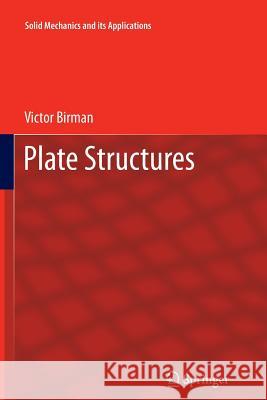
Plate Structures Victor Birman 9789400737471 Springer - książkaWidoczna okładka, to zdjęcie poglądowe, a rzeczywista szata graficzna może różnić się od prezentowanej.

Plate Structures

ISBN-13: 9789400737471 / Angielski / Miękka / 2013 / 298 str.

Victor Birman
cena 685,93 zł
(netto: 653,27 VAT:  5%)

Najniższa cena z 30 dni: 655,41 zł
Termin realizacji zamówienia:
ok. 22 dni roboczych
Bez gwarancji dostawy przed świętami

Darmowa dostawa!
inne wydania

Plate structures are used in almost every area of engineering, including aerospace and naval architecture, civil engineering, and electronics. These structures have diverse geometries and have to withstand a wide range of loading conditions. This book provides the theoretical foundations of the theories of plates manufactured from various materials, outlines and illustrates the methods used for the analysis of these structures, and emphasizes designs and solution techniques available to an engineer. The book is written for engineers working in industry, graduate students at aerospace, mechanical, civil engineering and naval architecture departments, and investigators interested in the development of the theory of plates and related subjects. While the mathematical modeling employed in the book is understandable to both engineers and graduate students, the book also provides insight into relevant phenomena and theories underlying plate structures. Thus, the reader is equipped with a thorough understanding of the problems and appropriate assumptions, even if the analysis is conducted using commercially available software codes. In addition, the book includes numerous analytical solutions that can confidently be used in the design of plate structures. The combination of theoretical insight and references to practical problems makes the book equally attractive to academia and industry. ""


Kategorie:
Technologie
Kategorie BISAC:
Science > Mechanics - Solids
Technology & Engineering > Mechanical
Technology & Engineering > Industrial Design - Product
Wydawca:
Springer
Seria wydawnicza:
Solid Mechanics and Its Applications
Język:
Angielski
ISBN-13:
9789400737471
Rok wydania:
2013
Dostępne języki:
Angielski
Wydanie:
2011
Numer serii:
000074400
Ilość stron:
298
Waga:
0.48 kg
Wymiary:
23.523.5 x 15.5
Oprawa:
Miękka
Wolumenów:
01
Dodatkowe informacje:
Wydanie ilustrowane

Preface.- Chapter 1: Introduction and Basic Concepts.-  1.1. Theoretical foundations of theory of plates.- 1.2 Constitutive relations for composite, isotropic and piezoelectric materials.- 1.3. Strain-displacement relations for plates and relevant kinematic assumptions.- 1.4. Stress resultants and stress couples.- 1.5. Introduction to the Rayleigh-Ritz and Galerkin methods.- 1.6. Equations of motion and boundary conditions: derivation from the Hamilton principle for a geometrically nonlinear shear deformable plate.- 1.7. Equations of motion and boundary conditions: derivation from the analysis of an infinitesimal plate element.- 1.8. An alternative formulation of equations of equilibrium and boundary conditions of thin plates in terms of a stress function.- 1.9. Effect of temperature on constitutive relations and material constants.- 1.10. Strength theories.- 1.11. Outline of a comprehensive plate analysis.- References.- Chapter 2: Static Problems in Isotropic Rectangular Plates.- 2.1. Classical Navier’s problem.- 2.2. Boundary conditions in realistic structures.- 2.3. Representative analytical solution: Levy’s method.- 2.4. Plates on elastic foundation.- 2.5. Combined lateral and in-plane loading.- 2.6. Buckling of rectangular isotropic plates.- 2.7. Application of the Rayleigh-Ritz method and Galerkin procedure to bending and buckling problems.- 2.8. Effect of initial imperfections on bending and buckling of rectangular plates2.- 2.9. Effect of stringers on bending and buckling of plates.- 2.10. Postbuckling response of plates.- 2.11. Design philosophy and recommendations.- References.- Chapter 3: Static Problems in Isotropic Circular Plates and Plates of Other Shapes.- 3.1. Governing equations of circular plates.- 3.2. Axisymmetric bending problems.- 3.3. Geometrically nonlinear axisymmetric bending problem for a solid annular plate.- 3.4. Asymmetric problems for circular plates.- 3.5. In-plane loading and buckling of circular plates.- 3.6. Bending of plates of non-rectangular and non-circular shapes.- 3.7. Design philosophy and recommendations.- References.- Chapter 4: Dynamic Problems in Isotropic Plates.- 4.1. Typical problems.- 4.2. Free vibrations of rectangular isotropic plates.- 4.3. Forced harmonic vibrations of rectangular isotropic plates.- 4.4. Non-periodic response (representative example of blast loading).- 4.5. Vibrations of reinforced plates.- 4.6. Large-amplitude vibrations.- 4.7. Dynamic instability of plates.- 4.8. Design philosophy and recommendations.- References.- Chapter 5: Mechanics of Composite plates.- 5.1. Basic concepts of thin laminated plates.- 5.2. Governing equations for thin composite plate.- 5.3. Strength criteria for laminated composites.- 5.4. Representative bending problems for a thin composite plate3.- 5.5. Buckling problems for thin composite plates.- 5.6. Statics and dynamics of stringer-reinforced composite plates.- 5.7. Shear-deformable composite plates.- 5.8. Sandwich plates.- 5.9. Design philosophy and recommendations.- References.- Chapter 6: Thermoelastic Problems in Isotropic and Composite Plates.- 6.1. Heat transfer problem.- 6.2. Representative problem: heat transfer in a functionally graded plate subject to a uniform over the surface thermal loading.- 6.3. Thermal bending and buckling of rectangular isotropic plates.- 6.4. Thermal bending and buckling problems for rectangular composite and sandwich plates.- 6.5. Example of thermal problem in applications: composite plates subject to fire.- 6.6. Design philosophy and recommendations.- References.- Chapter 7: Examples of Advanced Applications: Plates with Piezoelectric Sensors and Actuators and Functionally Graded Plates.- 7.1. Governing equations for shear deformable and thin plates with piezoelectric layers.- 7.2. Thin plates with piezoelectric sensors and actuators.- 7.3. Active control of composite plates using piezoelectric “stiffeners-actuators”.- 7. 4. Effect of temperature on measurements obtained from piezoelectric sensors.- 7.5. Concept of functionally graded material (FGM) plates.- 7.6. Thermal problems of FGM plates.- 7.7. Thermomechanical problems of FGM plates.- 7.8. Design philosophy and recommendations.- References.-  Subject index.

Plate structures are used in almost every area of engineering, including aerospace and naval architecture, civil engineering, and electronics. These structures have diverse geometries and have to withstand a wide range of loading conditions. This book provides the theoretical foundations of the theories of plates manufactured from various materials, outlines and illustrates the methods used for the analysis of these structures, and emphasizes designs and solution techniques available to an engineer.  The book is written for engineers working in industry, graduate students at aerospace, mechanical, civil engineering and naval architecture departments, and investigators interested in the development of the theory of plates and related subjects. While the mathematical modeling employed in the book is understandable to both engineers and graduate students, the book also provides insight into relevant phenomena and theories underlying plate structures. Thus, the reader is equipped with a thorough understanding of the problems and appropriate assumptions, even if the analysis is conducted using commercially available software codes. In addition, the book includes numerous analytical solutions that can confidently be used in the design of plate structures. The combination of theoretical insight and references to practical problems makes the book equally attractive to academia and industry.


Udostępnij

Facebook - konto krainaksiazek.pl


Opinie o Krainaksiazek.pl na Opineo.pl

Partner Mybenefit

Krainaksiazek.pl w programie rzetelna firma Krainaksiaze.pl - płatności przez paypal

Czytaj nas na:

Facebook - krainaksiazek.pl
  • książki na zamówienie
  • granty
  • książka na prezent
  • kontakt
  • pomoc
  • opinie
  • regulamin
  • polityka prywatności

Zobacz:

  • Księgarnia czeska

  • Wydawnictwo Książkowe Klimaty

1997-2025 DolnySlask.com Agencja Internetowa

© 1997-2022 krainaksiazek.pl
     
KONTAKT | REGULAMIN | POLITYKA PRYWATNOŚCI | USTAWIENIA PRYWATNOŚCI
Zobacz: Księgarnia Czeska | Wydawnictwo Książkowe Klimaty | Mapa strony | Lista autorów
KrainaKsiazek.PL - Księgarnia Internetowa

Polityka prywatnosci - link
Krainaksiazek.pl - płatnośc Przelewy24
Przechowalnia Przechowalnia





