• Wyszukiwanie zaawansowane
  • Kategorie
  • Kategorie BISAC
  • Książki na zamówienie
  • Promocje
  • Granty
  • Książka na prezent
  • Opinie
  • Pomoc
  • Załóż konto
  • Zaloguj się

Plant Performance Under Environmental Stress: Hormones, Biostimulants and Sustainable Plant Growth Management » książka


zaloguj się | załóż konto
Logo Krainaksiazek.pl

koszyk

konto

szukaj
topmenu
Księgarnia internetowa
Szukaj
Książki na zamówienie
Promocje
Granty
Książka na prezent
Moje konto
Pomoc
 
 
Wyszukiwanie zaawansowane
Pusty koszyk
Bezpłatna dostawa dla zamówień powyżej 20 złBezpłatna dostawa dla zamówień powyżej 20 zł

Kategorie główne

• Nauka
 [2946912]
• Literatura piękna
 [1852311]

  więcej...
• Turystyka
 [71421]
• Informatyka
 [150889]
• Komiksy
 [35717]
• Encyklopedie
 [23177]
• Dziecięca
 [617324]
• Hobby
 [138808]
• AudioBooki
 [1671]
• Literatura faktu
 [228371]
• Muzyka CD
 [400]
• Słowniki
 [2841]
• Inne
 [445428]
• Kalendarze
 [1545]
• Podręczniki
 [166819]
• Poradniki
 [480180]
• Religia
 [510412]
• Czasopisma
 [525]
• Sport
 [61271]
• Sztuka
 [242929]
• CD, DVD, Video
 [3371]
• Technologie
 [219258]
• Zdrowie
 [100961]
• Książkowe Klimaty
 [124]
• Zabawki
 [2341]
• Puzzle, gry
 [3766]
• Literatura w języku ukraińskim
 [255]
• Art. papiernicze i szkolne
 [7810]
Kategorie szczegółowe BISAC

Plant Performance Under Environmental Stress: Hormones, Biostimulants and Sustainable Plant Growth Management

ISBN-13: 9783030785239 / Angielski / Miękka / 2022
Husen, Azamal
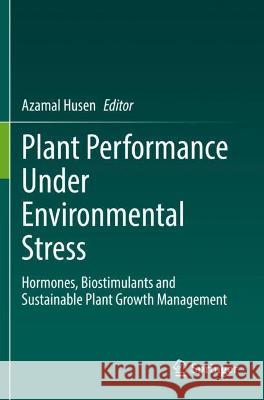
Plant Performance Under Environmental Stress: Hormones, Biostimulants and Sustainable Plant Growth Management Husen, Azamal 9783030785239 Springer International Publishing - książkaWidoczna okładka, to zdjęcie poglądowe, a rzeczywista szata graficzna może różnić się od prezentowanej.

Plant Performance Under Environmental Stress: Hormones, Biostimulants and Sustainable Plant Growth Management

ISBN-13: 9783030785239 / Angielski / Miękka / 2022

Husen, Azamal
cena 724,58
(netto: 690,08 VAT:  5%)

Najniższa cena z 30 dni: 693,97
Termin realizacji zamówienia:
ok. 22 dni roboczych
Bez gwarancji dostawy przed świętami

Darmowa dostawa!

Global climate change is bound to create a number of abiotic and biotic stresses in the environment, which would affect the overall growth and productivity of plants. Like other living beings, plants have the ability to protect themselves by evolving various mechanisms against stresses, despite being sessile in nature. They manage to withstand extremes of temperature, drought, flooding, salinity, heavy metals, atmospheric pollution, toxic chemicals and a variety of living organisms, especially viruses, bacteria, fungi, nematodes, insects and arachnids and weeds. Incidence of abiotic stresses may alter the plant-pest interactions by enhancing susceptibility of plants to pathogenic organisms. These interactions often change plant response to abiotic stresses. Plant growth regulators modulate plant responses to biotic and abiotic stresses, and regulate their growth and developmental cascades. A number of physiological and molecular processes that act together in a complex regulatory network, further manage these responses. Crosstalk between autophagy and hormones also occurs to develop tolerance in plants towards multiple abiotic stresses. Similarly, biostimulants, in combination with correct agronomic practices, have shown beneficial effects on plant metabolism due to the hormonal activity that stimulates different metabolic pathways. At the same time, they reduce the use of agrochemicals and impart tolerance to biotic and abiotic stress. Further, the use of bio- and nano-fertilizers seem to hold promise to improve the nutrient use efficiency and hence the plant yield under stressful environments. It has also been shown that the seed priming agents impart stress tolerance. Additionally, tolerance or resistance to stress may also be induced by using specific chemical compounds such as polyamines, proline, glycine betaine, hydrogen sulfide, silicon, β-aminobutyric acid, γ-aminobutyric acid and so on.This book discusses the advances in plant performance under stressful conditions. It should be very useful to graduate students, researchers, and scientists in the fields of botanical science, crop science, agriculture, horticulture, ecological and environmental science.


Kategorie:
Nauka, Biologia i przyroda
Kategorie BISAC:
Science > Botanika
Science > Life Sciences - Ecology
Technology & Engineering > Agriculture - General
Wydawca:
Springer International Publishing
Język:
Angielski
ISBN-13:
9783030785239
Rok wydania:
2022
Waga:
0.94 kg
Wymiary:
23.5 x 15.5
Oprawa:
Miękka
Dodatkowe informacje:
Wydanie ilustrowane

Preface


1. Crosstalk between autophagy and hormones for abiotic stress tolerance in plants
Azamal Husen; Wolaita Sodo University, P.O. Box:138, Wolaita, Ethiopia

2. Abscisic acid and plant response under adverse environmental conditions
Jorge Gonzalez-Villagraa; Departamento de Ciencias Agropecuarias y Acuícolas, Facultad de Recursos Naturales; Universidad Católica de Temuco, P.O. Box 15-D, Temuco, Chile
Carla Figueroab; Carrera de Bioquímica, Facultad de Ingeniería y Ciencias, Universidad de La Frontera P.O. Box 54-D, Temuco, Chile
Ana Luengo Escobarc; Center of Plant, Soil Interaction and Natural Resources Biotechnology, Scientific and Technological Bioresource Nucleus (BIOREN-UFRO), Universidad de La Frontera, Temuco, Chile.
Melanie Moralesd; Department of Evolutionary Biology, Ecology and Environmental Sciences, Faculty of Biology, University of Barcelona, Avinguda Diagonal 643, 08028, Barcelona, Spain.
Claudio Inostroza-Blancheteau; Núcleo de Investigación en Producción Alimentaria, Facultad de Recursos Naturales, Universidad, Católica de Temuco, P.O. Box 15-D, Temuco, Chile
Marjorie Reyes-Díaz; Departamento de Ciencias Químicas y Recursos Naturales, Facultad de Ingeniería y Ciencias, Universidad de La Frontera, P.O. Box 15-D, Temuco, Chile

3. Auxins and plant response to adverse environmental conditions
Swati T. Gurme; Department of Biotechnology, Shivaji University, Kolhapur (MS), India
Pankaj S. Mundada; Department of Biotechnology, Yashavantrao Chavan Institute of Science (Autonomous); Satara (MS), India
Mahendra L. Ahire; Department of Botany, Yashavantrao Chavan Institute of Science, Satara (MS), India
Supriya S. Salunkhe; Department of Biotechnology, Yashavantrao Chavan Institute of Science (Autonomous), Satara (MS), India

4. Salicylic acid for vigorous plant growth and enhanced yield under harsh environment
Sahila; Department of Botany, University of Delhi, New Delhi-110007, India
Radhika Keshana; Department of Botany, University of Delhi, New Delhi-110007, India
Sahil Mehta; International Centre for Genetic Engineering and Biotechnology, New Delhi-110067, India
Abdelmotelb K. F.; Department of Genetics and Genetic Engineering, Faculty of Agriculture, Zagazig University, Zagazig-44519, Egypt
S. K. Aggarwal; ICAR-Indian Institute of Maize Research, Ludhiana, Punjab-141004, India

5. Jasmonic acid for sustainable plant growth and production under adverse environmental conditions
Blanca Estela Barrera-Figueroa; Laboratorio de Biotecnología Vegetal, Instituto de Biotecnología, Universidad del Papaloapan, Tuxtepec, Mexico
Piyada Juntawong; Center for Advanced Studies in Tropical Natural Resources, National Research University - Department of Genetics, Faculty of Science, Kasetsart University, Bangkok, Thailand
Julián Mario Peña-Castro; Laboratorio de Biotecnología Vegetal, Instituto de Biotecnología, Universidad del Papaloapan, Tuxtepec, Mexico

6. Strigolactones for sustainable plant growth and production under adverse environmental conditions
Ali Razaa; Oil Crops Research Institute, Chinese Academy of Agricultural Sciences (CAAS), Wuhan 430062, China
Rida Javed; Centre of Agricultural Biochemistry and Biotechnology (CABB), University of Agriculture, Faisalabad 38040, Pakistan
Zainab Zahid; Institute of Environmental Sciences and Engineering (IESE), School of Civil and Environmental Engineering (SCEE), National University of Sciences and Technology (NUST), Islamabad 44000, Pakistan
Rahat Sharif, College of Horticulture, Northwest A&F University, Yangling, 712100, China
Muhammad Bilal Hafeez; College of Agronomy, Northwest A&F University, Yangling, 712100, China
Muhammad Zubair Ghouri; Center for Advanced Studies in Agriculture and Food Security (CAS-AFS), University of Agriculture, Faisalabad 38040, Pakistan
Muhammad Umar Nawaz; Department of Agronomy, University of Agriculture, Faisalabad 38040, Pakistan
Manzer H. Siddiqui; Department of Botany and Microbiology, College of Science, King Saud University, Saudi Arabia

7. Polyamines for sustainable plant growth and production under adverse environmental conditions
Brij Bihari Pandey; Division of Crop Production, ICAR-Indian Institute of Oilseeds Research, Hyderabad-500030, Telangana, India
Ratnakumar Pasala; Division of Crop Production, ICAR-Indian Institute of Oilseeds Research, Hyderabad-500030, Telangana, India
Kulasekaran Ramesh; Division of Crop Production, ICAR-Indian Institute of Oilseeds Research, Hyderabad-500030, Telangana, India
Sumit Kumar Mishra; Department of Biotechnology, Indian Institute of Technology, Roorkee, Roorkee-244412, India
Nidhi Tyagi; Department of Vegetable Science, Dr. Y.S. Parmar University of Horticulture and Forestry, Solan-173230, India
Akankhya Guru; Department of Plant Physiology, Institute of Agricultural Sciences, Banaras Hindu University, Varanasi-221005, India
Pappu Lal Bairwag; Department of Vegetable Science, IGKV, Raipur, Chhattisgarh-492012, India
Manikanta CLN; Division of Crop Production, ICAR-Indian Institute of Oilseeds Research, Hyderabad-500030, Telangana, India
Arti Guhey; Department of Plant Physiology, Indira Gandhi Agriculture University, Raipur, Chhattisgarh-492012, India

8. Plant performance and defensive role of proline under environmental stress
Se Chul Chun; Department of Bioresource and Food Science, Konkuk University, Seoul, South Korea
Manivannan Paramasivan; Department of Microbiology, Bharathidasan University, Tiruchirappalli, India
Murugesan Chandrasekaran; Department of Food Science and Biotechnology, Sejong University, Seoul, South Korea

9. Plant performance and defensive role of glycine betaine under environmental stress
Praveen Jaina; Department of Botany, Government Chandulal Chandrakar Arts and Science PG College Patan Durg Chhattisgarh, India 
Brijesh Pandey; Department of Biotechnology, School of Life Sciences, Mahatma Gandhi Central University, East Champaran, Bihar, India
Pratibha Singh; Ranjan Plant Physiology and Biochemistry laboratory, Department of Botany, University of Allahabad, Prayagraj, Uttar Pradesh, India
Ranjana Singh; Govt. Model Degree College, constituent college of CCS University (Meerut) Arniya, Bulandshahr, Uttar Pradesh, India
Satarudra Prakash Singh; Department of Biotechnology, School of Life Sciences, Mahatma Gandhi Central University, East Champaran, Bihar, India
Sashi Sonkar; Department of Botany, Bankim Sardar College, Tangrakhali, South 24 Parganas, West Bengal, India
Rahul Gupta; Amity Institute of Biotechnology, Amity University Uttar Pradesh, Lucknow Campus, Lucknow, Uttar Pradesh, India
Saurabh Singh Rathore; Department of Biotechnology, School of Life Sciences, Mahatma Gandhi Central University, East Champaran, Bihar, India
Akhilesh Kumar Singh; Department of Biotechnology, School of Life Sciences, Mahatma Gandhi Central University, East Champaran, Bihar, India
Azamal Husen; Wolaita Sodo University, P.O. Box:138, Wolaita, Ethiopia

10. Plant performance and defensive role of β-amino butyric acid under environmental stress
Yan Xu, Chenyang Zhan, Bingru Huang; Department of Plant Biology and Pathology, Rutgers University, New Brunswick, NJ 08901, USA

11. Plant performance and defensive role of γ-gamma amino butyric acid under environmental stress
Sunita A. Ramesh, Wendy Sullivan, Stephen D. Tyerman; ARC Centre of Excellence in Plant Energy Biology, Department of Plant Science, School of Agriculture, Food, and Wine, Waite Research Institute, University of Adelaide, Glen Osmond SA 5064, Australia

12. Nitric oxide: A key modulator of plant responses under environmental stress
Michael D Jochum; Department of Plant Pathology and Microbiology, Texas A&M University, College Station, TX, United States
Kelsey L McWilliams; Thomas H. Gosnell School of Life Sciences, Rochester Institute of Technology, Rochester, NY, United States
Young-Ki Jo; Department of Plant Pathology and Microbiology, Texas A&M University, College Station, TX, United States

13. Functions of hydrogen sulfide in plant regulation and response to abiotic stress 
Sashi Sonkar; Department of Botany, Bankim Sardar College, Tangrakhali, South 24 Parganas -743329, West Bengal, India
Akhilesh Kumar Singh; Department of Biotechnology, School of Life Sciences, Mahatma Gandhi Central University, East Champaran-845401, Bihar, India
Thomas Ernst Müller; CAT Catalytic Center, ITMC, RWTH Aachen, Worringerweg 1, 52074 Aachen, Germany
Azamal Husen; Wolaita Sodo University, P.O. Box:138, Wolaita, Ethiopia

14. Silicon and plant responses under adverse environmental conditions
Michael D Jochum; Department of Plant Pathology and Microbiology, Texas A&M University, College Station, TX United States
Kelsey L McWilliams; Department of Plant Pathology and Microbiology, Texas A&M University, College Station, TX United States
Genhua Niu; Texas A&M AgriLife Research and Extension Center, El Paso, TX, United States
Elizabeth A Pierson; Department of Plant Pathology and Microbiology, Texas A&M University, College Station, TX
Young-Ki Jo; Department of Plant Pathology and Microbiology, Texas A&M University, College Station, TX United States

15. Nanofertilizers as dual tools for plant nutrition and plant biostimulation under adverse environments
Misbah Naz; State Key Laboratory of Crop Genetics and Germplasm Enhancement, MOA Key Laboratory of Plant Nutrition and Fertilization in Low-Middle Reaches of the Yangtze River, Nanjing Agricultural University, Nanjing 210095, China
Adalberto Benavides-Mendoza; Autonomous Agricultural University Antonio Narro, Department of Horticulture, Calzada Antonio Narro 1923, Saltillo 25315, Mexico
 
16. Biostimulants and plant response under adverse environmental conditions: a functional interplay 
Giacomo Cocetta; Department of Agricultural and Environmental Sciences, Unviersità degli Studi di Milano, Italy
Andrea Ertani; Department of Agricultural, Forest and Food Sciences (DISAFA), University of Torino (Italy) L. go Braccini 2, I-10095, Grugliasco, Italy
Roberta Bulgari; Department of Agricultural and Environmental Sciences, Unviersità degli Studi di Milano, Italy
Giulia Franzoni; Department of Agricultural and Environmental Sciences, Unviersità degli Studi di Milano, Italy
Silvana Nicola; Department of Agricultural, Forest and Food Sciences (DISAFA), University of Torino (Italy) L. go Braccini 2, I-10095, Grugliasco, Italy
Antonio Ferrante; Department of Agricultural and Environmental Sciences, Unviersità degli Studi di Milano, Italy

17. Biofertilizers mediated sustainable plant growth and production under adverse environmental conditions
Swetika Porwal; Amity School of Architecture and Planning, Amity University Uttar Pradesh, Lucknow Campus, Lucknow, India
Akhilesh Kumar Singh; Department of Biotech and Genome, School of Life Sciences, Mahatma Gandhi Central University, Motihari, Bihar, India
Ashok Kumar Yadav; Deen Dayal Upadhyay Kaushal Kendra, RGSC (BHU), Barkachha, Mirzapur, Uttar Pradesh, India
Sudhir Kumar; Deen Dayal Upadhyay Kaushal Kendra, RGSC (BHU), Barkachha, Mirzapur, Uttar Pradesh, India
Paras Porwal; Amity Institute of Biotechnology, Amity University Uttar Pradesh, Lucknow Campus, Lucknow, India

18. Seed priming: A cost effective strategy to impart abiotic stress tolerance
Akhila Sen, Riya Johnson, Jos T. Puthur; Research scholar, Plant Physiology and Biochemistry Division, Department of Botany, University of Calicut, C.U. Campus P.O., Kerala, 673635, India

19. Significance of cyanobacteria in soil-plant system and for ecological resilience
Subhra Chakraborti, Abhishek Sen, Kuntal Bera, Puspendu Dutta, Shovik Deb, Satyajit Hembram, Ashok Choudhury; Uttar Banga Krishi Viswaidyalaya, Pundibari, Cooch Behar 736 165, India

20. Phytomicrobiome community: An agrarian perspective
Donald L. Smith; Plant Science Department, McGill University/Macdonald Campus, Sainte-Anne-de-Bellevue, QC Canada
Sowmyalakshmi Subramanian; Plant Science Department, McGill University/Macdonald Campus, Sainte-Anne-de-Bellevue, QC Canada
John R. Lamont; Plant Science Department, McGill University/Macdonald Campus, Sainte-Anne-de-Bellevue, QC Canada
Margaret Bywater-Ekegärd; Inocucor Technologies Inc., Montréal, QC Canada

21. Adverse environment and pest management for sustainable plant production
Priyanka Saxena; Concern International Foundation (CIF), New Delhi-110001, India
Akhilesh Kumar Singh; Department of Biotechnology, School of Life Sciences, Mahatma Gandhi Central University, East Champaran-845401, Bihar, India
Rahul Gupta; Amity Institute of Biotechnology, Amity University Uttar Pradesh, Lucknow Campus; Lucknow-226028, Uttar Pradesh, India

22. Eco-friendly approaches of using weeds for sustainable plant growth and production  
Satish Kumar Ameta; Department of Environmental Science, Mewar University, Gangrar, Chittorgarh (Rajasthan), India
Suresh C. Ameta; Faculty of Science, PAHER University, Udaipur-313003 (Rajasthan) India

Index

Professor Azamal Husen (BSc from Shri Murli Manohar Town Post Graduate College, Ballia, UP; MSc from Hamdard University, New Delhi; and PhD from Forest Research Institute, Dehra Dun, India) is a Foreign Delegate at Wolaita Sodo University, Wolaita, Ethiopia. He has served the University of Gondar, Ethiopia, as a Full Professor of Biology, and also worked as the Coordinator of MSc Program and the Head, Department of Biology. He was a Visiting Faculty of the Forest Research Institute, and the Doon College of Agriculture and Forest at Dehra Dun, India. He has a more than 20 years’ experience of teaching, research and administration. Dr. Husen specializes in biogenic nanomaterials fabrication and their application, plant response to nanomaterials, plant production and adaptation to harsh environments at physiological, biochemical and molecular levels, herbal medicine, and clonal propagation and improvement of tree species. He has conducted several research projects sponsored by various funding agencies, including the World Bank, the Indian Council of Agriculture Research (ICAR), the Indian Council of Forest Research Education (ICFRE); and the Japan Bank for International Cooperation (JBIC), etc. He has published over 100 research papers, review articles and book chapters, edited books of international repute, presented papers in several conferences, and produced over a dozen of manuals and monographs. Dr. Husen received four fellowships from India and a recognition award from University of Gondar, Ethiopia, for excellent teaching, research and community service. An active organizer of seminars/conferences and an efficient evaluator of research projects and book proposals as he is, Dr. Husen has been on the Editorial board and the panel of reviewers of several reputed journals of Elsevier, Frontiers Media SA, Taylor & Francis, Springer Nature, RSC, Oxford University Press, Sciendo, The Royal Society, CSIRO, PLOS and John Wiley & Sons. He is included in the advisory board of Cambridge Scholars Publishing, UK. He is a Fellow of the Plantae group of American Society of Plant Biologists, and a Member of International Society of Root Research, Asian Council of Science Editors, and INPST, etc. Also, he is Editor-in-Chief of American Journal of Plant Physiology; and a Series Editor of ‘Exploring Medicinal Plants’ published by Taylor & Francis Group, USA.

Global climate change is bound to create a number of abiotic and biotic stresses in the environment, which would affect the overall growth and productivity of plants. Like other living beings, plants have the ability to protect themselves by evolving various mechanisms against stresses, despite being sessile in nature. They manage to withstand extremes of temperature, drought, flooding, salinity, heavy metals, atmospheric pollution, toxic chemicals and a variety of living organisms, especially viruses, bacteria, fungi, nematodes, insects and arachnids and weeds. Incidence of abiotic stresses may alter the plant-pest interactions by enhancing susceptibility of plants to pathogenic organisms. These interactions often change plant response to abiotic stresses.

Plant growth regulators modulate plant responses to biotic and abiotic stresses, and regulate their growth and developmental cascades. A number of physiological and molecular processes that act together in a complex regulatory network, further manage these responses. Crosstalk between autophagy and hormones also occurs to develop tolerance in plants towards multiple abiotic stresses. Similarly, biostimulants, in combination with correct agronomic practices, have shown beneficial effects on plant metabolism due to the hormonal activity that stimulates different metabolic pathways. At the same time, they reduce the use of agrochemicals and impart tolerance to biotic and abiotic stress. Further, the use of bio- and nano-fertilizers seem to hold promise to improve the nutrient use efficiency and hence the plant yield under stressful environments. It has also been shown that the seed priming agents impart stress tolerance. Additionally, tolerance or resistance to stress may also be induced by using specific chemical compounds such as polyamines, proline, glycine betaine, hydrogen sulfide, silicon, β-aminobutyric acid, γ-aminobutyric acid and so on.

This book discusses the advances in plant performance under stressful conditions. It should be very useful to graduate students, researchers, and scientists in the fields of botanical science, crop science, agriculture, horticulture, ecological and environmental science.




Udostępnij

Facebook - konto krainaksiazek.pl


Opinie o Krainaksiazek.pl na Opineo.pl

Partner Mybenefit

Krainaksiazek.pl w programie rzetelna firma Krainaksiaze.pl - płatności przez paypal

Czytaj nas na:

Facebook - krainaksiazek.pl
  • książki na zamówienie
  • granty
  • książka na prezent
  • kontakt
  • pomoc
  • opinie
  • regulamin
  • polityka prywatności

Zobacz:

  • Księgarnia czeska

  • Wydawnictwo Książkowe Klimaty

1997-2025 DolnySlask.com Agencja Internetowa

© 1997-2022 krainaksiazek.pl
     
KONTAKT | REGULAMIN | POLITYKA PRYWATNOŚCI | USTAWIENIA PRYWATNOŚCI
Zobacz: Księgarnia Czeska | Wydawnictwo Książkowe Klimaty | Mapa strony | Lista autorów
KrainaKsiazek.PL - Księgarnia Internetowa

Polityka prywatnosci - link
Krainaksiazek.pl - płatnośc Przelewy24
Przechowalnia Przechowalnia



