• Wyszukiwanie zaawansowane
  • Kategorie
  • Kategorie BISAC
  • Książki na zamówienie
  • Promocje
  • Granty
  • Książka na prezent
  • Opinie
  • Pomoc
  • Załóż konto
  • Zaloguj się

Plant Nutritional Genomics » książka


zaloguj się | załóż konto
Logo Krainaksiazek.pl

koszyk

konto

szukaj
topmenu
Księgarnia internetowa
Szukaj
Książki na zamówienie
Promocje
Granty
Książka na prezent
Moje konto
Pomoc
 
 
Wyszukiwanie zaawansowane
Pusty koszyk
Bezpłatna dostawa dla zamówień powyżej 20 złBezpłatna dostawa dla zamówień powyżej 20 zł

Kategorie główne

• Nauka
 [2946600]
• Literatura piękna
 [1856966]

  więcej...
• Turystyka
 [72221]
• Informatyka
 [151456]
• Komiksy
 [35826]
• Encyklopedie
 [23190]
• Dziecięca
 [619653]
• Hobby
 [140543]
• AudioBooki
 [1577]
• Literatura faktu
 [228355]
• Muzyka CD
 [410]
• Słowniki
 [2874]
• Inne
 [445822]
• Kalendarze
 [1744]
• Podręczniki
 [167141]
• Poradniki
 [482898]
• Religia
 [510455]
• Czasopisma
 [526]
• Sport
 [61590]
• Sztuka
 [243598]
• CD, DVD, Video
 [3423]
• Technologie
 [219201]
• Zdrowie
 [101638]
• Książkowe Klimaty
 [124]
• Zabawki
 [2473]
• Puzzle, gry
 [3898]
• Literatura w języku ukraińskim
 [254]
• Art. papiernicze i szkolne
 [8170]
Kategorie szczegółowe BISAC

Plant Nutritional Genomics

ISBN-13: 9781405121149 / Angielski / Twarda / 2005 / 344 str.
Broadley; Jerry White
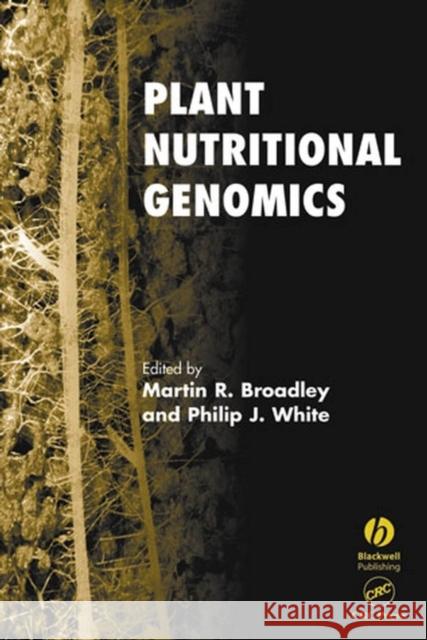
Plant Nutritional Genomics Broadley                                 Christopher Ed. White 9781405121149 John Wiley & Sons - książkaWidoczna okładka, to zdjęcie poglądowe, a rzeczywista szata graficzna może różnić się od prezentowanej.

Plant Nutritional Genomics

ISBN-13: 9781405121149 / Angielski / Twarda / 2005 / 344 str.

Broadley; Jerry White
cena 1344,99 zł
(netto: 1280,94 VAT:  5%)

Najniższa cena z 30 dni: 1331,23 zł
Termin realizacji zamówienia:
ok. 30 dni roboczych
Bez gwarancji dostawy przed świętami

Darmowa dostawa!

A textbook' plant typically comprises about 85% water and 13.5% carbohydrates. The remaining fraction contains at least 14 mineral elements, without which plants would be unable to complete their life cycles. Understanding plant nutrition and applying this knowledge to practical use is important for several reasons. First, an understanding of plant nutrition allows fertilisers to be used more wisely. Second, the nutritional composition of crops must be tailored to meet the health of humans and livestock. Third, many regions of the world are currently unsuitable for crop production, and an understanding of plant nutrition can be used to develop strategies either for the remediation of this land or for the cultivation of novel crops. That application of knowledge of plant nutrition can be achieved through genotypic or agronomic approaches. Genotypic approaches, based on crop selection and / or breeding (conventional or GM), have recently begun to benefit from technological advances, including the completion of plant genome sequencing projects. This book provides an overview of how plant nutritional genomics, defined as the interaction between a plant's genome and its nutritional characteristics, has developed in the light of these technological advances, and how this new knowledge might usefully be applied. This is a book for researchers and professionals in plant molecular genetics, biochemistry and physiology, in both the academic and industrial sectors.


Kategorie:
Nauka, Biologia i przyroda
Kategorie BISAC:
Science > Botanika
Wydawca:
John Wiley & Sons
Język:
Angielski
ISBN-13:
9781405121149
Rok wydania:
2005
Numer serii:
000111371
Ilość stron:
344
Waga:
0.68 kg
Wymiary:
24.0 x 15.9 x 2.5
Oprawa:
Twarda
Wolumenów:
01

The book is divided into 13 chapters covering three distinct topics: the molecular physiology of individual nutrients, methods for studying plant nutritional genomics, and applications of the knowledge gained.

"This is a really good book that should be part of the personal library of all those working in plant nutrition. It should also be consulted by those who want to keep abreast of recent developments or use it as a basis for an initial but integrated introduction to the molecular physiology of nutrient acquisition and assimilation and how this knowledge can potentially be exploited. It will also be useful to those preparing advanced undergraduate or graduate–level lecture courses in plant nutrition."

Roger A Leigh – Annals of Botany

1. Nitrogen.

Françoise Daniel–Vedele and Sylvain Chaillou, Plant Nitrogen Nutrition Unit, INRA Versailles, Frances.

2. Potassium.

Sabine Zimmermann and Isabelle Chérel, INRA – Biochimie et Physiologie Moléculaire des Plantes, Montpellier, France.

3. Calcium.

Philip J. White, Horticulture Research International, Wellesbourne, Warwick, UK.

4. Sulphur.

Malcolm J. Hawkesford, Agriculture and the Environment Division, Rothamsted Research, Harpenden, UK.

5. Phosphorus.

Kashchandra G. Raghothama, Department of Horticulture and Landscape Architecture, Purdue University, West Lafayette, Indiana, USA.

6. Sodium.

Huazhong Shi, Ray A. Bressan, Paul M. Hasegawa and Jian–Kang Zhu, Department of Horticulture and Landscape Architecture, Purdue University, West Lafayette, Indiana, USA.

7. Mapping links between the genome and ionome in plants.

Brett Lahner and David E. Salt, Department of Horticulture and Landscape Architechture, Purdue University, West Lafayette, Indiana, USA.

8. Transcriptional profiling of membrane transporters.

Frans J.M. Maathuis, Department of Biology, University of York, UK and Anna Amtmann, Laboratory of Plant Physiology and Biophysics, University of Glasgow, UK.

9. Exploring natural genetic variation to improve plant nutrient content.

Dick Vreugdenhil , Mark G.M. Aarts and Maarten Koornneef, Laboratory of Genetics, Wageningen University, The Netherlands.

10. Mapping nutritional traits in crop plants.

Matthias Wissuwa, International Rice Research Institute, Manila, The Philippines.

11. Sustainable crop nutrition: constraints and opportunities.

R. Ford Denison and E. Toby Kiers, Agronomy & Range Science Department, University of California, Davis, USA.

12. Methods to improve the crop–delivery of minerals to humans and livestock.

Michael A. Grusak, Baylor College of Medicine, Houston, Texas, USA and Ismail Cakmak, Faculty of Engineering and Natural Sciences, Sabanci University, Istanbul, Turkey.

13. Using plants to manage sites contaminated with heavy metals.

Steven N. Whiting, School of Botany, University of Melbourne, Australia, Roger D. Reeves, Institute of Fundamental Sciences, Massey University, Palmerston North, New Zealand, David Richards, Rio Tinto Plc, London, UK et al..

References.

Index

A textbook plant typically comprises about 85% water and 13.5% carbohydrates. The remaining fraction contains at least 14 mineral elements, without which plants would be unable to complete their life cycles.


Understanding plant nutrition and applying this knowledge to practical use is important for several reasons. First, an understanding of plant nutrition allows fertilisers to be used more wisely. Second, the nutritional composition of crops must be tailored to meet the health of humans and livestock. Third, many regions of the world are currently unsuitable for crop production, and an understanding of plant nutrition can be used to develop strategies either for the remediation of this land or for the cultivation of novel crops.


That application of knowledge of plant nutrition can be achieved through genotypic or agronomic approaches. Genotypic approaches, based on crop selection and / or breeding (conventional or GM), have recently begun to benefit from technological advances, including the completion of plant genome sequencing projects. This book provides an overview of how plant nutritional genomics, defined as the interaction between a plant′s genome and its nutritional characteristics, has developed in the light of these technological advances, and how this new knowledge might usefully be applied.


This is a book for researchers and professionals in plant molecular genetics, biochemistry and physiology, in both the academic and industrial sectors.

White, Jerry Chris White earned his doctorate from the Universi... więcej >


Udostępnij

Facebook - konto krainaksiazek.pl


Opinie o Krainaksiazek.pl na Opineo.pl

Partner Mybenefit

Krainaksiazek.pl w programie rzetelna firma Krainaksiaze.pl - płatności przez paypal

Czytaj nas na:

Facebook - krainaksiazek.pl
  • książki na zamówienie
  • granty
  • książka na prezent
  • kontakt
  • pomoc
  • opinie
  • regulamin
  • polityka prywatności

Zobacz:

  • Księgarnia czeska

  • Wydawnictwo Książkowe Klimaty

1997-2025 DolnySlask.com Agencja Internetowa

© 1997-2022 krainaksiazek.pl
     
KONTAKT | REGULAMIN | POLITYKA PRYWATNOŚCI | USTAWIENIA PRYWATNOŚCI
Zobacz: Księgarnia Czeska | Wydawnictwo Książkowe Klimaty | Mapa strony | Lista autorów
KrainaKsiazek.PL - Księgarnia Internetowa

Polityka prywatnosci - link
Krainaksiazek.pl - płatnośc Przelewy24
Przechowalnia Przechowalnia





