• Wyszukiwanie zaawansowane
  • Kategorie
  • Kategorie BISAC
  • Książki na zamówienie
  • Promocje
  • Granty
  • Książka na prezent
  • Opinie
  • Pomoc
  • Załóż konto
  • Zaloguj się

Plant Genetic Resources, Inventory, Collection and Conservation » książka


zaloguj się | załóż konto
Logo Krainaksiazek.pl

koszyk

konto

szukaj
topmenu
Księgarnia internetowa
Szukaj
Książki na zamówienie
Promocje
Granty
Książka na prezent
Moje konto
Pomoc
 
 
Wyszukiwanie zaawansowane
Pusty koszyk
Bezpłatna dostawa dla zamówień powyżej 40 złBezpłatna dostawa dla zamówień powyżej 40 zł

Kategorie główne

• Nauka
 [2950887]
• Literatura piękna
 [1817392]

  więcej...
• Turystyka
 [70421]
• Informatyka
 [151509]
• Komiksy
 [36471]
• Encyklopedie
 [23146]
• Dziecięca
 [612016]
• Hobby
 [135856]
• AudioBooki
 [1813]
• Literatura faktu
 [226002]
• Muzyka CD
 [369]
• Słowniki
 [2975]
• Inne
 [447066]
• Kalendarze
 [1173]
• Podręczniki
 [166853]
• Poradniki
 [469656]
• Religia
 [507933]
• Czasopisma
 [503]
• Sport
 [61169]
• Sztuka
 [242521]
• CD, DVD, Video
 [3456]
• Technologie
 [219319]
• Zdrowie
 [99010]
• Książkowe Klimaty
 [124]
• Zabawki
 [2510]
• Puzzle, gry
 [3701]
• Literatura w języku ukraińskim
 [264]
• Art. papiernicze i szkolne
 [8012]
Kategorie szczegółowe BISAC

Plant Genetic Resources, Inventory, Collection and Conservation

ISBN-13: 9789811677014 / Angielski / Miękka / 2023
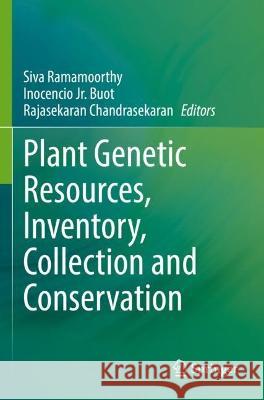
Plant Genetic Resources, Inventory, Collection and Conservation  9789811677014 Springer Nature Singapore - książkaWidoczna okładka, to zdjęcie poglądowe, a rzeczywista szata graficzna może różnić się od prezentowanej.

Plant Genetic Resources, Inventory, Collection and Conservation

ISBN-13: 9789811677014 / Angielski / Miękka / 2023

cena 726,29
(netto: 691,70 VAT:  5%)

Najniższa cena z 30 dni: 693,97
Termin realizacji zamówienia:
ok. 16-18 dni roboczych.

Darmowa dostawa!
inne wydania

This edited book deals with plant genetic resources and their status, availability, and ecological niche in natural habitat. Usage and conservation practices followed by various tribal communities and their rationale are also discussed in the book. The book explores application of biological tools to conserve plant species and optimization protocols for conservation and elicitation of secondary metabolites and other value addition products. The book is organized into sub-themes covering: (i) Ecological status of plant genetic resources (ii) Traditional ethnobotanical knowledge and conservation practices (iii) Ex-situ conservation practices and bioprospectingGlobally, plant genetic resources are deeply rooted in culture and economy. Since the early 1990s, the changing socio-economic situation has increasingly put pressure on plant genetic resources, in some cases leading to a severe loss of their diversity. For this reason, most vulnerable areas at risk of genetic erosion have been demarcated and protected by forest laws and regulations. Therefore, this book brings to light the opinions of leading experts in the area of ecology, conservation biodiversity, ethanobotany, and bioprospecting of plant genetic resources.  The book is for use by graduate and advanced undergraduate students and researchers in plant physiology, molecular biology, biochemistry, and agriculture. Additionally, it is extremely useful as a general reference on conservation of flora and large-scale cultivation.


Kategorie:
Nauka, Biologia i przyroda
Kategorie BISAC:
Science > Botanika
Science > Life Sciences - Ecology
Science > Life Sciences - Genetics & Genomics
Wydawca:
Springer Nature Singapore
Język:
Angielski
ISBN-13:
9789811677014
Rok wydania:
2023
Waga:
0.84 kg
Wymiary:
23.5 x 15.5
Oprawa:
Miękka
Dodatkowe informacje:
Wydanie ilustrowane

Chapter 1. A Checklist of Some Economically Important Philippine Ferns (Eupolypod I).- Chapter 2. On-Farm Conservation of Traditional Rice Varieties in the Provinces of Quirino, Iloilo, Antique and Davao Oriental, Philippines: Drivers and Implications for Policy.- Chapter 3. Recent Developments in Wild Rice Conservation, Research and Use.- Chapter 4. GIS and Its Role in Plant Genetic Resources Use and Conservation.- Chapter 5. Plant Diversity of Mount Makiling Forest Reserve: implications to management and conservation.- Chapter 6. Native/Heirloom Rice in the Cordilleras: Status, Conservation and Utilization.- Chapter 7. Identification and Conservation of Culturally Important Trees Used for Traditional Houses in Ifugao, Philippines.- Chapter 8. Pteridophyte Diversity in the Puerto Princesa Subterranean River National Park (PPSRNP), Palawan Island, Philippines.- Chapter 9. Situating Plant Genetic Resource in the K-12 Curriculum: A Critical Review.- Chapter 10. An Inventory of Commonly Cultivated Plant Species in Permaculture Farms in the Philippines.- Chapter 11. Conservation of Musa Diversity and Germplasm Management at the National Plant Genetic Resources Laboratory in the Philippines.- Chapter 12. Diversity and Management of Indoor Plants at Urban Dwellings in Bangladesh: A Case Study from Halishahar of Chattogram Metropolitan Area.- Chapter 13. Exploration, Identification, Multiplication and Conservation of Rare Foreset Genetic Resources in Chittagong University Campus, Bangladesh.- Chapter 14. The Chemistry of Anti-Diabetic Plants.- Chapter 15. Conservation of Medicinal Plant Genetic Resources in Southern Africa.- Chapter 16. Chloroplast DNA haplotype specific to genetic resources of Dalbergia oliveri in Thailand.- Chapter 17. Status, conservation and sustainability on medicinal plant resources of India.- Chapter 18. Plant genetic resources management in the framework of policy developments.- Chapter 19. Agricultural livelihoods and temporal dynamics of agriculturein peripheral villages of a protected area in South India.- Chapter 20. Conservation of plant genetic resources: A special reference to dye yielding plants.- Chapter 21. Perception of advanced techniques in conservation and utilization of wild genetic resources of rice.- Chapter 22. Conservation and determination of nutritional composition of Mondia whitei in vitro.- Chapter 23. Social Benefits, Development and the Pertinence of Laws: The Case of Commercialization of Plant Genetic Resources in the Global Markets.

Dr. Siva Ramamoorthy is Professor of Biotechnology at Vellore Institute of Technology, India. His PhD thesis was on plant genetic diversity, which was completed at Bharathidasan University, India. He completed postdoctoral research at Ben Gurion University (Israel) and Gyeongsang National University (South Korea). For around two decades, he has carried out extensive research on plant dyes and pigments. Dr. Siva is an IUCN species commission member for medicinal plants. He was nominated as Fellow of Linnean Society (FLS), Fellow of the Royal Society of Biology (FRSB), and Fellow of the Royal Society of Chemistry (FRSC), and he has published around 150 manuscripts in reputed journals with high impact factor. He has received many awards for his research contribution. He is the associate editor of BMC Plant Biology and BMC Biotechnology, and academic editor of PLoS One and Peer J.  Dr. Siva has been recognized as one among the top 2% scientists of the world as per survey of Stanford University and Mendeley.


Dr. Inocencio E Buot Jr is Professor of Botany and curator in the Plant Biology Division Herbarium (PBDH) and current head of the Plant Systematics Laboratory at the Institute of Biological Sciences (IBS), a Center of Excellence for Biology since 1984, University of the Philippines Los Banos (UPLB).  He obtained his PhD in botany (ecology) from the University of Chiba, Japan, in 1998 through a Monbusho Scholarship of the Japan Government and a postdoctoral research training in landscape ecology from 2003–2005 through the auspices of the Japan Society for the Promotion of Science (JSPS). His laboratory is now focusing on biodiversity conservation and plant systematic studies.  He has published more than 150 articles in journals. He has received many prestigious awards for his research contribution.


Dr. Rajasekaran Chandrasekaran is serving as a full-time professor in the Department of Biotechnology, Vellore Institute of Technology. He graduated in botany at the University of Madras and Annamalai University. His obtained his doctoral degree from H.N. B. Grahwal University, specified with eco plant physiology. His research focuses on ecophysiology, conservation biodiversity, bioprospecting of medicinal and aromatic plants, phycoremediation, and climate change indicators. He has authored 77 manuscripts in high-impact factor journals and edited 3 books and contributed 22 book chapters. He has been nominated as a Fellow of Linnean Society (FLS), London, and elected as a Fellow of the Royal Society of Biology (UK), Fellow of Indian Society for Plant Physiology (FISPP) Fellow of Academy of Sciences Chennai (FASCh). He is serving as commission member of many theme groups of International Union for Conservation of Nature (IUCN). He is the recipient of many awards. 


This edited book deals with plant genetic resources and their status, availability, and ecological niche in natural habitat. Usage and conservation practices followed by various tribal communities and their rationale are also discussed in the book. The book explores application of biological tools to conserve plant species and optimization protocols for conservation and elicitation of secondary metabolites and other value addition products. The book is organized into sub-themes covering: 

(i) Ecological status of plant genetic resources 

(ii) Traditional ethnobotanical knowledge and conservation practices 

(iii) Ex-situ conservation practices and bioprospecting

Globally, plant genetic resources are deeply rooted in culture and economy. Since the early 1990s, the changing socio-economic situation has increasingly put pressure on plant genetic resources, in some cases leading to a severe loss of their diversity. For this reason, most vulnerable areas at risk of genetic erosion have been demarcated and protected by forest laws and regulations. Therefore, this book brings to light the opinions of leading experts in the area of ecology, conservation biodiversity, ethanobotany, and bioprospecting of plant genetic resources.  

The book is for use by graduate and advanced undergraduate students and researchers in plant physiology, molecular biology, biochemistry, and agriculture. Additionally, it is extremely useful as a general reference on conservation of flora and large-scale cultivation.




Udostępnij

Facebook - konto krainaksiazek.pl


Opinie o Krainaksiazek.pl na Opineo.pl

Partner Mybenefit

Krainaksiazek.pl w programie rzetelna firma Krainaksiaze.pl - płatności przez paypal

Czytaj nas na:

Facebook - krainaksiazek.pl
  • książki na zamówienie
  • granty
  • książka na prezent
  • kontakt
  • pomoc
  • opinie
  • regulamin
  • polityka prywatności

Zobacz:

  • Księgarnia czeska

  • Wydawnictwo Książkowe Klimaty

1997-2026 DolnySlask.com Agencja Internetowa

© 1997-2022 krainaksiazek.pl
     
KONTAKT | REGULAMIN | POLITYKA PRYWATNOŚCI | USTAWIENIA PRYWATNOŚCI
Zobacz: Księgarnia Czeska | Wydawnictwo Książkowe Klimaty | Mapa strony | Lista autorów
KrainaKsiazek.PL - Księgarnia Internetowa

Polityka prywatnosci - link
Krainaksiazek.pl - płatnośc Przelewy24
Przechowalnia Przechowalnia



