• Wyszukiwanie zaawansowane
  • Kategorie
  • Kategorie BISAC
  • Książki na zamówienie
  • Promocje
  • Granty
  • Książka na prezent
  • Opinie
  • Pomoc
  • Załóż konto
  • Zaloguj się

Plant Cell Culture » książka


zaloguj się | załóż konto
Logo Krainaksiazek.pl

koszyk

konto

szukaj
topmenu
Księgarnia internetowa
Szukaj
Książki na zamówienie
Promocje
Granty
Książka na prezent
Moje konto
Pomoc
 
 
Wyszukiwanie zaawansowane
Pusty koszyk
Bezpłatna dostawa dla zamówień powyżej 20 złBezpłatna dostawa dla zamówień powyżej 20 zł

Kategorie główne

• Nauka
 [2952079]
• Literatura piękna
 [1850969]

  więcej...
• Turystyka
 [71058]
• Informatyka
 [151066]
• Komiksy
 [35579]
• Encyklopedie
 [23181]
• Dziecięca
 [620496]
• Hobby
 [139036]
• AudioBooki
 [1646]
• Literatura faktu
 [228729]
• Muzyka CD
 [379]
• Słowniki
 [2932]
• Inne
 [445708]
• Kalendarze
 [1409]
• Podręczniki
 [164793]
• Poradniki
 [480107]
• Religia
 [510956]
• Czasopisma
 [511]
• Sport
 [61267]
• Sztuka
 [243299]
• CD, DVD, Video
 [3411]
• Technologie
 [219640]
• Zdrowie
 [100984]
• Książkowe Klimaty
 [124]
• Zabawki
 [2281]
• Puzzle, gry
 [3363]
• Literatura w języku ukraińskim
 [258]
• Art. papiernicze i szkolne
 [8020]
Kategorie szczegółowe BISAC

Plant Cell Culture

ISBN-13: 9780470686485 / Angielski / Twarda / 2010 / 358 str.
Michael Davey; Paul Anthony; M. R. Davey
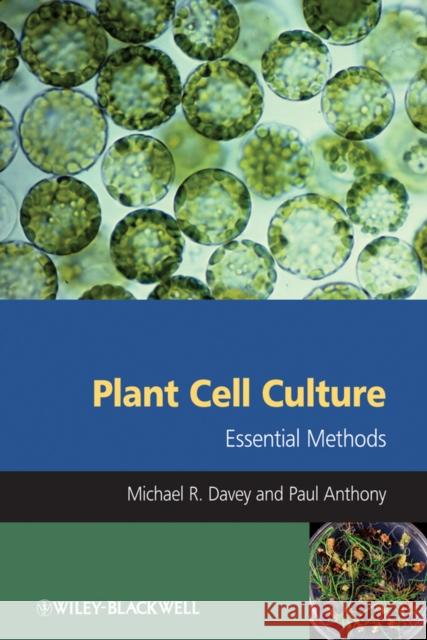
Plant Cell Culture Davey, Michael R. 9780470686485 John Wiley & Sons - książkaWidoczna okładka, to zdjęcie poglądowe, a rzeczywista szata graficzna może różnić się od prezentowanej.

Plant Cell Culture

ISBN-13: 9780470686485 / Angielski / Twarda / 2010 / 358 str.

Michael Davey; Paul Anthony; M. R. Davey
cena 441,32
(netto: 420,30 VAT:  5%)

Najniższa cena z 30 dni: 436,80
Termin realizacji zamówienia:
ok. 30 dni roboczych
Dostawa w 2026 r.

Darmowa dostawa!

The ability to culture cells is fundamental for mass propagation and as a baseline for the genetic manipulation of plant nuclei and organelles. The introduction to Plant Cell Culture: Essential Methods provides a general background to plant cell culture, including basic principles, technologies and laboratory practices that underpin the more detailed techniques described in subsequent chapters. Whilst each chapter provides a background to the topic area and methodology, a crucial aspect is the provision of detailed protocols with emphasis on trouble shooting, describing common problems and detailed advice for their avoidance. Plant Cell Culture: Essential Methods provides the reader with a concise overview of these techniques, including micropropagation, mutagenesis, cryopreservation, genetic and plastid transformation and somatic cell technologies. This book will be an essential addition to any plant science laboratory's bookshelf.

  • Highlights the best and most up-to-date techniques for working on plant cell culture
  • Explains clearly and precisely how to carry out selected techniques in addition to background information on the various approaches
  • Chapters are written by leading international authorities in the field and cover both well-known and new, tried and tested, methods for working in plant cell culture
An essential laboratory manual for students and early-career researchers.

Kategorie:
Nauka, Biologia i przyroda
Kategorie BISAC:
Science > Botanika
Science > Cytologia
Wydawca:
John Wiley & Sons
Język:
Angielski
ISBN-13:
9780470686485
Rok wydania:
2010
Ilość stron:
358
Waga:
0.73 kg
Wymiary:
24.89 x 17.27 x 2.54
Oprawa:
Twarda
Wolumenów:
01
Dodatkowe informacje:
Bibliografia
Wydanie ilustrowane

"In summary, this book is important for plant scientists as it thoroughly covers elementary technologies, providing the tools for comprehensive plant research." (The Quarterly Review of Biology, 1 September 2011)

"For anyone working in the area of plant tissue culture, micro–propagation or transformation this book is essential reading." (The Journal of Experimental Agriculture, 1 October 2011)

Preface.

Contributors.

1 Plant Micropropagation (Ivan Iliev, Alena Gajdosova, Gabriela Libiakova, Shri Mohan Jain).

1.1 Introduction.

1.2 Methods and approaches.

1.2.1 Explants and their surface disinfection.

1.2.2 Culture media and their preparation.

1.2.3 Stages of micropropagation.

1.2.4 Techniques of micropropagation.

1.3 Troubleshooting.

References.

2 Thin Cell Layers: The Technique (Jaime A. Teixeira da Silva and Michio Tanaka).

2.1 Introduction.

2.2 Methods and approaches.

2.2.1 TCL.

2.2.2 Choice of material: Cymbidium hybrid.

2.3 Troubleshooting.

2.3.1 General comments.

References.

3 Plant Regeneration Somatic Embryogenesis (Kim E. Nolan, Ray J. Rose).

3.1 Introduction.

3.2 Methods and approaches.

3.2.1 Selection of the cultivar and type of explant.

3.2.2 Culture media.

3.2.3 Preparation of culture media.

3.2.4 Sterilization of tissues and sterile technique.

3.2.5 Culture and growth of tissue.

3.2.6 Culture and induction of somatic embryos.

3.2.7 Embryo development.

3.2.8 Transfer to soil the final stage of regeneration.

3.3 Troubleshooting.

References.

4 Haploid Plants (Sant S. Bhojwani and Prem K. Dantu).

4.1 Introduction.

4.2 Methods and approaches.

4.2.1 Androgenesis.

4.2.2 Diploidization.

4.3 Troubleshooting.

References.

5 Embryo Rescue (Traud Winkelmann, Antje Doil, Sandra Reinhardt and Aloma Ewald).

5.1 Introduction.

5.2 Methods and approaches.

5.2.1 Identification of the time and type of barrier in hybridization.

5.2.2 Isolation of plant material after fertilization.

5.2.3 Culture conditions and media.

5.2.4 Confirmation of hybridity and ploidy.

5.2.5 Conditions for regeneration of embryos to plants.

5.3 Troubleshooting.

References.

6 In vitro Flowering and Seed Set: Acceleration of Generation Cycles (Sergio J. Ochatt and Rajbir S. Sangwan).

6.1 Introduction.

6.2 Methods and approaches.

6.2.1 Protein legumes [7].

6.2.2 Arabidopsis thaliana [13].

6.3 Troubleshooting.

References.

7 Induced Mutagenesis in Plants Using Physical and Chemical Agents (Chikelu Mba, Rownak Afza, Souleymane Bado and Shri Mohan Jain).

7.1 Introduction.

7.2 Methods and approaches.

7.2.1 Determination of the optimal doses of mutagens for inducing mutations.

7.3 Troubleshooting.

7.3.1 Factors influencing the outcome of mutagenesis using chemical mutagens.

7.3.2 Factors influencing the outcome of mutagenesis using physical mutagens.

7.3.3 Facts about induced mutations.

References.

8 Cryopreservation of Plant Germplasm (E.R. Joachim Keller and Angelika Senula).

8.1 Introduction.

8.2 Methods and approaches.

8.2.1 Main principles.

8.2.2 Slow (two–step) freezing.

8.2.3 Vitrification.

8.2.4 Encapsulation dehydration.

8.2.5 DMSO droplet freezing.

8.2.6 Combined methods.

8.2.7 Freezing of cold–hardened buds.

8.2.8 Freezing of orthodox seeds.

8.2.9 Freezing of pollen and spores.

8.3 Troubleshooting.

References.

9 Plant Protoplasts: Isolation, Culture and Plant Regeneration (Michael R. Davey, Paul Anthony, Deval Patel and J. Brian Power).

9.1 Introduction.

9.2 Methods and approaches.

9.2.1 Protoplast isolation.

9.2.2 Protoplast culture.

9.3 Troubleshooting.

References.

10 Protoplast Fusion Technology Somatic Hybridization and Cybridization (Jude W. Grosser, Milica Calovic and Eliezer S. Louzada).

10.1 Introduction.

10.2 General applications of somatic hybridization.

10.3 Methods and approaches.

10.4 Troubleshooting.

References.

11 Genetic Transformation Agrobacterium (Ian S. Curtis).

11.1 Introduction.

11.2 Methods and approaches.

11.2.1 Agrobacterium as a natural genetic engineer.

11.2.2 Vector systems for transformation.

11.2.3 Inoculation procedures.

11.3 Troubleshooting.

References.

12 Genetic Transformation Biolistics (Fredy Altpeter and Sukhpreet Sandhu).

12.1 Introduction.

12.2 Methods and approaches.

12.2.1 Biolistic technology.

12.2.2 Optimization of gene delivery parameters.

12.2.3 Target tissues.

12.2.4 Reporter gene assays.

12.2.5 Selection and plant regeneration.

12.3 Troubleshooting.

References.

13 Plastid Transformation (Bridget V. Hogg, Cilia L.C. Lelivelt, Aisling Dunne, Kim–Hong Nguyen and Jacqueline M. Nugent).

13.1 Introduction.

13.2 Methods and approaches.

13.2.1 Principles of plastid transformation.

13.2.2 Biolistic–mediated plastid transformation.

13.2.3 PEG–mediated plastid transformation.

13.2.4 Identification and characterization of transplastomic plants.

13.3 Troubleshooting.

13.3.1 Biolistic–mediated transformation.

13.3.2 PEG–mediated transformation.

References.

14 Molecular Characterization of Genetically Manipulated Plants (Cristiano Lacorte, Giovanni Vianna, Francisco J.L. Aragao and El´ bio L. Rech).

14.1 Introduction.

14.2 Methods and approaches.

14.2.1 Plant DNA extraction.

14.2.2 Polymerase chain reaction.

14.2.3 Southern blot technique.

14.2.4 Analysis of the integration site: inverse PCR (iPCR) and thermal asymmetric interlaced PCR (Tail–PCR).

14.3 Troubleshooting.

References.

15 Bioreactors (Spiridon Kintzios).

15.1 Introduction.

15.2 Methods and approaches.

15.2.1 Medium scale disposable or semidisposable airlift reactors.

15.2.2 The RITA temporary immersion reactor.

15.2.3 The LifeReactor.

15.2.4 Immobilized cell bioreactors.

15.2.5 Mini–bioreactors.

15.3 Troubleshooting.

References.

16 Secondary Products (Kexuan Tang, Lei Zhang, Junfeng Chen, Ying Xiao, Wansheng Chen and Xiaofen Sun).

16.1 Introduction.

16.2 Methods and approaches.

16.2.1 Plant cell cultures.

16.2.2 Scale–up and regulation of secondary metabolite production.

16.2.3 Detection of secondary products.

16.3 Troubleshooting.

References.

17 Plant Cell Culture Present and Future (Jim M. Dunwell).

17.1 Introduction.

17.2 Micropropagation.

17.3 Embryogenesis.

17.3.1 Background.

17.3.2 Commercial exploitation of somatic embryos.

17.3.3 Molecular aspects of somatic embryogenesis.

17.3.4 Microspore derived embryos.

17.4 Haploid methodology.

17.4.1 Haploids and their exploitation.

17.4.2 Induction of haploid plants.

17.4.3 Molecular aspects of haploid induction from microspores.

17.4.4 Ab initio zygotic–like embryogenesis from microspores.

17.5 Somaclonal variation.

17.6 Transgenic methods.

17.6.1 Background.

17.6.2 Regeneration and transformation techniques.

17.6.3 Chloroplast transformation.

17.6.4 Biopharming.

17.7 Protoplasts and somatic hybridization.

17.8 Bioreactors.

17.8.1 Production of plant products.

17.8.2 Production of pharmaceuticals.

17.8.3 Production of food ingredients.

17.8.4 Production of cosmetics.

17.8.5 Analytical methodology.

17.9 Cryopreservation.

17.10 Intellectual property and commercialization.

17.10.1 Background.

17.10.2 Sources of patent and other relevant information.

17.11 Conclusion.

References.

Index.

The ability to culture cells is fundamental for mass propagation and as a baseline for the genetic manipulation of plant nuclei and organelles. The introduction to Plant Cell Culture: Essential Methods provides a general background to plant cell culture, including basic principles, technologies and laboratory practices that underpin the more detailed techniques described in subsequent chapters. Whilst each chapter provides background to the topic area and methodology, a crucial aspect is the provision of detailed protocols with emphasis on trouble shooting, describing common problems and detailed advice for their avoidance. Plant Cell Culture: Essential Methods provides the reader with a concise overview of these techniques, including micropropagation, mutagenesis, cryopreservation, genetic and plastid transformation and somatic cell technologies. This book is an essential addition to any plant science laboratory′s bookshelf.

  • Highlights the best and most up–to–date techniques for working on plant cell culture
  • Explains clearly and precisely how to carry out selected techniques in addition to background information on the various approaches
  • Chapters are written by leading international authorities in the field and cover both well–known and new, tried and tested, methods for working in plant cell culture

An essential laboratory manual for students and early–career researchers.

Anthony, Paul Paul Anthony has been a professional woodworker si... więcej >


Udostępnij

Facebook - konto krainaksiazek.pl


Opinie o Krainaksiazek.pl na Opineo.pl

Partner Mybenefit

Krainaksiazek.pl w programie rzetelna firma Krainaksiaze.pl - płatności przez paypal

Czytaj nas na:

Facebook - krainaksiazek.pl
  • książki na zamówienie
  • granty
  • książka na prezent
  • kontakt
  • pomoc
  • opinie
  • regulamin
  • polityka prywatności

Zobacz:

  • Księgarnia czeska

  • Wydawnictwo Książkowe Klimaty

1997-2025 DolnySlask.com Agencja Internetowa

© 1997-2022 krainaksiazek.pl
     
KONTAKT | REGULAMIN | POLITYKA PRYWATNOŚCI | USTAWIENIA PRYWATNOŚCI
Zobacz: Księgarnia Czeska | Wydawnictwo Książkowe Klimaty | Mapa strony | Lista autorów
KrainaKsiazek.PL - Księgarnia Internetowa

Polityka prywatnosci - link
Krainaksiazek.pl - płatnośc Przelewy24
Przechowalnia Przechowalnia





