• Wyszukiwanie zaawansowane
  • Kategorie
  • Kategorie BISAC
  • Książki na zamówienie
  • Promocje
  • Granty
  • Książka na prezent
  • Opinie
  • Pomoc
  • Załóż konto
  • Zaloguj się

Planets, Stars and Stellar Systems: Volume 5: Galactic Structure and Stellar Populations » książka


zaloguj się | załóż konto
Logo Krainaksiazek.pl

koszyk

konto

szukaj
topmenu
Księgarnia internetowa
Szukaj
Książki na zamówienie
Promocje
Granty
Książka na prezent
Moje konto
Pomoc
 
 
Wyszukiwanie zaawansowane
Pusty koszyk
Bezpłatna dostawa dla zamówień powyżej 20 złBezpłatna dostawa dla zamówień powyżej 20 zł

Kategorie główne

• Nauka
 [2952079]
• Literatura piękna
 [1850969]

  więcej...
• Turystyka
 [71058]
• Informatyka
 [151066]
• Komiksy
 [35579]
• Encyklopedie
 [23181]
• Dziecięca
 [620496]
• Hobby
 [139036]
• AudioBooki
 [1646]
• Literatura faktu
 [228729]
• Muzyka CD
 [379]
• Słowniki
 [2932]
• Inne
 [445708]
• Kalendarze
 [1409]
• Podręczniki
 [164793]
• Poradniki
 [480107]
• Religia
 [510956]
• Czasopisma
 [511]
• Sport
 [61267]
• Sztuka
 [243299]
• CD, DVD, Video
 [3411]
• Technologie
 [219640]
• Zdrowie
 [100984]
• Książkowe Klimaty
 [124]
• Zabawki
 [2281]
• Puzzle, gry
 [3363]
• Literatura w języku ukraińskim
 [258]
• Art. papiernicze i szkolne
 [8020]
Kategorie szczegółowe BISAC

Planets, Stars and Stellar Systems: Volume 5: Galactic Structure and Stellar Populations

ISBN-13: 9789400756113 / Angielski / Twarda / 2013 / 1130 str.
Gerard F. Gilmore
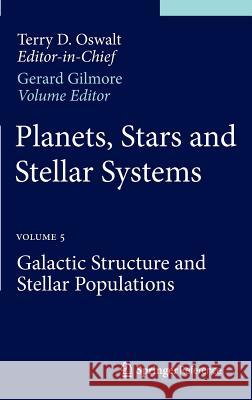
Planets, Stars and Stellar Systems: Volume 5: Galactic Structure and Stellar Populations Oswalt, Terry D. 9789400756113 Springer - książkaWidoczna okładka, to zdjęcie poglądowe, a rzeczywista szata graficzna może różnić się od prezentowanej.

Planets, Stars and Stellar Systems: Volume 5: Galactic Structure and Stellar Populations

ISBN-13: 9789400756113 / Angielski / Twarda / 2013 / 1130 str.

Gerard F. Gilmore
cena 2421,05
(netto: 2305,76 VAT:  5%)

Najniższa cena z 30 dni: 2313,32
Termin realizacji zamówienia:
ok. 22 dni roboczych
Dostawa w 2026 r.

Darmowa dostawa!

This is volume 5 of Planets, Stars and Stellar Systems, a six-volume compendium of modern astronomical research, covering subjects of key interest to the main fields of contemporary astronomy. This volume on "Galactic Structure and Stellar Populations," edited by Gerard F. Gilmore, presents accessible review chapters on Stellar Populations, Chemical Abundances as Population Tracers, Metal-Poor Stars and the Chemical Enrichment of the Universe, The Stellar and Sub-Stellar Initial Mass Function of Simple and Composite Populations, The Galactic Nucleus, The Galactic Bulge, Open Clusters and Their Role in the Galaxy, Star Counts and the Nature of Galactic Thick Disk, The Infrared Galaxy, Interstellar PAHs and Dust, Galactic Neutral Hydrogen, High-Velocity Clouds, Magnetic Fields in Galaxies, Astrophysics of Galactic Charged Cosmic Rays, Gamma-Ray Emission of Supernova Remnants and the Origin of Galactic Cosmic Rays, Galactic Distance Scales, Globular Cluster Dynamical Evolution, Dynamics of Disks and Warps, Mass Distribution and Rotation Curve in the Galaxy, Dark Matter in the GalacticDwarf Spheroidal Satellites, and History of Dark Matter in Galaxies. All chapters of the handbook were written by practicing professionals. They include sufficient background material and references to the current literature to allow readers to learn enough about a specialty within astronomy, astrophysics and cosmology to get started on their own practical research projects. In the spirit of the series Stars and Stellar Systems published by Chicago University Press in the 1960s and 1970s, each chapter of Planets, Stars and Stellar Systems can stand on its own as a fundamental review of its respective sub-discipline, and each volume can be used as a textbook or recommended reference work for advanced undergraduate or postgraduate courses. Advanced students and professional astronomers in their roles as both lecturers and researchers will welcome Planets, Stars and Stellar Systems as a comprehensive and pedagogical reference work on astronomy, astrophysics and cosmology.


Kategorie:
Nauka, Fizyka
Kategorie BISAC:
Science > Astronomia, przestrzeń i czas
Science > Astrofizyka
Science > Kosmologia i wszechświat
Wydawca:
Springer
Język:
Angielski
ISBN-13:
9789400756113
Rok wydania:
2013
Wydanie:
2013
Ilość stron:
1130
Waga:
1.75 kg
Wymiary:
23.37 x 16.0 x 6.35
Oprawa:
Twarda
Wolumenów:
01
Dodatkowe informacje:
Wydanie ilustrowane

1. Stellar Populations. 2. Chemical abundances as population tracers. 3. Metal-Poor Stars and the Chemical Enrichment of the Universe. 4. Stellar and Sub-Stellar Initial Mass Function of Simple and Composite Populations. 5.The Galactic Nucleus. 6. The Galactic Bulge. 7. Open Clusters and their Role in the Galaxy. 8.  Star Counts and the Nature of Galactic Thick Disk. 9. The Infrared Galaxy. 10. Interstellar PAHs and Dust. 11. Galactic Neutral Hydrogen. 12. High-Velocity Clouds. 13. Magnetic Fields in Galaxies. 14. Astrophysics of Galactic Charged Cosmic Rays. 15.  Gamma-Ray Emission of Supernova Remnants and the Origin of Galactic Cosmic Rays. 16. Galactic Distance Scales. 17. Globular Cluster Dynamical Evolution. 18. Dynamics of Disks and Warps. 19. Mass Distribution and Rotation Curve in the Galaxy. 20. Dark Matter in the Galactic Dwarf Spheroidal Satellites. 21.  History of Dark Matter in Galaxies.

Dr. Terry D. Oswalt, an astronomer, is Head of the Department of Physics and Space Sciences and Associate Provost for Research at Florida Institute of Technology. He has also served the U.S. National Science Foundation as program officer for Stellar Astronomy and Astrophysics. He earned his Ph.D. in Astronomy at the Ohio State University specializing in photoelectric and spectroscopic studies of binary star systems, late stages of stellar evolution, minor planets, and comets.

Since coming to Florida Tech in 1982, Dr. Oswalt has taught astronomy and physics, while continuing his primary research interest in studies of collapsed stars called white dwarfs. Because such objects are very faint, this work often takes him to Kitt Peak National Observatory in Arizona, Cerro Tololo Inter-American Observatory in Chile, and Mauna Kea Observatory in Hawaii, where telescopes as large as 10-meters are available on a competitive basis to scientists.

Oswalt is the founding Chairman of the Southeast Association for Research in Astronomy, a consortium of 10 universities which operates an automated 1-meter telescope at Kitt Peak National Observatory near Tucson, Arizona. In 2007 SARA will assume operations of a similar telescope at Cerro Tololo Interamerican Observatory in Chile. Oswalt also has been director of the SARA summer internship program, which brings undergraduate students from around the U.S. to the SARA facility at Kitt Peak each summer to do research in astronomy. Dr. Oswalt has written over 100 scientific articles and edits the I.A.P.P.P. Communications, an international journal for advanced amateurs, students, teachers and professionals who collaborate on research and educational projects in astronomy. He is also the editor for a three-volume set of Springer books, "The Future of Small Telescopes in the New Millennium".

Gerard Gilmore is Professor of Experimental Philosophy at the Institute of Astronomy, Cambridge University, UK. He completed his PhD in New Zealand, then worked for five years at the Royal Observatory Edinburgh on the first digitisation of the Sky Survey photographic plates being obtained at the newly-commissioned UK Schmidt Telescope, before moving to Cambridge.

He is a member of a very large number of local, national and international review, policy and assessment committees, has been UK Scientific Representative on the Council of the European Southern Observatory, is Scientific Coordinator of OPTICON, the EC Optical-Infrared Coordination Coordination Network for Astronomy, is UK Principal Investigator for the ESA Gaia mission, and is Co-PI of the Gaia-ESO Public Spectroscopic Survey.

The early photographic star count studies led to significantly improved determination of the low-luminosity stellar mass function, with implications for the possible significance of baryonic dark matter. These star-count studies independently discovered the Galactic Thick Disk.
Adding kinematics and spectroscopy to these star counts made possible an improved determination of the density and distribution of Dark Matter near the Sun, with a result which remains the accepted value 30 years later.
Later studies involved determination of the chemical abundance distributions and kinematics in the various Stellar Populations, and their interpretation. Discovery of the Sagittarius dwarf galaxy, the "smoking gun"  evidence for ongoing Galactic assembly, became the beginnings of many studies of Galactic satellite galaxies, their implications for early galaxy formation, and the spatial distribution of Cold Dark Matter. These studies continue, with some 600 publications to date.


Udostępnij

Facebook - konto krainaksiazek.pl


Opinie o Krainaksiazek.pl na Opineo.pl

Partner Mybenefit

Krainaksiazek.pl w programie rzetelna firma Krainaksiaze.pl - płatności przez paypal

Czytaj nas na:

Facebook - krainaksiazek.pl
  • książki na zamówienie
  • granty
  • książka na prezent
  • kontakt
  • pomoc
  • opinie
  • regulamin
  • polityka prywatności

Zobacz:

  • Księgarnia czeska

  • Wydawnictwo Książkowe Klimaty

1997-2025 DolnySlask.com Agencja Internetowa

© 1997-2022 krainaksiazek.pl
     
KONTAKT | REGULAMIN | POLITYKA PRYWATNOŚCI | USTAWIENIA PRYWATNOŚCI
Zobacz: Księgarnia Czeska | Wydawnictwo Książkowe Klimaty | Mapa strony | Lista autorów
KrainaKsiazek.PL - Księgarnia Internetowa

Polityka prywatnosci - link
Krainaksiazek.pl - płatnośc Przelewy24
Przechowalnia Przechowalnia






