• Wyszukiwanie zaawansowane
  • Kategorie
  • Kategorie BISAC
  • Książki na zamówienie
  • Promocje
  • Granty
  • Książka na prezent
  • Opinie
  • Pomoc
  • Załóż konto
  • Zaloguj się

Piety in Pieces: How Medieval Readers Customized their Manuscripts » książka


zaloguj się | załóż konto
Logo Krainaksiazek.pl

koszyk

konto

szukaj
topmenu
Księgarnia internetowa
Szukaj
Książki na zamówienie
Promocje
Granty
Książka na prezent
Moje konto
Pomoc
 
 
Wyszukiwanie zaawansowane
Pusty koszyk
Bezpłatna dostawa dla zamówień powyżej 20 złBezpłatna dostawa dla zamówień powyżej 20 zł

Kategorie główne

• Nauka
 [2950560]
• Literatura piękna
 [1849509]

  więcej...
• Turystyka
 [71097]
• Informatyka
 [151150]
• Komiksy
 [35848]
• Encyklopedie
 [23178]
• Dziecięca
 [617388]
• Hobby
 [139064]
• AudioBooki
 [1657]
• Literatura faktu
 [228597]
• Muzyka CD
 [383]
• Słowniki
 [2855]
• Inne
 [445295]
• Kalendarze
 [1464]
• Podręczniki
 [167547]
• Poradniki
 [480102]
• Religia
 [510749]
• Czasopisma
 [516]
• Sport
 [61293]
• Sztuka
 [243352]
• CD, DVD, Video
 [3414]
• Technologie
 [219456]
• Zdrowie
 [101002]
• Książkowe Klimaty
 [124]
• Zabawki
 [2311]
• Puzzle, gry
 [3459]
• Literatura w języku ukraińskim
 [254]
• Art. papiernicze i szkolne
 [8079]
Kategorie szczegółowe BISAC

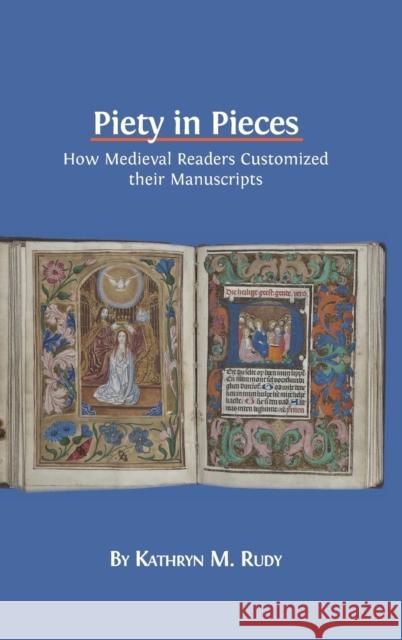
Piety in Pieces: How Medieval Readers Customized their Manuscripts

ISBN-13: 9781783742349 / Angielski / Twarda / 2016 / 414 str.
Kathryn M Rudy
Piety in Pieces: How Medieval Readers Customized their Manuscripts Kathryn M Rudy 9781783742349 Open Book Publishers - książkaWidoczna okładka, to zdjęcie poglądowe, a rzeczywista szata graficzna może różnić się od prezentowanej.

Piety in Pieces: How Medieval Readers Customized their Manuscripts

ISBN-13: 9781783742349 / Angielski / Twarda / 2016 / 414 str.

Kathryn M Rudy
cena 276,50
(netto: 263,33 VAT:  5%)

Najniższa cena z 30 dni: 255,06
Termin realizacji zamówienia:
ok. 16-18 dni roboczych
Dostawa w 2026 r.

Darmowa dostawa!

Medieval manuscripts resisted obsolescence. Made by highly specialised craftspeople (scribes, illuminators, book binders) with labour-intensive processes using exclusive and sometimes exotic materials (parchment made from dozens or hundreds of skins, inks and paints made from prized minerals, animals and plants), books were expensive and built to last. They usually outlived their owners. Rather than discard them when they were superseded, book owners found ways to update, amend and upcycle books or book parts.
These activities accelerated in the fifteenth century. Most manuscripts made before 1390 were bespoke and made for a particular client, but those made after 1390 (especially books of hours) were increasingly made for an open market, in which the producer was not in direct contact with the buyer. Increased efficiency led to more generic products, which owners were motivated to personalise. It also led to more blank parchment in the book, for example, the backs of inserted miniatures and the blanks ends of textual components. Book buyers of the late fourteenth and throughout the fifteenth century still held onto the old connotations of manuscripts--that they were custom-made luxury items--even when the production had become impersonal.
Owners consequently purchased books made for an open market and then personalised them, filling in the blank spaces, and even adding more components later. This would give them an affordable product, but one that still smacked of luxury and met their individual needs. They kept older books in circulation by amending them, attached items to generic books to make them more relevant and valuable, and added new prayers with escalating indulgences as the culture of salvation shifted.
Rudy considers ways in which book owners adjusted the contents of their books from the simplest (add a marginal note, sew in a curtain) to the most complex (take the book apart, embellish the components with painted decoration, add more quires of parchment). By making sometimes extreme adjustments, book owners kept their books fashionable and emotionally relevant. This study explores the intersection of codicology and human desire.
Rudy shows how increased modularisation of book making led to more standardisation but also to more opportunities for personalisation. She asks: What properties did parchment manuscripts have that printed books lacked? What are the interrelationships among technology, efficiency, skill loss and standardisation?


Kategorie:
Nauka, Literaturoznawstwo
Kategorie BISAC:
Literary Criticism > Books & Reading
Literary Criticism > Medieval
Literary Criticism > Subjects & Themes - Religion
Wydawca:
Open Book Publishers
Język:
Angielski
ISBN-13:
9781783742349
Rok wydania:
2016
Dostępne języki:
Angielski
Wydanie:
Hardback
Ilość stron:
414
Waga:
0.96 kg
Wymiary:
23.423.4 x 15.623.4 x 15.6 x 3
Oprawa:
Twarda
Wolumenów:
01


Udostępnij

Facebook - konto krainaksiazek.pl


Opinie o Krainaksiazek.pl na Opineo.pl

Partner Mybenefit

Krainaksiazek.pl w programie rzetelna firma Krainaksiaze.pl - płatności przez paypal

Czytaj nas na:

Facebook - krainaksiazek.pl
  • książki na zamówienie
  • granty
  • książka na prezent
  • kontakt
  • pomoc
  • opinie
  • regulamin
  • polityka prywatności

Zobacz:

  • Księgarnia czeska

  • Wydawnictwo Książkowe Klimaty

1997-2025 DolnySlask.com Agencja Internetowa

© 1997-2022 krainaksiazek.pl
     
KONTAKT | REGULAMIN | POLITYKA PRYWATNOŚCI | USTAWIENIA PRYWATNOŚCI
Zobacz: Księgarnia Czeska | Wydawnictwo Książkowe Klimaty | Mapa strony | Lista autorów
KrainaKsiazek.PL - Księgarnia Internetowa

Polityka prywatnosci - link
Krainaksiazek.pl - płatnośc Przelewy24
Przechowalnia Przechowalnia





