• Wyszukiwanie zaawansowane
  • Kategorie
  • Kategorie BISAC
  • Książki na zamówienie
  • Promocje
  • Granty
  • Książka na prezent
  • Opinie
  • Pomoc
  • Załóż konto
  • Zaloguj się

Phytoremediation: Management of Environmental Contaminants, Volume 7 » książka


zaloguj się | załóż konto
Logo Krainaksiazek.pl

koszyk

konto

szukaj
topmenu
Księgarnia internetowa
Szukaj
Książki na zamówienie
Promocje
Granty
Książka na prezent
Moje konto
Pomoc
 
 
Wyszukiwanie zaawansowane
Pusty koszyk
Bezpłatna dostawa dla zamówień powyżej 20 złBezpłatna dostawa dla zamówień powyżej 20 zł

Kategorie główne

• Nauka
 [2949965]
• Literatura piękna
 [1857847]

  więcej...
• Turystyka
 [70818]
• Informatyka
 [151303]
• Komiksy
 [35733]
• Encyklopedie
 [23180]
• Dziecięca
 [617748]
• Hobby
 [139972]
• AudioBooki
 [1650]
• Literatura faktu
 [228361]
• Muzyka CD
 [398]
• Słowniki
 [2862]
• Inne
 [444732]
• Kalendarze
 [1620]
• Podręczniki
 [167233]
• Poradniki
 [482388]
• Religia
 [509867]
• Czasopisma
 [533]
• Sport
 [61361]
• Sztuka
 [243125]
• CD, DVD, Video
 [3451]
• Technologie
 [219309]
• Zdrowie
 [101347]
• Książkowe Klimaty
 [123]
• Zabawki
 [2362]
• Puzzle, gry
 [3791]
• Literatura w języku ukraińskim
 [253]
• Art. papiernicze i szkolne
 [7933]
Kategorie szczegółowe BISAC

Phytoremediation: Management of Environmental Contaminants, Volume 7

ISBN-13: 9783031179877 / Angielski / Twarda / 2023 / 611 str.
Lee Newman; Abid Ali Ansari; Sarvajeet Singh Gill
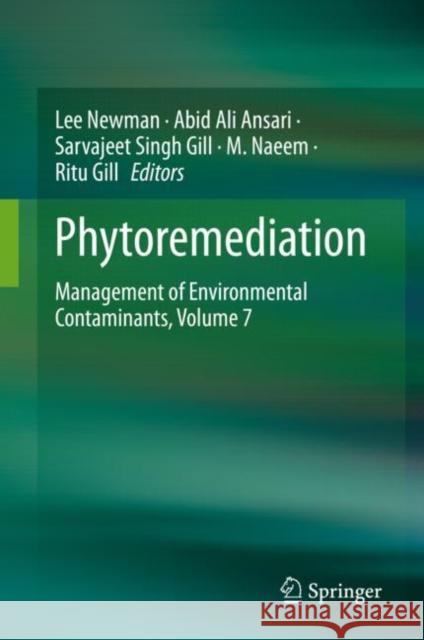
Phytoremediation: Management of Environmental Contaminants, Volume 7 Lee Newman Abid Ali Ansari Sarvajeet Singh Gill 9783031179877 Springer - książkaWidoczna okładka, to zdjęcie poglądowe, a rzeczywista szata graficzna może różnić się od prezentowanej.

Phytoremediation: Management of Environmental Contaminants, Volume 7

ISBN-13: 9783031179877 / Angielski / Twarda / 2023 / 611 str.

Lee Newman; Abid Ali Ansari; Sarvajeet Singh Gill
cena 685,93 zł
(netto: 653,27 VAT:  5%)

Najniższa cena z 30 dni: 655,41 zł
Termin realizacji zamówienia:
ok. 22 dni roboczych
Bez gwarancji dostawy przed świętami

Darmowa dostawa!
inne wydania

The accumulation of large amounts of contaminants occurs in the environment due to industrialization and various other anthropogenic activities. Contaminants ultimately affect human health worldwide. Organic, inorganic, and radioactive substances are the prevalent forms of environmental contaminants and their complete remediation in soils and sediments is rather a difficult task. Concerns of their toxicities led to the emphasis on development of effective techniques to assess the presence and mobility of contaminants in air, water, and soil. Furthermore, the ever-increasing concentration of toxic pollutants in the environment is considered a serious threat to plant, animal, human, and environmental health.Many technologies are in use to clean and eliminate hazardous contaminants from the environment; however, these technologies can be costly, labor intensive, and often distressing to the general public. Phytoremediation is a simple, cost effective, environmentally friendly and fast-emerging new technology for eliminating toxic contaminants from different environments. Phytoremediation refers to the natural ability of certain plants and their associated microbiome (including hyper-accumulators or bio-accumulators) to remove, degrade, or render contaminants harmless. Through this technique, certain species of plants flourish by accumulating contaminants present in the environment. The unique and selective uptake capabilities of plant root and shoot systems, effective translocation, bioaccumulation, and contaminant degradation capabilities of the accumulator plants are utilized in phytoremediation techniques. Phytotechnologies involving the use of plants for contaminant removal gained importance during the last two decades and phytoremediation technology became an effective tool for environmental detoxification because of plants ability to accumulate the contaminants at very high concentrations.Phytoremediation strategies can remove, degrade, or stabilize inorganic and organic contaminants entering a multitude of ecosystems using green plants and their associated microbial communities. The development and use of phytotechnologies continues to move forward at a steady pace. Researchers recognize the potential of phytoremediation to offer a green, cost effective, eco-friendly and feasible application to address some of the world’s many environmental challenges. This book provides significant information to add to the previous volumes published on the topic and can serve as the foundation for the development of new applications that feature the integration of modern research discoveries into new methods to remediate contaminated ecosystems. Moreover, this volume brings recent and established knowledge on different aspects of phytoremediation and nano-phytoremediation, providing this information in a single source that offers a cutting-edge synthesis of scientific and experiential knowledge on polluted environments that is useful for policy makers, practitioners and scientists, and engineers.Phytoremediation: Management of Environmental Contaminants, Volume 7highlights the various prospects that are involved in current global phytoremediation research. This book delivers a content-rich source to the reader and can act as a platform for further research studies. It should meet the needs of all researchers working in, or have an interest in this particular field.


The accumulation of large amounts of contaminants occurs in the environment due to industrialization and various other anthropogenic activities. Contaminants ultimately affect human health worldwide. Organic, inorganic, and radioactive substances are the prevalent forms of environmental contaminants and their complete remediation in soils and sediments is rather a difficult task. Concerns of their toxicities led to the emphasis on development of effective techniques to assess the presence and mobility of contaminants in air, water, and soil. Furthermore, the ever-increasing concentration of toxic pollutants in the environment is considered a serious threat to plant, animal, human, and environmental health.

Many technologies are in use to clean and eliminate hazardous contaminants from the environment; however, these technologies can be costly, labor intensive, and often distressing to the general public. Phytoremediation is a simple, cost effective, environmentally friendly and fast-emerging new technology for eliminating toxic contaminants from different environments. Phytoremediation refers to the natural ability of certain plants and their associated microbiome (including hyper-accumulators or bio-accumulators) to remove, degrade, or render contaminants harmless. Through this technique, certain species of plants flourish by accumulating contaminants present in the environment. The unique and selective uptake capabilities of plant root and shoot systems, effective translocation, bioaccumulation, and contaminant degradation capabilities of the accumulator plants are utilized in phytoremediation techniques. Phytotechnologies involving the use of plants for contaminant removal gained importance during the last two decades and phytoremediation technology became an effective tool for environmental detoxification because of plants ability to accumulate the contaminants at very high concentrations.

Phytoremediation strategies can remove, degrade, or stabilize inorganic and organic contaminants entering a multitude of ecosystems using green plants and their associated microbial communities. The development and use of phytotechnologies continues to move forward at a steady pace. Researchers recognize the potential of phytoremediation to offer a green, cost effective, eco-friendly and feasible application to address some of the world’s many environmental challenges. This book provides significant information to add to the previous volumes published on the topic and can serve as the foundation for the development of new applications that feature the integration of modern research discoveries into new methods to remediate contaminated ecosystems. Moreover, this volume brings recent and established knowledge on different aspects of phytoremediation and nano-phytoremediation, providing this information in a single source that offers a cutting-edge synthesis of scientific and experiential knowledge on polluted environments that is useful for policy makers, practitioners and scientists, and engineers.

Phytoremediation: Management of Environmental Contaminants, Volume 7 highlights the various prospects that are involved in current global phytoremediation research. This book delivers a content-rich source to the reader and can act as a platform for further research studies. It should meet the needs of all researchers working in, or have an interest in this particular field.

Kategorie:
Nauka, Biologia i przyroda
Kategorie BISAC:
Science > Biologia i przyroda
Technology & Engineering > Agriculture - General
Science > Botanika
Wydawca:
Springer
Język:
Angielski
ISBN-13:
9783031179877
Rok wydania:
2023
Dostępne języki:
Ilość stron:
611
Oprawa:
Twarda
Dodatkowe informacje:
Wydanie ilustrowane

SECTION-1: OVERVIEW OF CURRENT PHYTOTECHNOLOGY & PHYTOREMEDIATION APPLICATIONS


Chapter 1. Phytoremediation and Management of Environmental Contaminants: An Overview

Ritu Gill a, M. Naeem b, AA Ansari c, Sarvajeet Singh Gill a,*


a Centre for Biotechnology, Maharshi Dayanand University, Rohtak, 124 001, Haryana

b Plant Physiology Section, Department of Botany, Aligarh Muslim University, Aligarh 202 002, UP, India

c Department of Biology, Faculty of Science, University of Tabuk, Tabuk, Saudi Arabia

* Corresponding author.

E-mail address: ssgill14@mdurohtak.ac.in (S.S. Gill).


Chapter 2. Phytoremediation and Contaminants

Alessia Corami 

1MIUR, Ministry of University and Research, Rome, Italy

*Corresponding author’s email: alessiacorami@gmail.com


Chapter 3. Tentative Title: Phytoremediation by Wild Weeds: A Natural Asset

Sabreen Bashir1, Madhuri Girdhar1, Vikram Srivastava2, Anand Mohan*1

1School of Bioengineering and Biosciences, Lovely Professional, University, Phagwara Punjab, India,

2Department of Biomedical Sciences Iowa State University Ia,  50010, USA

E-mail: sabreenbashir@gmail.com  

madhurigirdhar007@gmail.com

vikrams@iastate.edu

*Corresponding author’s email: anandmohan77@gmail.com

Chapter 4. Phytoremediation: Sustainable and Organic Technology for the Removal of Heavy Metals Contaminants  1G. Subbulakshmi, 2R.Thiruneelakandan, 3G.Padma Priya

1&3Department of chemistry, Jain University, Bangalore

2Department of Chemistry University College of Engineering Bit Campus, Anna University Tiruchirappalli

*Corresponding author’s email: g.subbulakshmi@jainuniversity.ac.in


Chapter 5. Structure and Function of Heavy Metal Transporting ATPases in Brassica species

Abdul Razaque Memon* and Nuriye Meraklı

Department of Molecular Biology and Genetics, Arts and Science Faculty, Usak University, Usak, Turkey

*Corresponding author’s email: armemon@usak.edu.tr; abdulrezzak.memon@gmail.com

Chapter 6. Bioformulations for Sustainable Phytoremediation of Heavy Metal Contaminated Soil

Sana Ashraf1*, Sajid Rashid Ahmad1, Qasim Ali2, Muhammad Bilal Shakoor1, Humaira Nawaz1, Sobia Ashraf3, Hina Chaudhry4, Zahra Majid1

1College of Earth and Environmental Sciences, Quaid-e-Azam Campus, University of the Punjab Lahore, Pakistan

2Institute of Soil & Environmental Sciences, University of Agriculture Faisalabad, Pakistan

3Department of Environmental Sciences & Engineering, Government College university Faisalabad, Pakistan

4Department of Environmental Sciences, Lahore College for Women University

*Corresponding author’s email: sanaashrafenv@gmail.com


SECTION-2: PLANNING AND ENGINEERING APPLICATIONS TO PHYTOREMEDIATION


Chapter 7. Application of Electroremediation Coupled with Phytoremediation Techniques for the Removal of Trace Metals in Sewage Sludge

A. Ram Sailesh1, Sk. Riyazuddin2, K. Suresh Kumar3, Anindita Chakraborthy4 and N. Srinivas5*

1,2,3,5 – Department of Environmental Science, Institute of Science, GITAM (Deemed to be University, Visakhapatnam.

4 – UGC DAE, Consortium for Scientific Research, Kolkata Centre, Kolkata.

*Corresponding author’s email: N. Srinivas (snamudur@gitam.edu)


SECTION-3: PHYTOREMEDIATION APPLICATIONS FOR CONTAMINATED WATER AND SOIL


Chapter 8. Phytoremediation of Heavy Metals by Trapa natans in Hokersar Wetland, a Ramsar site of Kashmir Himalayas

Syed Shakeel Ahmad1*, Zafar A. Reshi1, Manzoor A Shah1 and Irfan Rashid1, Roshan Ara

Department of Botany, University of Kashmir, Srinagar -190 006, J& K, India

*Corresponding author’s email: ssahmad900@gmail.com


SECTION-4: PHYTOREMEDIATION USING MICROBIAL ASSEMBLAGES IN WATER AND SOIL


Chapter 9. Spinoffs of Phyoremediation and/or Microorganisms Consortium in Soil, Sediment and Water Treatments and Improvement: Study of Specific Cases and Its Socioeconomic and Environmental Advantages

Hayfa Rajhi1* and Anouar Bardi2

1Department of Molecular Biology, Universidad Autonoma de Madrid, 28049 Madrid, Spain. Laboratory of Applied Microbiology.

2Higher Institute of Management of Gabès, Gabès, Rue Jilani Habib, Gabès 6002, Tunisia.

*Corresponding author: E-mail: hayfa_rajhi@yahoo.fr


Chapter 10. Applying Amendments for Metal(loid) Phytostabilization: Effects on Biogeochemical and Microbiological Processes in Soils

Lukas Trakal and Manhattan LEBRUN*

Affiliation: Czech University of Life Sciences, Department of Environmental Geosciences, Prague, Czechia

*Corresponding author’s email: manhattan.lebrun13@gmail.com


Chapter 11. Tentative Title: Rhizodegradation: the Plant Root Exudate and Microbial Interactions

Kwang Mo Yang, Toemthip Poolpak and Prayad Pokethitiyook*

Affiliation: Bioresources and Environmental Biology (BE) (international program), Department of Biology, Faculty of Science, Mahidol University, 272 Rama VI Road, Phayathai, Ratchathewi, Bangkok 10400, Thailand

*Corresponding author’s email: prayad.pok@mahidol.ac.th


Chapter 12. Role of Microorganisms in the Remediation of Toxic Metals from Contaminated Soil

Amtul Bari Tabinda, Ajwa Tahir, Maryam Dogar, Abdullah Yasar, Rizwan Rasheed, Muhammad Afzaal

Affiliation: Sustainable Development Study Centre, GC University, Katchery Road, Lahore 54000, Pakistan

*Corresponding author’s email: amtulbaritabinda@gcu.edu.pk


SECTION-5: PHYTOREMEDIATION OF ORGANIC AND INORGANIC CONTAMINANTS AND ORGANIC-INORGANIC MIXTURES


Chapter 13. Prospects for the Use of Sorghum bicolor for Phytoremediation of Soils Contaminated with Heavy Metals in Temperate Climates

Gorelova S.V.1*, Kolbas A.P.2, Muratova A.Yu.3, Frontasyeva M.V.4, Zinicovscaia I.4, Okina O.I.5

1 Tula State University, Natural Science Institute, Tula, Russia,

2 Brest State A.S. Pushkin University. Brest, Belarus

3 Institute of Biochemistry and Physiology of Plants and Microorganisms,

Russian Academy of Sciences, Saratov, Russia

4Joint Institute for Nuclear Research, Dubna, Moscow region, Russia

5 Geological Institute of the Russian Academy of Sciences, Moscow, Russia

*Corresponding author’s email: salix35@gmail.com

Chapter 14. Comparative Effect of Cadmium on Germination and Early Growth of Two Halophytes: Atriplex halimus L. and A. nummularia Lindl. for Phytoremediation Applications

Bouzid Nedjimi
Affiliation: Laboratory of Exploration and Valorization of Steppe Ecosystem, Faculty of Science of Nature and Life, University of Djelfa, Cité Aîn Chih, P.O. Box 3117 Djelfa 17000, Algeria
*Corresponding author’s email: bnedjimi@yahoo.fr


Chapter 15. Phytoremediation of Soils Polluted by Heavy Metals and Metalloids: Recent Case Studies in Latin America Sabrina N. Hernández Guiancea,b, I. Daniel Coriaa, Ana Faggic, Gabriel Basílicod*

a.    Universidad del Centro Educativo Latinoamericano, Rosario, Argentina.

b.   Instituto de Física de Rosario, Consejo Nacional de Investigaciones Científicas y Técnicas (CONICET), Rosario, Argentina

c.    Universidad de Flores, Facultad de Ingeniería, Laboratorio de Bioindicadores y Remediación, Ciudad Autónoma de Buenos Aires, Argentina

d.   Museo Argentino de Ciencia Naturales, CONICET, Ciudad Autónoma de Buenos Aires, Argentina.

**Corresponding author’s email: gbasilico@conicet.gov.ar; gabrielomarbasilico@hotmail.com


SECTION-6: NANOTECHNOLOGY IN MANAGEMENT OF ENVIRONMENTAL CONTAMINANTS


Chapter 16. Nano-phytoremediation and its Applications

Trinath Biswal
Affiliation: Chemistry department, VSSUT, Burla-768018, Sambalpur district, Odisha, India

*Corresponding author’s email: biswaltrinath@gmail.com


Chapter 17. Potentials and Frontiers of Nanotechnology for Phytoremediation

*Garima Pandey a, Prashant Singhb, Bhaskara Nand Pant,b  Sangeeta Bajpai c

aSRM-Institute of Science and Technology, Delhi-NCR Campus, Modinagar, Ghaziabad, 201204, (UP) India

bDepartment of Chemistry, Atma Ram Sanatan Dharma College, University of Delhi, New Delhi-110021

cAMITY School of Applied Sciences, Amity University, Lucknow, 226010, (UP) India

*Corresponding author’s email: garimapandey.pandey8@gmail.com


Chapter 18. Nanotechnology in the Management of Environmental Contaminants

Amara Saeed1, Haram Javed1, Rida Nawaz1, Sobia Riaz1, Zia Ur Rahman Farooqi1*, Ayesha Abdul Qadir1 and Humaira Nawaz2

1Institute of Soil and Environmental Sciences, University of Agriculture Faisalabad-38040, Pakistan

2College of Earth and Environmental Sciences, University of the Punjab, Lahore-54590, Pakistan

*Corresponding author’s email: ziaa2600@gmail.com

Chapter 19. Nanotechnologies and Phytoremediation: Pros and Cons

Alessia Corami 

Affiliation: 1MIUR, Ministry of University and Research, Rome, Italy

*Corresponding author’s email: alessiacorami@gmail.com

Chapter 20. Nanotechnology in Phytoremediation – Applications and Future

Tayyaba Yasmin1, Sameen Ruqia Imadi2, Alvina Gul3

1.COMSATS University Islamabad, Islamabad, Pakistan

2.Commission on Science and Technology for Sustainable Development in the South (COMSATS) Secretariat, Islamabad, Pakistan

3.Atta ur Rahman School of Applied Biosciences (ASAB), National University of Sciences and Technology (NUST), Islamabad, Pakistan

*Corresponding author’s email: alvina_gul@yahoo.com


Chapter 21. Nano-phytoremediation: The Successful Combination of Nanotechnology and Phytoremediation

Melina Borges Teixeira Zanatta1#, Maycon Lucas de Oliveira2#, Lilian Rodrigues Rosa Souza2*

1Environmental Studies Center (CEA), São Paulo State University, UNESP, Rio Claro, SP 13506-900, Brazil

2Department of Chemistry, FFCLRP-USP, University of São Paulo - USP, Ribeirão Preto, SP, Brazil

3Department of Chemistry, University of São Paulo, Av. Bandeirantes 3900, Monte Alegre, Ribeirão Preto, SP, 14040-901, Brazil

**Corresponding author’s email: lilianrosa@alumni.usp.br

Chapter 22. Nanobioremediation and Its Application for Sustainable Environment

Trinath Biswal
Affiliation: Chemistry department, VSSUT, Burla-768018, Sambalpur district, Odisha, India

*Corresponding author’s email: biswaltrinath@gmail.com


Chapter 23. Nanoparticles Assisted Phytoremediation of Polluted Soils: Potential Application and Challenges

Muhammad Umair1, Muhammad Zia-ur-Rehman1* Muhammad Akram Qazi2 Ali Rizwan1, Muhammad Javid Qamar3, and Sehar Razzaq4

1          Institute of Soil and Environmental Sciences, University of Agriculture, Faisalabad, 38040, Pakistan

2          Soil Fertility Research Institute, Lahore, Punjab

3          Soil and Water Testing Laboratory, Bahawalpur

4          State Key Laboratory of Eco-hydraulics in Northwest Arid Region of China, Xi’an University of Technology, Xi’an 710048, China

*          Corresponding author’s email: ziasindhu1399@gmail.com


Chapter 24. A Systematic Analysis of Nanotechnology Application in Water Contaminations Removal

Madhulika Bhati1, Yogesh Nagar2, and Raghav Sharma2

Affiliation: 1Head - Energy, Environment and Sustainability Division, AcSIR, Dr. K.S. Krishnan Marg, Pusa, New Delhi-110012.

2CSIR-National Institute of Science Communication and Policy Research (NIScPR), Dr. K.S. Krishnan Marg, Pusa, New Delhi-110012.

*Corresponding author’s email: madhulikabhati@nistads.res.in  


Chapter 25. Nanoparticles-based Management of Cadmium Toxicity in Crop Plants

Ogunkunle COab*, Jimoh MAb, Adegboye EFa, Rufai ABb, Olatunji, OAb, Okunlola, GOb, Adenipekun COc

a Environmental Botany unit, Department of Plant Biology, P. M. B. 1515, University of Ilorin, Ilorin 240003, Nigeria.

b Department of Plant Biology, Osun State University, 210001 Osogbo, Nigeria

c Plant Physiology Unit, Department of Botany, University of Ibadan, Ibadan, Nigeria


* *Corresponding author’s email: ogunkunle.co@unilorin.edu.ng; seyeogunkunle@gmail.com


Chapter 26. Heavy Metal Remediation by Nanotechnology

Shafia Maryam, Alvina Gul

Affiliation: Atta ur Rahman School of Applied Biosciences (ASAB), National University of Sciences and Technology (NUST), Islamabad, Pakistan


*Corresponding author’s email: alvina_gul@asab.nust.edu.pk; alvina_gul@yahoo.com


Chapter 27. Phytoremediation and Management of Environmental Contaminants: Conclusion and Future Perspectives

Ritu Gill a, M. Naeem b, AA Ansari c, Sarvajeet Singh Gill a,*

a Centre for Biotechnology, Maharshi Dayanand University, Rohtak, 124 001, Haryana

b Plant Physiology Section, Department of Botany, Aligarh Muslim University, Aligarh 202 002, UP, India

c Department of Biology, Faculty of Science, University of Tabuk, Tabuk, Saudi Arabia

* Corresponding author.

E-mail address: ssgill14@mdurohtak.ac.in (S.S. Gill).


Dr. ​Lee Newman is an Associate Professor in the Department of Environmental and Forest Biology, State University of New York. Dr. Lee’s primary research interests are in phytoremediation and interactions between plants and endophytic bacteria. She has published a number of refereed journal articles, book chapters, books, and technical reports.


Dr. Abid A. Ansari is assistant professor in the Department of Biology, Faculty of Science, University of Tabuk, Saudi Arabia. Dr. Ansari’s research work is concerned with phytoremediation and eutrophication. Dr. Ansari has to his credit a number of research articles of national and international repute, eleven edited books, and a number of book chapters on varied aspects of his field of research. He has been awarded Scientist of the Year and Environmentalist of the Year by the National Environmental Science Academy, India, and Research Excellence by the University of Tabuk.

Dr. Sarvajeet Singh Gill is currently working as Professor (Asstt.) at Centre for Biotechnology, Maharshi Dayanand University, Rohtak, Haryana, India. Dr. Sarvajeet Gill’s research includes abiotic stress tolerance in crop plants, reactive oxygen species signaling and antioxidant machinery, gene expression, helicases, crop improvement, transgenics, nitrogen & sulfur metabolism and plant fungal symbiotic interactions. Together with Dr. Narendra Tuteja at ICGEB, New Delhi, he worked on plant helicases for abiotic stress tolerance. His research uncovered new pathways to plant abiotic stress tolerance and indicates the potential for improving crop production at sub-optimal conditions. Sarvajeet Gill has edited several books with Springer, Wiley, Elsevier, CABI etc and has a number of research papers, review articles, and book chapters to his name. Recently, Dr. Sarvajeet Gill conferred with INDIA Research Excellence & Citation Award – 2017 from Clarivate Analytics (Web of Science).

Dr. M. Naeem is an Assistant Professor in the Department of Botany at Aligarh Muslim University, India. His research focuses on escalating the production of commercially important medicinal and aromatic plants and their active principles using a novel and safe technique involving depolymerized polysaccharides as well as the application of potent PGRs. His research also focuses on abiotic stress tolerance in medicinal plants. He has published around 100 research papers in reputable International journals. Also, he has authored ten books and co-authored several book chapters published by international publishers. Based on his research contributions, he has received multiple awards and recognitions.

Dr. Ritu Gill is currently working as Professor (Asstt.) at Centre for Biotechnology, Maharshi Dayanand University, Rohtak, Haryana, India. Dr. Gill is working on phytoremediation, plant abiotic stress and molecular aspects of host-parasite relations. She has published a number of refereed journal articles, book chapters, and books. She has been awarded with various research fellowships along with the Young Scientist Award by the Indian Society for Parasitology.

The accumulation of large amounts of contaminants occurs in the environment due to industrialization and various other anthropogenic activities. These contaminants ultimately affect plant, animal, human, and environmental health worldwide. 

Organic, inorganic, and radioactive substances are the prevalent forms of environmental contaminants and their complete remediation in soils and sediments is rather a difficult task. Concerns of their toxicities led to the emphasis on development of effective techniques to assess the presence and mobility of contaminants in air, water, and soil. Many technologies are now in use to clean and eliminate hazardous contaminants from the environment; however, these technologies can be costly, labor intensive, and often distressing to the general public. Phytoremediation is a simple, cost-effective, environmentally friendly and fast-emerging new technology for eliminating toxic contaminants from different environments. Phytoremediation refers to the natural ability of certain plants and their associated microbiome (including hyper-accumulators or bio-accumulators) to remove, degrade, or render contaminants harmless. Researchers have recognized the potential of phytoremediation to offer a green, cost-effective, eco-friendly and feasible application to address some of the world’s many environmental challenges. 

Phytoremediation: Management of Environmental Contaminants, Volume 7 highlights the various prospects that are involved in current global phytoremediation research. This book delivers a content-rich source to the reader and can act as a platform for further studies. It should meet the needs of all researchers working in, or have an interest in this particular field.




Udostępnij

Facebook - konto krainaksiazek.pl


Opinie o Krainaksiazek.pl na Opineo.pl

Partner Mybenefit

Krainaksiazek.pl w programie rzetelna firma Krainaksiaze.pl - płatności przez paypal

Czytaj nas na:

Facebook - krainaksiazek.pl
  • książki na zamówienie
  • granty
  • książka na prezent
  • kontakt
  • pomoc
  • opinie
  • regulamin
  • polityka prywatności

Zobacz:

  • Księgarnia czeska

  • Wydawnictwo Książkowe Klimaty

1997-2025 DolnySlask.com Agencja Internetowa

© 1997-2022 krainaksiazek.pl
     
KONTAKT | REGULAMIN | POLITYKA PRYWATNOŚCI | USTAWIENIA PRYWATNOŚCI
Zobacz: Księgarnia Czeska | Wydawnictwo Książkowe Klimaty | Mapa strony | Lista autorów
KrainaKsiazek.PL - Księgarnia Internetowa

Polityka prywatnosci - link
Krainaksiazek.pl - płatnośc Przelewy24
Przechowalnia Przechowalnia



