• Wyszukiwanie zaawansowane
  • Kategorie
  • Kategorie BISAC
  • Książki na zamówienie
  • Promocje
  • Granty
  • Książka na prezent
  • Opinie
  • Pomoc
  • Załóż konto
  • Zaloguj się

Physiology of Crop Yield 2e » książka

zaloguj się | załóż konto
Logo Krainaksiazek.pl

koszyk

konto

szukaj
topmenu
Księgarnia internetowa
Szukaj
Książki na zamówienie
Promocje
Granty
Książka na prezent
Moje konto
Pomoc
 
 
Wyszukiwanie zaawansowane
Pusty koszyk
Bezpłatna dostawa dla zamówień powyżej 20 złBezpłatna dostawa dla zamówień powyżej 20 zł

Kategorie główne

• Nauka
 [2944077]
• Literatura piękna
 [1814251]

  więcej...
• Turystyka
 [70679]
• Informatyka
 [151074]
• Komiksy
 [35590]
• Encyklopedie
 [23169]
• Dziecięca
 [611005]
• Hobby
 [136031]
• AudioBooki
 [1718]
• Literatura faktu
 [225599]
• Muzyka CD
 [379]
• Słowniki
 [2916]
• Inne
 [443741]
• Kalendarze
 [1187]
• Podręczniki
 [166463]
• Poradniki
 [469211]
• Religia
 [506887]
• Czasopisma
 [481]
• Sport
 [61343]
• Sztuka
 [242115]
• CD, DVD, Video
 [3348]
• Technologie
 [219293]
• Zdrowie
 [98602]
• Książkowe Klimaty
 [124]
• Zabawki
 [2385]
• Puzzle, gry
 [3504]
• Literatura w języku ukraińskim
 [260]
• Art. papiernicze i szkolne
 [7151]
Kategorie szczegółowe BISAC

Physiology of Crop Yield 2e

ISBN-13: 9781405108591 / Angielski / Miękka / 2006 / 336 str.
Robert Hay; J. R. Porter
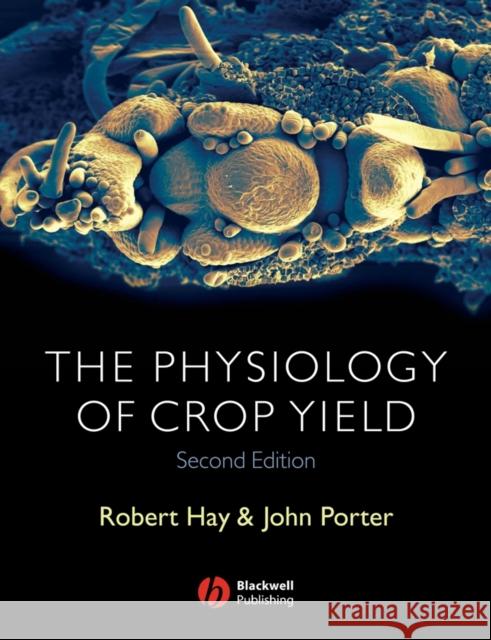
Physiology of Crop Yield 2e Hay, Robert K. M. 9781405108591 Blackwell Publishers - książkaWidoczna okładka, to zdjęcie poglądowe, a rzeczywista szata graficzna może różnić się od prezentowanej.

Physiology of Crop Yield 2e

ISBN-13: 9781405108591 / Angielski / Miękka / 2006 / 336 str.

Robert Hay; J. R. Porter
cena 391,56
(netto: 372,91 VAT:  5%)

Najniższa cena z 30 dni: 386,78
Termin realizacji zamówienia:
ok. 30 dni roboczych.

Darmowa dostawa!

First published in 1989, Physiology of Crop Yield was the first student textbook to digest and assimilate the many advances in crop physiology, within a framework of resource capture and use. Retaining the central core of the first edition, this long-awaited second edition draws on recent developments in areas such as phenology, canopy dynamics and crop modelling, and the concepts of sustainable crop production. A broad perspective is developed, from the gene through the plant and crop to the ecosystem, covering:


  • Advances in molecular biology relating to crop science
  • Limitation of crop yield by the supply of water or nitrogen
  • Global climate change and its impact on crop modelling
  • Physiological aspects of crop quality
  • A wider range of species, with emphasis on wheat, maize and soybean


This book will be a valuable tool for advanced undergraduate and postgraduate students of agricultural science, plant science, applied ecology and environmental science. It will be an essential addition to all libraries in universities and relevant research establishments.


Kategorie:
Technologie
Kategorie BISAC:
Technology & Engineering > Agriculture - Agronomy - General
Technology & Engineering > Agriculture - Agronomy - Crop Science
Science > Life Sciences - Horticulture
Wydawca:
Blackwell Publishers
Język:
Angielski
ISBN-13:
9781405108591
Rok wydania:
2006
Ilość stron:
336
Waga:
0.59 kg
Wymiary:
24.64 x 19.08 x 1.83
Oprawa:
Miękka
Wolumenów:
01
Dodatkowe informacje:
Bibliografia
Wydanie ilustrowane

" Physiology of Crop Yield would be useful to any scientist who works to integrate and better understand growth, development and yield from a perspective of whole plant physiology.
This is a much needed and timely publication."
P.V. Vara Prasad, Kansas State University

"Hay and Porter have produced an excellent book, well–suited for undergraduate teaching and for those seeking an overview of processes contributing to crop yield. They even tell us how long the sun needs to shine to deliver a bowl of breakfast cereal."
Tim Wheeler, University of Reading

"Although described as the second edition of An Introduction to the Physiology of Crop Yield, which was authored by R. Hay and A. J. Walker (1989). The Physiology of Crop Yield is completely rewritten and focuses more explicitly on quantitative prediction of Crop growth. The Physiology of Crop Yield contains numerous line drawings and tables, as well as 30 pages of reference. The overall layout and design of text, tables, and figures follows that of traditional textbooks...the text seems well suited for an upper–level undergraduate course with a pre–requisite of plant physiology."
Jeffrey W. White reproduced from Crop Science

"This book extensively covers the theoretical aspects of crop physiological processes...It is useful for understanding and interpreting agronomic phenomena and therfore clearly has a considerable value to advanced students, teachers and scientists in the field of agronomy, crop management and even plant breeding. The array of literature cited is broad and also up–to–date. The Order of presentation is logical and comprehensive overviews are given...it remains an excellent reference that should be recommended for any teaching of crop phsiology at the graduate level."
Annals of Botany, 1–2, 2007

CONTENTS.

Preface.

Acknowledgements.

1. Introduction.

2. Development and Phenology. How Crops Fit Their Environment: Concepts and Case Histories.

2.1 Crop Development: Concepts and Tools.

2.1.1 Growth Stages and Phasic Development.

2.1.2 Events at the Stem Apex: The Leek as a Simple Model Species.

2.1.3 Events at Stem Apices: Branching and Reproductive Development in Wheat.

2.1.4 Events at Stem Apices: The Consequences of Separation of Male and Female Organs in Maize.

2.1.5 Phenology Determined by Events at Axillary Meristems: Determinate and Indeterminate Soybean Varieties.

2.1.6 Components of Yield.

2.2 Case Histories: The Influence of Environment and Management on Crop Development and Phenology.

2.2.1 Convergence and Synchrony: The Influence of Sowing Date on Winter Wheat in Northern Europe.

2.2.2 Crop Improvement and the Anthesis–Silking Interval in maize.

2.2.3 Adaptation of Soybean to Different Latitudes: Phasic Analysis of the Photoperiodic Control of Flowering.

2.2.4 Development in Storage: Physiological Age and Tuber Initiation in the Potato.

2.2.5 Complementary Phenologies and Plant Habits in Mixed Cropping: Temperate Grass/Clover Swards.

3. Interception of Solar Radiation by the Canopy.

3.1 The Life History of a Leaf.

3.2 The Components of Plant Leaf Area Expansion.

3.2.1 Crop Emergence.

3.2.2 Leaf Production.

3.2.3 Leaf Expansion.

3.2.4 Branching.

3.2.5 Senescence, Removal and Damage: Leaf Life Span.

3.3 The Development of the Crop Canopy: Leaf Area Index.

3.3.1 Seasonal Development of Leaf Area Index.

3.3.2 Leaf Area Index and Crop Management.

3.4 Canopy Architecture and the Interception of Solar Radiation.

3.4.1 Seasonal Patterns of Interception.

3.4.2 Optimum and Critical Leaf Area Indices.

3.4.3 Leaf Photosynthesis and Canopy Properties.

3.4.4 Canopy Extinction Coefficient.

4. Photosynthesis and Photorespiration.

4.1 Introduction.

4.2 Photosynthetic Efficiency.

4.3 Photosynthetic Processes.

4.3.1 Photosynthesis as a Cellular Biochemical Process.

4.3.2 Photosynthesis as a Leaf Diffusive Process.

4.3.3 Photosynthesis as a Crop Canopy Process.

4.4 The C4 Photosynthesis Mechanism.

4.5 Water Shortage and Photosynthesis.

4.6 Nitrogen Effects on Photosynthesis.

4.7 Ozone Effects on Photosynthesis and Crop Productivity.

5. The Loss of CO2: Respiration.

5.1 Introduction.

5.2 The Basis of Crop Respiration.

5.3 Growth and Maintenance Respiration.

5.4 The Respiration of Different Plant Substrates.

5.5 Growth and Maintenance Respiration in the Field.

5.6 Respiration Associated with Crop Processes.

5.7 Environmental Effects on Respiration.

5.8 Crop Respiration in the Future.

6. The Partitioning of Dry Matter to Harvested Organs.

6.1 The Processes and Pathways of Assimilate Partitioning.

6.2 Ontogeny and Assimilate Partitioning: A Survey of Source/Sink Relationships.

6.3 Time Courses of Dry Matter Partitioning: Harvest Index.

6.4 Limitation of Yield by Source or Sink.

6.5 Sink Limitation of Yield in Cereals Physiology of Ineffective Grain Setting.

6.6 Assimilate Partitioning and Crop Improvement: Historic Trends in Harvest Index of Wheat and Barley.

6.7 Assimilate Partitioning and Crop Improvement: Historic Trends in Harvest Index of Maize.

6.8 Assimilate Partitioning to Potato Tubers.

6.9 Assimilate Partitioning in Grassland: Implications for Management of Grass Yield.

6.10 Assimilate Partitioning in Grassland: Implications for the Overwintering and Early Growth of White Clover.

6.11 Assimilate Partitioning in Diseased Plants: Temperate Cereals Infected with Biotrophic Fungal Pathogens.

7. Limiting Factors and the Achievement of High Yield.

7.1 Limitation by Water Supply.

7.1.1 Acquisition of Water.

7.1.2 Water Use Efficiency.

7.1.3 Crop Yield where Water Supply is Limiting.

7.2 Limitation by Nitrogen Supply.

7.2.1 Acquisition of Nitrogen.

7.2.2 Nitrogen Use Efficiency.

7.2.3 Crop Yield where N Supply is Limiting.

7.3 Achieving High Yield: Resource Capture and Assimilate Partitioning.

8. Physiology of Crop Quality.

8.1 Wheat: Protein content.

8.2 Soybean: Oil and Protein Contents.

8.3 Oilseed Rape: Glucosinolates and Erucic Acid.

8.4 Potato: Tuber Size and Processing Quality.

8.5 The Quality of Conserved Forages: Ontogeny and Yield.

9. The Simulation Modelling of Crops.

9.1 Introduction.

9.2 Building a Crop Model.

9.3 Crop Models of Wheat (AFRC2), soybean (CROPGRO) and maize.

9.3.1 The AFRC2 Wheat Model.

9.3.2 The CROPGRO Soybean Model.

9.3.3 The Maize Model.

9.4 Modelling Variety Differences and Traits.

9.5 Conclusions.

10. The Future for Crop Physiology.

10.1 Introduction.

10.2 Lowering Inputs.

10.3 Climate Change.

10.4 Quality.

10.5 New Crops.

10.6 The Potential for Increasing Crop Photosynthesis and Yield.

10.7 The Last Words.

References.

Indexes

Robert K M Hay was, until 2004, director of the Scottish Agricultural Science Agency. He is currently Visiting Professor in the Swedish University of Agricultural Sciences, Uppsala.


John R Porter is Professor of Agroecology at the Royal Veterinary and Agricultural University in Denmark and was formerly President of the European Society for Agronomy.

First published in 1989, Physiology of Crop Yield was the first student textbook to digest and assimilate the many advances in crop physiology, within a framework of resource capture and use. Retaining the central core of the first edition, this long–awaited second edition draws on recent developments in areas such as phenology, canopy dynamics and crop modelling, and the concepts of sustainable crop production. A broad perspective is developed, from the gene through the plant and crop to the ecosystem, covering: Advances in molecular biology relating to crop science Limitation of crop yield by the supply of water or nitrogen Global climate change and its impact on crop modelling Physiological aspects of crop quality A wider range of species, with emphasis on wheat, maize and soybean This book will be a valuable tool for advanced undergraduate and postgraduate students of agricultural science, plant science, applied ecology and environmental science. It will be an essential addition to all libraries in universities and relevant research establishments.

Hay, Robert Robert Hay lives on Lismore and is one of the cura... więcej >
Porter, J. R. J. R. Porter is professor emeritus of theology at ... więcej >


Udostępnij

Facebook - konto krainaksiazek.pl


Opinie o Krainaksiazek.pl na Opineo.pl

Partner Mybenefit

Krainaksiazek.pl w programie rzetelna firma Krainaksiaze.pl - płatności przez paypal

Czytaj nas na:

Facebook - krainaksiazek.pl
  • książki na zamówienie
  • granty
  • książka na prezent
  • kontakt
  • pomoc
  • opinie
  • regulamin
  • polityka prywatności

Zobacz:

  • Księgarnia czeska

  • Wydawnictwo Książkowe Klimaty

1997-2026 DolnySlask.com Agencja Internetowa

© 1997-2022 krainaksiazek.pl
     
KONTAKT | REGULAMIN | POLITYKA PRYWATNOŚCI | USTAWIENIA PRYWATNOŚCI
Zobacz: Księgarnia Czeska | Wydawnictwo Książkowe Klimaty | Mapa strony | Lista autorów
KrainaKsiazek.PL - Księgarnia Internetowa

Polityka prywatnosci - link
Krainaksiazek.pl - płatnośc Przelewy24
Przechowalnia Przechowalnia






