• Wyszukiwanie zaawansowane
  • Kategorie
  • Kategorie BISAC
  • Książki na zamówienie
  • Promocje
  • Granty
  • Książka na prezent
  • Opinie
  • Pomoc
  • Załóż konto
  • Zaloguj się

Pharmacological Approaches to the Treatment of Brain and Spinal Cord Injury » książka


zaloguj się | załóż konto
Logo Krainaksiazek.pl

koszyk

konto

szukaj
topmenu
Księgarnia internetowa
Szukaj
Książki na zamówienie
Promocje
Granty
Książka na prezent
Moje konto
Pomoc
 
 
Wyszukiwanie zaawansowane
Pusty koszyk
Bezpłatna dostawa dla zamówień powyżej 20 złBezpłatna dostawa dla zamówień powyżej 20 zł

Kategorie główne

• Nauka
 [2946912]
• Literatura piękna
 [1852311]

  więcej...
• Turystyka
 [71421]
• Informatyka
 [150889]
• Komiksy
 [35717]
• Encyklopedie
 [23177]
• Dziecięca
 [617324]
• Hobby
 [138808]
• AudioBooki
 [1671]
• Literatura faktu
 [228371]
• Muzyka CD
 [400]
• Słowniki
 [2841]
• Inne
 [445428]
• Kalendarze
 [1545]
• Podręczniki
 [166819]
• Poradniki
 [480180]
• Religia
 [510412]
• Czasopisma
 [525]
• Sport
 [61271]
• Sztuka
 [242929]
• CD, DVD, Video
 [3371]
• Technologie
 [219258]
• Zdrowie
 [100961]
• Książkowe Klimaty
 [124]
• Zabawki
 [2341]
• Puzzle, gry
 [3766]
• Literatura w języku ukraińskim
 [255]
• Art. papiernicze i szkolne
 [7810]
Kategorie szczegółowe BISAC

Pharmacological Approaches to the Treatment of Brain and Spinal Cord Injury

ISBN-13: 9781461282495 / Angielski / Miękka / 2011 / 386 str.
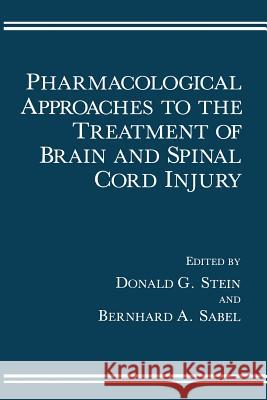
Donald G. Stein; Bernhard A. Sabel; Donald G. Stein
Pharmacological Approaches to the Treatment of Brain and Spinal Cord Injury Donald G Bernhard A Donald G. Stein 9781461282495 Springer - książkaWidoczna okładka, to zdjęcie poglądowe, a rzeczywista szata graficzna może różnić się od prezentowanej.

Pharmacological Approaches to the Treatment of Brain and Spinal Cord Injury

ISBN-13: 9781461282495 / Angielski / Miękka / 2011 / 386 str.

Donald G. Stein; Bernhard A. Sabel; Donald G. Stein
cena 201,72 zł
(netto: 192,11 VAT:  5%)

Najniższa cena z 30 dni: 192,74 zł
Termin realizacji zamówienia:
ok. 22 dni roboczych
Bez gwarancji dostawy przed świętami

Darmowa dostawa!

Although there are over 400,000 people each year in the United States alone who suffer from traumatic injury to the central nervous system (CNS), no phar macological treatment is currently available. Considering the enormity of the problem in terms of human tragedy as well as the economic burden to families and societies alike, it is surprising that so little effort is being made to develop treatments for these disorders. Although no one can become inured to the victims of brain or spinal cord injuries, one reason that insufficient time and effort have been devoted to research on recovery is that it is a generally held medical belief that nervous system injuries are simply not amenable to treatment. At best, current therapies are aimed at providing symptomatic relief or focus on re habilitative measures and the teaching of alternative behavioral strategies to help patients cope with their impairments, with only marginal results in many cases. Only within the last decade have neuroscientists begun to make serious inroads into understanding and examining the inherent "plasticity" found in the adult CNS. Ten years or so ago, very few researchers or clinicians would have thought that damaged central neurons could sprout new terminals or that intact nerve fibers in a damaged pathway could proliferate to replace inputs from neurons that died as a result of injury.


Kategorie:
Nauka, Medycyna
Kategorie BISAC:
Science > Biologia i przyroda
Medical > Farmakologia
Medical > Neurologia i neurofizjologia kliniczna
Wydawca:
Springer
Język:
Angielski
ISBN-13:
9781461282495
Rok wydania:
2011
Wydanie:
Softcover Repri
Ilość stron:
386
Waga:
0.60 kg
Wymiary:
22.9 x 15.2
Oprawa:
Miękka
Wolumenów:
01
Dodatkowe informacje:
Wydanie ilustrowane

1. Therapeutic Approaches in Subjects with Brain Lesions.- 1. Introduction.- 2. Developmental, Degenerative, and Regenerative Factors Related to Brain Plasticity.- 3. Mechanisms of Cell Damage Linked to Ischemia.- 4. Drugs Used to Treat Ischemic Cell Damage.- 5. Management of Medical and Neurological Complications.- 6. Requirements in the Design of a Clinical Trial.- 7. Individualization of Drug Therapy.- 8. The GABA Technique of Reversible Brain Dysfunction.- References.- 2. Arachidonic Acid Metabolites and Membrane Lipid Changes in Central Nervous System Injury.- 1. Introduction.- 2. Membrane Lipid Changes in CNS Injury.- 2.1. Direct Membrane Effects.- 2.2. Eicosanoid Production.- 3. Pharmacological Intervention.- 3.1. Direct Membrane Protection.- 3.2. Eicosanoid Blockade.- 4. Research in Progress.- 5. Conclusion.- References.- 3. Experimental Spinal Cord Injury: Strategies for Acute and Chronic Intervention Based on Anatomic, Physiological, and Behavioral Studies.- 1. Introduction and a Brief History of Spinal Cord Injury Research.- 2. Current Methods for Lesion Production.- 2.1. Impact Injuries.- 2.2. Slow(er) Compression Injuries.- 3. The Time Course of Events following Injury.- 3.1. The Acute Phase and the Concept of a Progressive Lesion.- 3.2. The Chronic Phase: Potential Reorganization and Rehabilitation.- 4. The Features of the Lesion.- 4.1. At the Impact Site.- 4.2. The Distributed Nature of the Lesion.- 5. Assessing Behavioral and Neurological Recovery.- 6. Examples of Attempts at Pharmacological Intervention.- 6.1. In the Acute Phase.- 6.2. In the Chronic Phase.- 6.3. Adjuncts to Pharmacological Treatment.- 7. Studies Using the Ohio State Impaction Device.- 7.1. The Ohio State Feedback-Controlled Impactor.- 7.2. Production of Lesions with Predictable Outcomes.- 7.3. The Role of Ionic Ca2+ in the Acute Phase.- 8. Future Strategies for Pharmacological Intervention.- 8.1. In the Acute Phase.- 8.2. In the Chronic Phase.- 9. Summary and Conclusions.- References.- 4. Serotonin Antagonists Reduce Central Nervous System Ischemic Damage.- 1. Introduction.- 2. Review of the Effects of Serotonin in Stroke.- 3. New Methods for the Study of CNS Ischemia.- 3.1. Rabbit Spinal Cord Ischemia Model.- 3.2. Microsphere Embolic Stroke Model.- 4. Biochemical Studies of the Effects of Serotonin in CNS Ischemia.- 5. Pharmacological Studies of the Effects of Serotonin Antagonists and Agonists in CNS Ischemia.- 6. Microsphere Studies of the Effects of Serotonin Antagonists on Stroke.- References.- 5. Opiate Antagonists in CNS Injury.- 1. Introduction.- 2. Opiate Antagonists.- 3. Rationale for Use of Opiate Antagonists in CNS Injury.- 3.1. Opiate Antagonists in the Treatment of Spinal Cord Injury.- 3.2. Opiate Antagonists and Traumatic Brain Injury.- 4. Role of Specific Opioids and Opiate Receptors in CNS Injury.- 5. Opiate Antagonists in CNS Injury: Clinical Studies.- 6. Future Directions.- References.- 6. Adaptive Changes in Central Dopaminergic Neurons after Injury: Effects of Drugs.- 1. Introduction.- 2. Anatomy and Function of Mesencephalic Dopaminergic Neurons.- 3. Compensatory Changes in Transmitter Release.- 4. Pharmacological Stimulation of DA Synthesis and Release in Dopaminergic Neurons Surviving Partial Nigrostriatal Lesions.- 5. Compensatory Changes in Postsynaptic Receptor Sensitivity.- References.- 7. Catecholamines and Recovery of Function after Brain Damage.- 1. Historical Background.- 1.1. Tactile Placing.- 1.2. Visual Cliff.- 1.3. Hemiplegic Rat Model.- 1.4. Norepinephrine and the Importance of Experience.- 1.5. Hemiplegic Cat Model.- 1.6. Binocular Vision.- 2. Theoretical Bases.- 2.1. Morphological Changes.- 2.2. Vicariation.- 2.3. Behavioral Substitution.- 2.4. Cerebral Blood Flow and Cholinergic System.- 2.5. Diaschisis, RFD, and Metabolic Studies.- 3. Recent Data.- 3.1. Cytochrome Oxidase.- 3.2. Idazoxan.- 3.3. Locus Coeruleus and Cerebellum.- 3.4. Phentermine and Phenylpropanolamine.- 3.5. Transplants.- 3.6. Cortical Contusion.- 3.7. Clinical Data.- 3.8. Drug Contraindications.- 4. Future Directions.- 4.1. Mechanisms.- 4.2. Optimizing Therapy.- References.- 8. Ganglioside Involvement in Membrane-Mediated Transfer of Trophic Information: Relationship to GM1 Effects following CNS Injury.- 1. Introduction.- 1.1. Neuronotrophic Activity after Injury.- 1.2. Trophic Effects and Exogenous Factors.- 1.3. Trophic Effects and Membrane Constituents.- 2. Evidence for Ganglioside Involvement in the Biotransduction of Membrane-Mediated Information.- 2.1. Chemical Diversity of the Gangliosides.- 2.2. Tissue Distribution and Cellular Localization.- 2.3. Membrane Organization.- 3. Evidence for Ganglioside Involvement in Neuronal Cell Responsiveness to Neuronotrophic Factors.- 3.1. Studies in Normal Neuronal Development and “Accidents of Nature”.- 3.2. Studies Utilizing Neuroblastoma Cells.- 3.3. Studies Utilizing Primary PNS Neurons and PC12 Cells.- 3.4. Studies Utilizing Primary CNS Neurons.- 4. GM1 Effects in Vivo: Possible Relationship with Neuronotrophic Factors.- References.- 9. Anatomic Mechanisms whereby Ganglioside Treatment Induces Brain Repair: What Do We Really Know?.- 1. Introduction.- 2. Regeneration and Sprouting after Brain Injury.- 2.1. Gangliosides in Development and Peripheral Nerve Regeneration.- 2.2. Sprouting in Adulthood.- 2.3. Sprouting in Development.- 2.4. Conclusions on Sprouting.- 3. Preventing Secondary Degeneration after Brain Injury.- 3.1. Degeneration in Adulthood.- 3.2. Degeneration in Development.- 4. Other Mechanisms.- 4.1. Denervation Supersensitivity.- 4.2. Synaptic Efficiency.- 5. Discussion.- 6. Recommendations for Future Research.- References.- 10. Gangliosides and Functional Recovery from Brain Injury.- 1. Introduction.- 2. Behavioral Recovery following Damage to the Septohippocampal System.- 3. Behavioral Recovery following Damage or Denervation of Cortical Structures.- 3.1. Recovery after Lesions to the Cholinergic Forebrain Nuclei.- 3.2. Recovery after Cortical Lesions.- 3.3. Recovery after Ischemia.- 4. Behavioral Recovery following Nigrostriatal Damage.- 4.1. Early Studies on Recovery following Nigrostriatal Damage.- 4.2. Later Studies on Recovery after Nigrostriatal Damage.- 4.3. Recent Data on Recovery after Nigrostriatal Damage.- 4.4. Recent Data on Recovery after Bilateral Lesions of the Caudate Nucleus.- 5. General Discussion and Conclusions.- References.- 11. Acute Ganglioside Effects Limit CNS Injury: Functional and Biochemical Consequences.- 1. Long-Term Ganglioside Effects: Increased Plasticity.- 2. Acute Ganglioside Effects.- 2.1. Unilateral Entorhinal Cortical Lesions.- 2.2. Bilateral Entorhinal Cortical Lesions.- 2.3. Nigrostriatal Transection: Reduced Asymmetry.- 3. GM1 Ganglioside Reduces Edema: Protection of Membrane Na + ,K + -ATPase.- 3.1. Membrane Na +,K + -ATPase.- 3.2. Protection of Striatal Na +,K + -ATPase after Hemitransection.- 4. Ganglioside Treatment Reduces Mortality from Ischemia.- 4.1. Global Ischemia Model.- 4.2. Reduced Mortality following Ganglioside Injections.- 5. Mechanism: Membrane Protection.- References.- 12. A Rationale for the Use of Melanocortins in Neural Injury.- 1. Introduction.- 2. Trophic Influences of Melanocortins in Development.- 3. Melanocortins and CNS Plasticity.- 4. Regeneration in the Peripheral Nervous System.- 5. Melanocortins and PNS Plasticity.- 5.1. Recovery of Function following a Crush Lesion.- 5.2. Route of Administration.- 5.3. Electrophysiology.- 5.4. Histology.- 6. Neurotrophic Effect and Pathophysiological Mechanism.- 7. Local Application of ?-MSH and the Repair of Transected Rat Sciatic Nerve.- 8. Clinical Perspectives.- References.- 13. Developmental Neurobiology and Physiopathology of Brain Injury.- 1. Introduction.- 2. Neuronal Proliferation.- 3. Neuronal Migration.- 3.1. Plasminogen Activators.- 3.2. Cell Adhesion Molecules.- 3.3. Extracellular Matrix Components.- 4. Neuronal Stabilization.- 4.1. Neuronotrophic Factors.- 4.2. Neuronotoxic Factors.- 4.3. Interference between Neuronotrophic and Neuronotoxic Activities.- 5. Growth (Mitogenic) Factors.- 6. Conclusion.- References.- 14. Growth-Associated Triggering Factors and Central Nervous System Response to Injury.- 1. Introduction.- 2. Background and Literature Survey.- 2.1. Regeneration-Associated Events in the Neuron.- 2.2. Neuronal—Microenvironment Reciprocal Relationship.- 3. Results Obtained in the Visual System.- 3.1. Modifications of Neuronal Environment and Regeneration.- 3.2. Messenger RNA Derived from Nonneuronal Cells and Regeneration.- References.- 15. Growth Factor Induction and Order of Events in CNS Repair.- 1. Introduction.- 2. Cellular Events That Follow CNS Injury.- 3. Neuronal Survival after CNS Injury.- 3.1. Central Neuronotrophic Factors and Secondary Neuronal Death.- 3.2. Excitotoxicity and Secondary Neuronal Death.- 3.3. Preventing Secondary Neuronal Death.- 3.4. Replacing Lost Neurons: Injury-Induced Neuronotrophic Factors and Transplant Survival.- 4. Reactive and Regenerative Growth after CNS Injury.- 4.1. Reactive Synaptogenesis.- 4.2. Functional Significance of Reactive Synaptogenesis.- 4.3. Neurite-Promoting Factors and Axonal Sprouting.- 4.4. Regenerative Synaptogenesis and Transplant—Host Integration.- 5. Multiple Roles of Astroglia.- 5.1. The “Glial Scar” or Neo-Glia Limitans.- 5.2. The Control of Glial Populations in Adult CNS: Mitogens, Morphogens, and Inhibitors.- 5.3. Astrocytes Accumulate and Detoxify Glutamate.- 5.4. Astrocytes Produce Factors That Promote Neuronal Survival, Sprouting, and Substrate Attachment.- 5.5. Transplants of Purified Astrocytes Promote Functional Recovery.- 5.6. Control of the Neural Environment by Astrocytes: A Neuron—Astrocyte Unit of Function.- 6. Cellular Sources of Trophic Factors.- 7. Timing of the Intervention in CNS Repair.- 8. Conclusion.- References.- 16. Nerve Growth Factor: Effects on CNS Neurons and on Behavioral Recovery from Brain Damage.- 1. Introduction.- 2. The Nerve Growth Factor and Its Effects on PNS Neurons.- 3. Effects of NGF on CNS Neurons.- 4. Effects of NGF on Behavior.- 5. Discussion.- References.- 17. Recovery from Stroke.- 1. Introduction.- 2. Pharmacological Intervention and First-Stage Recovery.- 3. Pharmacological Treatment in Second-Stage Recovery.- 4. Factors in Second-Stage Recovery.- 5. The Measurements of Deficit.- 6. Recovery Rates and Time Intervals.- 7. Lesion Size and Recovery.- 8. Lesion Location and Recovery.- 9. Cerebral Asymmetry.- 10. Functional Reorganization.- 11. Implications for Pharmacological Trials in Patients.- References.


Udostępnij

Facebook - konto krainaksiazek.pl


Opinie o Krainaksiazek.pl na Opineo.pl

Partner Mybenefit

Krainaksiazek.pl w programie rzetelna firma Krainaksiaze.pl - płatności przez paypal

Czytaj nas na:

Facebook - krainaksiazek.pl
  • książki na zamówienie
  • granty
  • książka na prezent
  • kontakt
  • pomoc
  • opinie
  • regulamin
  • polityka prywatności

Zobacz:

  • Księgarnia czeska

  • Wydawnictwo Książkowe Klimaty

1997-2025 DolnySlask.com Agencja Internetowa

© 1997-2022 krainaksiazek.pl
     
KONTAKT | REGULAMIN | POLITYKA PRYWATNOŚCI | USTAWIENIA PRYWATNOŚCI
Zobacz: Księgarnia Czeska | Wydawnictwo Książkowe Klimaty | Mapa strony | Lista autorów
KrainaKsiazek.PL - Księgarnia Internetowa

Polityka prywatnosci - link
Krainaksiazek.pl - płatnośc Przelewy24
Przechowalnia Przechowalnia






