• Wyszukiwanie zaawansowane
  • Kategorie
  • Kategorie BISAC
  • Książki na zamówienie
  • Promocje
  • Granty
  • Książka na prezent
  • Opinie
  • Pomoc
  • Załóż konto
  • Zaloguj się

Perspectives on Biologically Based Cancer Risk Assessment » książka


zaloguj się | załóż konto
Logo Krainaksiazek.pl

koszyk

konto

szukaj
topmenu
Księgarnia internetowa
Szukaj
Książki na zamówienie
Promocje
Granty
Książka na prezent
Moje konto
Pomoc
 
 
Wyszukiwanie zaawansowane
Pusty koszyk
Bezpłatna dostawa dla zamówień powyżej 20 złBezpłatna dostawa dla zamówień powyżej 20 zł

Kategorie główne

• Nauka
 [2949965]
• Literatura piękna
 [1857847]

  więcej...
• Turystyka
 [70818]
• Informatyka
 [151303]
• Komiksy
 [35733]
• Encyklopedie
 [23180]
• Dziecięca
 [617748]
• Hobby
 [139972]
• AudioBooki
 [1650]
• Literatura faktu
 [228361]
• Muzyka CD
 [398]
• Słowniki
 [2862]
• Inne
 [444732]
• Kalendarze
 [1620]
• Podręczniki
 [167233]
• Poradniki
 [482388]
• Religia
 [509867]
• Czasopisma
 [533]
• Sport
 [61361]
• Sztuka
 [243125]
• CD, DVD, Video
 [3451]
• Technologie
 [219309]
• Zdrowie
 [101347]
• Książkowe Klimaty
 [123]
• Zabawki
 [2362]
• Puzzle, gry
 [3791]
• Literatura w języku ukraińskim
 [253]
• Art. papiernicze i szkolne
 [7933]
Kategorie szczegółowe BISAC

Perspectives on Biologically Based Cancer Risk Assessment

ISBN-13: 9781461371496 / Angielski / Miękka / 2012 / 319 str.
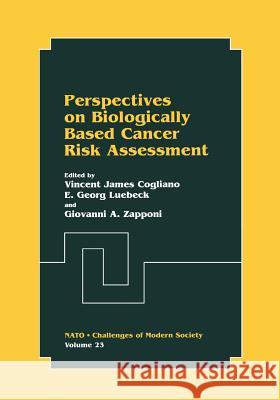
Vincent James Cogliano; E. Georg Luebeck; Giovanni A. Zapponi
Perspectives on Biologically Based Cancer Risk Assessment Vincent Jame E. Geor Giovanni A 9781461371496 Springer - książkaWidoczna okładka, to zdjęcie poglądowe, a rzeczywista szata graficzna może różnić się od prezentowanej.

Perspectives on Biologically Based Cancer Risk Assessment

ISBN-13: 9781461371496 / Angielski / Miękka / 2012 / 319 str.

Vincent James Cogliano; E. Georg Luebeck; Giovanni A. Zapponi
cena 605,23 zł
(netto: 576,41 VAT:  5%)

Najniższa cena z 30 dni: 578,30 zł
Termin realizacji zamówienia:
ok. 22 dni roboczych
Bez gwarancji dostawy przed świętami

Darmowa dostawa!

The first meeting of the NATO/CCMS Pilot Study "Dose-Response Analysis and Biologically-Based Risk assessment for Initiator and Promoter Carcinogens" was held in Rome, Italy, in the spring of 1991, and was followed by annual or bi-annual meetings held in Germany, Greece, Netherlands, Portugal, USA, up to the end of 1995; in large part supported by NATO/CCMS grants or fellowships, and organized by Pilot Study participants. The Pilot Study activity has been characterized by a higly collaborative atmosphere, which was essential for a deep and detailed analysis of a problem on which different points of view, methodological approaches and regulations exist in the various member countries. The Pilot Study was aimed at proposing a carcinogenic risk assessment procedure which is based on a detailed analysis of the relevant biological processes, and may also consent the verification of hypotheses. The specific form of theoretical and mathe- matical models is identified by considering and using the whole set of objective data available. The multidisciplinary approach of the pilot study is reflected by the struc- ture of this book. Each chapter is the result of the cooperation of several authors from to produce a comprehensive manual that includes different countries; its objective was both theoretical and practical information.


Kategorie:
Nauka, Medycyna
Kategorie BISAC:
Medical > Oncology - General
Medical > Health Risk Assessment
Medical > Patologia medyczna
Wydawca:
Springer
Seria wydawnicza:
NATO Challenges of Modern Society (Closed)
Język:
Angielski
ISBN-13:
9781461371496
Rok wydania:
2012
Wydanie:
Softcover Repri
Numer serii:
000449120
Ilość stron:
319
Waga:
0.64 kg
Wymiary:
25.4 x 17.8
Oprawa:
Miękka
Wolumenów:
01

1. Introduction.- 1.1. Dose-Response Assessment in Nato Countries.- 1.1.1. European Community.- 1.1.1.1. European Union.- 1.1.1.2. The Netherlands.- 1.1.1.3. United Kingdom.- 1.1.1.4. Germany.- 1.1.1.5. Denmark.- 1.1.1.6. Norway.- 1.1.1.7. Other countries.- 1.1.1.8. Concluding remarks.- 1.1.2. United States.- 1.1.2.1. Use of Dose-Response Assessment.- 1.1.2.2. Evolution of Dose-Response Assessment.- 1.1.3. Differences between the United States and European Countries.- 1.2. Future Directions in Dose-Response Assessment.- 1.3. Brief Considerations on Some Commonly Used Parameters.- 1.3.1. Variation in Carcinogenic Potency and in Parameters Adopted for Carcinogen Regulation.- 1.3.2. Toxicity Data and Carcinogenic Potencies: Correlation between Parameters Adopted for Risk Assessment.- 1.3.3. The Linearized Multistage Model and Benchmark Dose (BD) Approaches: Dose-Response Analysis May Provide a Unique Framework for Both the Carcinogenic and Noncarcinogenic Procedures.- 1.4. Structure of this Report.- 1.5. References.- 2. The Biological Basis of Cancer.- 2.1. Introduction.- 2.2. Cell Proliferation.- 2.3. Cell Proliferation and Mutation.- 2.4. Differences in Susceptibility.- 2.5. Mechanisms of Inhibition in Mutagenesis and Carcinogenesis.- 2.5.1. Introduction.- 2.5.2. Inhibition in Mutagenesis and Carcinogenesis.- 2.5.3. Extracellular Inhibition.- 2.5.4. Intracellular Inhibition.- 2.5.5. Inhibitors of Cancer Initiation.- 2.5.6. Inhibitors of Tumor Promotion and Progression.- 2.5.7. Dual Effects of Inhibitors.- 2.6. References.- 3. Sources of Data For Cancer Risk Assessment.- 3.1. Introduction.- 3.2. In Vitro and Short Term Testing.- 3.3. Trends in Animal Toxicology Testing.- 3.4. Cell Proliferation.- 3.4.1. Quantitative Methods and Data Sources.- 3.4.1.1. Direct Measurements of Cell Division.- 3.4.1.2. Serum Biomarkers of Cellular Proliferation.- 3.4.1.3. Cell kinetics of EAF.- 3.5. Sources of Toxicokinetic Data.- 3.5.1. Introduction.- 3.5.2. Model Parameters.- 3.5.2.1. Physiologic.- 3.5.2.2. Biochemical.- 3.5.3. Toxicokinetic Data.- 3.6. Inter- and Intra-Species Variability.- 3.6.1. Variability in Genetic Damage.- 3.6.2. The Parallelogram Model.- 3.7. References.- 4. Use of Biochemical and Molecular Biomarkers For Cancer Risk Assessment in Humans.- 4.1. Introduction.- 4.2. The Initiatory Complex and its Modulators.- 4.2.1. Biomarkers of Exposure.- 4.2.1.1. The External Dose.- 4.2.1.2. The Internal Dose.- 4.2.1.3. The Biologically Effective Dose.- 4.2.1.4. Interaction with Relevant Macromolecules.- 4.2.1.5. Cytogenetic Biomarkers of Early Effects.- 4.2.1.6. Discussion about the Biomarkers of Exposure.- 4.2.2. Biomarkers of Individual Susceptibility.- 4.2.2.1. Phase I Enzymes and Related Markers.- 4.2.2.2. Phase II Enzymes.- 4.2.3. DNA Repair and its Variability.- 4.2.3.1. Assessment of DNA Repair.- 4.2.3.2. Mismatch Repair, Microsatellite Instability and Mutator Phenotype.- 4.2.3.3. Other Genetic Instability Syndromes.- 4.2.3.4. Restatement of the DNA Repair Problem.- 4.2.4. Exogenous Nutritional Factors.- 4.3. The Determinants of the Clonal Expansion of the Initiated Cells.- 4.3.1. Basic Mechanisms.- 4.3.2. Cell Cycle Control Mechanisms.- 4.3.2.1. p53.- 4.3.2.2. The Rb tumour suppressor gene.- 4.3.2.3. The myc Oncogene.- 4.3.2.4. Low Molecular Weight Regulatory Proteins.- 4.3.3. Growth Factors, Growth Factor Receptors and Signal Transduction Pathways.- 4.3.3.1. Growth Factors and Receptors.- 4.3.3.2. Growth Factor Receptors.- 4.3.4. Signal Transduction Pathways.- 4.3.4.1. Transmembrane Receptors with Intrinsic TRK Activity.- 4.3.4.2. Receptors with Seven Transmembrane-spanning Domains.- 4.3.4.3. Cytoskeletal Signal Transduction Pathways.- 4.3.5. The Outcome: The Clonal Expansion of the Initiated Cells.- 4.3.5.1. Proliferation.- 4.3.5.2. Apoptosis.- 4.4. Adjuvant Determinants of the Clonal Expansion.- 4.4.1. Oxidative Damage and its Repair.- 4.4.1.1. Identification of Oxidative Damage.- 4.4.1.2. Thymine Glycol and Thymidine Glycol.- 4.4.1.3. 8-Hydroxydeoxyguanosine (8OHdG).- 4.4.1.4. ADPRT.- 4.4.1.5. Others.- 4.4.2. Intercellular Communication.- 4.4.3. Intercellular Adhesion.- 4.4.4. Cell-Surface Structures.- 4.4.5. Miscellaneous Determinants.- 4.4.5.1. Immune Status.- 4.4.5.2. Nutritional Status.- 4.5. Conclusion.- 4.6. Acknowledgments.- 4.7. References.- 5. The Multistage Model of Carcinogenesis: A Critical Review of its Use.- 5.1. Introduction.- 5.2. Historical Antecedents of the Multistage Model.- 5.3. The Armitage-Doll Multistage Model.- 5.4. Derivation, Rationale and Mathematical Form of the Model.- 5.5. The “Linearized Multistage Model”.- 5.6. Time-Dependent Non-Constant Exposure Patterns: Their Influence on Multistage-Derived Risk Estimates.- 5.7. Consideration of Pharmakokinetics in Multistage Modeling.- 5.8. The Problem of Multiple Exposure: Multistage Carcinogenesis Theory and Additive and Multiplicative Models.- 5.9. Critical Review of the Model.- 5.10. Discussion.- 5.11. References.- 6. Biologically Based Models of Carcinogenesis.- 6.1. Introduction.- 6.2. A Brief History of Biologically-Based Cancer Models.- 6.3. Two-Mutation Clonal Expansion Model.- 6.4. Modes of Action of Carcinogens.- 6.5. Quantitative Formulation of the Model.- 6.5.1. The Probability of Tumor.- 6.5.1.1. Solution for Piecewise Constant Parameters.- 6.5.1.2. Identifiability of Model Parameters.- 6.6. Likelihood Construction and Estimation.- 6.7. Quantitative Analysis of Intermediate Lesions.- 6.7.1. Modeling Initiation and Promotion of EAF.- 6.7.2. Gompertz Growth.- 6.7.3. Statistical Analysis.- 6.7.4. Joint Analysis of Premalignant and Malignant Lesions.- 6.8. Toxicokinetics in Biologically Based Risk Assessment.- 6.8.1. Physiologically-based Toxicokinetic Models in Risk Assessment.- 6.8.2. Multistage Modeling.- 6.8.3. Biologically-based Risk Assessment.- 6.8.4. Model Development and Parameterization.- 6.9. Interspecies Extrapolation.- 6.9.1. Scaling Physiologic and Metabolic PBTK Model Parameters.- 6.9.2. Discussion of Allometric Scaling.- 6.9.3. Choice of a Dose Surrogate.- 6.9.4. Interspecies Extrapolation of Toxicokinetics.- 6.10. Implications for Low-Dose Extrapolation.- 6.11. References.- 7. Statistical Issues in the Application of Multistage and Biologically Based Models.- 7.1. Introduction.- 7.2. Characterization Of Models.- 7.2.1. Model Components.- 7.2.2. Model Comparison.- 7.2.3. Low Dose.- 7.3. Statistical Inference.- 7.3.1. Available Data and Parameter Estimation.- 7.3.2. Comparing Low-Dose Extrapolations from Different Models: A Simulation Study.- 7.3.3. Design of the Simulation Study.- 7.3.3.1. Data Generation.- 7.3.3.2. Estimation of Parameters.- 7.3.4. Simulation Results.- 7.3.4.1. Parameter Estimates.- 7.3.4.2. Estimates of Additional Risk.- 7.3.4.3. The Direction of Error.- 7.3.4.4. Goodness of Fit as a Criterion for Model Choice.- 7.4. Design Considerations for Low-Dose Problems.- 7.5. Sensitivity Analysis and Physiologically Based Toxicokinetic Modeling.- 7.5.1. Current Methodology.- 7.5.2. Physiologically Based Toxicokinetic Model Sensitivity Analysis.- 7.6. Discussion.- 7.7. References.- 8. Informative Case Studies.- 8.1. Radon, Cigarette Smoke, and Lung Cancer: The Colorado Plateau Uranium Miners’ Cohort.- 8.2. Modeling Colon Cancer.- 8.2.1. How Many Rate-limiting Events for Colon Cancer?.- 8.2.2. Analysis of Colon Cancer Data in Patients with FAP.- 8.3. Quantitative Analysis of Enzyme Altered Foci (EAF).- 8.3.1. Effects of PCBs on the Initiation and Promotion of EAF.- 8.3.2. Effects of Chronic Administration of N-nitrosomorpholine on Liver EAF and Hepatocellular Carcinoma (HCC).- 8.4. The Role of Cell Proliferation in Urinary Bladder Carcinogenesis.- 8.5. N-Nitrosomorpholine: Comparison of Multistage Model and Two-Event Clonal Expansion Model.- 8.6. Calculation of Tetrachloroethylene Risk Estimates.- 8.6.1. Classical Risk Assessment Methodology.- 8.6.1.1. Interspecies Extrapolation.- 8.6.1.2. Dose-Response Relation in Animals.- 8.6.1.3. Calculation of Administered Dose in Humans.- 8.6.1.4. Classical Calculation of Human Risk.- 8.6.2. Toxicokinetic Risk Assessment Methodology.- 8.6.2.1. Interspecies Extrapolation.- 8.6.2.2. Dose-Response Relation in Mice.- 8.6.2.3. Calculation of Effective Dose in Humans.- 8.6.2.4. Toxicokinetic Calculation of Human Risk.- 8.6.3. Biologically Based Risk Assessment Methodology.- 8.6.3.1. Dose-Response Relation in Mice.- 8.6.3.2. Calculation of Human Risk.- 8.6.4. Comparison of Human Risk Estimates.- 8.7. Considerations for Benzene Toxicokinetic Extrapolation.- 8.7.1. Methods.- 8.7.1.1. Experimental Data.- 8.7.1.2. Model.- 8.7.1.3. Extrapolation.- 8.7.1.4. Extrapolated Model Predictions.- 8.7.2. Results and Discussion.- 8.7.2.1. Extrapolated Model Predictions.- 8.8. References.- 8.9. Appendix A.- 9. Conclusions and Recommendations.- 9.1. Introduction.- 9.2. What does Each Source of Experimental Data Contribute to our Knowledge and Ability to Model?.- 9.3. What Kinds of Information are Needed to Develop a Biologically Based Model?.- 9.4. How does Linearity Enter into Empirical Models and Biologically Based Models?.- 9.5. How does a Biologically Based Model Help Us Understand Intraspecies Variability?.- 9.6. How D does a Biologically Based Model Help Us Understand Interspecies Variability?.- 9.7. What are the Uncertainties Associated with a Biologically Based Model?.- Contributors.


Udostępnij

Facebook - konto krainaksiazek.pl


Opinie o Krainaksiazek.pl na Opineo.pl

Partner Mybenefit

Krainaksiazek.pl w programie rzetelna firma Krainaksiaze.pl - płatności przez paypal

Czytaj nas na:

Facebook - krainaksiazek.pl
  • książki na zamówienie
  • granty
  • książka na prezent
  • kontakt
  • pomoc
  • opinie
  • regulamin
  • polityka prywatności

Zobacz:

  • Księgarnia czeska

  • Wydawnictwo Książkowe Klimaty

1997-2025 DolnySlask.com Agencja Internetowa

© 1997-2022 krainaksiazek.pl
     
KONTAKT | REGULAMIN | POLITYKA PRYWATNOŚCI | USTAWIENIA PRYWATNOŚCI
Zobacz: Księgarnia Czeska | Wydawnictwo Książkowe Klimaty | Mapa strony | Lista autorów
KrainaKsiazek.PL - Księgarnia Internetowa

Polityka prywatnosci - link
Krainaksiazek.pl - płatnośc Przelewy24
Przechowalnia Przechowalnia






