• Wyszukiwanie zaawansowane
  • Kategorie
  • Kategorie BISAC
  • Książki na zamówienie
  • Promocje
  • Granty
  • Książka na prezent
  • Opinie
  • Pomoc
  • Załóż konto
  • Zaloguj się

Perspectives of Information Systems » książka


zaloguj się | załóż konto
Logo Krainaksiazek.pl

koszyk

konto

szukaj
topmenu
Księgarnia internetowa
Szukaj
Książki na zamówienie
Promocje
Granty
Książka na prezent
Moje konto
Pomoc
 
 
Wyszukiwanie zaawansowane
Pusty koszyk
Bezpłatna dostawa dla zamówień powyżej 20 złBezpłatna dostawa dla zamówień powyżej 20 zł

Kategorie główne

• Nauka
 [2946600]
• Literatura piękna
 [1856966]

  więcej...
• Turystyka
 [72221]
• Informatyka
 [151456]
• Komiksy
 [35826]
• Encyklopedie
 [23190]
• Dziecięca
 [619653]
• Hobby
 [140543]
• AudioBooki
 [1577]
• Literatura faktu
 [228355]
• Muzyka CD
 [410]
• Słowniki
 [2874]
• Inne
 [445822]
• Kalendarze
 [1744]
• Podręczniki
 [167141]
• Poradniki
 [482898]
• Religia
 [510455]
• Czasopisma
 [526]
• Sport
 [61590]
• Sztuka
 [243598]
• CD, DVD, Video
 [3423]
• Technologie
 [219201]
• Zdrowie
 [101638]
• Książkowe Klimaty
 [124]
• Zabawki
 [2473]
• Puzzle, gry
 [3898]
• Literatura w języku ukraińskim
 [254]
• Art. papiernicze i szkolne
 [8170]
Kategorie szczegółowe BISAC

Perspectives of Information Systems

ISBN-13: 9780387987125 / Angielski / Twarda / 1999 / 271 str.
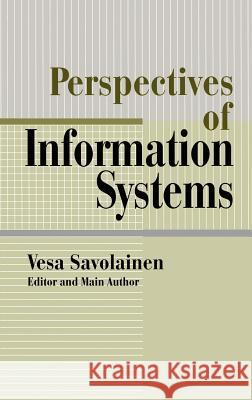
Vesa Savolainen; Vesa Savolainen
Perspectives of Information Systems Vesa Savolainen Vesa Savolainen 9780387987125 Springer - książkaWidoczna okładka, to zdjęcie poglądowe, a rzeczywista szata graficzna może różnić się od prezentowanej.

Perspectives of Information Systems

ISBN-13: 9780387987125 / Angielski / Twarda / 1999 / 271 str.

Vesa Savolainen; Vesa Savolainen
cena 201,72 zł
(netto: 192,11 VAT:  5%)

Najniższa cena z 30 dni: 192,74 zł
Termin realizacji zamówienia:
ok. 22 dni roboczych
Bez gwarancji dostawy przed świętami

Darmowa dostawa!

Information system science, defined broadly, is highly interdisciplinary because it can be seen as the effective analysis, design, delivery, use, and impact of infor mation technology in organizations and society. Many basic as well as advanced books on information systems and their development apply approaches and theo ries from such disciplines as technology, management science, economics, math ematics, psychology, sociology, and philosophy. Such new branches of information system science as mobile information systems, multimedia informa tion systems, telematic commerce, and cooperative work support systems have incorporated theories from such disciplines as organization science, education sciences, communication science, and musicology. Objectives and Uses of This Book This book focuses on various issues in information systems and their develop ment, as well as on the advanced utilization of new information technology. The fields and issues that are analyzed in this book have not been discussed in the same context in the current scientific literature, although they are becoming more important in information systems development. This book includes both theoreti cal foundations and practical approaches for each topic, and therefore it is of rel evance both to scientists of information systems and to practitioners in information systems development, introduction, and use. Large companies and software houses will also find this book useful in its discussion of methods for evaluating information technologies, systems, methodologies, and tools. Our col leagues have expressed a need for this kind of book. We offer new perspectives on key topics in information systems research."


Kategorie:
Informatyka, Bazy danych
Kategorie BISAC:
Computers > Software Development & Engineering - Systems Analysis & Design
Business & Economics > Information Management
Business & Economics > Matematyka biznesowa
Wydawca:
Springer
Język:
Angielski
ISBN-13:
9780387987125
Rok wydania:
1999
Wydanie:
1999
Ilość stron:
271
Waga:
1.32 kg
Wymiary:
23.5 x 15.5
Oprawa:
Twarda
Wolumenów:
01
Dodatkowe informacje:
Wydanie ilustrowane

I Methodologies and Metamodels for Information System Development and Their Evaluation.- 1. Framework for Information Activities.- 1.1. Motivation.- 1.2. Foundations of the Framework.- 1.2.1. Information System and Its Environment.- 1.2.2. Principles of Level Construction.- 1.3. IST, the Fundamental Conceptual Component of Information Systems.- 1.4. Levels of Information Activity.- 1.4.1. Hierarchical Structure.- 1.4.2. IS Use Level.- 1.4.3. ISD Level.- 1.4.4. ISD Model Construction Level.- 1.4.5. Theory Development Level.- 1.4.6. Interpretations of the Framework.- 1.5. Evaluation.- 1.5.1. Framework for Research.- 1.5.2. Frame of Reference for Tools.- 1.6. Conclusions.- 2. Analysis of Three IS and ISD Reference Frameworks.- 2.1. Related Works.- 2.2. Definitions and Concepts.- 2.3. A Short Description of Three Reference Frameworks.- 2.3.1. Framework for Understanding.- 2.3.2. HECTOR Framework of Reference.- 2.3.3. FRISCO Framework.- 2.4. Scheme for Evaluating Metamethodologies.- 2.4.1. Internal Validity of Frameworks.- 2.4.2. External Validity of Frameworks.- 2.4.3. Coverage of Frameworks.- 2.5. Comparison Results.- 2.5.1. Internal Validity of Frameworks.- 2.5.2. External Validity of Frameworks.- 2.6. Conclusions.- II Contingency Factors and Uncertainty in Decision Making in Information System Development.- 3. Favorable Atmosphere for Effective Information Technology Decisions.- 3.1. Basic Assumptions.- 3.2. MISD Contingency Factors.- 3.3. Main Information Technology Decisions.- 3.4. Priority Setting and Other Strategic Decisions.- 3.5. Feasibility Study, Contingency Analysis, and Methodology Selection.- 3.6. MIS Implementation Decisions.- 3.7. Introduction of the New MIS and Maintenance Decisions.- 3.8. Conclusions.- III Development of Holistic ISD Methodologies and Selection of ISD Methods and Tools.- 4. Overview of the OSSAD Methodology.- 4.1. Principles, Functions, and Approach.- 4.2. Main Principles.- 4.3. Approach.- 4.3.1. Set Contract.- 4.3.2. Analyze Situation.- 4.3.3. Design System.- 4.3.4. Implement Changes.- 4.3.5. Monitor System Performance.- 4.4. Management Issues.- 4.4.1. Organization.- 4.4.2. Procedures for Getting Under Way.- 4.5. Modeling.- 4.6. Language.- 4.6.1. Abstract Model.- 4.6.2. Descriptive Model.- 4.6.3. Specification Models.- 4.7. Conclusions.- 5. Refinement of the OSSAD Methodology by Multiclient Field Testing.- 5.1. Overview.- 5.2. Framework for Research Work.- 5.2.1. Research Objective.- 5.2.2. Research Setting.- 5.3. Research Methods.- 5.3.1. Study Methods.- 5.3.2. Experimental Methods.- 5.3.3. Action Research.- 5.3.4. Methodological Pluralism.- 5.4. Field Test Practice in the Development of OSSAD Methodology.- 5.4.1. The Application of the 7S-Frame to the OSSAD Field Test Practice.- 5.4.2. The Contextual Framework of the Analysis.- 5.4.3. Sequence of Methodological Steps.- 5.4.4. Use and Relevance of Instruments and Procedures, Models and Concepts.- 5.4.5. Strategic Aspects and Findings on the OSSAD Methodology.- 5.5. Some Results of Other OSSAD Field Testings.- 5.6. Conclusions.- 6. Technical Specification of an Information System.- 6.1. Technical Information System Specification.- 6.2. Information System Structure and User Interface Specification.- 6.3. Software Specification.- 6.4. Specification of Files, Databases, and Knowledge Bases.- 6.5. Specification of Data Media, Hardware, and Other Facilities.- 6.6. Specification of Systems Interconnections.- 6.7. Specification of Information System Quality and Control Features.- 6.8. Framework for Technical Specification Process.- 6.9. Conclusions.- 7. Decision Criteria for Information System Development Tool Selection.- 7.1. Types of Tools for Supporting ISD Processes.- 7.2. Reasons for Acquiring a Tool.- 7.3. Issues in Selection Processes.- 7.4. Rating Selection Criteria.- 7.5. Computerized Support of the Selection Process.- 7.6. Conclusions.- IV Toward Intelligent Executive Information Systems.- 8. Strategic Decision Making.- 8.1. Motivation for Classifying Decision Problems.- 8.2. Classification of Strategic Decision-Making Problems.- 8.3. Analysis of Information Requirements.- 8.4. Decisions Supported by Knowledge-Based Technology.- 8.5. Conclusions.- 9. Evaluation of Executive Information Systems.- 9.1. Acquiring an EIS Product to Match the Managerial Requirements.- 9.2. Development of Mangerial Support Systems.- 9.2.1. Management Information Systems.- 9.2.2. Decision Support Systems.- 9.2.3. Executive Information Systems.- 9.2.4. Generalization Trends in Information Systems for Managerial Use.- 9.3. Framework for Evaluating EIS Products.- 9.4. Functional Capabilities of EIS Products.- 9.5. Qualitative Properties of EIS Products.- 9.6. Technical Properties of EIS.- 9.7. Cost Issues.- 9.8. User’s Experiences.- 9.8.1. Utilization of the Functional Properties of EIS.- 9.8.2. Utilization of the Qualitative Properties of EIS.- 9.8.3. Utilization of the Technical Properties of EIS.- 9.9. Issues in Construction, Introduction, and Use of EIS.- 9.10. Conclusions.- 10. Application of Knowledge-Based Technology in Executive Information Systems.- 10.1. The Diversity of Decision Support Systems.- 10.2. DSS, EIS, and ESS.- 10.2.1. Decision Support Systems.- 10.2.2. Executive Information Systems.- 10.2.3. Executive Support Systems.- 10.3. IESS as an Integration of ES/KBS Technology to EIS and DSS.- 10.3.1. Expert Systems and Knowledge-Based Systems.- 10.3.2. Intelligent Decision Support Systems.- 10.3.3. Intelligent Executive Support Systems.- 10.4. Structure of Intelligent Executive Support Systems.- 10.4.1. The Interface.- 10.4.2. Office Support Subsystem.- 10.4.3. Database Subsystem.- 10.4.4. Model Base Subsystem.- 10.4.5. Knowledge Base Subsystem.- 10.4.6. Work Space.- 10.5. Conclusions.- V Mobile Information Systems.- 11. Executives’ Views of Mobile Information Services.- 11.1. Concepts, Research Objectives, and Research Methods.- 11.1.1. Basic Concepts.- 11.1.2. Research Objectives.- 11.1.3. Research Methods.- 11.2. Executives’ Work.- 11.2.1. Main Characteristics of Executives’ Work.- 11.2.2. Trends.- 11.2.3. Our Case Studies of Executives.- 11.2.4. Time Distribution of Executives’ Work.- 11.3. Information Technology Support for Executives’ Tasks.- 11.3.1. Personal Work Support.- 11.3.2. Mail and Communication Services.- 11.3.3. Information Services.- 11.3.4. Office Support Services.- 11.3.5. Analytical Support Services.- 11.3.6. Other Services.- 11.3.7. IT Use Experiences and the Executives’ Tasks.- 11.4. Trends in Information Technology Support for Executives.- 11.4.1. Value-Added Services.- 11.4.2. Executives’ Expectations of Mobile IT Services.- 11.5. Conclusions.- VI Exception Handling in Information Systems.- 12. Basic Concepts of Exception Handling in Office Information Systems.- 12.1. Event Handling.- 12.2. Dynamic Nature of Office Information Systems.- 12.2.1. Office.- 12.2.2. Rules.- 12.2.3. Exceptions.- 12.3. Characteristics of Exceptionality.- 12.3.1. Severity Classes of Exceptions.- 12.3.2. Frequencies of Exceptions.- 12.3.3. Organizational Influence of Exceptions.- 12.3.4. Reasons for Exceptions.- 12.4. Exception Handling Principles.- 12.4.1. Event Handling.- 12.4.2. Action Analysis.- 12.4.3. Handling of Established Exceptions.- 12.4.4. Handling of Otherwise Exceptions.- 12.4.5. Handling True Exceptions.- 12.5. Exception Handling in Organizations.- 12.5.1. Levels of Information Systems.- 12.5.2. Exception Handling Practices.- 12.5.3. Consequences of Exception Occurrence.- 12.6. Conclusions.- VII Quality Assurance and Performance Evaluation of Information Systems.- 13. Concepts and Practices in Performance Evaluation of Office Information Systems.- 13.1. System Performance and Changing User Preferences.- 13.2. Concepts and Criteria.- 13.2.1. Main Concepts.- 13.2.2. Evaluation Criteria in OSSAD Models.- 13.2.3. Evaluation of the OIS Development Process and Its Results.- 13.2.4. Organizational, Social, Economic, and Technical Criteria for the Evaluation.- 13.3. Framework for Dynamic OIS Evaluation.- 13.4. Evaluation Practices and User Participation.- 13.5. Conclusions.- 14. Analysis of the Dynamic Nature of Information Systems Performance Evaluation.- 14.1. Theoretical Background and Research Issues.- 14.1.1. Theoretical Foundations and Research Methodology.- 14.1.2. Research Issues.- 14.2. Evaluation from the Systems Developers’ Viewpoints.- 14.3. Changing Interest in Systems Evaluation Through the ISLC.- 14.4. Changing Evaluation Criteria Throughout the ISLC.- 14.5. Conclusions.- 15. Performance Evaluation of an Information System: An Experiment.- 15.1. Background for Our Case Studies.- 15.2. Performance Evaluation Process.- 15.3. Performance Evaluation Criteria and Measurement.- 15.4. Performance Evaluation over the ISLC.- 15.5. Some Evaluation Experiments.- 15.6. Conclusions.


Udostępnij

Facebook - konto krainaksiazek.pl


Opinie o Krainaksiazek.pl na Opineo.pl

Partner Mybenefit

Krainaksiazek.pl w programie rzetelna firma Krainaksiaze.pl - płatności przez paypal

Czytaj nas na:

Facebook - krainaksiazek.pl
  • książki na zamówienie
  • granty
  • książka na prezent
  • kontakt
  • pomoc
  • opinie
  • regulamin
  • polityka prywatności

Zobacz:

  • Księgarnia czeska

  • Wydawnictwo Książkowe Klimaty

1997-2025 DolnySlask.com Agencja Internetowa

© 1997-2022 krainaksiazek.pl
     
KONTAKT | REGULAMIN | POLITYKA PRYWATNOŚCI | USTAWIENIA PRYWATNOŚCI
Zobacz: Księgarnia Czeska | Wydawnictwo Książkowe Klimaty | Mapa strony | Lista autorów
KrainaKsiazek.PL - Księgarnia Internetowa

Polityka prywatnosci - link
Krainaksiazek.pl - płatnośc Przelewy24
Przechowalnia Przechowalnia





