• Wyszukiwanie zaawansowane
  • Kategorie
  • Kategorie BISAC
  • Książki na zamówienie
  • Promocje
  • Granty
  • Książka na prezent
  • Opinie
  • Pomoc
  • Załóż konto
  • Zaloguj się

Performance-Based Seismic Engineering: Vision for an Earthquake Resilient Society » książka


zaloguj się | załóż konto
Logo Krainaksiazek.pl

koszyk

konto

szukaj
topmenu
Księgarnia internetowa
Szukaj
Książki na zamówienie
Promocje
Granty
Książka na prezent
Moje konto
Pomoc
 
 
Wyszukiwanie zaawansowane
Pusty koszyk
Bezpłatna dostawa dla zamówień powyżej 20 złBezpłatna dostawa dla zamówień powyżej 20 zł

Kategorie główne

• Nauka
 [2946600]
• Literatura piękna
 [1856966]

  więcej...
• Turystyka
 [72221]
• Informatyka
 [151456]
• Komiksy
 [35826]
• Encyklopedie
 [23190]
• Dziecięca
 [619653]
• Hobby
 [140543]
• AudioBooki
 [1577]
• Literatura faktu
 [228355]
• Muzyka CD
 [410]
• Słowniki
 [2874]
• Inne
 [445822]
• Kalendarze
 [1744]
• Podręczniki
 [167141]
• Poradniki
 [482898]
• Religia
 [510455]
• Czasopisma
 [526]
• Sport
 [61590]
• Sztuka
 [243598]
• CD, DVD, Video
 [3423]
• Technologie
 [219201]
• Zdrowie
 [101638]
• Książkowe Klimaty
 [124]
• Zabawki
 [2473]
• Puzzle, gry
 [3898]
• Literatura w języku ukraińskim
 [254]
• Art. papiernicze i szkolne
 [8170]
Kategorie szczegółowe BISAC

Performance-Based Seismic Engineering: Vision for an Earthquake Resilient Society

ISBN-13: 9789401788748 / Angielski / Twarda / 2014 / 505 str.
Matej Fischinger
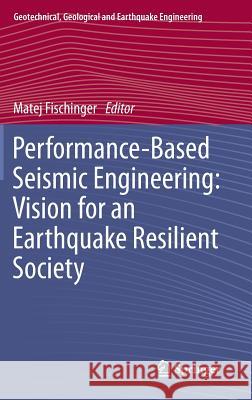
Performance-Based Seismic Engineering: Vision for an Earthquake Resilient Society Matej Fischinger 9789401788748 Springer - książkaWidoczna okładka, to zdjęcie poglądowe, a rzeczywista szata graficzna może różnić się od prezentowanej.

Performance-Based Seismic Engineering: Vision for an Earthquake Resilient Society

ISBN-13: 9789401788748 / Angielski / Twarda / 2014 / 505 str.

Matej Fischinger
cena 605,23 zł
(netto: 576,41 VAT:  5%)

Najniższa cena z 30 dni: 578,30 zł
Termin realizacji zamówienia:
ok. 22 dni roboczych
Bez gwarancji dostawy przed świętami

Darmowa dostawa!

The Bled workshops have traditionally produced reference documents providing visions for the future development of earthquake engineering as foreseen by leading researchers in the field. The participants of the 2011 workshop built on the tradition of these events initiated by Professors Fajfar and Krawinkler to honor their important research contributions and have now produced a book providing answers to crucial questions in today's earthquake engineering: "What visible changes in the design practice have been brought about by performance-based seismic engineering? What are the critical needs for future advances? What actions should be taken to respond to those needs?" The key answer is that research interests should go beyond the narrow technical aspects and that the seismic resilience of society as a whole should become an essential part of the planning and design process.The book aims to provide essential guidelines for researchers, professionals and students in the field of earthquake engineering. It will also be of particular interest for all those working at insurance companies, governmental, civil protection and emergency management agencies that are responsible for assessing and planning community resilience.The introductory chapter of the book is based on the keynote presentation given at theworkshop by the late Professor Helmut Krawinkler. As such, the book includes Helmut's last and priceless address to the engineering community, together with his vision and advice for the future development of performance-based design, earthquake engineering and seismic risk management.


Kategorie:
Technologie
Kategorie BISAC:
Science > Earth Sciences - Geology
Technology & Engineering > Civil - General
Nature > Natural Disasters
Wydawca:
Springer
Seria wydawnicza:
Geotechnical, Geological and Earthquake Engineering
Język:
Angielski
ISBN-13:
9789401788748
Rok wydania:
2014
Wydanie:
2014
Numer serii:
000289424
Ilość stron:
505
Waga:
0.91 kg
Wymiary:
23.39 x 15.6 x 2.87
Oprawa:
Twarda
Wolumenów:
01

Part I: Helmut's Vision.- Challenges Towards Achieving Earthquake Resilience through Performance-Based Earthquake Engineering.- Part II: Global Vision.- Engineering Challenges on the Way to Resilient Structures and Communities.- Toward the Bled Workshop in Future.- Global Challenges and the Role of Civil Engineering.- Earthquake-Resistant Bridges of the Future with Advanced Materials.- Inelastic Shear Response and Strengthening of RC Bridge Hollow Box Piers.- Developments in Codifying Direct Displacement-Based Seismic Design.- Part III: New Vision after Recent Earthquakes.- A Lesson from the 2011 Tohoku Earthquake – The necessity for collaboration and dialog among natural scientists, engineers, social scientists, government agencies and the general public.- Lessons Learned from the 2010 Haiti Earthquake for Performance-Based Design.- L'Aquila Earthquake: A Wake-Up Call For European Research and Codes.- Lessons from the 2010 Chile earthquake for performance based design and code development.- Performance-Based Issues from the 22 February 2011 Christchurch Earthquake.- Part IV: Vision in Japan and Asia (Coordinated and edited by Masayoshi Nakashima).- Seismic Performance of a Bridge Column Based on E-Defense Shake-Table Excitations.- Development of Building Monitoring System to Verify the Capacity Spectrum Method.- Evaluation on ultimate flexural deformability of reinforced concrete columns with wing walls.- Seismic Performance and Reinforcement of Japanese High-Rise Buildings Facing Subduction Earthquakes: E-Defense Shake Table Tests.- Pseudo-dynamic Performance Evaluation of Full Scale Seismic Steel Braced Frames Using Buckling-Restrained and In-plane Buckling Braces.- Theory and Applications of the 3-DOF Modal System for PBSE of Asymmetrical Buildings.- Part V: Vision in Europe (Coordinated and edited by Peter Fajfar).- Pushover-based analysis in performance-based seismic engineering – A view from Europe.- Challenges and problems in performance-based design of tall buildings.- Performance Based Earthquake-Resistant Design: Migrating Towards Nonlinear Models and Probabilistic Framework.- Seismic fragility of RC buildings designed to Eurocodes 2 and 8.- Performance-Based Assessment of Existing Buildings in Europe: Problems and Perspectives.- Inelastic Shear Response of RC Walls – A Challenge in Performance Based Design and Assessment.- Masonry buildings, seismic performance and Eurocodes.- Part VI : Vision in Americas (Coordinated and edited by Jack Moehle and Andrei Reinhorn).- Performance-based earthquake engineering in the U.S.A case study for tall buildings.- Consideration of Resilience of Communities in Structural Design.- Ground motion selection for performance-based engineering: Effect of target spectrum and conditioning period.- Reliability Considerations in the Seismic Capacity Design Requirements for Force-Controlled Components.- Reassessing ACI 318 Shear Wall Provisions Based on Recent Earthquake and Test Observations.- Collapse Probability of Existing Concrete Buildings: The Evolution of Seismic Rehabilitation in North America.- Earthquake-Resilient Communities: A Look from Mexico.

Matej Fischinger (born in 1954) is a Professor of Earthquake Engineering and Reinforced Concrete Structures at the University of Ljubljana in Slovenia. He is a Member of the Slovenian Academic Society of Technical and Natural Sciences and the Vice-president of the Slovenian Association for Earthquake Engineering.
His research has been concerned with earthquake resistant design of RC structures and the inelastic design procedures. He is the co-author of the N2 method, proposed in 1989 in his Ph.D. dissertation supervised by Professor Fajfar. For the related research work they got the highest research award in the Republic of Slovenia. Since then the N2 method, which was recently incorporated into Eurocode 8, has become one of the leading push-over methods in earthquake engineering. His current interest is in the seismic resistance of bridges, RC industrial buildings and structural walls, performance-based design methodologies, the Eurocode, and the use of information technology in education. Using inelastic macro-models the research group led by Matej Fischinger made several successful benchmark predictions of the response of RC structural walls.
As a designer, consultant or reviewer, he has participated in many design projects (in particular of high-rise apartment buildings, bridges, industrial buildings, precast buildings, NPP Kr ko and related buildings). He has been very active in the development of the EC8 and its introduction as a National code in Slovenia. Slovenia was the first country to adopt Eurocodes as the national code on January 1, 2008. He wrote the commentary for the RC section. He has actively participated in the recent modifications of the design rules for prefabricated structures in EC8. These results are based on extensive research within several EU research projects, where Matej Fischinger served as the Slovenian co-ordinator.

The Bled workshops have traditionally produced reference documents providing visions for the future development of earthquake engineering as foreseen by leading researchers in the field. The participants of the 2011 workshop built on the tradition of these events initiated by Professors Fajfar and Krawinkler to honor their important research contributions, and have now produced a book providing answers to crucial questions in today’s earthquake engineering: “What visible changes in the design practice have been brought about by performance-based seismic engineering? What are the critical needs for future advances? What actions should be taken to respond to those needs?” The key answer is that research interests should go beyond the narrow technical aspects and that the seismic resilience of society as a whole should become an essential part of the planning and design process.

The book aims to provide essential guidelines for researchers, professionals and students in the field of earthquake engineering. It will also be of particular interest for all those working at insurance companies, governmental, civil protection and emergency management agencies who are responsible for assessing and planning community resilience.

The introductory chapter of the book is based on the keynote presentation given at the  workshop by the late Professor Helmut Krawinkler. As such, the book includes Helmut’s last and priceless address to the engineering community, together with his vision and advice for the future development of performance-based design, earthquake engineering and seismic risk management.





Udostępnij

Facebook - konto krainaksiazek.pl


Opinie o Krainaksiazek.pl na Opineo.pl

Partner Mybenefit

Krainaksiazek.pl w programie rzetelna firma Krainaksiaze.pl - płatności przez paypal

Czytaj nas na:

Facebook - krainaksiazek.pl
  • książki na zamówienie
  • granty
  • książka na prezent
  • kontakt
  • pomoc
  • opinie
  • regulamin
  • polityka prywatności

Zobacz:

  • Księgarnia czeska

  • Wydawnictwo Książkowe Klimaty

1997-2025 DolnySlask.com Agencja Internetowa

© 1997-2022 krainaksiazek.pl
     
KONTAKT | REGULAMIN | POLITYKA PRYWATNOŚCI | USTAWIENIA PRYWATNOŚCI
Zobacz: Księgarnia Czeska | Wydawnictwo Książkowe Klimaty | Mapa strony | Lista autorów
KrainaKsiazek.PL - Księgarnia Internetowa

Polityka prywatnosci - link
Krainaksiazek.pl - płatnośc Przelewy24
Przechowalnia Przechowalnia



