• Wyszukiwanie zaawansowane
  • Kategorie
  • Kategorie BISAC
  • Książki na zamówienie
  • Promocje
  • Granty
  • Książka na prezent
  • Opinie
  • Pomoc
  • Załóż konto
  • Zaloguj się

Peptides in Neurobiology » książka


zaloguj się | załóż konto
Logo Krainaksiazek.pl

koszyk

konto

szukaj
topmenu
Księgarnia internetowa
Szukaj
Książki na zamówienie
Promocje
Granty
Książka na prezent
Moje konto
Pomoc
 
 
Wyszukiwanie zaawansowane
Pusty koszyk
Bezpłatna dostawa dla zamówień powyżej 20 złBezpłatna dostawa dla zamówień powyżej 20 zł

Kategorie główne

• Nauka
 [2946350]
• Literatura piękna
 [1816154]

  więcej...
• Turystyka
 [70666]
• Informatyka
 [151172]
• Komiksy
 [35576]
• Encyklopedie
 [23172]
• Dziecięca
 [611458]
• Hobby
 [135995]
• AudioBooki
 [1726]
• Literatura faktu
 [225763]
• Muzyka CD
 [378]
• Słowniki
 [2917]
• Inne
 [444280]
• Kalendarze
 [1179]
• Podręczniki
 [166508]
• Poradniki
 [469467]
• Religia
 [507199]
• Czasopisma
 [496]
• Sport
 [61352]
• Sztuka
 [242330]
• CD, DVD, Video
 [3348]
• Technologie
 [219391]
• Zdrowie
 [98638]
• Książkowe Klimaty
 [124]
• Zabawki
 [2382]
• Puzzle, gry
 [3525]
• Literatura w języku ukraińskim
 [259]
• Art. papiernicze i szkolne
 [7107]
Kategorie szczegółowe BISAC

Peptides in Neurobiology

ISBN-13: 9781461341321 / Angielski / Miękka / 2011 / 464 str.
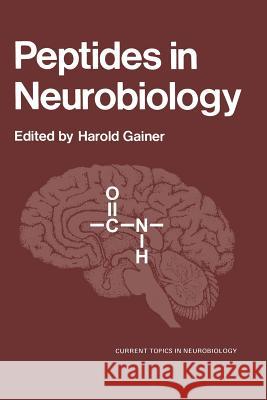
Harold Gainer
Peptides in Neurobiology Harold Gainer 9781461341321 Springer - książkaWidoczna okładka, to zdjęcie poglądowe, a rzeczywista szata graficzna może różnić się od prezentowanej.

Peptides in Neurobiology

ISBN-13: 9781461341321 / Angielski / Miękka / 2011 / 464 str.

Harold Gainer
cena 350,20
(netto: 333,52 VAT:  5%)

Najniższa cena z 30 dni: 335,40
Termin realizacji zamówienia:
ok. 16-18 dni roboczych.

Darmowa dostawa!

Elucidation of the important roles played by peptides as hypothalamic-adenohypo physeal releasing factors, or regulatory hormones, has in recent years led to the recognition that peptides may also be of significance as intercellular messengers in other regions of the nervous system. In this regard, it is interesting that Sub stance P, which has been proposed as a putative neurotransmitter in the spinal cord, was rediscovered by Leeman and her co-workers during their search for the corticotropin-releasing factor in the hypothalamus. Indeed, with the wide spread availability and use of radioimmunoassay techniques, it has become ap parent that various "hypothalamic releasing factors" are localized in extrahypo thalamic areas of the central nervous system as well. This book represents an expression of the belief that the impact on neurobiology of research into neuro peptides will be comparable to, if not greater than, the recent achievements obtained with the biogenic amines. As already appears to be the case, future inves tigations on brain pep tides will undoubtedly uncover a host of new transmitter candidates, with obvious implications for neuropharmacology. Perhaps the most dramatic developments in this field have been the discoveries of the endogenous opiate peptides (enkephalin and endorphin), and the profound physiological and behavioral effects of specific peptides.


Kategorie:
Nauka, Medycyna
Kategorie BISAC:
Medical > Neuroscience
Science > Life Sciences - Neuroscience
Wydawca:
Springer
Seria wydawnicza:
Current Topics in Neurobiology
Język:
Angielski
ISBN-13:
9781461341321
Rok wydania:
2011
Wydanie:
Softcover Repri
Numer serii:
000224581
Ilość stron:
464
Waga:
0.74 kg
Wymiary:
23.5 x 15.5
Oprawa:
Miękka
Wolumenów:
01
Dodatkowe informacje:
Wydanie ilustrowane

1 Peptides in Neurobiology: Historical Introduction.- 1. The Neurosecretory Neuron and the Concept of Neurosecretion.- 2. The Hypothalamic Origin of the Posterior Lobe Hormones.- 3. The Hypothalamic Control of the Adenohypophysis.- 4. Nonhormonal Neurosecretory Signals to Endocrine and Nonendocrine Effector Cells.- 5. Peptidergic Interneuronal Communication.- 6. Conclusion.- 7. References.- 2 Application of Fluorescent Techniques to the Study of Peptides.- 1. Introduction.- 2. Preparation of Materials and Equipment.- 3. Isolation of Peptides from Tissues.- 4. Separation and Detection of Peptides.- 4.1. Noncolumn Methods for Free Peptides.- 4.2. Column Methods for Free Peptides.- 4.3. Noncolumn Methods for Prelabeled Peptides.- 4.4. Column Methods for Prelabeled Peptides.- 5. Applications.- 5.1. Isolation of Pure Peptides.- 5.2. Quantitative Analysis.- 5.3. Physiological Studies.- 5.4. Chemical Characterization.- 6. Conclusion.- 7. References.- 3 Specific Problems in the Identification and Quantitation of Neuropeptides by Radioimmunoassay.- 1. Introduction.- 2. Radioimmunoassay for Detection of Well-Characterized Peptides in Nervous Tissues.- 2.1. Species-Specificity.- 2.2. Preparation of Tissue Extracts.- 2.3. Sources of Artifact.- 2.4. Physical—Chemical Characterization.- 3. Development of Radioimmunoassay Systems for Newly Described Peptides.- 3.1. Production of Antisera.- 3.2. Labeled Peptide.- 3.3. Preparation of Standards.- 3.4. Separation Techniques.- 4. Conclusions and Conjectures.- 5. References.- 4 Immunocytochemistry of Neuropeptides and Their Receptors.- 1. Introduction.- 2. The Unlabeled Antibody Enzyme Method—Sensitivity of Immunocytochemistry.- 3. Modifications of the Unlabeled Antibody Enzyme Method.- 4. Immunocytochemical Staining of Nervous Tissue.- 5. Neurotransmitter Pathways—Catecholamines and Serotonin.- 6. Hypothalamopituitary Pathways.- 6.1. Oxytocin, Vasopressin, and Angiotensin.- 6.2. Luteinizing Hormone—Releasing Hormone, Somatostatin, and Corticotropin-Releasing Factor.- 7. Neuropeptide Receptors.- 8. Nonpituitary Neurosecretory Peptide Pathways.- 9. References.- 5 Substance P and Neurotensin.- 1. Introduction.- 2. Guidelines for the Isolation of Biologically Active Peptides.- 2.1. Detection of Activity.- 2.2. Quantitation of Activity.- 2.3. Establishment of the Peptidic Nature of the Active Material.- 2.4. Development of Isolation Procedures.- 2.5. Sequencing.- 2.6. Synthesis.- 3. Guidelines for the Radioimmunoassay of Small Peptides.- 3.1. General Approach.- 3.2. Generation of Antisera.- 3.3 Selection of Antisera.- 3.4. Performance and Interpretation.- 4. Substance P.- 4.1. Detection of Activity.- 4.2. Quantitation of Activity.- 4.3. Identification as a Peptide.- 4.4. Isolation Procedures.- 4.5. Amino Acid Sequence.- 4.6. Synthesis.- 4.7. Radioimmunoassay.- 4.8. Immunocytochemical Studies.- 4.9. Substance P as a Neurotransmitter.- 5. Neurotensin.- 5.1. Detection of Activity.- 5.2. Quantitation of Activity.- 5.3. Identification as a Peptide.- 5.4. Isolation Procedures.- 5.5. Amino Acid Sequence.- 5.6. Synthesis.- 5.7. Biological Properties.- 5.8. Biologically Active Region.- 5.9. Radioimmunoassay.- 6. References.- 6 Biologically Active Peptides in the Mammalian Central Nervous System.- 1. Introduction.- 2. Historical Perspective.- 3. Indirect Methods for Locating Neurosecretory Cells.- 3.1. Lesions.- 3.2. Pituitary Grafts.- 3.3. Electrical Stimulation.- 3.4. Hypothalamic Deafferentation.- 3.5. Electrophysiological Approaches.- 4. Regional Distribution of Selected Peptides.- 4.1. Luteinizing Hormone—Releasing Hormone.- 4.2. Thyrotropin-Releasing Hormone.- 4.3. Growth Hormone Release—Inhibiting Hormone (Somatostatin).- 4.4. Vasopressin, Oxytocin, and the Neurophysins.- 4.5. Substance P and Neurotensin.- 4.6. ?-Lipotropin, ACTH, ?-MSH, and Enkephalin (Endorphin).- 4.7. Carnosine.- 4.8. Gastrin.- 5. Conclusion.- 6. References.- 7 Peptides Containing Probable Transmitter Candidates in the Central Nervous System.- 1. General Properties of CNS Peptides.- 2. Peptide and Peptidoamine Synthesis with N-Terminal Acetyl-Asp.- 3. Factors That Affect the Levels and Release of Peptides in the CNS.- 3.1. Regulation of Secretion of Releasing Factors.- 3.2. Role of Peptidases in the CNS.- 4. A Working Hypothesis of Peptides as the Final Common Pathway of Multisignal Integration.- 5. Specific Examples of the Working Hypothesis.- 6. Conclusion.- 7. References.- 8 Biosynthesis of Neuronal Peptides.- 1. Introduction.- 2. The Precursor-Protein (Prohormone) Concept.- 3. Strategy for the Study of Peptide Biosynthesis in Neurons.- 3.1. Intact Systems.- 3.2. Identification of a Precursor.- 4. Peptidergic Neurons in Aplysia as Model Systems.- 4.1. Peptidergic and Nonpeptidergic Identified Neurons.- 4.2. Pulse-and-Chase Experiments in Neuron R15.- 4.3. Biosynthetic and Subcellular Fractionation Studies on the Bag Cells.- 4.4. A Model of Neuronal Peptide Biosynthesis and Transport.- 5. Biosynthesis of Neurohypophyseal Peptides and Neurophysin.- 5.1. Historical Background.- 5.2. The Experimental System.- 5.3. Time-Course of Synthesis and Transport of Protein.- 5.4. Analysis of Proteins Transported to the Neurohypophysis.- 5.5. Biosynthetic Evidence for a Precursor.- 5.6. Axonal Transport and Processing of the Precursor.- 5.7. Summary and Conclusions.- 6. Regulation of Neuronal Peptide Biosynthesis.- 7. Biological Significance of the Precursor Mode of Peptide Biosynthesis.- 8. Conclusion.- 9. References.- 9 Conversion and Inactivation of Neuropeptides.- 1. Introduction.- 1.1. Comment on Classification of Proteolytic Enzymes.- 1.2. Methodological Considerations.- 2. Conversion of Prohormones.- 2.1. Corticotropin and Lipotropin.- 2.2. Pituitary—Hypothalamic Hormones.- 2.3. The Angiotensin—Renin System.- 2.4. The Kinin System.- 2.5. Non-CNS Peptides.- 3. Inactivation of Active Peptides.- 3.1. Luteinizing Hormone—Releasing Hormone.- 3.2. Somatostatin.- 3.3. Thyrotropin-Releasing Factor.- 3.4. Substance P and Neurotensin.- 3.5. Oxytocin and Vasopressin.- 3.6. Melanocyte-Inhibiting Factor.- 3.7. Insulin.- 3.8. Angiotensin.- 3.9. Kinins.- 3.10. Lipotropic-Related Peptides.- 4. References.- 10 Peptides in Invertebrate Nervous Systems.- 1. Introduction.- 2. Coelenterata.- 2.1. Head-Activator Peptide.- 2.2. Neck-Inducing Factor.- 3. Arthropoda (Crustacea).- 3.1. Peptides That Act on Tegumentary Chromatophores.- 3.2. Peptides That Act on Retinic Pigments.- 3.3. Cardioactive Peptides.- 3.4. Hyperglycemic Factors.- 3.5. Molt-Inhibiting Factor.- 3.6. Circadian Modulator.- 4. Arthropoda (Insecta).- 4.1. Peptides That Act on the Heartbeat Rate.- 4.2. Peptides That Act on the Gut.- 4.3. Peptides That Act on Diuresis and on Malpighian Tubule Movements.- 4.4. Peptides (Proteins) That Act on the Prothoracic Gland (Prothoracicotropic Hormones).- 4.5. Silkworm Embryonic Diapause Hormone.- 4.6. Peptides That Act on Spontaneous Electrical Activity of Neurons.- 4.7. Bursicon and Other Tanning Factors.- 4.8. Hyperglycemic Peptides.- 4.9. Adipokinetic Hormone.- 4.10. Peptide and Protein Pheromones from Male Accessory Glands.- 4.11. Neurosecretory Factors with As Yet Undemonstrated Peptidic Nature.- 4.12. Peptides of Unknown Function Found in the Nervous System.- 5. Mollusca.- 5.1. Cardioactive Peptides.- 5.2. Peptides That Regulate Neuronal Activity.- 5.3. Peptides That Regulate Salt and Water.- 5.4. Peptides Involved in Reproduction.- 6. Echinodermata: Radial Nerve Factor.- 7. Conclusion.- 8. References.- 11 Physiological Roles of Peptides in the Nervous System.- 1. Introduction.- 1.1. Neurotransmitters.- 1.2. Neurohormones.- 2. Substance P.- 2.1. Distribution.- 2.2. Actions in the Central Nervous System.- 2.3. Actions in the Peripheral Nervous System.- 2.4. Conclusions.- 3. Angiotensin II.- 3.1. Distribution.- 3.2. Actions in the Central Nervous System.- 3.3. Actions in the Peripheral Nervous System.- 3.4. Conclusions.- 4. Parvicellular Peptides: Thyrotropin-Releasing Hormone and Luteinizing Hormone—Releasing Hormone.- 4.1. Distribution.- 4.2. Actions in the Central Nervous System.- 4.3. Conclusions.- 5. Magnocellular Peptides: Antidiuretic Hormone (Lysine Vasopressin) and Oxytocin.- 5.1. Vertebrate Studies.- 5.2. Invertebrate Studies.- 6. Conclusions.- 7. References.- 12 Electrical Activity of Neurosecretory Terminals and Control of Peptide Hormone Release.- 1. Introduction.- 1.1. Correlation of Electrical Activity and Hormone Release.- 1.2. The Calcium Hypothesis.- 2. The Crustacean X-Organ Sinus Gland Neurosecretory System.- 2.1. Background.- 2.2. A Bioassay System.- 2.3. Correlation of Electrical Responses to Stimulation with Hormone Release.- 2.4. Hormone Release in High-Potassium Salines.- 2.5. Intracellularly Recorded Electrical Activity of Neurosecretory Terminals.- 2.6. The Ionic Bases of Terminal and Axonal Potentials.- 2.7. Changes of Terminal Responses During Repetitive Stimulation.- 3. General Conclusions.- 4. References.- 13 Endogenous Opiate Peptides.- 1. Introduction.- 2. The Opiate Receptor.- 2.1. Pharmacological Evidence.- 2.2. Biochemical Studies.- 2.3. Coupling with Adenylate Cyclase.- 3. Adenylate Cyclase and the Mechanism of Addiction.- 4. Endogenous Opiates.- 4.1. Pharmacological Evidence.- 4.2. Steps in Their Isolation and Characterization.- 4.3. The Enkephalins.- 4.4. Are Morphine and the Enkephalins Structurally Related?.- 4.5. ?-Lipotropin and the Endorphins.- 4.6. Other Types of Endorphin.- 5. Physiological Role of Endogenous Opiate Peptides.- 6. References.- 7. Addendum.- 8. Addendum References.- 14 Behavioral Effects of Peptides.- 1. Introduction.- 2. Implication of the Pituitary Gland in Acquisition and Maintenance of Conditioned Avoidance Behavior.- 2.1. Adenohypophysectomy and Hypophysectomy on Acquisition of Active and Passive Avoidance Behavior.- 2.2. Posterior Lobectomy on Acquisition and Maintenance of Active Avoidance Behavior—Effect of Pituitary Peptides.- 2.3. Active and Passive Avoidance Behavior in Rats with Hereditary Diabetes Insipidus.- 3. Behaviorally Active Adrenocorticotropic Hormone Fragments.- 3.1. Behavioral Effects in Intact Rats.- 3.2. Structure—Activity Studies.- 3.3. Sites of Action.- 3.4. Electrophysiological Effects.- 3.5. Effects on Cardiovascular Responses During Emotional Behavior.- 3.6. Role in Inducing Stretching and Excessive Grooming.- 3.7. Interaction with the Opiate Receptor.- 3.8. Biochemical Effects.- 4. Behavioral Effects of Vasopressin and Congeners.- 4.1. Effects on Active and Passive Avoidance Approach, Sexual Behavior, and Amnesia.- 4.2. Structure—Activity Studies with Behaviorally Active Vasopressin Fragments.- 4.3. Cerebrospinal Fluid as a Transport Medium.- 4.4. Sites of Action.- 4.5. Electrophysiological Effects.- 4.6. Effects on Cardiovascular Responses During Emotional Behavior.- 4.7. Vasopressin and Morphine Tolerance.- 5. General Discussion.- 5.1. Behavioral Deficiency as a Result of Ablation of the Pituitary Gland; Precursor Molecules; Long- and Short-Term Effects of Neuropeptides.- 5.2. Significance of the N-Terminal Part of Adrenocorticotropic Hormone for Behavior.- 5.3. Significance of Vasopressin in Memory-Consolidation Processes.- 5.4. Behavioral Effects of Releasing Hormones and Other Oligopeptides.- 5.5. Summary.- 6. References.


Udostępnij

Facebook - konto krainaksiazek.pl


Opinie o Krainaksiazek.pl na Opineo.pl

Partner Mybenefit

Krainaksiazek.pl w programie rzetelna firma Krainaksiaze.pl - płatności przez paypal

Czytaj nas na:

Facebook - krainaksiazek.pl
  • książki na zamówienie
  • granty
  • książka na prezent
  • kontakt
  • pomoc
  • opinie
  • regulamin
  • polityka prywatności

Zobacz:

  • Księgarnia czeska

  • Wydawnictwo Książkowe Klimaty

1997-2026 DolnySlask.com Agencja Internetowa

© 1997-2022 krainaksiazek.pl
     
KONTAKT | REGULAMIN | POLITYKA PRYWATNOŚCI | USTAWIENIA PRYWATNOŚCI
Zobacz: Księgarnia Czeska | Wydawnictwo Książkowe Klimaty | Mapa strony | Lista autorów
KrainaKsiazek.PL - Księgarnia Internetowa

Polityka prywatnosci - link
Krainaksiazek.pl - płatnośc Przelewy24
Przechowalnia Przechowalnia






