People Flow in Buildings » książka





People Flow in Buildings
ISBN-13: 9781119545569 / Angielski / Twarda / 2021 / 448 str.
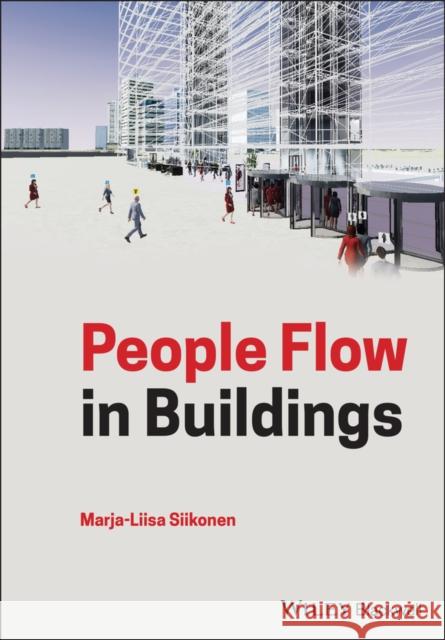
People Flow in Buildings
ISBN-13: 9781119545569 / Angielski / Twarda / 2021 / 448 str.
(netto: 539,85 VAT: 5%)
Najniższa cena z 30 dni: 559,92
ok. 30 dni roboczych.
Darmowa dostawa!
Glosariusz/słownik
Symbols and AbbreviationsPrefaceScope of the bookPART I1. Building design population1.1 Office building population1.2 Number of inhabitants in residential buildings1.3 Number of hotel guests1.4 People arriving from parking areas1.5 Population in hospitals1.6 Other types of populated buildings2. People counting methods2.1. Counting technology inside and outside buildings2.2. Passenger traffic components2.3. Manual people-counting2.4. Use of optical vision2.5. Visitor-counting with photocell signals and infra-red beams2.6. People-counting with access control system2.7. Passenger-counting by load-weighing device2.8. Elevator monitoring systems2.9. External traffic measurement devices2.10. Smart sensing and mobile computing3. Passenger arrival process in buildings3.1 Introduction3.2 Poisson arrival process3.2.1 Probability density function3.2.2 Example of passenger arrivals through security cages3.3 Passenger arrivals in batches3.3.1 Batch arrivals in elevator lobbies3.3.2 Batch arrivals in escalators3.3.3 Observed batch size distributions in several building types3.3.4 Batch size variation in elevator lobbies during the day3.3.5 Modelling of batch size distribution4. Daily vertical passenger traffic profiles4.1 Introduction4.1 Vertical building traffic components4.1 Two-way traffic profiles4.1 Effect of inter-floor traffic4.1 Occupancy in buildings4.2 Passenger trips with elevators4.3 People flow in office buildings4.3.1 Traffic in offices4.3.2 Observed daily two-way traffic profiles4.3.3 Daily traffic profiles with interfloor traffic4.4 People flow in hotels4.4.1 Traffic in hotels4.4.2 Daily traffic profiles in hotels4.5 People flow in residential buildings4.5.1 Traffic in residential buildings4.5.2 Traffic profiles in residential buildings4.6 People flow profiles in hospitals4.6.1 Hospital traffic4.6.2 Daily traffic in hospitals4.7 People flow in commercial and public buildings4.7.1 Traffic in commercial and public buildings4.7.2 Daily people flow in escalators4.7.3 Daily people flow in elevators in shopping centers4.7.4 Duration of a visit in a shopping centre4.7.5 People flow by GPS in public buildings4.8 People flow on cruise ships4.8.1 Traffic in cruisers4.8.2 Daily traffic profiles for typical days5. Monitored elevator traffic data5.1 Introduction5.2 Service quality parameters5.3 Measured passenger service level5.3.1 Measured passenger traffic with external device5.3.2 Call time distribution5.3.3 Waiting time distribution with destination control5.3.4 Monthly service times5.4 Measured elevator performance5.4.1 Number of starts during a month5.4.2 Correlation between cycle time and round trip timePart II: People flow solutions6. Historical overview7. Push button control systems7.1 Signal operation7.2 Single-button collective control7.3 Down collective control7.4 Interconnected full collective control principle8. Collective group control system8.1 Software-based collective control system8.2 Bunching8.3 Next car up8.4 Dynamic sub-zoning8.5 Channeling8.6 Queue selective control system9. Intelligent group control systems9.1 Performance requirements9.2 Control system architectures10. Artificial Intelligence in elevator dispatching10.1 Introduction10.2 AI architectures10.3 Traffic forecasting10.4 Fuzzy logic10.5 Genetic algorithm10.6 Neural networks10.7 Optimization objective functions10.8 Elevator lobby with collective control system10.9 Hospital service modes11. Destination control system11.1 Adaptive call allocation algorithm11.2 Destination control system11.3 Hybrid destination control system11.4 "Harmonized" elevator dispatching11.5 Elevator lobby with destination control system12. Multi-car control systems12.1 Introduction12.2 Paternoster12.3 Odyssey12.4 Double-deck elevators12.4.1 Functional principle of double-deck elevators12.4.2 Double-deck collective control12.4.3 Double-deck destination control12.4.4 Harmonized dispatching for double-deck elevators12.5 TWIN12.6 MULTI12.7 Other possible multi-car elevator control systems13. Access control systems2.11. Application areas2.12. Access control by an external provider2.13. Access control embedded in an elevator control14. Architectural considerations of elevators14.1 Layouts with conventional control14.2 Layouts with destination control system14.3 Dimensions of passenger elevators14.1 Vertical elevator dimensions14.2 Lobby arrangement with double-deck elevators15. Architectural considerations of other people flow solutions15.1 Escalator arrangements15.2 Horizontal escalator dimensions15.3 Vertical escalator dimensions15.4 Dimensions of moving walkways15.5 Staircase dimensions15.6 Building door typesPart III: People flow calculation methods16. Introduction17. Elevator traffic calculation methods17.1 Elevator performance parameters17.2 Elevator handling capacity equation17.3 Elevator kinematics17.3.1 Elevator rated speed17.3.2 Flight time calculation17.4 Up-peak roundtrip time equations17.4.1 Uniform passenger arrivals17.4.2 Poisson arrival process17.4.3 Uniform arrival process for r-floor elevator jumps17.4.4 Poisson arrival process for r-floor elevator jumps17.4.5 Uniform arrival process for elevator jumps between floor pairs17.4.6 Poisson arrival process for elevator jumps between floor pairs17.4.7 A generalized roundtrip time formula17.5 Round trip time related equations17.5.1 Shuttle elevators17.5.2 Express zones17.5.3 Dynamic zoning in up-peak17.5.4 Unsymmetric elevator groups17.5.5 Multiple entrance floors17.5.6 Two-way traffic17.6 Multicar traffic analysis17.6.1 Paternoster performance17.6.2 Double-deck performance17.6.3 Number of MULTI cabins and shafts18. Passenger service level18.1 Queuing theoretical approach18.1.1 Waiting times18.1.2 Transit times18.1.3 Journey time18.2 Queuing at hot spots18.3 Egress time with elevators19. Pedestrian traffic19.1 People flow density19.1.1 Level of Service19.1.2 Human body size19.1.3 Passenger characteristics19.1.4 Passenger space demand in elevators19.2 Escalator handling capacity19.3 Handling capacity of moving walkways19.4 People flow in walkways19.5 People flow in staircases19.6 People flow in corridors and doorways19.7 Handling capacities of turnstiles and ticket counters19.8 Number of destination operation panelsPart IV: People flow simulation methods20. Introduction21. Traffic simulation methods21.1 Monte Carlo simulation21.2 Passenger traffic generation21.3 Traffic simulation of an elevator group21.4 Building traffic simulation21.5 People flow simulation21.5.1 Simulation software architecture21.5.2 Passenger routing model22. Simulation procedure22.1 Simulated handling capacity22.2 Initial transient22.3 Stepwise or ramp arrival profiles22.4 Traffic patterns22.4.1 Introduction22.4.2 Office traffic templates22.4.3 Hotel traffic templates22.4.4 Traffic templates of residential buildings23. Validation of elevator traffic simulation software23.1 Introduction23.2 Verification of simulator models23.3 Validation of the elevator traffic simulator24. Simulated elevator performance and passenger service level24.1 Introduction24.1 Up-peak boosting24.1.1 Traffic boosting with destination control24.1.2 Boosting with double-deck system24.1.3 Effect of elevator group size24.2 Traffic simulations with diverse control systems24.2.1 Simulation setup for an example building24.2.2 Conventional control with single-car elevator system24.2.3 Destination control with single-car elevator system24.2.4 Conventional control double-deck system24.2.5 Destination control double-deck system24.3 Comparison handling capacities24.4 Service time distributions with conventional systemPart V: People flow planning and evacuation25. Introduction26. ISO 8100-3226.1 Background26.2 Design process26.3 ISO calculation method26.1 ISO simulation method26.2 Selection of rated load based on mass26.3 Selection of rated load based on area and mass27. Design criteria27.1 ISO 8100-32 design criteria27.2 BCO design criteria for offices27.3 Other design criteria28. Elevatoring low and mid-rise buildings28.1 Offices28.2 Hotels28.3 Residential buildings28.4 Hospitals28.5 Parking areas29. People transportation in commercial and public buildings29.1 Mass transits29.2 Public transportation buildings29.3 Commercial buildings29.4 Observation decks30. Elevatoring tall buildigs30.1 Background30.2 Zoning of supertall buildings30.3 Example zonings of a supertall building30.4 Arrangements with zoning from the ground30.4.1 Elevator arrangement selection with ISO simulation method30.4.2 Elevator group lobby layouts30.4.3 Main entrance core areas30.5 Sky lobby arrangement30.5.1 Double-deck shuttle elevators30.5.2 Multi-car shuttle elevators30.5.3 Elevator selection with ISO simulation method30.5.4 Elevator group loofbby layouts30.5.5 Main entrance core areas for sky lobby arrangements31. Core space of different arrangements32. Building evacuation32.1 Introduction32.2 Egress time calculation in building design32.2.1 Background32.2.2 Egress by stairs32.2.3 Egress by elevators32.3 Generic emergency evacuation types32.3.1 Non-fire emergency evacuation32.3.2 Fire evacuation modes32.3.3 Scenatio configuration from BMS32.4 Elevator evacuation-related standards and guidelines32.4.1 Evacuation elevator requirements32.4.2 Firefighters lifts - EN 81-72:201532.4.3 Evacuation of disabled persons using lifts - CEN/TS 81-76:201132.4.4 Occupant Evacuation Operation - ASME A17.1:201332.4.5 Elevators used to assist in building evacuation - ISO/TS 18870:201432.5 Evacuation strategies of megatall buildings32.5.1 Introduction32.5.2 Jeddah Tower32.5.3 Shanghai Tower32.5.4 Royal Clock Tower, Makkah32.5.5 One World Trade Center, New York33. How high can we go?EpilogueBibliographyGlossary
Dr. Marja-Liisa Siikonen (née Jokela), PhD, is the CEO of MLS Lift Consulting. Earlier she worked as a Director of People Flow Planning in KONE Corporation, Finland. She received her M.Sc. in technical physics, and Lic.Sc. (Tech.) and D.Sc. (Tech.) degree in applied mathematics from the Helsinki University of Technology. She has published around 100 articles and holds 250 patents in the field of elevator control systems and energy consumption, elevator traffic planning, building traffic simulation and evacuation, and people flow in buildings.




Czytaj nas na:
1997-2026 DolnySlask.com Agencja Internetowa
KrainaKsiazek.PL - Księgarnia Internetowa


