Peacemaking and Religious Violence: From Thomas Aquinas to Thomas Jefferson » książka





Peacemaking and Religious Violence: From Thomas Aquinas to Thomas Jefferson
ISBN-13: 9781556350696 / Angielski / Miękka / 2009 / 251 str.
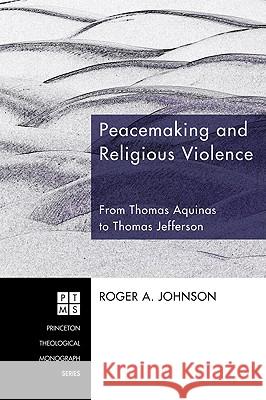
Peacemaking and Religious Violence: From Thomas Aquinas to Thomas Jefferson
ISBN-13: 9781556350696 / Angielski / Miękka / 2009 / 251 str.
(netto: 139,75 VAT: 5%)
Najniższa cena z 30 dni: 144,74
ok. 16-18 dni roboczych.
Darmowa dostawa!
Description: From its very beginning, Christian faith has been engaged with religious violence. The first Christians were persecuted by their co-religionists and then by imperial Rome. Jesus taught them, in such circumstances, not to retaliate, but to be peacemakers, to love their enemies, and to pray for their persecutors. Jesus's response to religious violence of the first century was often ignored, but it was never forgotten. Even during those centuries when the church herself persecuted Christian heretics, Jews, and Muslims, some Christians still struggled to bear witness to the peace mandate of their Lord. In the thirteenth century, Thomas Aquinas wrote a theology to help his Dominican brothers persuade Cathar Christians to return to their Catholic faith peacefully. Ramon Lull, a Christian student of Arabic and the Qur'an, sought to help his fellow Christians recognize the elements of belief they shared in common with the Muslims in their midst. In the fifteenth century, Nicholas of Cusa, a Church Cardinal and theologian, expanded Lull's project to include the newly discovered religions of Asia. In the seventeenth century, Lord Herbert, an English diplomat and lay Christian, began to identify the political union of church and government as a causal factor in the religious warfare of post-Reformation Christendom. One and a half centuries later, Thomas Jefferson, a lay theologian of considerable political stature, won a political struggle in the American colonies to disestablish religion first in his home colony of Virginia and then in the new nation he helped to found. All five of these theologians reclaimed the peace mandate of Jesus in their response to the religious violence of their own eras. All of which points us to some intriguing Christian responses to religious violence in our own century as recounted in the epilogue. Endorsements: ""Peacemaking and Religious Violence brings careful scholarship and a refreshing clarity of expression to a burning contemporary concern: the way that religions either foster violence or defuse it. In a series of marvelously lucid historical vignettes, Johnson illuminates crucial moments in Christianity's response to religious difference. He demonstrates that there is more to this story than is commonly assumed. Alongside the all-too-real exclusivist claims and crusading zeal, he lifts up a series of thinkers in different periods who sketched an alternative history, a path not taken by the majority church, but one urgently in need of appropriation today. Peacemaking and Religious Violence is an extraordinary work: mature, balanced, original. Its unpretentious clarity will commend it to general readers. Its ability to throw striking new light on major figures and topics in Christian theology and history will impress academics. Anyone interested in questions of religious pluralism and social conflict will be enriched and instructed by this study."" --S. Mark Heim Samuel Abbot Professor of Christian Theology, Andover Newton Theological School ""Roger Johnson utilizes in this volume his formidable historical and theological knowledge to appraise two contemporary tides in our culture: a growing Christian peace witness and a growing public concern about religious violence . . . This welcome study enriches our awareness of historical figures some of whom are less well-known and it connects them all in instructive ways. It brings the Constantinian and the contemporary eras into comparative focus, something too rarely done. This is a deeply illuminating and carefully researched text that deserves to be widely read and taken to heart."" --Gene Outka Dwight Professor of Philosophy and Christian Ethics, Yale University ""Sad to say, the peace ethic of Jesus long ago became a minor (some said heretical) part of Christian witness. Yet it has persisted. Today, when we are faced with growing inter-religious violence, Roger Johnson does us a huge service by shining the light of his research on fi
Description:From its very beginning, Christian faith has been engaged with religious violence. The first Christians were persecuted by their co-religionists and then by imperial Rome. Jesus taught them, in such circumstances, not to retaliate, but to be peacemakers, to love their enemies, and to pray for their persecutors. Jesuss response to religious violence of the first century was often ignored, but it was never forgotten. Even during those centuries when the church herself persecuted Christian heretics, Jews, and Muslims, some Christians still struggled to bear witness to the peace mandate of their Lord. In the thirteenth century, Thomas Aquinas wrote a theology to help his Dominican brothers persuade Cathar Christians to return to their Catholic faith peacefully. Ramon Lull, a Christian student of Arabic and the Quran, sought to help his fellow Christians recognize the elements of belief they shared in common with the Muslims in their midst. In the fifteenth century, Nicholas of Cusa, a Church Cardinal and theologian, expanded Lulls project to include the newly discovered religions of Asia. In the seventeenth century, Lord Herbert, an English diplomat and lay Christian, began to identify the political union of church and government as a causal factor in the religious warfare of post-Reformation Christendom. One and a half centuries later, Thomas Jefferson, a lay theologian of considerable political stature, won a political struggle in the American colonies to disestablish religion first in his home colony of Virginia and then in the new nation he helped to found. All five of these theologians reclaimed the peace mandate of Jesus in their response to the religious violence of their own eras. All of which points us to some intriguing Christian responses to religious violence in our own century as recounted in the epilogue. Endorsements:""Peacemaking and Religious Violence brings careful scholarship and a refreshing clarity of expression to a burning contemporary concern: the way that religions either foster violence or defuse it. In a series of marvelously lucid historical vignettes, Johnson illuminates crucial moments in Christianitys response to religious difference. He demonstrates that there is more to this story than is commonly assumed. Alongside the all-too-real exclusivist claims and crusading zeal, he lifts up a series of thinkers in different periods who sketched an alternative history, a path not taken by the majority church, but one urgently in need of appropriation today. Peacemaking and Religious Violence is an extraordinary work: mature, balanced, original. Its unpretentious clarity will commend it to general readers. Its ability to throw striking new light on major figures and topics in Christian theology and history will impress academics. Anyone interested in questions of religious pluralism and social conflict will be enriched and instructed by this study.""--S. Mark HeimSamuel Abbot Professor of Christian Theology, Andover Newton Theological School""Roger Johnson utilizes in this volume his formidable historical and theological knowledge to appraise two contemporary tides in our culture: a growing Christian peace witness and a growing public concern about religious violence . . . This welcome study enriches our awareness of historical figures some of whom are less well-known and it connects them all in instructive ways. It brings the Constantinian and the contemporary eras into comparative focus, something too rarely done. This is a deeply illuminating and carefully researched text that deserves to be widely read and taken to heart.""--Gene OutkaDwight Professor of Philosophy and Christian Ethics, Yale University""Sad to say, the peace ethic of Jesus long ago became a minor (some said heretical) part of Christian witness. Yet it has persisted. Today, when we are faced with growing inter-religious violence, Roger Johnson does us a huge service by shining the light of his research on fi




Czytaj nas na:
KrainaKsiazek.PL - Księgarnia Internetowa


