• Wyszukiwanie zaawansowane
  • Kategorie
  • Kategorie BISAC
  • Książki na zamówienie
  • Promocje
  • Granty
  • Książka na prezent
  • Opinie
  • Pomoc
  • Załóż konto
  • Zaloguj się

Pattern Recognition Basis Artificial Intelligence » książka


zaloguj się | załóż konto
Logo Krainaksiazek.pl

koszyk

konto

szukaj
topmenu
Księgarnia internetowa
Szukaj
Książki na zamówienie
Promocje
Granty
Książka na prezent
Moje konto
Pomoc
 
 
Wyszukiwanie zaawansowane
Pusty koszyk
Bezpłatna dostawa dla zamówień powyżej 20 złBezpłatna dostawa dla zamówień powyżej 20 zł

Kategorie główne

• Nauka
 [2952079]
• Literatura piękna
 [1850969]

  więcej...
• Turystyka
 [71058]
• Informatyka
 [151066]
• Komiksy
 [35579]
• Encyklopedie
 [23181]
• Dziecięca
 [620496]
• Hobby
 [139036]
• AudioBooki
 [1646]
• Literatura faktu
 [228729]
• Muzyka CD
 [379]
• Słowniki
 [2932]
• Inne
 [445708]
• Kalendarze
 [1409]
• Podręczniki
 [164793]
• Poradniki
 [480107]
• Religia
 [510956]
• Czasopisma
 [511]
• Sport
 [61267]
• Sztuka
 [243299]
• CD, DVD, Video
 [3411]
• Technologie
 [219640]
• Zdrowie
 [100984]
• Książkowe Klimaty
 [124]
• Zabawki
 [2281]
• Puzzle, gry
 [3363]
• Literatura w języku ukraińskim
 [258]
• Art. papiernicze i szkolne
 [8020]
Kategorie szczegółowe BISAC

Pattern Recognition Basis Artificial Intelligence

ISBN-13: 9780818677960 / Angielski / Miękka / 1998 / 388 str.
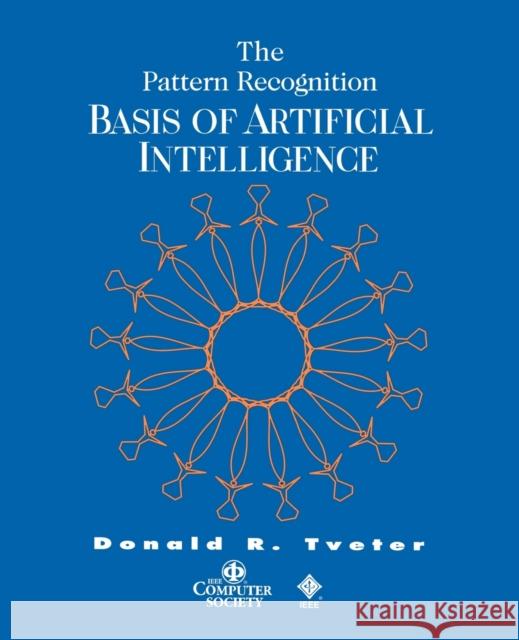
Donald R. Tveter
Pattern Recognition Basis Artificial Intelligence Tveter, Donald 9780818677960 IEEE Computer Society Press - książkaWidoczna okładka, to zdjęcie poglądowe, a rzeczywista szata graficzna może różnić się od prezentowanej.

Pattern Recognition Basis Artificial Intelligence

ISBN-13: 9780818677960 / Angielski / Miękka / 1998 / 388 str.

Donald R. Tveter
cena 541,78
(netto: 515,98 VAT:  5%)

Najniższa cena z 30 dni: 538,44
Termin realizacji zamówienia:
ok. 30 dni roboczych
Dostawa w 2026 r.

Darmowa dostawa!

This book takes the viewpoint that plain symbol processing techniques have little hope of reproducing the depth and breadth of capabilities found in human beings. The book introduces new foundational principles to AI: connectionist/neural networking methods, case based and memory based methods and picture processing.

The book looks at methods of AI as different ways of doing pattern recognition. One way to do pattern recognition is to compare a problem to stored cases. At the other end of the spectrum, Classical Symbol Processing AI compresses cases down to a small set of rules and then works only with this condensed knowledge. In between these two extremes are neural networks, especially backprop type networks. As much as possible the book compares these three basic methods using actual AI programs.

The structure of the book starts at the bottom of human abilities with vision and other simple pattern recognition abilities and moves on to the higher levels of problem solving and game playing and finally to the level of natural language and understanding of the world. At the higher levels more complex computer architectures are needed that include methods for structuring thoughts.

The book is organized in a manner in which the reader will get an intuitive feeling for the principles of AI. Throughout the book applications of basic principles are demonstrated by examining some classic AI programs in detail. The book can serve as a text for juniors, seniors and first year graduate students in Computer Science or Psychology and includes sample problems and data for exercises and a list of frequently asked questions.


Kategorie:
Informatyka
Kategorie BISAC:
Computers > Artificial Intelligence - General
Technology & Engineering > Electronics - Digital
Wydawca:
IEEE Computer Society Press
Język:
Angielski
ISBN-13:
9780818677960
Rok wydania:
1998
Ilość stron:
388
Waga:
0.68 kg
Wymiary:
26.29 x 18.47 x 2.59
Oprawa:
Miękka
Wolumenów:
01
Dodatkowe informacje:
Bibliografia
Glosariusz/słownik
Wydanie ilustrowane

Preface.

1 Artificial Intelligence.

1.1 Artificial Intelligence and Intelligence

1.1.1 Intelligence.

1.1.2 Thinking.

1.1.3 The Turing Test for Thinking.

1.1.4 The Chinese Room Argument.

1.1.5 Consciousness and Quantum Mechanics.

1.1.6 Dualism.

1.2 Association.

1.3 Neural Networking.

1.3.1 Artificial Neural Networks.

1.3.2 Biological Neural Networks.

1.4 Symbol Processing.

1.5 Heuristic Search.

1.6 The Problems with AI.

1.7 The New Proposals.

1.7.1 Real Numbers.

1.7.2 Picture Processing.

1.7.3 Memories.

1.7.4 Quantum Mechanics.

1.8 The Organization of the Book.

1.9 Exercises.

2 Pattern Recognition I.

2.1 A Simple Pattern Recognition Algorithm.

2.2 A Short Description of the Neocognitron.

2.2.1 Detecting Short Lines.

2.2.2 A Typical Neocognitron.

2.2.3 Training the Neocognitron.

2.2.4 Some Results.

2.3 Recognizing Words.

2.4 Expanding the Pattern Recognition Hierarchy.

2.4.1 Hearing.

2.4.2 Higher Levels.

2.4.3 The Hierarchy.

2.4.4 On the Hierarchy.

2.5 Additional Perspective.

2.5.1 Other Systems.

2.5.2 Realism.

2.5.3 Bigger Problems.

2.6 Exercises.

3 Pattern Recognition II.

3.1 Mathematics, Pattern Recognition, and the Linear Pattern Classifier.

3.1.1 The Linear Pattern Classifier.

3.1.2 ADALINEs and MADELINEs.

3.1.3 Perceptrons.

3.2 Separating Nonlinearly Separable Classes.

3.2.1 The Nearest Neighbor Algorithm.

3.2.2 Learning Vector Quantization Methods.

3.3 Hopfield Networks.

3.3.1 The Hopfield Network.

3.3.2 Storing Patterns.

3.3.3 The Boltzman Machine.

3.3.4 Pattern Recognition.

3.3.5 Harmony.

3.3.6 Comparison with Human Thinking.

3.4 Back–Propagation.

3.4.1 History.

3.4.2 The Network.

3.4.3 Computing the Weights.

3.4.4 Speeding Up Back–Propagation.

3.4.5 Dealing with Local Minima.

3.4.6 Using Back–Propagation to Train Hopfield/Boltzman Networks.

3.5 Pattern Recognition and Curve Fitting.

3.5.1 Pattern Recognition as Curve Fitting.

3.5.2 Approximating Real–Valued Functions.

3.5.3 Overfitting.

3.6 Associative Memory and Generalization.

3.6.1 Associative Memory.

3.6.2 Local and Distributed Representations.

3.6.3 Reasoning within a Network.

3.7 Applications of Back–Propagation.

3.7.1 Interpreting Sonar Returns.

3.7.2 Reading Text. 3.7.3 Speech Recognition.

3.7.4 Detecting Bombs.

3.7.5 Economic Analysis.

3.7.6 Learning to Drive.

3.7.7 DNA Analysis.

3.8 Additional Perspective.

3.9 Exercises.

4 Rule–Based Methods.

4.1 Introduction.

4.2 Some Elementary Prolog.

4.2.1 Stating Facts.

4.2.2 Syntax.

4.2.3 Asking Questions.

4.2.4 Rules.

4.2.5 Recursion.

4.2.6 List Processing.

4.2.7 Other Predicates.

4.3 Rules and Basic Rule Interpretation Methods.

4.3.1 A Small Rule–Based System.

4.3.2 Forward Chaining.

4.3.3 Backward Chaining.

4.4 Conflict Resolution.

4.5 More Sophisticated Rule Interpretation.

4.5.1 Dealing with Incomplete Data by Asking Questions.

4.5.2 Other Activation Functions.

4.5.3 Uncertain Input.

4.5.4 Extra Facilities for Rule Interpreters.

4.6 The Famous Expert Systems.

4.6.1 DENDRAL.

4.6.2 MYCIN.

4.6.3 PROSPECTOR.

4.6.4 ACE.

4.6.5 XCON.

4.7 Learning Rules in SOAR.

4.7.1 A Searching Example.

4.7.2 The Power Law of Practice.

4.8 Rules versus Networks.

4.9 Exercises.

5 Logic.

5.1 Standard Form and Clausal Form.

5.2 Basic Inference Rules.

5.2.1 Inference Rules.

5.2.2 Clauses with Variables.

5.3 Controlling Search.

5.3.1 The Problem with Blind Searching.

5.3.2 Proof by Contradiction.

5.3.3 The Set–of–Support Strategy.

5.3.4 Weighting.

5.3.5 Prolog′s Strategy.

5.4 An Example Using Otter.

5.4.1 The Problem.

5.5 The Usefulness of Predicate Calculus.

5.6 Other Reasoning Methods.

5.7 Exercises.

6 Complex Architectures.

6.1 The Basic Human Architecture.

6.2 Flow of Control.

6.3 The Virtual Symbol Processing Machine Proposal.

6.4 Mental Representation and Computer Representation.

6.4.1 A Problem with Symbolic Representation.

6.4.2 Symbol Grounding as a Solution.

6.4.3 Structure and Operations on Structures.

6.5 Storing Sequential Events.

6.5.1 The Symbolic Solution.

6.5.2 Neural Solutions.

6.6 Structuring Individual Thoughts.

6.6.1 The Symbolic Methods.

6.6.2 Neural Methods.

6.7 Frames and Scripts.

6.7.1 Schemas and Frames.

6.7.2 Scripts.

6.8 Exercises.

7 Case–Based and Memory–Based Reasoning

7.1 Condensed versus Uncondensed Knowledge

7.1.1 Arguments For Condensed Knowledge

7.1.2 Arguments Against Condensed Knowledge.

7.1.3 Problems with Condensed Representations.

7.2 Memory–Based Reasoning.

7.2.1 A Simple Example.

7.2.2 MBRtalk.

7.2.3 A HERBIE Solution to Reading.

7.2.4 JOHNNY.

7.2.5 PACE.

7.3 Case–Based Reasoning.

7.3.1 Case–Based Reasoning in People.

7.3.2 CHEF.

7.4 Other Case–Based Programs.

7.5 Exercises.

8 Problem Solving and Heuristic Search.

8.1 The 8–Puzzle.

8.1.1 The Blind Search Methods.

8.1.2 Heuristic Searches.

8.1.3 Other Methods.

8.2 A Geometry Theorem Prover.

8.3 Symbolic Integration and Heuristic Search.

8.3.1 SAINT.

8.3.2 A Symbolic Program to Learn Integration.

8.3.3 A Partial Back–Propagation Solution.

8.4 Other Heuristic Programs.

8.5 Exercises.

9 Game Playing.

9.1 General Game Playing Techniques.

9.1.1 Minimax.

9.1.2 More Sophisticated Searching Methods.

9.1.3 Using Experience.

9.2 Checkers.

9.2.1 Rote Learning.

9.2.2 Generalization Learning.

9.2.3 Samuel′s Later Work.

9.2.4 Chinook.

9.3 Backgammon.

9.3.1 Berliner′s BKG Program.

9.3.2 Backgammon using Back–Propagation.

9.3.3 A Second Back–Propagation Approach.

9.3.4 Temporal Difference Learning.

9.4 Exercises.

10 Natural Language Processing.

10.1 Formal Languages.

10.2 The Transition Network Grammar.

10.2.1 A Simple Transition Network.

10.2.2 A Prolog Implementation.

10.2.3 A Neural Analog.

10.2.4 Syntax is not Enough.

10.3 Semantics–Based Methods.

10.3.1 Semantic Grammar.

10.3.2 Conceptual Dependency Notation.

10.4 Scripts and Short Stories.

10.5 A Neural–Network–Based Approach.

10.6 Defining Words by the Way they are Used.

10.7 A Recurrent Network for Sentences.

10.8 Neural–Based Scripts.

10.9 Learning the Past Tense of Verbs.

10.9.1 Over–Regularization.

10.9.2 The Rumelhart and McClelland Network.

10.9.3 The Classical Rule–Based Model.

10.9.4 A Hybrid Model.

10.10 Other Positions on Language.

10.11 Exercises Afterword.

A Appendix A.

A.1 A Derivation of Back–Propagation.

A.1.1 The Delta Rule.

A.1.2 The Generalized Delta Rule, or Back–Propagation.

Glossary.

Bibliography.

Index.


Udostępnij

Facebook - konto krainaksiazek.pl


Opinie o Krainaksiazek.pl na Opineo.pl

Partner Mybenefit

Krainaksiazek.pl w programie rzetelna firma Krainaksiaze.pl - płatności przez paypal

Czytaj nas na:

Facebook - krainaksiazek.pl
  • książki na zamówienie
  • granty
  • książka na prezent
  • kontakt
  • pomoc
  • opinie
  • regulamin
  • polityka prywatności

Zobacz:

  • Księgarnia czeska

  • Wydawnictwo Książkowe Klimaty

1997-2025 DolnySlask.com Agencja Internetowa

© 1997-2022 krainaksiazek.pl
     
KONTAKT | REGULAMIN | POLITYKA PRYWATNOŚCI | USTAWIENIA PRYWATNOŚCI
Zobacz: Księgarnia Czeska | Wydawnictwo Książkowe Klimaty | Mapa strony | Lista autorów
KrainaKsiazek.PL - Księgarnia Internetowa

Polityka prywatnosci - link
Krainaksiazek.pl - płatnośc Przelewy24
Przechowalnia Przechowalnia





