• Wyszukiwanie zaawansowane
  • Kategorie
  • Kategorie BISAC
  • Książki na zamówienie
  • Promocje
  • Granty
  • Książka na prezent
  • Opinie
  • Pomoc
  • Załóż konto
  • Zaloguj się

Parasitic Orobanchaceae: Parasitic Mechanisms and Control Strategies » książka


zaloguj się | załóż konto
Logo Krainaksiazek.pl

koszyk

konto

szukaj
topmenu
Księgarnia internetowa
Szukaj
Książki na zamówienie
Promocje
Granty
Książka na prezent
Moje konto
Pomoc
 
 
Wyszukiwanie zaawansowane
Pusty koszyk
Bezpłatna dostawa dla zamówień powyżej 20 złBezpłatna dostawa dla zamówień powyżej 20 zł

Kategorie główne

• Nauka
 [2944077]
• Literatura piękna
 [1814251]

  więcej...
• Turystyka
 [70679]
• Informatyka
 [151074]
• Komiksy
 [35590]
• Encyklopedie
 [23169]
• Dziecięca
 [611005]
• Hobby
 [136031]
• AudioBooki
 [1718]
• Literatura faktu
 [225599]
• Muzyka CD
 [379]
• Słowniki
 [2916]
• Inne
 [443741]
• Kalendarze
 [1187]
• Podręczniki
 [166463]
• Poradniki
 [469211]
• Religia
 [506887]
• Czasopisma
 [481]
• Sport
 [61343]
• Sztuka
 [242115]
• CD, DVD, Video
 [3348]
• Technologie
 [219293]
• Zdrowie
 [98602]
• Książkowe Klimaty
 [124]
• Zabawki
 [2385]
• Puzzle, gry
 [3504]
• Literatura w języku ukraińskim
 [260]
• Art. papiernicze i szkolne
 [7151]
Kategorie szczegółowe BISAC

Parasitic Orobanchaceae: Parasitic Mechanisms and Control Strategies

ISBN-13: 9783642447075 / Angielski / Miękka / 2015 / 513 str.
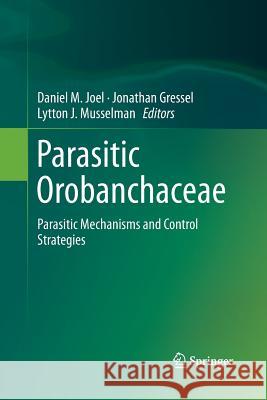
Daniel M. Joel; Jonathan Gressel; Lytton J. Musselman
Parasitic Orobanchaceae: Parasitic Mechanisms and Control Strategies Joel, Daniel M. 9783642447075 Springer - książkaWidoczna okładka, to zdjęcie poglądowe, a rzeczywista szata graficzna może różnić się od prezentowanej.

Parasitic Orobanchaceae: Parasitic Mechanisms and Control Strategies

ISBN-13: 9783642447075 / Angielski / Miękka / 2015 / 513 str.

Daniel M. Joel; Jonathan Gressel; Lytton J. Musselman
cena 805,10
(netto: 766,76 VAT:  5%)

Najniższa cena z 30 dni: 771,08
Termin realizacji zamówienia:
ok. 22 dni roboczych.

Darmowa dostawa!

This book was written in response to significant recent advances in understanding the mechanisms of parasitism in the Orobanchaceae, and breakthroughs in the control of the parasitic weeds Striga and Orobanche. It consists of 26 contributions by internationally recognized leading scientists. The main book chapters are grouped into two parts: . Part I The Orobanchaceae and Their Parasitic Mechanisms. Part II The Weedy Orobanchaceae and Their ControlThe first part provides cutting-edge information on all key aspects of plant parasitism, such as the structure, development and function of the haustorium; nutrient transfer and the physiology of the parasite-host association; host reaction to parasitic plants; seed production and germination; the strigolactones and host-parasite signaling mechanisms; the parasite genome, phylogenetics, evolution and epigenetics; and ecology. Topics of the second part include: the problem posed by the weedy parasites; population diversity and dynamics; molecular diagnosis of seed banks; and detailed discussion of the various management strategies, including agronomic, chemical and biotechnological approaches, as well as host breeding for resistance, allelopathy and biological control. This book is intended for plant scientists, university lecturers and students, agronomists and weed specialists, breeders and farmers, extension personnel and experts in tropical and subtropical agriculture. "


Kategorie:
Nauka, Biologia i przyroda
Kategorie BISAC:
Science > Botanika
Science > Life Sciences - Ecology
Technology & Engineering > Agriculture - General
Wydawca:
Springer
Język:
Angielski
ISBN-13:
9783642447075
Rok wydania:
2015
Wydanie:
Softcover Repri
Ilość stron:
513
Waga:
0.73 kg
Wymiary:
23.39 x 15.6 x 2.72
Oprawa:
Miękka
Wolumenów:
01
Dodatkowe informacje:
Wydanie ilustrowane

"This is the most comprehensive book about the biology of, and control strategies for, the parasitic plants in the family Orobanchaceae. ... All authors are to be congratulated for their contributions to this valuable book. This book is a 'must have' for scientists, students, and breeders who are interested in, or affected by, parasitic plants. This book will contribute to numerous future studies on the elucidation of plant parasitism and ultimately to eliminate these devastating weeds." (Satoko Yoshida, Haustorium, Issue 68, December, 2015)

1. Introduction: The parasitic syndrome in higher plants

Henning S. Heide-Jørgensen

1.1 Parasitism in plants

1.2 Hemi- and holoparasitism

1.3 The haustorium

1.4 Dispersal and germination strategies

1.5  Host range

1.6  Geographical distribution

1.7  The parasitic plant families
1.8. Parasite look-alike

References


Part I: The Orobanchaceae and their parasitic mechanisms

2. The haustorium and the life cycles of parasitic Orobanchaceae
Daniel M. Joel

            2.1   How do we define the haustorium in the Orobanchaceae?

            2.2    Life cycles of facultative and obligate Orobanchaceae

References

3. Functional structure of the mature haustorium

Daniel M. Joel

            3.1   Introduction

            3.2    Haustorium diversity

            3.3    Lateral and terminal haustoria

            3.4    Morphological features of terminal haustoria

            3.5    Roots of hemiparasites

            3.6    Morphological features of lateral haustoria

            3.7    The anatomical complexity of haustoria

            3.8    Tissue organization within the mature haustorium

            3.9    The conductive system

            3.10   Developmental aspects of the vascular system

            3.11   The mature endophyte

            3.12   The haustorial neck

            3.13   The base of lateral haustoria

            3.14   The base of terminal haustoria

            3.15   Exceptional haustoria

            3.16   Are haustoria homologous to roots?

            3.17   Concluding remarks
References

4.   Haustorium initiation and early development
Pradeepa C.G. Bandaranayake and John I. Yoder                                                              

            4.1     Introduction

            4.2     Early haustorium development

            4.3     Haustorium initiation factors

            4.4     Haustorium signal transduction

            4.5     Evolutionary origins

            4.6     Conclusions

References

5.   Haustorium invasion into host tissues
Alejandro Pérez-de-Luque

            5.1    Introduction

            5.2    Preparing for penetration

            5.3    Penetration

            5.4    Duration of penetration

            5.5    Avoiding defences: tricks of war

            5.6    Conclusions

References


6.  The physiology of the established parasite-host association
James H. Westwood

            6.1  General physiological considerations

            6.2    Nutrient acquisition and transport

            6.3    Direction of movement

            6.4   Hormone interactions

            6.5   Macromolecules

            6.6   Conclusions

References

7.  Host reaction to attack by root parasitic plants
Michael P. Timko and Julie D. Scholes

            7.1 Introduction

            7.2  General mechanisms of host resistance

            7.3 Histological characteristics of the host resistance responses

            7.4 Genetic Basis of Resistance

            7.5 Cell signalling and gene expression in host defence responses

            7.6 Conclusions and perspective

References


8.  Seed production and dispersal in the Orobanchaceae
Daniel M. Joel
References

9.   The seed and the seedling
Daniel M. Joel and Hilla Bar
            9.1   Surface structure

            9.2   Anatomy

            9.3   Water absorption

            9.4   Site of signal perception

            9.5   Nutrient transfer during germination

            9.6   The seedling

            9.7   Concluding remarks

References

10.   Induction of germination
Koichi Yoneyama, Carolien Ruyter-Spira, Harro Bouwmeester

            10.1   Introduction

            10.2   Strigolactones

            10.3   Non-strigolactone germination stimulants

            10.4   Can germination be a target in the control of parasitic weeds?

            10.5   Concluding remarks

References

11.  Germination eco-physiology
Alistair J. Murdoch and Ermias Kebreab

            11.1   Introduction

            11.2   Seed survival in dry storage

            11.3   Seed survival in moist storage

            11.4   Dormancy and quiescence

            11.5   From relief of dormancy to the initiation of germination

            11.6   Germination

            11.7   Conclusion

References

12.  Are karrikin signalling mechanisms relevant to strigolactone perception?
David C. Nelson

            12.1   Introduction

            12.2   Karrikins, germination stimulants found in smoke

            12.3   Regulation of plant development by karrikins and strigolactones

            12.4   Karrikin and strigolactone responses are MAX2-dependent

            12.5   KAI2 and D14 are required for specific responses to karrikins and strigolactones

            12.6   Common elements of karrikin, strigolactone, and gibberellin signalling

            12.7   D14/DAD2 is a candidate receptor for strigolactones

            12.8   What can Arabidopsis thaliana tell us about parasitic weed germination?

            12.9   Conclusion

References


13.  Changing host specificities: by mutational changes or epigenetic reprogramming?
Toby J.A. Bruce and Jonathan Gressel

            13.1  Introduction

            13.2  Static evidence for intraspecific variation in host specificity

            13.3  Evidence for rapid dynamic intraspecific changes in host specificity

            13.4  Critically differentiating between classical genetic evolution and epigenetic adaptation

                        13.5    Does it matter to parasite management whether classical genetic evolution o epigenetic adaptation?

References


14.  Phylogenetic relationships and evolutionary trends in Orobanchaceae
Gerald M. Schneeweiss

            14.1   Introduction

            14.2   Phylogenetic relationships

            14.3   Phylogenetic relationships of weedy taxa

            14.4   Evolutionary trends: some examples

            14.5   Outlook

References

15.  Genomic evolution in Orobanchaceae
Susann Wicke

            15.1  Introduction

            15.2  The nuclear genome

            15.3  The plastid genome

            15.4  The mitochondrial genome

            15.5  Horizontal DNA transfer

            15.6  Conclusions

References


16.  Ecology of hemi-parasitic Orobanchaceae with special reference to their interaction with plant communities
Duncan D. Cameron and Gareth K. Phoenix

            16.1   Introduction

            16.2   Interactions between parasitic plants and their hosts at the individual scale

            16.3   Orobanchaceae in plant communities: multiple impacts, multiple consequences

            16.4   Interactions across multiple trophic levels

            16.5    Parasitic plant impacts on nutrient cycling

            16.6    Conclusions and future directions

References


Part II: The weedy Orobanchaceae and their control

17.  Weedy Orobanchaceae – The problem
Jonathan Gressel and Daniel Joel

18.  The parasitic weeds of the Orobanchaceae
Chris Parker

            18.1   Introduction

            18.2  The weedy broomrapes: Orobanche and Phelipanche species

            18.3   The weedy witchweeds: Striga species

            18.4   Alectra species

            18.5    Rhamphicarpa fistulosa  

            18.6   Other Orobanchaceae occasionally proving weedy

            18.7   Conclusion

References

19.  Population diversity and dynamics of parasitic weeds
Belén Román

            19.1    Introduction

            19.2   Genetic diversity and population dynamics

            19.3   Impacts of life history on population demography and genetics

            19.4   Future prospects

References

20.  Molecular diagnosis of parasite seed banks
Jane Prider,  Kathy Ophel Keller and  Alan McKay

            20.1   Introduction

            20.2   Sample collection

            20.3   Test development

            20.4   Test validation

            20.5   Test applications

            20.6   Other applications

            20.7   Conclusions

References

21.  Marker-assisted and physiology-based breeding for resistance to Orobanchaceae
Begoña Pérez-Vich, Leonardo Velasco, Patrick J. Rich and Gebisa Ejeta

            21.1  Introduction

            21.2  Physiology-based breeding

            21.3  Marker assisted breeding

References


22.   Integrated agronomic management of parasitic weed seed banks
Yaakov Goldwasser and Jonne Rodenburg

            22.1  Introduction<

            22.2  Phytosanitary measures

            22.3  Reduction of parasite seed production and crop damage

            22.4  Methods to reduce existing seed banks

            22.5  Integrating agronomic management practices

            22.6   Conclusions

References

23.  Chemical control
Hanan Eizenberg, Joseph Hershenhorn, Jhonathan H. Ephrath, and Fred Kanampiu

            23.1    Introduction -the complexity of chemical control of parasitic weeds

            23.2   Herbicides

            23.3   The use of herbicides and fumigants

            23.4   Models for optimizing herbicide application

            23.5   Broomrape control by herbicide-resistant crops

            23.6   New and future approaches

            23.7   Conclusions

References

24.  Biotechnologies for directly generating crops resistant to parasites
Jonathan Gressel

            24.1   Introduction

            24.2   Target site herbicide resistances

            24.3   When will the parasites evolve herbicide resistance?

            24.4   Biotechnologically directly conferring crop resistance to the parasites

            24.5   Other biotechnological approaches

            24.6   Conclusions

References

25.  Allelopathy
John A. Pickett, Antony M. Hooper, Charles A.O. Midega and Zeyaur R. Khan

            25.1   Introduction

            25.2   Allelopathic mechanism by which Desmodium controls Striga in maize

            25.3   Long term needs

            25.4 Conclusions

References

26.  Biocontrol
Alan K. Watson

            26.1 Introduction

            26.2 Insects attacking broomrapes and witchweeds

            26.3 Biocontrol of parasitic weeds with microorganisms

            26.4 Path to commercialization of a Striga bioherbicide

            26.5 Conclusions and future possibilities

References


Index

Gressel, Jonathan Jonathan Gressel is professor emeritus of plant sc... więcej >


Udostępnij

Facebook - konto krainaksiazek.pl


Opinie o Krainaksiazek.pl na Opineo.pl

Partner Mybenefit

Krainaksiazek.pl w programie rzetelna firma Krainaksiaze.pl - płatności przez paypal

Czytaj nas na:

Facebook - krainaksiazek.pl
  • książki na zamówienie
  • granty
  • książka na prezent
  • kontakt
  • pomoc
  • opinie
  • regulamin
  • polityka prywatności

Zobacz:

  • Księgarnia czeska

  • Wydawnictwo Książkowe Klimaty

1997-2026 DolnySlask.com Agencja Internetowa

© 1997-2022 krainaksiazek.pl
     
KONTAKT | REGULAMIN | POLITYKA PRYWATNOŚCI | USTAWIENIA PRYWATNOŚCI
Zobacz: Księgarnia Czeska | Wydawnictwo Książkowe Klimaty | Mapa strony | Lista autorów
KrainaKsiazek.PL - Księgarnia Internetowa

Polityka prywatnosci - link
Krainaksiazek.pl - płatnośc Przelewy24
Przechowalnia Przechowalnia






