• Wyszukiwanie zaawansowane
  • Kategorie
  • Kategorie BISAC
  • Książki na zamówienie
  • Promocje
  • Granty
  • Książka na prezent
  • Opinie
  • Pomoc
  • Załóż konto
  • Zaloguj się

Overlooking Conventions: The Trouble with Linguistic Pragmatism » książka


zaloguj się | załóż konto
Logo Krainaksiazek.pl

koszyk

konto

szukaj
topmenu
Księgarnia internetowa
Szukaj
Książki na zamówienie
Promocje
Granty
Książka na prezent
Moje konto
Pomoc
 
 
Wyszukiwanie zaawansowane
Pusty koszyk
Bezpłatna dostawa dla zamówień powyżej 20 złBezpłatna dostawa dla zamówień powyżej 20 zł

Kategorie główne

• Nauka
 [2946600]
• Literatura piękna
 [1856966]

  więcej...
• Turystyka
 [72221]
• Informatyka
 [151456]
• Komiksy
 [35826]
• Encyklopedie
 [23190]
• Dziecięca
 [619653]
• Hobby
 [140543]
• AudioBooki
 [1577]
• Literatura faktu
 [228355]
• Muzyka CD
 [410]
• Słowniki
 [2874]
• Inne
 [445822]
• Kalendarze
 [1744]
• Podręczniki
 [167141]
• Poradniki
 [482898]
• Religia
 [510455]
• Czasopisma
 [526]
• Sport
 [61590]
• Sztuka
 [243598]
• CD, DVD, Video
 [3423]
• Technologie
 [219201]
• Zdrowie
 [101638]
• Książkowe Klimaty
 [124]
• Zabawki
 [2473]
• Puzzle, gry
 [3898]
• Literatura w języku ukraińskim
 [254]
• Art. papiernicze i szkolne
 [8170]
Kategorie szczegółowe BISAC

Overlooking Conventions: The Trouble with Linguistic Pragmatism

ISBN-13: 9783030706555 / Angielski / Miękka / 2022
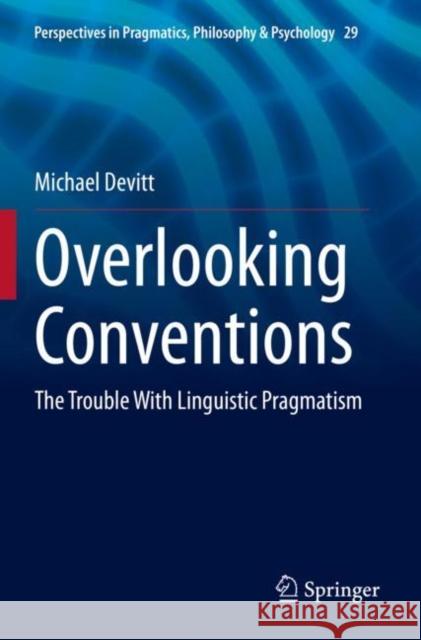
Michael Devitt
Overlooking Conventions: The Trouble with Linguistic Pragmatism Devitt, Michael 9783030706555 Springer International Publishing - książkaWidoczna okładka, to zdjęcie poglądowe, a rzeczywista szata graficzna może różnić się od prezentowanej.

Overlooking Conventions: The Trouble with Linguistic Pragmatism

ISBN-13: 9783030706555 / Angielski / Miękka / 2022

Michael Devitt
cena 262,25 zł
(netto: 249,76 VAT:  5%)

Najniższa cena z 30 dni: 250,57 zł
Termin realizacji zamówienia:
ok. 22 dni roboczych
Bez gwarancji dostawy przed świętami

Darmowa dostawa!
inne wydania

This book criticizes the methodology of the recent semantics-pragmatics debate in the theory of language and proposes an alternative. It applies this methodology to argue for a traditional view against a group of “contextualists” and “pragmatists”, including Sperber and Wilson, Bach, Carston, Recanati, Neale, and many others.  The author disagrees with these theorists who hold that the meaning of the sentence in an utterance never, or hardly ever, yields its literal truth-conditional content, even after disambiguation and reference fixing; it needs to be pragmatically supplemented in context.The standard methodology of this debate is to consult intuitions. The book argues that theories should be tested against linguistic usage. Theoretical distinctions, however intuitive, need to be scientifically motivated. Also we should not be guided by Grice’s “Modified Occam’s Razor”, Ruhl’s “Monosemantic Bias”, or other such strategies for “meaning denialism”. From this novel perspective, the striking examples of context relativity that motivate contextualists and pragmatists typically exemplify semantic rather than pragmatic properties. In particular, polysemous phenomena should typically be treated as semantic ambiguity. The author argues that conventions have been overlooked, that there’s no extensive “semantic underdetermination” and that the new theoretical framework of “truth-conditional pragmatics” is a mistake.


Kategorie:
Nauka, Filozofia
Kategorie BISAC:
Philosophy > Reference
Language Arts & Disciplines > Linguistics - Pragmatics
Philosophy > Language
Wydawca:
Springer International Publishing
Seria wydawnicza:
Perspectives in Pragmatics, Philosophy & Psychology
Język:
Angielski
ISBN-13:
9783030706555
Rok wydania:
2022
Waga:
0.52 kg
Wymiary:
23.5 x 15.5
Oprawa:
Miękka
Dodatkowe informacje:
Wydanie ilustrowane

PREFACE


CHAPTER 1: INTRODUCTION
1.1 Background
1.2 Summary of Chapters

CHAPTER 2: RELIANCE ON INTUITIONS:
2.1 The Received View
2.2 The Task?
2.3 Experimental Semantics 
2.4 “Cartesianism”
2.5 A Priori Knowledge?
2.6 Embodied Theory?
2.7 Competence as a Skill
2.8 Intuitions as Empirical Judgments
2.9 Rejecting “Voice of Competence”
2.11 Conclusion

CHAPTER 3: THE SEMANTICS-PRAGMATICS DISTINCTION
3.1 Introduction
3.2 The Theoretical Motivation
3.2.1 Human Thoughts
3.2.2 Animal Communication
3.2.3 Human Language
3.2.4 Our Theoretical Interest in a Language
3.3 Terminology
3.4 Communication
3.5 The Semantics-Pragmatics Dispute
3.6 The Evidence
3.7 Conclusion

CHAPTER 4: SPEAKER MEANINGS AND INTENTIONS
4.1 Intending to Refer
4.1.1 Objection 1: Implausible Starting Point
4.1.2 Objection 2: Incomplete
4.1.3 Objection 3: Redundant
4.1.4 Objection 4: Misleading
4.2 Intending to Communicate
4.3. Constraints on Intentions

CHAPTER 5: LINGUISTIC CONVENTIONS AND LANGUAGE
PART I: THE POSITION
5.1 Conventions and Linguistic Meanings
5.2 Linguistic Conventions
PART II: CONVENTION DENIERS
5.3 Collins Against Conventions
5.4 Chomsky Against Linguistic Conventions
5.5 Chomsky against Common Languages
5.6 Davidson, Malapropisms, Spoonerisms, and Slips

CHAPTER 6: BACH AND NEALE ON “WHAT IS SAID”
PART I: BACH
6.1 Bach’s Notion
6.2 Criticisms of Bach
6.3 Bach’s Response
PART II: NEALE
6.4 Neale’s Notion
6.5 Criticisms of Neale

CHAPTER 7: CONFUSION OF THE METAPHYSICS OF MEANING WITH THE EPISTEMOLOGY OF INTERPRETATION
PART I: THE CONFUSION
7.1 The Meaning/Interpretation Distinction
7.2 Confusing Meaning and Interpretation
7.3 Examples of the Confusion
7.3.1 Jason Stanley and Zoltan Szabo
7.3.2 Dan Sperber and Deidre Wilson
7.3.3 François Recanati 
7.3.4 Anne Bezuidenhout
7.3.5 Robert Stainton
7.3.6 Kepa Korta and John Perry 
7.4 A Principled Position?
PART II: DEFENDING THE CONFUSION
7.5 Elugardo and Stainton’s Defense
7.6 Tidying Up the Defense
7.7 Two Major Failings of the Defense

CHAPTER 8: MODIFIED OCCAM’S RAZOR AND THE DENIAL OF LINGUISTIC MEANINGS
8.1 Embracing the Razor
8.2 The Falsity of the Razor (as Commonly Construed)
8.3 The Explanatory Onus
8.4 Objections to Semantic Polysemy
8.4.1 The Failure of the tests
8.4.2 Too Psychologically Demanding
8.4.3 Distinguishing Polysemy From Homonymy
8.4.4 Nunberg on the Arbitrariness of Meanings
8.5 Bach on the Razor
8.6 Bach’s “Standardization”

CHAPTER 9: REFERENTIAL DESCRIPTIONS: A CASE STUDY
9.1 Introduction
9.2 The Argument from Convention
9.3 The Incompleteness Argument Against Pragmatic Explanations
9.4 Bach’s Pragmatic Defense of Russell
9.5 Bach’s Response
9.6 Three Further Arguments for Semantic or against Pragmatic Explanations
9.7 Neale’s Illusion
9.8 Conclusion

CHAPTER 10: SATURATION AND PRAGMATISM’S CHALLENGE
10.1 Introduction
10.2 Truth-Conditional Pragmatics
10.3 Meaning Eliminativism
10.4 Implicit Saturation
10.5 The Tyranny of Syntax
10.6 Perry’s “Unarticulated Constituents”

CHAPTER 11: POLYSEMY AND PRAGMATISM’S CHALLENGE
11.1 Polysemy
11.2 Semantic Polysemy
11.3 Polysemy in Psycholinguistics
                                11.3.1 “Represented and Stored”
                11.3.2 An “Information-Rich” Lexicon?
11.4 Objections to Semantic Polysemy
11.5 Polysemy and the Experimental Evidence
11.6 Whither Linguistic Pragmatism?

CHAPTER 12: SUB-SENTENTIALS: PRAGMATICS OR SEMANTICS?
12.1 Introduction
12.2 Implicit Demonstratives
12.3 The Role of Demonstrations
12.4 Other Examples
12.5. The Syntactic Ellipsis Objection
12.5.1 Introduction
12.5.2(A): The Syntactic Ellipsis Assumption
12.5.3 (B): No Syntactic Ellipsis in (1) to (5)
12.6. Stainton’s Other Objections
12.6.1 Too Much Ambiguity
12.6.2 No Explanatory Work
12.6.3 Fails a Kripkean Test
12.7. The Assertion of Propositional Fragments
12.8 Conclusion

Michael Devitt is a Distinguished Professor of Philosophy at the Graduate Center of CUNY. He is the author of the following books: Designation (1981); Realism and Truth (1984/1991/1997); Language and Reality (with Kim Sterelny, 1987/1999); Coming to Our Senses (1996); Ignorance of Language (2006); Putting Metaphysics First (2010); Biological Essentialism (forthcoming). He has co-edited (with Richard Hanley) The Blackwell Guide to the Philosophy of Language (2006)

This book criticizes the methodology of the recent semantics-pragmatics debate in the theory of language and proposes an alternative. It applies this methodology to argue for a traditional view against a group of “contextualists” and “pragmatists”, including Sperber and Wilson, Bach, Carston, Recanati, Neale, and many others.  The author disagrees with these theorists who hold that the meaning of the sentence in an utterance never, or hardly ever, yields its literal truth-conditional content, even after disambiguation and reference fixing; it needs to be pragmatically supplemented in context.

The standard methodology of this debate is to consult intuitions. The book argues that theories should be tested against linguistic usage. Theoretical distinctions, however intuitive, need to be scientifically motivated. Also we should not be guided by Grice’s “Modified Occam’s Razor”, Ruhl’s “Monosemantic Bias”, or other such strategies for “meaning denialism”. From this novel perspective, the striking examples of context relativity that motivate contextualists and pragmatists typically exemplify semantic rather than pragmatic properties. In particular, polysemous phenomena should typically be treated as semantic ambiguity. The author argues that conventions have been overlooked, that there’s no extensive “semantic underdetermination” and that the new theoretical framework of “truth-conditional pragmatics” is a mistake.




Udostępnij

Facebook - konto krainaksiazek.pl


Opinie o Krainaksiazek.pl na Opineo.pl

Partner Mybenefit

Krainaksiazek.pl w programie rzetelna firma Krainaksiaze.pl - płatności przez paypal

Czytaj nas na:

Facebook - krainaksiazek.pl
  • książki na zamówienie
  • granty
  • książka na prezent
  • kontakt
  • pomoc
  • opinie
  • regulamin
  • polityka prywatności

Zobacz:

  • Księgarnia czeska

  • Wydawnictwo Książkowe Klimaty

1997-2025 DolnySlask.com Agencja Internetowa

© 1997-2022 krainaksiazek.pl
     
KONTAKT | REGULAMIN | POLITYKA PRYWATNOŚCI | USTAWIENIA PRYWATNOŚCI
Zobacz: Księgarnia Czeska | Wydawnictwo Książkowe Klimaty | Mapa strony | Lista autorów
KrainaKsiazek.PL - Księgarnia Internetowa

Polityka prywatnosci - link
Krainaksiazek.pl - płatnośc Przelewy24
Przechowalnia Przechowalnia



