Out of Poverty. Comparative Poverty Reduction Strategies in Eastern and Southern Africa » książka





Out of Poverty. Comparative Poverty Reduction Strategies in Eastern and Southern Africa
ISBN-13: 9789987080069 / Angielski / Miękka / 2008 / 208 str.
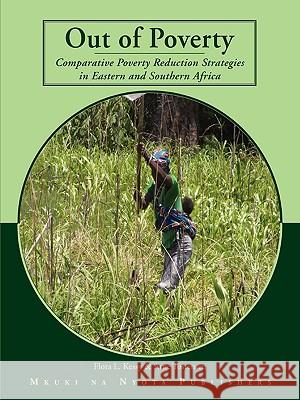
Out of Poverty. Comparative Poverty Reduction Strategies in Eastern and Southern Africa
ISBN-13: 9789987080069 / Angielski / Miękka / 2008 / 208 str.
(netto: 224,78 VAT: 5%)
Najniższa cena z 30 dni: 235,37
ok. 16-18 dni roboczych
Dostawa w 2026 r.
Darmowa dostawa!
Poverty reduction has been a long-standing concern of all African countries since independence. This focus is also reflected in the policies of the international donor community, including the twin International Financial Institutions (IFIs) the World Bank and the International Monetary Fund. This study examines, traces and maps the poverty reduction policies adopted by six countries in Eastern and Southern Africa since the mid-1990s with a view to highlighting differences and similarities. The first group of three countries Tanzania, Uganda and Zambia is made up of so-called Heavily Indebted Poor Countries (HIPCs), while the other three are non-HIPCs, comprising Botswana, Kenya and Namibia. Whereas the former are required to formulate Poverty Reduction Strategy Papers (PRSPs) under terms of reference set by the IFIs, the latter are at liberty to chart home-grown strategies. The study compares these two categories of countries in order to ascertain whether their poverty reduction strategies differ substantially or largely converge. It is found that despite differences of nuance there is a strong tendency towards convergence of approach and design. Since it is recognised that poverty is complex and multi-faceted, it follows that strategies pointing the way out of poverty must be comprehensive and multi-pronged, as reflected in the World Bank s three-pronged strategy: promoting opportunity; facilitating empowerment; and enhancing security. An epistemic community seems to have emerged, at least among the political and economic elites of Eastern and Southern Africa, by and large embracing the precepts of the IFIs. Specifically, the study reviews through six country-specific chapters the different anti-poverty strategies adopted by the selected HIPCs and non-HIPCs to assess implementation arrangements in terms of priority; linkages to budgets; and monitoring and evaluation systems. It also attempts in some measure to document the main economic, social and political factors influencing poverty generation and/or reduction since the mid-1990s, and, finally, to review poverty indicators and changes in the state of poverty over the same period. The concluding chapter undertakes a comparative analysis of the six country-based strategies."
Poverty reduction has been a long-standing concern of all African countries since independence. This focus is also reflected in the policies of the international donor community, including the twin International Financial Institutions (IFIs) – the World Bank and the International Monetary Fund.This study examines, traces and maps the poverty reduction policies adopted by six countries in Eastern and Southern Africa since the mid-1990s with a view to highlighting differences and similarities. The first group of three countries – Tanzania, Uganda and Zambia – is made up of so-called Heavily Indebted Poor Countries (HIPCs), while the other three are non-HIPCs, comprising Botswana, Kenya and Namibia. Whereas the former are required to formulate Poverty Reduction Strategy Papers (PRSPs) under terms of reference set by the IFIs, the latter are at liberty to chart home-grown strategies. The study compares these two categories of countries in order to ascertain whether their poverty reduction strategies differ substantially or largely converge. It is found that despite differences of nuance there is a strong tendency towards convergence of approach and design. Since it is recognised that poverty is complex and multi-faceted, it follows that strategies pointing the way out of poverty must be comprehensive and multi-pronged, as reflected in the World Bank’s three-pronged strategy: promoting opportunity; facilitating empowerment; and enhancing security. An epistemic community seems to have emerged, at least among the political and economic elites of Eastern and Southern Africa, by and large embracing the precepts of the IFIs. Specifically, the study reviews through six country-specific chapters the different anti-poverty strategies adopted by the selected HIPCs and non-HIPCs to assess implementation arrangements in terms of priority; linkages to budgets; and monitoring and evaluation systems. It also attempts in some measure to document the main economic, social and political factors influencing poverty generation and/or reduction since the mid-1990s, and, finally, to review poverty indicators and changes in the state of poverty over the same period. The concluding chapter undertakes a comparative analysis of the six country-based strategies.




Czytaj nas na:
KrainaKsiazek.PL - Księgarnia Internetowa


