• Wyszukiwanie zaawansowane
  • Kategorie
  • Kategorie BISAC
  • Książki na zamówienie
  • Promocje
  • Granty
  • Książka na prezent
  • Opinie
  • Pomoc
  • Załóż konto
  • Zaloguj się

Optimization Techniques for Solving Complex Problems » książka


zaloguj się | załóż konto
Logo Krainaksiazek.pl

koszyk

konto

szukaj
topmenu
Księgarnia internetowa
Szukaj
Książki na zamówienie
Promocje
Granty
Książka na prezent
Moje konto
Pomoc
 
 
Wyszukiwanie zaawansowane
Pusty koszyk
Bezpłatna dostawa dla zamówień powyżej 20 złBezpłatna dostawa dla zamówień powyżej 20 zł

Kategorie główne

• Nauka
 [2946600]
• Literatura piękna
 [1856966]

  więcej...
• Turystyka
 [72221]
• Informatyka
 [151456]
• Komiksy
 [35826]
• Encyklopedie
 [23190]
• Dziecięca
 [619653]
• Hobby
 [140543]
• AudioBooki
 [1577]
• Literatura faktu
 [228355]
• Muzyka CD
 [410]
• Słowniki
 [2874]
• Inne
 [445822]
• Kalendarze
 [1744]
• Podręczniki
 [167141]
• Poradniki
 [482898]
• Religia
 [510455]
• Czasopisma
 [526]
• Sport
 [61590]
• Sztuka
 [243598]
• CD, DVD, Video
 [3423]
• Technologie
 [219201]
• Zdrowie
 [101638]
• Książkowe Klimaty
 [124]
• Zabawki
 [2473]
• Puzzle, gry
 [3898]
• Literatura w języku ukraińskim
 [254]
• Art. papiernicze i szkolne
 [8170]
Kategorie szczegółowe BISAC

Optimization Techniques for Solving Complex Problems

ISBN-13: 9780470293324 / Angielski / Twarda / 2009 / 504 str.
Enrique Alba; Christian Blum; Pedro Asasi
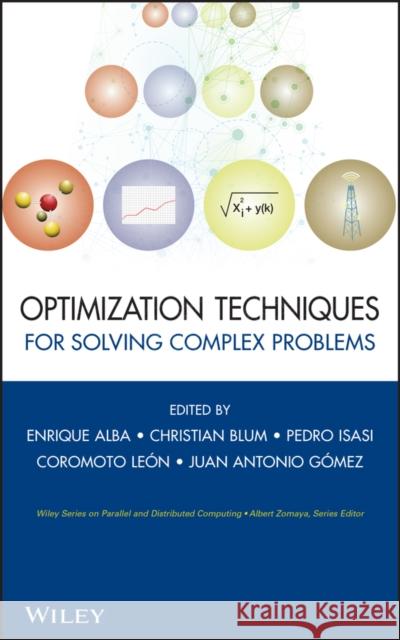
Optimization Techniques for Solving Complex Problems Enrique Alba Christian Blum Pedro Asasi 9780470293324 John Wiley & Sons - książkaWidoczna okładka, to zdjęcie poglądowe, a rzeczywista szata graficzna może różnić się od prezentowanej.

Optimization Techniques for Solving Complex Problems

ISBN-13: 9780470293324 / Angielski / Twarda / 2009 / 504 str.

Enrique Alba; Christian Blum; Pedro Asasi
cena 722,23 zł
(netto: 687,84 VAT:  5%)

Najniższa cena z 30 dni: 716,31 zł
Termin realizacji zamówienia:
ok. 30 dni roboczych
Bez gwarancji dostawy przed świętami

Darmowa dostawa!

Real-world problems and modern optimization techniques to solve them Here, a team of international experts brings together core ideas for solving complex problems in optimization across a wide variety of real-world settings, including computer science, engineering, transportation, telecommunications, and bioinformatics. Part One--covers methodologies for complex problem solving including genetic programming, neural networks, genetic algorithms, hybrid evolutionary algorithms, and more. Part Two--delves into applications including DNA sequencing and reconstruction, location of antennae in telecommunication networks, metaheuristics, FPGAs, problems arising in telecommunication networks, image processing, time series prediction, and more. All chapters contain examples that illustrate the applications themselves as well as the actual performance of the algorithms.?Optimization Techniques for Solving Complex Problems is a valuable resource for practitioners and researchers who work with optimization in real-world settings.


Kategorie:
Technologie
Kategorie BISAC:
Computers > Programming - Algorithms
Computers > Machine Theory
Wydawca:
John Wiley & Sons
Seria wydawnicza:
Wiley Series on Parallel and Distributed Computing
Język:
Angielski
ISBN-13:
9780470293324
Rok wydania:
2009
Numer serii:
000107225
Ilość stron:
504
Waga:
0.77 kg
Wymiary:
23.62 x 16.26 x 2.79
Oprawa:
Twarda
Wolumenów:
01
Dodatkowe informacje:
Bibliografia

PART I: METHODOLOGIES FOR COMPLEX PROBLEM SOLVING.

1. Generating Automatic Projections by Means of GP (C. Estébanez,and R. Aler).

1.1 Introduction.

1.2 Background.

1.3 Domains.

1.4 Algorithmic Proposal.

1.5 Experimental Analysis.

1.6 Conclusions and Future Work.

References.

2. Neural Lazy Local Learning (J. M. Valls, I. M. Galván, and P. Isasi).

2.1 Introduction.

2.2 LRBNN: Lazy Radial Basis Neural Networks.

2.3 Experimental Framework.

2.4 Conclusions.

References.

3. Optimization by Using GAs with Micropopulations (Y. Sáez).

3.1 Introduction.

3.2 Algorithmic Proposal.

3.3 Experimental Analysis: the Rastrigin Function.

3.4 Conclusions.

References.

4. Analyzing Parallel Cellular Genetic Algorithms (G. Luque, E. Alba, and B. Dorronsoro).

4.1 Introduction.

4.2 Cellular Genetic Algorithms.

4.3 Parallel Models for cGAs.

4.4 Brief Survey on Parallel cGAs.

4.5 Experimental Results.

4.6 Conclusions.

References.

5. Evaluating New Advanced Multiobjective Metaheuristics (A. J. Nebro, J.J. Durillo, F. Luna, and E. Alba).

5.1 Introduction.

5.2 Background.

5.3 Description of the Metaheuristics.

5.4 Experimentation Methodology.

5.5 Computational Results.

5.6 Conclusions and Future Work.

References.

6. Canonical Metaheuristics for DOPs (G. Leguizamón, G. Ordóñez, S. Molina, and E. Alba).

6.1 Introduction.

6.2 Dynamic Optimization Problems.

6.3 Canonical MHs for DOPs.

6.4 Benchmarks.

6.5 Metrics.

6.6 Conclusions.

References.

7. Solving Constrained Optimization Problems with HEAs (C. Cotta, and A. J. Fernández).

7.1 Introduction.

7.2 Strategies for Solving CCOPs with HEAs.

7.3 Study Cases.

7.4 Conclusions.

References.

8. Optimization of Time Series Using Parallel, Adaptive, and Neural Techniques (J. A. Gomez, M. D. Jaraiz, M. A. Vega, and J. M. Sanchez).

8.1 Introduction.

8.2 Time Series Identification.

8.3 Optimization Problem.

8.4 Algorithmic Proposal.

8.5 Experimental Analysis.

8.6 Conclusions and Future Work.

References.

9. Using Reconfigurable Computing to Optimization of Cryptographic Algorithms (J. M. Granado, M. A. Vega, J. M. Sanchez, and J. A. Gomez).

9.1 Introduction.

9.2 Description of the Cryptographic Algorithms.

9.3 Implementation Proposal.

9.4 Results.

9.5 Conclusions.

References.

10. Genetic Algorithms, Parallelism and Reconfigurable Hardware (J. M. Sanchez, M. Rubio, M. A. Vega, and J. A. Gomez).

10.1 Introduction.

10.2 State of the Art.

10.3 FPGA Problem Description and Solution.

10.4 Algorithmic Proposal.

10.5 Experiments and Results.

10.6 Conclusions and Future Work.

References.

11. Divide and Conquer, Advanced Techniques (C. Lóon, G. Miranda, and C. Rodriguez).

11.1 Introduction.

11.2 The Algorithm of the Skeleton.

11.3 Computational Results.

11.4 Conclusions.

References.

12. Tools for Tree Searches: Branch and Bound and A∗ Algorithms (C. León, G. Miranda, and C. Rodriguez).

12.1 Introduction.

12.2 Background.

12.3 Algorithmic Skeleton for Tree Searches.

12.4 Experimentation Methodology.

12.5 Computational Results.

12.6 Conclusions and Future Work.

References.

13. Tools for Tree Searches: Dynamic Programming (C. León, G. Miranda, and C. Rodriguez).

13.1 Introduction.

13.2 The TopDown.

Approach.

13.3 The BottomUp Approach.

13.4 Automata Theory and Dynamic Programming.

13.5 Parallel Algorithms.

13.6 Dynamic Programming Heuristics.

13.7 Conclusions.

References.

PART II: APPLICATIONS.

14. Automatic Search of Behavior Strategies in Auctions (D. Quintana, and A. Mochón).

14.1 Introduction.

14.2 Evolutionary Techniques in Auctions.

14.3 Theoretical Framework: the Ausubel Auction.

14.4 Algorithmic Proposal.

14.5 Experimental analysis.

14.6 Conclusions and Future Work.

References.

15. Evolving Rules For Local Time Series Prediction (C. Luque, J. M. Valls, and P. Isasi).

15.1 Introduction.

15.2 Evolutionary Algorithms for Generating Prediction Rules.

15.3 Description of the Method.

15.4 Experiments.

15.5 Conclusions.

References.

16. Metaheuristics in Bioinformatics (C. Cotta, A. J. Fernández, J. E. Gallardo, G. Luque, and E. Alba).

16.1 Introduction.

16.2 Metaheuristics and Bioinformatics.

16.3 The DNA Fragment Assembly Problem.

16.4 The Shortest Common Supersequence Problem.

16.5 Conclusions.

References.

17. Optimal Location of Antennae in Telecommunication Networks (G. Molina, F. Chicano, and E. Alba).

17.1 Introduction.

17.2 State of the Art.

17.3 Radio Network Design Problem.

17.4 Optimization Algorithms.

17.5 Basic Problem Instances.

17.6 Advanced Problem Instance.

17.7 Conclusions.

References.

18. Optimization of Image Processing Algorithms Using FPGAs (M. A. Vega, A. Gomez, J. A. Gomez, and J. M. Sanchez).

18.1 Introduction.

18.2 Background.

18.3 Main Features of the FPGAbased Image Processing.

18.4 Advanced Details.

18.5 Experimental Analysis: Software vs. FPGA.

18.6 Conclusions.

References.

19. Application of Cellular Automata Algorithms to the Parallel Simulation of Laser Dynamics (J. L. Guisado, F. Jiménez Morales, J. M. Guerra, F. Fernández de Vega).

19.1 Introduction.

19.2 Background.

19.3 The Problem: Laser Dynamics.

19.4 Algorithmic Proposal.

19.5 Experimental Analysis.

19.6 Parallel Implementation of the Algorithm.

19.7 Conclusions and Future Work.

References.

20. Dense Stereo Disparity from an ALife Standpoint (G. Olague, F. Fernandez, C. B. Perez, and E. Lutton).

20.1 Introduction.

20.2 Infection Algorithm with an Evolutionary Approach.

20.3 Experimental Results.

20.4 Conclusion.

References.

21. Approaches to Multidimensional Knapsack Problems (J. E. Gallardo, C. Cotta, and A. J. Fernández).

21.1 Introduction.

21.2 The Multidimensional Knapsack Problem.

21.3 Hybrid Models.

21.4 Experimental Results.

21.5 Conclusions and Future Work.

References.

22. Greedy Seeding and ProblemSpecific Operators for GAs Solving Strip Packing Problems (C. Salto, J. M. Molina, and E. Alba).

22.1 Introduction.

22.2 Background.

22.3 A Hybrid GA for the 2SPP.

22.4 Genetic Operators for Solving the 2SPP.

22.5 Initial Seeding.

22.6 Implementation.

22.7 Computational Analysis.

22.8 Conclusions.

References.

23. Solving the KCT Problem: Large Scale Neighborhood Search and Solution Merging (C. Blum, and M. Blesa).

23.1 Introduction.

23.2 Hybrid Algorithms for the KCT Problem.

23.3 Experimental Evaluation.

23.4 Summary and Conclusions.

References.

24. Experimental Study of Gabased Schedulers in Dynamic Distributed Computing Environments (F. Xhafa, and J. Carretero).

24.1 Introduction.

24.2 Related Work.

24.3 Independent Job Scheduling Problem.

24.4 Genetic Algorithms for Scheduling in Grid Systems.

24.5 Grid Simulator.

24.6 The Interface for Using Gabased Scheduler with the Grid Simulator.

24.7 Experimental Analysis.

24.8 Conclusions.

References.

25. ROS: Remote Optimization Service (J. GarcíaNieto, F. Chicano, and E. Alba).

25.1 Introduction.

25.2 Background and State of the Art.

25.3 ROS Architecture.

25.4 Information Exchange in ROS.

25.5 XML in ROS.

25.6 Wrappers.

25.7 Evaluation of ROS.

25.8 Conclusions and Future Work.

References.

26. SIRVA, MOSET, TIDESI, ABACUS: Remote Services for Advanced.

Problem Optimization (J. A. Gomez, M. A. Vega, J. M. Sanchez, J. L. Guisado, D. Lombrana, and F. Fernandez).

26.1 Introduction.

26.2 SIRVA.

26.3 MOSET and TIDESI.

26.4 ABACUS.

References.

Index.

Enrique Alba is a Professor of Data Communications and Evolutionary Algorithms at the University of Málaga, Spain. Christian Blum is a Research Fellow at the ALBCOM research group of the Universitat Politècnica de Catalunya, Spain.

Pedro Isasi?is a Professor of Artificial Intelligence at the University Carlos III of Madrid, Spain. Coromoto León is a Professor of Language Processors and Distributed Programming at the University of La Laguna, Spain. Juan Antonio?Gómez is a Professor of Computer Architecture and Reconfigurable Computing at the University of Extremadura, Spain.

Real–world problems and modern optimization techniques to solve them

Here, a team of international experts brings together core ideas for solving complex problems in optimization across a wide variety of real–world settings, including computer science, engineering, transportation, telecommunications, and bioinformatics.

Part One—covers methodologies for complex problem solving including genetic programming, neural networks, genetic algorithms, hybrid evolutionary algorithms, and more.

Part Two—delves into applications including DNA sequencing and reconstruction, location of antennae in telecommunication networks, metaheuristics, FPGAs, problems arising in telecommunication networks, image processing, time series prediction, and more.

All chapters contain examples that illustrate the applications themselves as well as the actual performance of the algorithms.?Optimization Techniques for Solving Complex Problems is a valuable resource for practitioners and researchers who work with optimization in real–world settings.

Alba, Enrique ENRIQUE ALBA, PhD, is a Professor of Computer Scie... więcej >
Blum, Christian Christian Blum, B.A., wurde 1984 in Eisenach gebor... więcej >


Udostępnij

Facebook - konto krainaksiazek.pl


Opinie o Krainaksiazek.pl na Opineo.pl

Partner Mybenefit

Krainaksiazek.pl w programie rzetelna firma Krainaksiaze.pl - płatności przez paypal

Czytaj nas na:

Facebook - krainaksiazek.pl
  • książki na zamówienie
  • granty
  • książka na prezent
  • kontakt
  • pomoc
  • opinie
  • regulamin
  • polityka prywatności

Zobacz:

  • Księgarnia czeska

  • Wydawnictwo Książkowe Klimaty

1997-2025 DolnySlask.com Agencja Internetowa

© 1997-2022 krainaksiazek.pl
     
KONTAKT | REGULAMIN | POLITYKA PRYWATNOŚCI | USTAWIENIA PRYWATNOŚCI
Zobacz: Księgarnia Czeska | Wydawnictwo Książkowe Klimaty | Mapa strony | Lista autorów
KrainaKsiazek.PL - Księgarnia Internetowa

Polityka prywatnosci - link
Krainaksiazek.pl - płatnośc Przelewy24
Przechowalnia Przechowalnia





