• Wyszukiwanie zaawansowane
  • Kategorie
  • Kategorie BISAC
  • Książki na zamówienie
  • Promocje
  • Granty
  • Książka na prezent
  • Opinie
  • Pomoc
  • Załóż konto
  • Zaloguj się

One Hundred Years of Pressure: Hydrostatics from Stevin to Newton » książka

zaloguj się | załóż konto
Logo Krainaksiazek.pl

koszyk

konto

szukaj
topmenu
Księgarnia internetowa
Szukaj
Książki na zamówienie
Promocje
Granty
Książka na prezent
Moje konto
Pomoc
 
 
Wyszukiwanie zaawansowane
Pusty koszyk
Bezpłatna dostawa dla zamówień powyżej 20 złBezpłatna dostawa dla zamówień powyżej 20 zł

Kategorie główne

• Nauka
 [2952079]
• Literatura piękna
 [1850969]

  więcej...
• Turystyka
 [71058]
• Informatyka
 [151066]
• Komiksy
 [35579]
• Encyklopedie
 [23181]
• Dziecięca
 [620496]
• Hobby
 [139036]
• AudioBooki
 [1646]
• Literatura faktu
 [228729]
• Muzyka CD
 [379]
• Słowniki
 [2932]
• Inne
 [445708]
• Kalendarze
 [1409]
• Podręczniki
 [164793]
• Poradniki
 [480107]
• Religia
 [510956]
• Czasopisma
 [511]
• Sport
 [61267]
• Sztuka
 [243299]
• CD, DVD, Video
 [3411]
• Technologie
 [219640]
• Zdrowie
 [100984]
• Książkowe Klimaty
 [124]
• Zabawki
 [2281]
• Puzzle, gry
 [3363]
• Literatura w języku ukraińskim
 [258]
• Art. papiernicze i szkolne
 [8020]
Kategorie szczegółowe BISAC

One Hundred Years of Pressure: Hydrostatics from Stevin to Newton

ISBN-13: 9783319859385 / Angielski / Miękka / 2018 / 197 str.
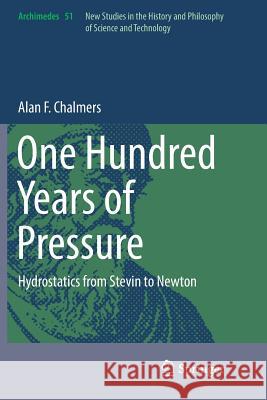
Alan F. Chalmers
One Hundred Years of Pressure: Hydrostatics from Stevin to Newton Chalmers, Alan F. 9783319859385 Springer - książkaWidoczna okładka, to zdjęcie poglądowe, a rzeczywista szata graficzna może różnić się od prezentowanej.

One Hundred Years of Pressure: Hydrostatics from Stevin to Newton

ISBN-13: 9783319859385 / Angielski / Miękka / 2018 / 197 str.

Alan F. Chalmers
cena 524,53
(netto: 499,55 VAT:  5%)

Najniższa cena z 30 dni: 501,19
Termin realizacji zamówienia:
ok. 22 dni roboczych.

Darmowa dostawa!
Kategorie:
Nauka, Fizyka
Kategorie BISAC:
Science > Fizyka
Mathematics > Filozofia i historia matematyki
Science > Philosophy & Social Aspects
Wydawca:
Springer
Seria wydawnicza:
Archimedes
Język:
Angielski
ISBN-13:
9783319859385
Rok wydania:
2018
Wydanie:
Softcover Repri
Ilość stron:
197
Waga:
0.30 kg
Wymiary:
23.39 x 15.6 x 1.12
Oprawa:
Miękka
Wolumenów:
01
Dodatkowe informacje:
Wydanie ilustrowane


"One hundred years of pressure offers a rich and searching analysis of the conceptual development of what has become known as the science of hydrostatics. ... Chalmers's account is impeccable; the logic of his argument is consistent and convincing. Confining the account to a 'conceptual self-realization of hydrostatics' allows for a clear and precise analysis." (Fokko Jan Dijksterhuis, Metascience, Vol. 28, 2019)
"Chalmers (retired, Univ. of Sydney, Australia) delves into the understanding of pressure that has evolved over the centuries ... . The main focus is how the knowledge of pressure within a stationary liquid ... developed in the context of historical changes. Chalmers explores the mechanistic philosophy that led to the understanding of the concept, with major shifts after the 17th century. ... Summing Up: Recommended. Upper-division undergraduates and above; faculty and professionals." (N. Sadanand, Choice, Vol. 55 (4), December, 2017)
"This book should be available in the library of institutions that have researchers in either of these fields. Likewise, physicists from the field of hydrostatics will probably enjoy reading Chalmers' book and benefit from his analysis." (Peter Heering, Science and Education, Vol. 27, 2018)

Chapter 1. The theoretical challenge posed for seventeenth century mechanics by fluids.
Chapter 2. The background to Simon Stevin’s hydrostatics.
Chapter 3. Moving beyond Archimedes: The hydrostatics of Simon Stevin
Chapter 4. Galileo, floating bodies and the balance
Chapter 5. Descartes’ engagement with hydrostatics
Chapter 6. Pascal on the equilibrium of liquids
Chapter 7. Experimenting with, and theorizing about, air
Chapter 8. Boyle and the concept of pressure
Chapter 9. Newton’s hydrostatics: Pressure in a continuum, following Boyle, rather than corpuscle pressing on corpuscle, following Descartes.
Chapter 10. Reflections on the role of theory and experiment in the emergence of hydrostatics
Chapter 11. Reflections on the significance of the history of hydrostatics: What was revolutionary about the scientific revolution?

Alan F. Chalmers is the author of What is this thing called science? (1976, 1982, 1999, 2013) which has been translated into eighteen languages and has been a basic text in philosophy of science for four decades. He is  also the Author of Science and its Fabrication (1990) , The Scientist’s atom and the philosopher’s stone (2009) and over fifty journal articles on the history and philosophy of the physical sciences. His  interests are in the history and philosophy of the physical sciences.

Having acquired a PhD in History and Philosophy of Science at the University of London in 1971 he moved to the University of Sydney where he remained employed until my ‘retirement’ in 2000. In the late 1980s Alan set up the Unit for History and Philosophy of Science that has flourished and is flourishing.

His retirement has given him more time to devote to his research. He has been able to take advantage of Visiting Fellowships at the Dibner Institute for History of Science and Technology, The Centre for Philosophy of Science, University of Pittsburgh and the Institute for Advanced Study at the University of Durham. On three separate occasions he has been a Visiting Scholar at the Max Planck Institute for the History of Science, and is two weeks into the third of these as this is written.  


This monograph investigates the development of hydrostatics as a science. In the process, it sheds new light on the nature of science and its origins in the Scientific Revolution. Readers will come to see that the history of hydrostatics reveals subtle ways in which the science of the seventeenth century differed from previous periods.

The key, the author argues, is the new insights into the concept of pressure that emerged during the Scientific Revolution. This came about due to contributions from such figures as Simon Stevin, Pascal, Boyle and Newton. The author compares their work with Galileo and Descartes, neither of whom grasped the need for a new conception of pressure. As a result, their contributions to hydrostatics were unproductive.

The story ends with Newton insofar as his version of hydrostatics set the subject on its modern course. He articulated a technical notion of pressure that was up to the task. Newton compared the mathematical way in hydrostatics and the experimental way, and sided with the former. The subtleties that lie behind Newton's position throws light on the way in which developments in seventeenth-century science simultaneously involved mathematization and experimentation.

This book serves as an example of the degree of conceptual change that new sciences often require. It will be of interest to those involved in the study of history and philosophy of science. It will also appeal to physicists as well as interested general readers.

Chalmers, Alan F. Alan Chalmers is Adjunct Associate Professor at th... więcej >


Udostępnij

Facebook - konto krainaksiazek.pl


Opinie o Krainaksiazek.pl na Opineo.pl

Partner Mybenefit

Krainaksiazek.pl w programie rzetelna firma Krainaksiaze.pl - płatności przez paypal

Czytaj nas na:

Facebook - krainaksiazek.pl
  • książki na zamówienie
  • granty
  • książka na prezent
  • kontakt
  • pomoc
  • opinie
  • regulamin
  • polityka prywatności

Zobacz:

  • Księgarnia czeska

  • Wydawnictwo Książkowe Klimaty

1997-2026 DolnySlask.com Agencja Internetowa

© 1997-2022 krainaksiazek.pl
     
KONTAKT | REGULAMIN | POLITYKA PRYWATNOŚCI | USTAWIENIA PRYWATNOŚCI
Zobacz: Księgarnia Czeska | Wydawnictwo Książkowe Klimaty | Mapa strony | Lista autorów
KrainaKsiazek.PL - Księgarnia Internetowa

Polityka prywatnosci - link
Krainaksiazek.pl - płatnośc Przelewy24
Przechowalnia Przechowalnia







