• Wyszukiwanie zaawansowane
  • Kategorie
  • Kategorie BISAC
  • Książki na zamówienie
  • Promocje
  • Granty
  • Książka na prezent
  • Opinie
  • Pomoc
  • Załóż konto
  • Zaloguj się

On Exciton–Vibration and Exciton–Photon Interactions in Organic Semiconductors » książka


zaloguj się | załóż konto
Logo Krainaksiazek.pl

koszyk

konto

szukaj
topmenu
Księgarnia internetowa
Szukaj
Książki na zamówienie
Promocje
Granty
Książka na prezent
Moje konto
Pomoc
 
 
Wyszukiwanie zaawansowane
Pusty koszyk
Bezpłatna dostawa dla zamówień powyżej 20 złBezpłatna dostawa dla zamówień powyżej 20 zł

Kategorie główne

• Nauka
 [2946350]
• Literatura piękna
 [1816154]

  więcej...
• Turystyka
 [70666]
• Informatyka
 [151172]
• Komiksy
 [35576]
• Encyklopedie
 [23172]
• Dziecięca
 [611458]
• Hobby
 [135995]
• AudioBooki
 [1726]
• Literatura faktu
 [225763]
• Muzyka CD
 [378]
• Słowniki
 [2917]
• Inne
 [444280]
• Kalendarze
 [1179]
• Podręczniki
 [166508]
• Poradniki
 [469467]
• Religia
 [507199]
• Czasopisma
 [496]
• Sport
 [61352]
• Sztuka
 [242330]
• CD, DVD, Video
 [3348]
• Technologie
 [219391]
• Zdrowie
 [98638]
• Książkowe Klimaty
 [124]
• Zabawki
 [2382]
• Puzzle, gry
 [3525]
• Literatura w języku ukraińskim
 [259]
• Art. papiernicze i szkolne
 [7107]
Kategorie szczegółowe BISAC

On Exciton–Vibration and Exciton–Photon Interactions in Organic Semiconductors

ISBN-13: 9783030854560 / Angielski / Miękka / 2022 / 202 str.
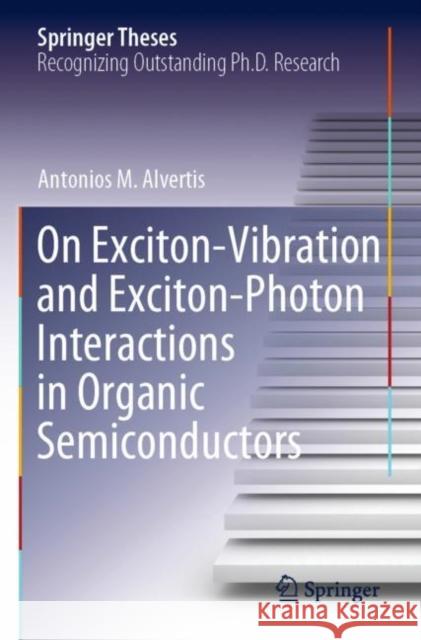
Antonios M. Alvertis
On Exciton–Vibration and Exciton–Photon Interactions in Organic Semiconductors Antonios M. Alvertis 9783030854560 Springer - książkaWidoczna okładka, to zdjęcie poglądowe, a rzeczywista szata graficzna może różnić się od prezentowanej.

On Exciton–Vibration and Exciton–Photon Interactions in Organic Semiconductors

ISBN-13: 9783030854560 / Angielski / Miękka / 2022 / 202 str.

Antonios M. Alvertis
cena 684,33
(netto: 651,74 VAT:  5%)

Najniższa cena z 30 dni: 655,41
Termin realizacji zamówienia:
ok. 16-18 dni roboczych.

Darmowa dostawa!
inne wydania

What are the physical mechanisms that underlie the efficient generation and transfer of energy at the nanoscale? Nature seems to know the answer to this question, having optimised the process of photosynthesis in plants over millions of years of evolution. It is conceivable that humans could mimic this process using synthetic materials, and organic semiconductors have attracted a lot of attention in this respect.Once an organic semiconductor absorbs light, bound pairs of electrons with positively charged holes, termed `excitons’, are formed. Excitons behave as fundamental energy carriers, hence understanding the physics behind their efficient generation and transfer is critical to realising the potential of organic semiconductors for light-harvesting and other applications, such as LEDs and transistors. However, this problem is extremely challenging since excitons can interact very strongly with photons. Moreover, simultaneously with the exciton motion, organic molecules can vibrate in hundreds of possible ways, having a very strong effect on energy transfer.The description of these complex phenomena is often beyond the reach of standard quantum mechanical methods which rely on the assumption of weak interactions between excitons, photons and vibrations. In this thesis, Antonios Alvertis addresses this problem through the development and application of a variety of different theoretical methods to the description of these strong interactions, providing pedagogical explanations of the underlying physics. A comprehensive introduction to organic semiconductors is followed by a review of the background theory that is employed to approach the relevant research questions, and the theoretical results are presented in close connection with experiment, yielding valuable insights for experimentalists and theoreticians alike.


What are the physical mechanisms that underlie the efficient generation and transfer of energy at the nanoscale? Nature seems to know the answer to this question, having optimised the process of photosynthesis in plants over millions of years of evolution. It is conceivable that humans could mimic this process using synthetic materials, and organic semiconductors have attracted a lot of attention in this respect.Once an organic semiconductor absorbs light, bound pairs of electrons with positively charged holes, termed `excitons’, are formed. Excitons behave as fundamental energy carriers, hence understanding the physics behind their efficient generation and transfer is critical to realising the potential of organic semiconductors for light-harvesting and other applications, such as LEDs and transistors. However, this problem is extremely challenging since excitons can interact very strongly with photons. Moreover, simultaneously with the exciton motion, organic molecules can vibrate in hundreds of possible ways, having a very strong effect on energy transfer.The description of these complex phenomena is often beyond the reach of standard quantum mechanical methods which rely on the assumption of weak interactions between excitons, photons and vibrations. In this thesis, Antonios Alvertis addresses this problem through the development and application of a variety of different theoretical methods to the description of these strong interactions, providing pedagogical explanations of the underlying physics. A comprehensive introduction to organic semiconductors is followed by a review of the background theory that is employed to approach the relevant research questions, and the theoretical results are presented in close connection with experiment, yielding valuable insights for experimentalists and theoreticians alike. 

Kategorie:
Nauka, Fizyka
Kategorie BISAC:
Science > Optyka
Technology & Engineering > Power Resources - Alternative & Renewable
Technology & Engineering > Microwaves
Wydawca:
Springer
Seria wydawnicza:
Springer Theses
Język:
Angielski
ISBN-13:
9783030854560
Rok wydania:
2022
Dostępne języki:
Numer serii:
000416125
Ilość stron:
202
Waga:
0.32 kg
Wymiary:
23.39 x 15.6 x 1.19
Oprawa:
Miękka
Dodatkowe informacje:
Wydanie ilustrowane

Introduction.- Organic Semiconductors and Their Properties.- The Time-Dependent Quantum Mechanical Problem.- Modelling of the Electronic and Vibrational Structure.-  First Principles Modelling of Exciton-photon Interactions.

Antonios Alvertis grew up in Athens, Greece, where he also studied for his undergraduate degree at the National and Kapodistrian University of Athens. In 2014 he was awarded a scholarship from the German Academic Exchange Service (DAAD) to study for a M.Sc. degree in Organic and Molecular Electronics at the TU Dresden. In 2016, after receiving a scholarship from the Engineering and Physical Sciences Research Council of the United Kingdom, he moved to the University of Cambridge to undertake an M.Phil. in Scientific Computing and subsequently a Ph.D. in Physics at the Cavendish Laboratory. During his time in Cambridge, he worked on solar-energy harvesting in organic semiconductors, and specifically towards achieving a better theoretical understanding of the properties of fundamental energy carriers called "excitons", and their interactions with light and the vibrational motion of these materials.

Antonios was officially awarded his Ph.D. in April of 2021, also receiving the Cavendish Ph.D. prize in Computational Physics in recognition of the impact of his research. At the time of writing, he is a postdoctoral researcher at the Cavendish Laboratory, and a visitor at UC Berkeley in the USA, having been awarded a research-exchange fellowship from the Cambridge-based Winton Programme for the Physics of Sustainability. His current research aims to contribute to a more unified understanding of the exciton physics of diverse materials beyond organic semiconductors, including low-dimensional systems.

When Antonios is not thinking about excitons, he can often be found reading one of the books of Jack London, Leo Tolstoy or Fyodor Dostoevsky. Sometimes he can also be spotted running along the river Cam, or attempting to bake a cake.


What are the physical mechanisms that underlie the efficient generation and transfer of energy at the nanoscale? Nature seems to know the answer to this question, having optimised the process of photosynthesis in plants over millions of years of evolution. It is conceivable that humans could mimic this process using synthetic materials, and organic semiconductors have attracted a lot of attention in this respect.

Once an organic semiconductor absorbs light, bound pairs of electrons with positively charged holes, termed `excitons’, are formed. Excitons behave as fundamental energy carriers, hence understanding the physics behind their efficient generation and transfer is critical to realising the potential of organic semiconductors for light-harvesting and other applications, such as LEDs and transistors. However, this problem is extremely challenging since excitons can interact very strongly with photons. Moreover, simultaneously with the exciton motion, organic molecules can vibrate in hundreds of possible ways, having a very strong effect on energy transfer.

The description of these complex phenomena is often beyond the reach of standard quantum mechanical methods which rely on the assumption of weak interactions between excitons, photons and vibrations. In this thesis, Antonios Alvertis addresses this problem through the development and application of a variety of different theoretical methods to the description of these strong interactions, providing pedagogical explanations of the underlying physics. A comprehensive introduction to organic semiconductors is followed by a review of the background theory that is employed to approach the relevant research questions, and the theoretical results are presented in close connection with experiment, yielding valuable insights for experimentalists and theoreticians alike.



Udostępnij

Facebook - konto krainaksiazek.pl


Opinie o Krainaksiazek.pl na Opineo.pl

Partner Mybenefit

Krainaksiazek.pl w programie rzetelna firma Krainaksiaze.pl - płatności przez paypal

Czytaj nas na:

Facebook - krainaksiazek.pl
  • książki na zamówienie
  • granty
  • książka na prezent
  • kontakt
  • pomoc
  • opinie
  • regulamin
  • polityka prywatności

Zobacz:

  • Księgarnia czeska

  • Wydawnictwo Książkowe Klimaty

1997-2026 DolnySlask.com Agencja Internetowa

© 1997-2022 krainaksiazek.pl
     
KONTAKT | REGULAMIN | POLITYKA PRYWATNOŚCI | USTAWIENIA PRYWATNOŚCI
Zobacz: Księgarnia Czeska | Wydawnictwo Książkowe Klimaty | Mapa strony | Lista autorów
KrainaKsiazek.PL - Księgarnia Internetowa

Polityka prywatnosci - link
Krainaksiazek.pl - płatnośc Przelewy24
Przechowalnia Przechowalnia




