• Wyszukiwanie zaawansowane
  • Kategorie
  • Kategorie BISAC
  • Książki na zamówienie
  • Promocje
  • Granty
  • Książka na prezent
  • Opinie
  • Pomoc
  • Załóż konto
  • Zaloguj się

Ocean Governance: Knowledge Systems, Policy Foundations and Thematic Analyses » książka


zaloguj się | załóż konto
Logo Krainaksiazek.pl

koszyk

konto

szukaj
topmenu
Księgarnia internetowa
Szukaj
Książki na zamówienie
Promocje
Granty
Książka na prezent
Moje konto
Pomoc
 
 
Wyszukiwanie zaawansowane
Pusty koszyk
Bezpłatna dostawa dla zamówień powyżej 20 złBezpłatna dostawa dla zamówień powyżej 20 zł

Kategorie główne

• Nauka
 [2946912]
• Literatura piękna
 [1852311]

  więcej...
• Turystyka
 [71421]
• Informatyka
 [150889]
• Komiksy
 [35717]
• Encyklopedie
 [23177]
• Dziecięca
 [617324]
• Hobby
 [138808]
• AudioBooki
 [1671]
• Literatura faktu
 [228371]
• Muzyka CD
 [400]
• Słowniki
 [2841]
• Inne
 [445428]
• Kalendarze
 [1545]
• Podręczniki
 [166819]
• Poradniki
 [480180]
• Religia
 [510412]
• Czasopisma
 [525]
• Sport
 [61271]
• Sztuka
 [242929]
• CD, DVD, Video
 [3371]
• Technologie
 [219258]
• Zdrowie
 [100961]
• Książkowe Klimaty
 [124]
• Zabawki
 [2341]
• Puzzle, gry
 [3766]
• Literatura w języku ukraińskim
 [255]
• Art. papiernicze i szkolne
 [7810]
Kategorie szczegółowe BISAC

Ocean Governance: Knowledge Systems, Policy Foundations and Thematic Analyses

ISBN-13: 9783031207396 / Angielski / Twarda / 2023 / 343 str.
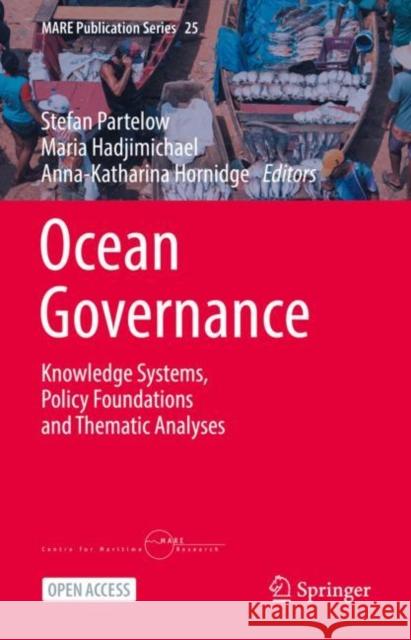
Stefan Partelow; Maria Hadjimichael; Anna-Katharina Hornidge
Ocean Governance: Knowledge Systems, Policy Foundations and Thematic Analyses Stefan Partelow Maria Hadjimichael Anna-Katharina Hornidge 9783031207396 Springer - książkaWidoczna okładka, to zdjęcie poglądowe, a rzeczywista szata graficzna może różnić się od prezentowanej.

Ocean Governance: Knowledge Systems, Policy Foundations and Thematic Analyses

ISBN-13: 9783031207396 / Angielski / Twarda / 2023 / 343 str.

Stefan Partelow; Maria Hadjimichael; Anna-Katharina Hornidge
cena 201,72
(netto: 192,11 VAT:  5%)

Najniższa cena z 30 dni: 192,74
Termin realizacji zamówienia:
ok. 22 dni roboczych
Bez gwarancji dostawy przed świętami

Darmowa dostawa!
inne wydania

This Open Access book on Ocean Governance examines sustainability challenges facing our oceans today. The book is organized into three sections: knowledge systems, policy foundations and thematic analyses. The knowledge produced in the book was catalyzed by the scientific outcomes within the European-funded Cooperation in Science and Technology (COST) network “Ocean Governance for Sustainability – Challenges, Options and the Role of Science”. This network brings together scientists, policy-makers and civil society representatives from 28 nation states to cooperate on ocean governance research. This book offers a compilation of new research material including focused case studies, broad policy syntheses and reflective chapters on the history and current status of knowledge production systems on ocean governance. New research material is presented, although some chapters draw on secondary sources. The book starts with synthetic review chapters from the editors, outlining past and present knowledge systems, addressing how and why ocean governance for sustainability is where it currently stands with critical reflections on existing narratives, path dependencies and colonialist histories. This is followed by chapters addressing, synthesizing and analyzing different legal and policy frameworks for ocean governance both regionally and internationally. At the core of the book are the thematic analyses, which provide focused case studies with detailed contextual information in support of different ocean governance challenges and sustainability pathways around the world. The book concludes with a chapter explicitly targeting students, researchers and policy-makers with key take-away messages compiled by the editors.


This Open Access book on Ocean Governance examines sustainability challenges facing our oceans today. The book is organized into three sections: knowledge systems, policy foundations and thematic analyses. The knowledge produced in the book was catalyzed by the scientific outcomes within the European-funded Cooperation in Science and Technology (COST) network “Ocean Governance for Sustainability – Challenges, Options and the Role of Science”. This network brings together scientists, policy-makers and civil society representatives from 28 nation states to cooperate on ocean governance research. This book offers a compilation of new research material including focused case studies, broad policy syntheses and reflective chapters on the history and current status of knowledge production systems on ocean governance. New research material is presented, although some chapters draw on secondary sources. The book starts with synthetic review chapters from the editors, outlining past and present knowledge systems, addressing how and why ocean governance for sustainability is where it currently stands with critical reflections on existing narratives, path dependencies and colonialist histories. This is followed by chapters addressing, synthesizing and analyzing different legal and policy frameworks for ocean governance both regionally and internationally. At the core of the book are the thematic analyses, which provide focused case studies with detailed contextual information in support of different ocean governance challenges and sustainability pathways around the world. The book concludes with a chapter explicitly targeting students, researchers and policy-makers with key take-away messages compiled by the editors.

Kategorie:
Nauka, Socjologia i społeczeństwo
Kategorie BISAC:
Political Science > Public Policy - Environmental Policy
Social Science > Socjologia
Science > Environmental Science (see also Chemistry - Environmental)
Wydawca:
Springer
Seria wydawnicza:
Mare Publication
Język:
Angielski
ISBN-13:
9783031207396
Rok wydania:
2023
Dostępne języki:
Numer serii:
000297815
Ilość stron:
343
Oprawa:
Twarda

Part 1. Knowledge Systems.- Chapter 1. Introduction – Ocean Governance for Sustainability (Partelow et al.).- Chapter 2. How do we know the Ocean (Hornidge & Partelow).- Chapter 3. Managing fish or governing fisheries stakeholders? An historical recount of Fisheries Governance in the last Century (a South American Case) (Barragán et al.).- Chapter 4. Post-War Reconnaissance of Japanese Fishery and Ocean Science and its Contribution to the Development of U.S. Scientific Programs: 1947-1954 (Finley, Carmel).- Part 2: Policy foundations.- Chapter 5. Ocean governance from the perspective of the law of the sea: an inquiry into the past, present and future, with an emphasis on fisheries, area-based management and international seabed mineral resources. (Singh et al.).- Chapter 6. International Fisheries Law: Past to Future.-  Chapter 7.  Legal aspects of the sustainable exploitation of marine energy and mineral resources (present/future) (Willemez, Alix).- Chapter 8. Making Marine Spatial Planning Matter (Flannery, Wesley).- Chapter 9. Marine and Coastal Governance: Lessons from Current Practice of Managing Land Sea Interactions and Marine and Coastal Governance in EU Member States (Lawlor and Depellegrin).- Chapter 10. Developing progressive marine biodiversity indicators to support the functions of area-based management tools for the sustainable use of oceans: case studies from European territorial waters (Kaymaz, Ipek).- Chapter 11. Ocean Governance in An Era of Climate Change: Protecting Living Marine Resources on the Sea Bed – the Need for an Integrated Approach (Borg, Simone).- Chapter 12. The diverse legal and regulatory framework for marine policy in the North Atlantic – A case of a never-ending “horrendogram” or an opportunity for convergence? (Calado, Helena et al.).- Part 3. Thematic Analyses.- Chapter 13. Assembling the seabed: Pan-European and interdisciplinary advances in understanding seabed mining (Chen et al.).- Chapter 14. Societal transformations and governance challenges of coastal small-scale fisheries in the Northern Baltic Sea (Salmi, Pekka & Svels, Kristina).- Chapter 15. Marine Governance as a process of reflexive institutionalization? The case of Arctic Shipping (Van Tatenhove). Chapter 16. The plastic bag habit on Bali: From Banana Leaf Wrappings to Reusable Bags (Schlüter et al.). Chapter 17. Market initiatives of small-scale fisheries in the Mediterranean: innovation in support of sustainable blue economy (Penca, Jerneja & Said, Alicia).- Chapter 18. Towards Just and Sustainable Blue Futures: Small‐Scale Fisher Movements and Food Sovereignty (Ertör et al.).- Chapter 19. Ocean acidification as governance challenge in the Mediterranean Sea (Bernadsek et al.).- Chapter 20. Futuring the terra-aqueous: Reading alternative urbanities from the Java Sea (Siriwardane- de Zoysa et al.). Chapter 21. Moving forward on Ocean Governance: Key messages for students, researchers and policy-makers (Hornidge, Hadjimichael, Partelow). 


Dr. Stefan Partelow is a researcher at the Leibniz Centre for Tropical Marine Research (ZMT) in Bremen, Germany. He focuses on governance and sustainability issues surrounding environmental commons, specializing in marine and coastal systems. He draws extensively on social-ecological systems concepts and analytical approaches, employing both inter- and trans-disciplinary methods. His focal geographies span the global tropics, with extensive research on small-scale fisheries, aquaculture and tourism in Indonesia. He is the co-founder and co-host of the In Common podcast, featuring interviews with emerging and leading researchers in the environmental social sciences around the world.

Dr. Maria Hadjimichael’s interests lie in the study and understanding of the governance of the commons, particularly marine and coastal commons. She examines issues such as the ‘stealing of the seashore’ and ocean grabbing through neoliberal mechanisms. She worked as a postdoctoral researcher at the Innovative Fisheries Management Institute of Aalborg University in Denmark. Her PhD (Bangor University, U.K.) explored the human dimensions of the European fisheries governance. She has worked on numerous interdisciplinary EU funded projects and conducted fieldwork in the UK, Spain, Denmark, Greece, Cyprus, the US and Chile. She has also founded the website reclaimthesea.org.

Prof. Dr. Anna-Katharina Hornidge is Director of the German Institute of Development and Sustainability (IDOS) and Professor for Global Sustainable Development at the University of Bonn. In her research, she works on knowledges & innovation for development, as well as questions of natural resource governance in agriculture and fisheries in Asia and Africa. She serves as an expert advisor at the national, EU and UN level: as Member of the German Advisory Council on Global Change of the German Government (WBGU), Co-Chair (with Gesine Schwan) of SDSN Germany, and as part of the executive council of the German UNESCO-Commission.

This Open Access book on Ocean Governance examines sustainability challenges facing our oceans today. The book is organized into three sections: knowledge systems, policy foundations and thematic analyses. The knowledge produced in the book was catalyzed by the scientific outcomes within the European-funded Cooperation in Science and Technology (COST) network “Ocean Governance for Sustainability – Challenges, Options and the Role of Science”. This network brings together scientists, policy-makers and civil society representatives from 28 nation states to cooperate on ocean governance research. This book offers a compilation of new research material including focused case studies, broad policy syntheses and reflective chapters on the history and current status of knowledge production systems on ocean governance. New research material is presented, although some chapters draw on secondary sources. The book starts with synthetic review chapters from the editors, outlining past and present knowledge systems, addressing how and why ocean governance for sustainability is where it currently stands with critical reflections on existing narratives, path dependencies and colonialist histories. This is followed by chapters addressing, synthesizing and analyzing different legal and policy frameworks for ocean governance both regionally and internationally. At the core of the book are the thematic analyses, which provide focused case studies with detailed contextual information in support of different ocean governance challenges and sustainability pathways around the world. The book concludes with a chapter explicitly targeting students, researchers and policy-makers with key take-away messages compiled by the editors.




Udostępnij

Facebook - konto krainaksiazek.pl


Opinie o Krainaksiazek.pl na Opineo.pl

Partner Mybenefit

Krainaksiazek.pl w programie rzetelna firma Krainaksiaze.pl - płatności przez paypal

Czytaj nas na:

Facebook - krainaksiazek.pl
  • książki na zamówienie
  • granty
  • książka na prezent
  • kontakt
  • pomoc
  • opinie
  • regulamin
  • polityka prywatności

Zobacz:

  • Księgarnia czeska

  • Wydawnictwo Książkowe Klimaty

1997-2025 DolnySlask.com Agencja Internetowa

© 1997-2022 krainaksiazek.pl
     
KONTAKT | REGULAMIN | POLITYKA PRYWATNOŚCI | USTAWIENIA PRYWATNOŚCI
Zobacz: Księgarnia Czeska | Wydawnictwo Książkowe Klimaty | Mapa strony | Lista autorów
KrainaKsiazek.PL - Księgarnia Internetowa

Polityka prywatnosci - link
Krainaksiazek.pl - płatnośc Przelewy24
Przechowalnia Przechowalnia




