• Wyszukiwanie zaawansowane
  • Kategorie
  • Kategorie BISAC
  • Książki na zamówienie
  • Promocje
  • Granty
  • Książka na prezent
  • Opinie
  • Pomoc
  • Załóż konto
  • Zaloguj się

Object-Oriented Software for Manufacturing Systems » książka


zaloguj się | załóż konto
Logo Krainaksiazek.pl

koszyk

konto

szukaj
topmenu
Księgarnia internetowa
Szukaj
Książki na zamówienie
Promocje
Granty
Książka na prezent
Moje konto
Pomoc
 
 
Wyszukiwanie zaawansowane
Pusty koszyk
Bezpłatna dostawa dla zamówień powyżej 20 złBezpłatna dostawa dla zamówień powyżej 20 zł

Kategorie główne

• Nauka
 [2946912]
• Literatura piękna
 [1852311]

  więcej...
• Turystyka
 [71421]
• Informatyka
 [150889]
• Komiksy
 [35717]
• Encyklopedie
 [23177]
• Dziecięca
 [617324]
• Hobby
 [138808]
• AudioBooki
 [1671]
• Literatura faktu
 [228371]
• Muzyka CD
 [400]
• Słowniki
 [2841]
• Inne
 [445428]
• Kalendarze
 [1545]
• Podręczniki
 [166819]
• Poradniki
 [480180]
• Religia
 [510412]
• Czasopisma
 [525]
• Sport
 [61271]
• Sztuka
 [242929]
• CD, DVD, Video
 [3371]
• Technologie
 [219258]
• Zdrowie
 [100961]
• Książkowe Klimaty
 [124]
• Zabawki
 [2341]
• Puzzle, gry
 [3766]
• Literatura w języku ukraińskim
 [255]
• Art. papiernicze i szkolne
 [7810]
Kategorie szczegółowe BISAC

Object-Oriented Software for Manufacturing Systems

ISBN-13: 9789401060288 / Angielski / Miękka / 2012 / 270 str.
S. Adiga
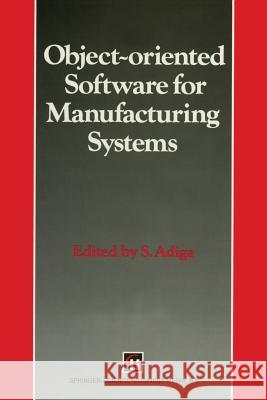
Object-Oriented Software for Manufacturing Systems Adiga, S. 9789401060288 Springer - książkaWidoczna okładka, to zdjęcie poglądowe, a rzeczywista szata graficzna może różnić się od prezentowanej.

Object-Oriented Software for Manufacturing Systems

ISBN-13: 9789401060288 / Angielski / Miękka / 2012 / 270 str.

S. Adiga
cena 200,77
(netto: 191,21 VAT:  5%)

Najniższa cena z 30 dni: 192,74
Termin realizacji zamówienia:
ok. 22 dni roboczych
Bez gwarancji dostawy przed świętami

Darmowa dostawa!

I must confess that I stumbled upon the object-oriented (00) world view during my explorations into the world of artificial intelligence (AI) in search of a new solution to the problem of building computer-integrated manufacturing systems (CIM). In 00 computing, I found the constructs to model the manufacturing enterprise in terms of information, a resource that is common to all activities in an organization. It offered a level of modularity, and the coupling/binding neces- sary for fostering integration without placing undue restrictions on what the individual applications can do. The implications of 00 computing are more extensive than just being a vehicle for manufacturing applications. Leaders in the field such as Brad Cox see it introducing a paradigm shift that will change our world gradually, but as radically as the Industrial Revolution changed manufacturing. However, it must be borne in mind that simply using an object-oriented language or environment does not, in itself, ensure success in one's applications. It requires a different way of thinking, design discipline, techniques, and tools to exploit what the technology has to offer. In other words, it calls for a paradigm shift (as defined by Kuhn in The Structure of Scientific Revolution, a classic text in the history of science).


Kategorie:
Technologie
Kategorie BISAC:
Computers > Programming - General
Technology & Engineering > Industrial Engineering
Technology & Engineering > Manufacturing
Wydawca:
Springer
Seria wydawnicza:
Intelligent Manufactoring
Język:
Angielski
ISBN-13:
9789401060288
Rok wydania:
2012
Wydanie:
1993
Numer serii:
000440360
Ilość stron:
270
Waga:
0.44 kg
Wymiary:
23.5 x 15.5
Oprawa:
Miękka
Wolumenów:
01

1 Introduction.- 1.1 Objects and object-oriented software.- 1.2 Objective and target audience of the book.- 1.3 Organization of the book.- 1.4 Conclusion.- References.- One Conceptual Background.- 2 Object-oriented software systems: Concepts.- 2.1 Introduction.- 2.2 Key concepts.- 2.3 Object communication.- 2.4 Comparison with structured analysis and design.- 2.5 Software life cycle benefits.- 2.6 Prototyping and software evolution.- 2.7 Software reuse.- 2.8 Potential limitations.- 2.9 Conclusion.- References.- 3 Object-oriented software: Relevance to manufacturing.- 3.1 Introduction.- 3.2 Software development aspects of CIM.- 3.3 Communication issues.- 3.4 Integration problems.- 3.5 Conclusion.- References.- Summary: Part One.- Two Design and Implementation Techniques.- 4 Towards an object-oriented architecture for CIM systems.- 4.1 Introduction.- 4.2 A conceptual framework.- 4.3 Description of the modules.- 4.4 Communication between modules (and the plant).- 4.5 Special concerns.- 4.6 Implementation perspective.- 4.7 Working with existing applications and future extensions.- 4.8 Related work of interest.- 4.9 Limitations.- 4.10 Conclusion.- References.- 5 Prototyping object systems and reusable object libraries.- 5.1 Introduction.- 5.2 Review of existing design methods.- 5.3 Rationale for our approach.- 5.4 Our design approach.- 5.5 An example manufacturing facility.- 5.6 Object-oriented library for modeling the facility.- 5.7 State transition diagrams.- 5.8 Conclusion.- References.- 6 Object-oriented databases.- 6.1 Needs of the engineering/manufacturing domains.- 6.2 Towards an object model for database management.- 6.3 Object identity.- 6.4 Schema evolution.- 6.5 Versioning.- 6.6 Storage.- 6.7 Querying.- 6.8 Commercial OODMBS.- 6.9 Conclusion.- References.- 7 Comparing object-oriented programming languages.- 7.1 Introduction.- 7.2 Smalltalk.- 7.3 Object-oriented extensions to Lisp.- 7.4 Object-oriented extensions to C.- 7.5 C++.- 7.6 Objective-C.- 7.7 Comparing Objective-C and C++.- 7.8 Other object-oriented programming languages.- 7.9 Summary and conclusion.- References.- Summary: Part Two.- Three Manufacturing Applications.- 8 FlowStream: An object-oriented plant-floor management system.- 8.1 FlowStream as a plant-floor management system.- 8.2 Rationale for object-oriented development.- 8.3 The FlowStream object architecture.- 8.4 Assessing the object-oriented approach.- 8.5 Summary.- Reference.- 9 OOPS in real-time control applications.- 9.1 Introduction.- 9.2 The kitting cell.- 9.3 The glass line.- 9.4 Conclusion.- References.- Summary: Part Three.- Four Management and Organizational Issues.- 10 Management issues in adopting object-oriented technology.- 10.1 Introduction.- 10.2 Object-oriented software development.- 10.3 Managing reusability.- 10.4 Resourcing and staffing.- 10.5 Supplier management.- 10.6 Planning and budgeting.- 10.7 Conclusion.- References.- 11 Concluding remarks.- 11.1 Where is the OO industry headed?.- 11.2 Growth in the manufacturing area.- 11.3 Final words.- References.- Appendix A: OO resources Paul Worhach.


Udostępnij

Facebook - konto krainaksiazek.pl


Opinie o Krainaksiazek.pl na Opineo.pl

Partner Mybenefit

Krainaksiazek.pl w programie rzetelna firma Krainaksiaze.pl - płatności przez paypal

Czytaj nas na:

Facebook - krainaksiazek.pl
  • książki na zamówienie
  • granty
  • książka na prezent
  • kontakt
  • pomoc
  • opinie
  • regulamin
  • polityka prywatności

Zobacz:

  • Księgarnia czeska

  • Wydawnictwo Książkowe Klimaty

1997-2025 DolnySlask.com Agencja Internetowa

© 1997-2022 krainaksiazek.pl
     
KONTAKT | REGULAMIN | POLITYKA PRYWATNOŚCI | USTAWIENIA PRYWATNOŚCI
Zobacz: Księgarnia Czeska | Wydawnictwo Książkowe Klimaty | Mapa strony | Lista autorów
KrainaKsiazek.PL - Księgarnia Internetowa

Polityka prywatnosci - link
Krainaksiazek.pl - płatnośc Przelewy24
Przechowalnia Przechowalnia






