• Wyszukiwanie zaawansowane
  • Kategorie
  • Kategorie BISAC
  • Książki na zamówienie
  • Promocje
  • Granty
  • Książka na prezent
  • Opinie
  • Pomoc
  • Załóż konto
  • Zaloguj się

Nutrigenomics » książka


zaloguj się | załóż konto
Logo Krainaksiazek.pl

koszyk

konto

szukaj
topmenu
Księgarnia internetowa
Szukaj
Książki na zamówienie
Promocje
Granty
Książka na prezent
Moje konto
Pomoc
 
 
Wyszukiwanie zaawansowane
Pusty koszyk
Bezpłatna dostawa dla zamówień powyżej 20 złBezpłatna dostawa dla zamówień powyżej 20 zł

Kategorie główne

• Nauka
 [2952079]
• Literatura piękna
 [1850969]

  więcej...
• Turystyka
 [71058]
• Informatyka
 [151066]
• Komiksy
 [35579]
• Encyklopedie
 [23181]
• Dziecięca
 [620496]
• Hobby
 [139036]
• AudioBooki
 [1646]
• Literatura faktu
 [228729]
• Muzyka CD
 [379]
• Słowniki
 [2932]
• Inne
 [445708]
• Kalendarze
 [1409]
• Podręczniki
 [164793]
• Poradniki
 [480107]
• Religia
 [510956]
• Czasopisma
 [511]
• Sport
 [61267]
• Sztuka
 [243299]
• CD, DVD, Video
 [3411]
• Technologie
 [219640]
• Zdrowie
 [100984]
• Książkowe Klimaty
 [124]
• Zabawki
 [2281]
• Puzzle, gry
 [3363]
• Literatura w języku ukraińskim
 [258]
• Art. papiernicze i szkolne
 [8020]
Kategorie szczegółowe BISAC

Nutrigenomics

ISBN-13: 9783319304137 / Angielski / Twarda / 2016 / 222 str.
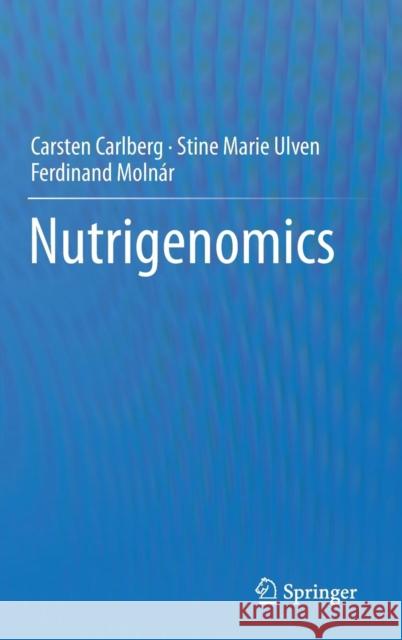
Carsten Carlberg; Stine Marie Ulven; Ferdinand Molnar
Nutrigenomics Carsten Carlberg Stine Marie Ulven Ferdinand Molnar 9783319304137 Springer - książkaWidoczna okładka, to zdjęcie poglądowe, a rzeczywista szata graficzna może różnić się od prezentowanej.

Nutrigenomics

ISBN-13: 9783319304137 / Angielski / Twarda / 2016 / 222 str.

Carsten Carlberg; Stine Marie Ulven; Ferdinand Molnar
cena 523,30
(netto: 498,38 VAT:  5%)

Najniższa cena z 30 dni: 501,19
Termin realizacji zamówienia:
ok. 22 dni roboczych
Dostawa w 2026 r.

Darmowa dostawa!

The fascinating area of Nutrigenomics describes this daily communication between diet, food and nutrients, their metabolites and our genome. This book describes how nutrition shapes human evolution and demonstrates its consequences for our susceptibility to diseases, such as diabetes and atherosclerosis. Inappropriate diet can yield stress for our cells, tissues and organs and then it is often associated with low-grade chronic inflammation. Overnutrition paired with physical inactivity leads to overweight and obesity and results in increased burden for a body that originally was adapted for a life in the savannas of East Africa. Therefore, this textbook does not discuss a theoretical topic in science, but it talks about real life, and our life-long chat with diet. We are all food consumers, thus each of us is concerned by the topic of this book and should be aware of its mechanisms. The purpose of this book is to provide an overview on the principles of nutrigenomics and their relation to health or disease. We are not aiming to compete with more comprehensive textbooks on molecular nutrition, evolutionary biology, genomics, gene regulation or metabolic diseases, but rather will focus on the essentials and will combine, in a compact form, elements from different disciplines. In order to facilitate the latter, we favor a high figure-to-text ratio following the rule a picture tells more than thousand words . The content of this book is based on the lecture course Nutrigenomics, which is held since 2003 once per year by Prof. Carlberg at the University of Eastern Finland in Kuopio. The book is subdivided into three sections and twelve chapters. Following the "Introduction" there are sections on the "Molecular genetic basis" and the "Links to disease," which take a view on nutrigenomics from the perspective of molecular mechanisms or from the causes of metabolic diseases, respectively. Besides its value as a textbook, Nutrigenomics will be a usefull reference for individuals working in biomedicine. "


Kategorie:
Nauka, Medycyna
Kategorie BISAC:
Science > Biologia molekularna
Medical > Nutrition
Medical > Anatomia
Wydawca:
Springer
Język:
Angielski
ISBN-13:
9783319304137
Rok wydania:
2016
Wydanie:
2016
Ilość stron:
222
Waga:
0.50 kg
Wymiary:
23.62 x 16.26 x 2.29
Oprawa:
Twarda
Wolumenów:
01
Dodatkowe informacje:
Wydanie ilustrowane


Section A: Introduction

1. Nutrition and common diseases
1.1 Human nutrition
1.2 Nutrition and obesity
1.3 Nutrition and cancer
1.4 Nutrition and diabetes
1.5 Nutrition and cardiovascular diseases
1.6 Impact of exercise

2. Human genomic variation
2.1 Migration and evolutionary challenges of the modern human
2.2 Diversity of human populations
2.3 Genetic variants of the human genome
2.4 The HapMap Project and haplotype blocks
2.5 Genome-wide association studies
2.6 Whole genome sequencing and the 1000 Genomes Project

Section B: Molecular genetic basis

3. Sensing nutrition
3.1 Nutrient-sensing mechanisms
3.2 Nutrient-sensing via nuclear receptors
3.3 Functions and actions of PPARs
3.4 Integration of lipid metabolism by LXRs and FXR
3.5 Coordination of the immune response by VDR
3.6 Circadian control of metabolic processes

4. Nutrigenomics: Adapting the human genome to dietary changes and personalized nutrition
4.1 Definition of nutrigenomics
4.2 Vitamin D and skin color
4.3 Human genetic adaption to dietary changes
4.4 Regulatory SNPs and quantitative traits
4.5 “Omics” analysis in nutrition sciences
4.6 Integrative personal omics profile

5. Nutritional epigenomics
5.1 Epigenetic mechanisms
5.2 Intermediary metabolism and epigenetic signaling
5.3 One-carbon metabolism and DNA methylation
5.4 Nutrition-triggered transgenerational epigenetics in mice
5.5 Epigenetic programming in humans

6. Nutritional signaling and aging
6.1 Aging and conserved nutrient-sensing pathways
6.2 Neuroendocrine aging regulation in humans and other mammals
6.3 Caloric restriction from yeast to mammals
6.4 Properties and functions of sirtuins
6.5 Cellular energy status sensing by AMPK

7. Chronic inflammation and metabolic stress
7.1 Central role of monocytes and macrophages
7.2 Acute and chronic inflammation
7.3 Reverse cholesterol transport and inflammation
7.4 M1 and M2 macrophages in adipose tissue
7.5 ER stress response

Section C: Links to diseases

8. Obesity
8.1 Definition of obesity
8.2 Adipogenesis
8.3 Energy homeostasis
8.4 Hormonal regulation of food anticipation
8.5 Adipose tissue as an endocrine organ
8.6 Inflammation in adipose tissue
8.7 Genetics of obesity

9. Glucose homeostasis, insulin resistance and β cell failure
9.1 Glucose homeostasis in health
9.2 Principles of insulin signaling
9.3 Central role of FOXO transcription factors
9.4 Insulin resistance in skeletal muscle and liver
9.5 β cell failure

10. Diabetes
10.1 Definition of diabetes
10.2 Failure of glucose homeostasis in T2D and its treatment
10.3 Genetics of T2D
10.4 Thrifty gene hypothesis

11. Hypertension, atherosclerosis and dyslipidemias
11.1 Hypertension
11.2 Mechanisms of atherosclerosis
11.3 Cholesterol metabolism and lipoproteins
11.4 Dyslipidemias

12. Metabolic syndrome
12.1 Definitions of the metabolic syndrome
12.2 Whole body's perspective on the metabolic syndrome
12.3 Metabolic syndrome in key metabolic organs
12.4. Genetic and epigenetic basis of the metabolic syndrome

Prof. Carsten Carlberg: Professor for biochemistry at the School of Medicine, Institute of Biomedicine at the University of Eastern Finland. The main research interests of Prof. Carlberg are (epi)genomics of nuclear receptors and their ligands with special focus on vitamin D. So far he published more than 190 papers (H-index 50). Since 2003 he is lecturing yearly the course "Nutrigenomics", which is the basis of this textbook. Together with Dr. Molnár he also published the Springer textbook "Mechanisms of gene regulation".

Prof. Stine Marie Ulven: Professor at the Department of Nutrition, Institute of Basic Medical Sciences at the University of Oslo (Norway). The main research interests of Prof. Ulven are human dietary intervention studies and diet-gene interactions with particular focus on the role of dietary fat in prevention of chronic diseases. She has in total published 43 papers (H-index of 18).

Dr. Ferdinand Molnár: Senior researcher at the School of Pharmacy, Institute of Biopharmacy, University of Eastern Finland. The main research interests of Dr. Molnár are the molecular structure of nuclear receptor proteins and their natural and synthetic ligands, on which he published more than 20 papers (H-index 14). Together with Prof. Carlberg he published the Springer textbook "Mechanisms of gene regulation".    

The fascinating area of Nutrigenomics describes this daily communication between diet, food and nutrients, their metabolites and our genome. This book describes how nutrition shapes human evolution and demonstrates its consequences for our susceptibility to diseases, such as diabetes and atherosclerosis. Inappropriate diet can yield stress for our cells, tissues and organs and then it is often associated with low-grade chronic inflammation. Overnutrition paired with physical inactivity leads to overweight and obesity and results in increased burden for a body that originally was adapted for a life in the savannas of East Africa. Therefore, this textbook does not discuss a theoretical topic in science, but it talks about real life, and our life-long “chat” with diet. We are all food consumers, thus each of us is concerned by the topic of this book and should be aware of its mechanisms.

The purpose of this book is to provide an overview on the principles of nutrigenomics and their relation to health or disease. We are not aiming to compete with more comprehensive textbooks on molecular nutrition, evolutionary biology, genomics, gene regulation or metabolic diseases, but rather will focus on the essentials and will combine, in a compact form, elements from different disciplines. In order to facilitate the latter, we favor a high figure-to-text ratio following the rule “a picture tells more than thousand words”.        

The content of this book is based on the lecture course “Nutrigenomics”, which is held since 2003 once per year by Prof. Carlberg at the University of Eastern Finland in Kuopio. The book is subdivided into three sections and twelve chapters. Following the "Introduction" there are sections on the "Molecular genetic basis" and the "Links to disease", which take a view on nutrigenomics from the perspective of molecular mechanisms or from the causes of metabolic diseases, respectively.

Besides its value as a textbook, Nutrigenomics will be a usefull reference for individuals working in biomedicine.


Udostępnij

Facebook - konto krainaksiazek.pl


Opinie o Krainaksiazek.pl na Opineo.pl

Partner Mybenefit

Krainaksiazek.pl w programie rzetelna firma Krainaksiaze.pl - płatności przez paypal

Czytaj nas na:

Facebook - krainaksiazek.pl
  • książki na zamówienie
  • granty
  • książka na prezent
  • kontakt
  • pomoc
  • opinie
  • regulamin
  • polityka prywatności

Zobacz:

  • Księgarnia czeska

  • Wydawnictwo Książkowe Klimaty

1997-2025 DolnySlask.com Agencja Internetowa

© 1997-2022 krainaksiazek.pl
     
KONTAKT | REGULAMIN | POLITYKA PRYWATNOŚCI | USTAWIENIA PRYWATNOŚCI
Zobacz: Księgarnia Czeska | Wydawnictwo Książkowe Klimaty | Mapa strony | Lista autorów
KrainaKsiazek.PL - Księgarnia Internetowa

Polityka prywatnosci - link
Krainaksiazek.pl - płatnośc Przelewy24
Przechowalnia Przechowalnia





