Numerical Methods Using Kotlin: For Data Science, Analysis, and Engineering » książka

topmenu




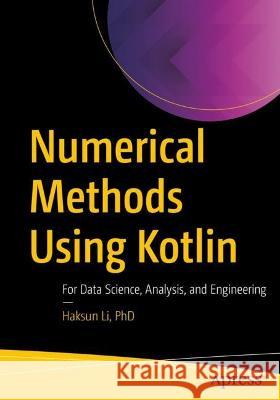
Numerical Methods Using Kotlin: For Data Science, Analysis, and Engineering
ISBN-13: 9781484288252 / Angielski / Miękka / 2023 / 899 str.
Numerical Methods Using Kotlin: For Data Science, Analysis, and Engineering
ISBN-13: 9781484288252 / Angielski / Miękka / 2023 / 899 str.
cena 264,09
(netto: 251,51 VAT: 5%)
Najniższa cena z 30 dni: 250,57
(netto: 251,51 VAT: 5%)
Najniższa cena z 30 dni: 250,57
Termin realizacji zamówienia:
ok. 16-18 dni roboczych.
ok. 16-18 dni roboczych.
Darmowa dostawa!
Intermediate-Advanced user level
This in-depth guide covers a wide range of topics, including chapters on linear algebra, root finding, curve fitting, differentiation and integration, solving differential equations, random numbers and simulation, a whole suite of unconstrained and constrained optimization algorithms, statistics, regression and time series analysis. The mathematical concepts behind the algorithms are clearly explained, with plenty of code examples and illustrations to help even beginners get started.
In this book, you'll implement numerical algorithms in Kotlin using NM Dev, an object-oriented and high-performance programming library for applied and industrial mathematics. Discover how Kotlin has many advantages over Java in its speed, and in some cases, ease of use. In this book, you’ll see how it can help you easily create solutions for your complex engineering and data science problems.
After reading this book, you'll come away with the knowledge to create your own numerical models and algorithms using the Kotlin programming language.
What You Will Learn
- Program in Kotlin using a high-performance numerical library
- Learn the mathematics necessary for a wide range of numerical computing algorithms
- Convert ideas and equations into code
- Put together algorithms and classes to build your own engineering solutions
- Build solvers for industrial optimization problems
- Perform data analysis using basic and advanced statistics
Programmers, data scientists, and analysts with prior experience programming in any language, especially Kotlin or Java.
Kategorie:
Kategorie BISAC:
Wydawca:
Apress
Język:
Angielski
ISBN-13:
9781484288252
Rok wydania:
2023
Dostępne języki:
Ilość stron:
899
Oprawa:
Miękka
Dodatkowe informacje:
Wydanie ilustrowane
1: Introduction to Numerical Methods in Kotlin.-
2: Linear Algebra.-
3: Finding Roots of Equations.-
4: Finding Roots of Systems of Equations.-
5: Curve Fitting and Interpolation.-
6: Numerical Differentiation and Integration.-
7: Ordinary Differential Equations.-
8: Partial Differential Equations.-
9: Unconstrained Optimization.-
10: Constrained Optimization.-
11: Heuristics.-
12: Basic Statistics.-
13: Random Numbers and Simulation.-
14: Linear Regression.-
15: Time Series Analysis.-
References.
Table of Contents
About the Authors...........................................................................................................i
Preface............................................................................................................................ii
1. Why Kotlin?..............................................................................................................6
1.1. Kotlin in 2022.....................................................................................................6
1.2. Kotlin vs. C++....................................................................................................6
1.3. Kotlin vs. Python................................................................................................6
1.4. Kotlin in the future .............................................................................................6
2. Data Structures.......................................................................................................7
2.1. Function...........................................................................................................72.2. Polynomial ......................................................................................................7
3. Linear Algebra .......................................................................................................8
3.1. Vector and Matrix ...........................................................................................8
3.1.1. Vector Properties .....................................................................................8
3.1.2. Element-wise Operations.........................................................................8
3.1.3. Norm ........................................................................................................9
3.1.4. Inner product and angle ...........................................................................9
3.2. Matrix............................................................................................................10
3.3. Determinant, Transpose and Inverse.............................................................103.4. Diagonal Matrices and Diagonal of a Matrix................................................10
3.5. Eigenvalues and Eigenvectors.......................................................................10
3.5.1. Householder Tridiagonalization and QR Factorization Methods..........10
3.5.2. Transformation to Hessenberg Form (Nonsymmetric Matrices)...........10
4. Finding Roots of Single Variable Equations .......................................................114.1. Bracketing Methods ......................................................................................11
4.1.1. Bisection Method ...................................................................................11
4.2. Open Methods...............................................................................................11
4.2.1. Fixed-Point Method ...............................................................................11
4.2.2. Newton’s Method (Newton-Raphson Method) .....................................11
4.2.3. Secant Method .......................................................................................11
4.2.4. Brent’s Method ......................................................................................11
5. Finding Roots of Systems of Equations...............................................................12
5.1. Linear Systems of Equations.........................................................................12
5.2. Gauss Elimination Method............................................................................12
5.3. LU Factorization Methods ............................................................................12
5.3.1. Cholesky Factorization ..........................................................................12
5.4. Iterative Solution of Linear Systems.............................................................12
5.5. System of Nonlinear Equations.....................................................................126. Curve Fitting and Interpolation............................................................................14
6.1. Least-Squares Regression .............................................................................14
6.2. Linear Regression..........................................................................................14
6.3. Polynomial Regression..................................................................................14
6.4. Polynomial Interpolation...............................................................................14
6.5. Spline Interpolation .......................................................................................14
7. Numerical Differentiation and Integration...........................................................15
7.1. Numerical Differentiation .............................................................................15
7.2. Finite-Difference Formulas...........................................................................15
7.3. Newton-Cotes Formulas................................................................................15
7.3.1. Rectangular Rule....................................................................................15
7.3.2. Trapezoidal Rule....................................................................................15
7.3.3. Simpson’s Rules.....................................................................................15
7.3.4. Higher-Order Newton-Coles Formulas..................................................15
7.4. Romberg Integration .....................................................................................15
7.4.1. Gaussian Quadrature..............................................................................15
7.4.2. Improper Integrals..................................................................................15
8. Numerical Solution of Initial-Value Problems....................................................16
8.1. One-Step Methods.........................................................................................16
8.2. Euler’s Method..............................................................................................16
8.3. Runge-Kutta Methods...................................................................................16
8.4. Systems of Ordinary Differential Equations.................................................16
9. Numerical Solution of Partial Differential Equations..........................................17
9.1. Elliptic Partial Differential Equations...........................................................17
9.1.1. Dirichlet Problem...................................................................................17
9.2. Parabolic Partial Differential Equations........................................................17
9.2.1. Finite-Difference Method ......................................................................17
9.2.2. Crank-Nicolson Method.........................................................................17
9.3. Hyperbolic Partial Differential Equations.....................................................17
10..................................................................................................................................18
11..................................................................................................................................19
12. Random Numbers and Simulation ....................................................................20
12.1. Uniform Distribution .................................................................................20
12.2. Normal Distribution...................................................................................20
12.3. Exponential Distribution............................................................................20
12.4. Poisson Distribution ..................................................................................20
12.5. Beta Distribution........................................................................................2012.6. Gamma Distribution ..................................................................................20
12.7. Multi-dimension Distribution ....................................................................20
13. Unconstrainted Optimization ............................................................................21
13.1. Single Variable Optimization ....................................................................21
13.2. Multi Variable Optimization .....................................................................21
14. Constrained Optimization .................................................................................22
14.1. Linear Programming..................................................................................22
14.2. Quadratic Programming ............................................................................22
14.3. Second Order Conic Programming............................................................22
14.4. Sequential Quadratic Programming...........................................................22
14.5. Integer Programming.................................................................................22
15. Heuristic Optimization......................................................................................23
15.1. Genetic Algorithm .....................................................................................23
15.2. Simulated Annealing .................................................................................23
16. Basic Statistics..................................................................................................24
16.1. Mean, Variance and Covariance................................................................24
16.2. Moment......................................................................................................24
16.3. Rank...........................................................................................................24
17. Linear Regression .............................................................................................25
17.1. Least-Squares Regression..........................................................................25
17.2. General Linear Least Squares....................................................................25
18. Time Series Analysis ........................................................................................26
18.1. Univariate Time Series..............................................................................2618.2. Multivariate Time Series ...........................................................................26
18.3. ARMA .......................................................................................................26
18.4. GARCH .....................................................................................................26
18.5. Cointegration .............................................................................................26
19. Bibliography .....................................................................................................27
20. Index .....................................................................................................
Haksun Li, PhD, is founder of NM Group, a scientific and mathematical research company. He has the vision of “Making the World Better Using Mathematics”. Under his leadership, the firm serves worldwide brokerage houses and funds, multinational corporations and very high net worth individuals. Haksun is an expert in options trading, asset allocation, portfolio optimization and fixed-income product pricing. He has coded up a variety of numerical software, including SuanShu (a library of numerical methods), NM Dev (a library of numerical methods), AlgoQuant (a library for financial analytics), NMRMS (a portfolio management system for equities), and supercurve (a fixed-income options pricing system). Prior to this, Haksun was a quantitative trader/quantitative analyst with multiple investment banks. He has worked in New York, London, Tokyo, and Singapore. Additionally, Haksun is the vice dean of the Big Data Finance and Investment Institute of Fudan University, China. He was an adjunct professor with multiple universities. He has taught at the National University of Singapore (mathematics), Nanyang Technological University (business school), Fudan University (economics), as well as Hong Kong University of Science and Technology (mathematics). Dr. Haksun Li has a B.S. and M.S. in pure and financial mathematics from the University of Chicago, and an M.S. and a PhD in computer science and engineering from the University of Michigan, Ann Arbor.
This in-depth guide covers a wide range of topics, including chapters on linear algebra, root finding, curve fitting, differentiation and integration, solving differential equations, random numbers and simulation, a whole suite of unconstrained and constrained optimization algorithms, statistics, regression and time series analysis. The mathematical concepts behind the algorithms are clearly explained, with plenty of code examples and illustrations to help even beginners get started.
In this book, you'll implement numerical algorithms in Kotlin using NM Dev, an object-oriented and high-performance programming library for applied and industrial mathematics. Discover how Kotlin has many advantages over Java in its speed, and in some cases, ease of use. In this book, you’ll see how it can help you easily create solutions for your complex engineering and data science problems.
After reading this book, you'll come away with the knowledge to create your own numerical models and algorithms using the Kotlin programming language.
You will:
- Program in Kotlin using a high-performance numerical library
- Learn the mathematics necessary for a wide range of numerical computing algorithms
- Convert ideas and equations into code
- Put together algorithms and classes to build your own engineering solutions
- Build solvers for industrial optimization problems
- Perform data analysis using basic and advanced statistics




Czytaj nas na:
1997-2026 DolnySlask.com Agencja Internetowa
Zobacz: Księgarnia Czeska | Wydawnictwo Książkowe Klimaty | Mapa strony | Lista autorów
KrainaKsiazek.PL - Księgarnia Internetowa

KrainaKsiazek.PL - Księgarnia Internetowa

