• Wyszukiwanie zaawansowane
  • Kategorie
  • Kategorie BISAC
  • Książki na zamówienie
  • Promocje
  • Granty
  • Książka na prezent
  • Opinie
  • Pomoc
  • Załóż konto
  • Zaloguj się

Nucleic Acid Blotting: The Basics » książka

zaloguj się | załóż konto
Logo Krainaksiazek.pl

koszyk

konto

szukaj
topmenu
Księgarnia internetowa
Szukaj
Książki na zamówienie
Promocje
Granty
Książka na prezent
Moje konto
Pomoc
 
 
Wyszukiwanie zaawansowane
Pusty koszyk
Bezpłatna dostawa dla zamówień powyżej 20 złBezpłatna dostawa dla zamówień powyżej 20 zł

Kategorie główne

• Nauka
 [2946600]
• Literatura piękna
 [1856966]

  więcej...
• Turystyka
 [72221]
• Informatyka
 [151456]
• Komiksy
 [35826]
• Encyklopedie
 [23190]
• Dziecięca
 [619653]
• Hobby
 [140543]
• AudioBooki
 [1577]
• Literatura faktu
 [228355]
• Muzyka CD
 [410]
• Słowniki
 [2874]
• Inne
 [445822]
• Kalendarze
 [1744]
• Podręczniki
 [167141]
• Poradniki
 [482898]
• Religia
 [510455]
• Czasopisma
 [526]
• Sport
 [61590]
• Sztuka
 [243598]
• CD, DVD, Video
 [3423]
• Technologie
 [219201]
• Zdrowie
 [101638]
• Książkowe Klimaty
 [124]
• Zabawki
 [2473]
• Puzzle, gry
 [3898]
• Literatura w języku ukraińskim
 [254]
• Art. papiernicze i szkolne
 [8170]
Kategorie szczegółowe BISAC

Nucleic Acid Blotting: The Basics

ISBN-13: 9780199634460 / Angielski / Miękka / 1994 / 124 str.
Brickell Darling; D. Darling; P. Brickell
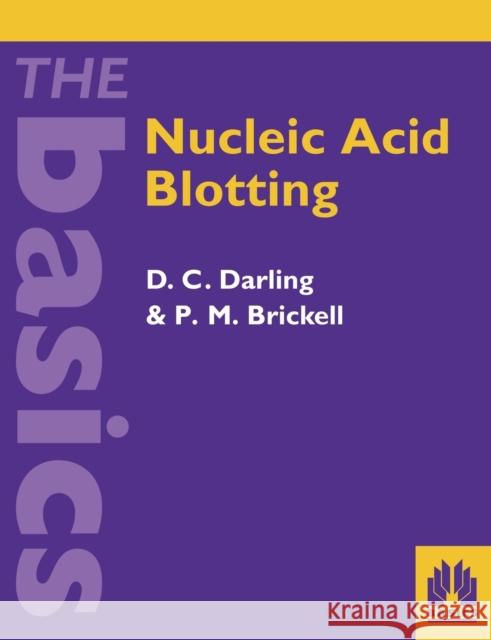
Nucleic Acid Blotting: The Basics Darling, David C. 9780199634460 Oxford University Press, USA - książkaWidoczna okładka, to zdjęcie poglądowe, a rzeczywista szata graficzna może różnić się od prezentowanej.

Nucleic Acid Blotting: The Basics

ISBN-13: 9780199634460 / Angielski / Miękka / 1994 / 124 str.

Brickell Darling; D. Darling; P. Brickell
cena 155,73 zł
(netto: 148,31 VAT:  5%)

Najniższa cena z 30 dni: 146,03 zł
Termin realizacji zamówienia:
ok. 22 dni roboczych
Bez gwarancji dostawy przed świętami

Darmowa dostawa!

Nucleic acid blotting is a central component of many biological research techniques. In this book you will find descriptions of all the current techniques for DNA and RNA blotting. The authors guide you through blotting procedures and explain how each method works, highlighting the common pitfalls. Trying to master blotting techniques can be a frustrating experience, but help is at hand with "Nucleic Acid Blotting: The Basics." Together with the companion volume, "Nucleic Acid Hybridization: The Basics," you will be armed with all the fundamental information you need to become expert in these tricky techniques.


Kategorie:
Nauka, Biologia i przyroda
Kategorie BISAC:
Science > Cytologia
Medical > Medycyna
Science > Biologia i przyroda
Wydawca:
Oxford University Press, USA
Seria wydawnicza:
Basics
Język:
Angielski
ISBN-13:
9780199634460
Rok wydania:
1994
Numer serii:
000192510
Ilość stron:
124
Waga:
0.23 kg
Wymiary:
24.61 x 18.9 x 0.66
Oprawa:
Miękka
Wolumenów:
01
Dodatkowe informacje:
Bibliografia
Glosariusz/słownik

CHAPTER I How it all got started -- 1. The development of blotting and hybridization techniques -- 1.1 Southern blotting -- 1.2 Northern blotting -- 1.3 Further advances -- 2. This book -- 3. Further reading -- 4. Laboratory safety -- 5. References -- CHAPTER 2 Southern blotting I: electrophoresis of DNA -- 1. Different sources of DNA -- 1.1 Genomic DNA -- 1.2 Plasmid DNA -- 1.3 Bacteriophage and cosmid DNA -- 1.4 YACDNA -- 1.5 PCR product DNA -- 2. Before you load the DNA on to the gel -- 3. Preparing and running the gel -- 3.1 Agarose -- 3.2 Electrophoresis buffers -- 3.3 Casting the gel -- 3.4 Assembling the gel electrophoresis tank -- 3.5 Loading your samples -- 3.6 Running the gel -- 3.7 Visualizing the DNA with UV radiation -- 3.8 Photographing your gel -- 3.9 Interpretation of gels -- 3.9.1 Genomic DNA -- 3.9.2 Cloned DNA -- 3.10 What can go wrong with electrophoresis? -- 4. Further reading -- 5. References -- CHAPTER 3 Southern blotting II: performing the blot -- I. Uni-directional capillary blotting on to a single membrane at neutral pH -- 1.1 Preparing the gel for blotting -- 1.1.1 Partial depurination -- 1.1.2 Denaturation -- 1.1.3 Neutralization -- 1.2 Assembling the blot -- 1.2.1 Cutting and preparing the membrane -- 1.2.2 Assembly and blotting -- 1.3 Dismantling the blot -- 1.4 Checking the efficiency of transfer -- 1.5 Fixing the DNA to the membrane -- 1.5.1 UV treatment -- 1.5.2 Drying -- 1.6 Storing membranes before hybridization -- 2. Capillary blotting on to multiple membranes at neutral pH -- 2.1 Uni-directional capillary blotting on to several membranes -- 2.2 Bi-directional capillary blotting -- 3. Capillary blotting at alkaline pH -- 4. Other methods of blotting -- 4.1 Electrophoretic transfer ( electro blotting) -- 4.2 Vacuum blotting and positive-pressure blotting -- 4.3 Which method of blotting should you use? -- 5. Further reading -- 6. References -- CHAPTER 4 Electrophoresis of RNA and northern blotting -- 1. How does northern blotting differ from Southern blotting? -- 2. What information can a northern blot give? -- 3. Comparing the levels of an mRNA species in different cell types -- 3.1 Equal loading -- 3.2. Quantitation -- 3.2.1 Scintillation counting of excised bands -- 3.2.2 Scanning densitometry -- 3.2.3 Phosphorimagery -- 4. Gel electrophoresis of RNA samples -- 4.1 Gel systems -- 4.2 Formaldehyde gels -- 4.2.1 Preparing formaldehyde gels -- 4.2.2 Preparing RNA samples for formaldehyde gels -- 4.2.3 How much RNA should be loaded? -- 4.2.4 Running formaldehyde gels -- 4.3 Glyoxal gels -- 4.3.1 Preparing glyoxal gels -- 4.3.2 Preparing RNA samples for glyoxal gels -- 4.3.3 Running glyoxal gels -- 4.4 Molecular size markers -- 4.4.1 28S and 18S rRNA size markers -- 4.4.2 Other RNA size markers -- 5. Blotting the gel -- 6. Further reading -- 7. References -- CHAPTERS Dot and slot blotting -- 1. What are dot blots and slot blots -- 1.1 Why do a DNA dot /slot blot? -- 1.2 Why do an RNA dot /slot blot? -- 2. How to perform a dot /slot blot -- 2.1 Preparing the sample -- 2.1.1 How much DNA or RNA should you load? -- 2.1.2 DNA samples -- 2.1.3 RNA samples -- 2.2 Preparing the membrane -- 2.3 Assembling the manifold -- 2.4 Applying the sample -- 2.5 Blotting -- 2.6 Processing the membrane -- 3. Quantitation of dot /slot blots and interpretation of results -- 4. Limitations of dot /slot blotting -- 5. Further reading -- 6. References -- CHAPTER 6 Plaque and colony screening -- 1. Screening bacteriophage 11, plaques by the Benton and Davis method -- 1.1 Plating -- 1.1.1 Petri dishes -- 1.1.2 Base agar -- 1.1.3 Top agarose -- 1.1.4 Plating cells -- 1.1.5 Bacteriophage -- 1.1.6 Plating -- 1.2 Taking membrane lifts -- 1.2.1 Getting the membranes ready -- 1.2.2 Taking the first membrane lift -- 1.2.3 Taking the second membrane lift -- 1.2.4 Storing the plates -- 1.3 Treating membranes before hybridization -- 1.3.1 Denaturation -- 1.3.2 Neutralization -- 1.3.3 Treatment with 2 x SSC -- 1.3.4 Fixing the DNA to the membrane -- 1.4 A brief note about hybridization probes -- 1.5 Orientating the membranes and X-ray film before autoradiography -- 1.6 Identifying hybridization signals after autoradiography -- 1. 7 Picking plaques -- 1.8 Further rounds of screening -- 2. Determining the titre of a bacteriophage "A suspension -- 3. Screening bacterial colonies by the Grunstein-Hogness method -- 3.1 Plating -- 3.2 Making replica membranes -- 3.2.1 Making the first replica -- 3.2.2 Making the second replica -- 3.2.3 What to do with the master membrane while you are screening the replicas -- 3.3 Treating membranes before hybridization -- 3.4 Another brief note about hybridization probes -- 3.5 Orientating the membranes and X-ray film before autoradiography -- 3.6 Picking colonies -- 4. Further reading -- 5. References -- CHAPTER 7 Filters and membranes -- 1. The advantages and disadvantages of nitrocellulose filters and nylon membranes? -- 1.1 Nylon membranes are physically strong -- 1.2 DNA and RNA bind covalently to nylon membranes -- 1.3 Nylon membranes have a high nucleic acid binding capacity -- 1.4 Nylon membranes are hydrophilic -- 1.5 Nylon membranes retain"their size and shape at high temperatures -- 1.6 Nylon membranes are not inflammable -- 1. 7 Nylon membranes do not require solutions of high ionic strength to bind nucleic acids efficiently -- 1.8 Nylon membranes may give higher backgrounds than nitrocellulose filters, but this can be overcome easily -- 1.9 Nylon membranes are sometimes 'single-sided' -- 1.10 Nylon membranes and nitrocellulose filters must be handled with care -- 2. Which membrane should be used? -- 3. References -- Glossary -- Index.

The Medical Molecular Biology Unit Department of Molecular Pathology University College London Medical School The Windeyer Building, Cleveland Street, London WI P 6DB.


Udostępnij

Facebook - konto krainaksiazek.pl


Opinie o Krainaksiazek.pl na Opineo.pl

Partner Mybenefit

Krainaksiazek.pl w programie rzetelna firma Krainaksiaze.pl - płatności przez paypal

Czytaj nas na:

Facebook - krainaksiazek.pl
  • książki na zamówienie
  • granty
  • książka na prezent
  • kontakt
  • pomoc
  • opinie
  • regulamin
  • polityka prywatności

Zobacz:

  • Księgarnia czeska

  • Wydawnictwo Książkowe Klimaty

1997-2025 DolnySlask.com Agencja Internetowa

© 1997-2022 krainaksiazek.pl
     
KONTAKT | REGULAMIN | POLITYKA PRYWATNOŚCI | USTAWIENIA PRYWATNOŚCI
Zobacz: Księgarnia Czeska | Wydawnictwo Książkowe Klimaty | Mapa strony | Lista autorów
KrainaKsiazek.PL - Księgarnia Internetowa

Polityka prywatnosci - link
Krainaksiazek.pl - płatnośc Przelewy24
Przechowalnia Przechowalnia






