Novel approach of Pi recycling: Conversion of waste streams to valuable polyphosphate using Engineered Saccharomyces cerevisiae » książka





Novel approach of Pi recycling: Conversion of waste streams to valuable polyphosphate using Engineered Saccharomyces cerevisiae
ISBN-13: 9783985552504 / Angielski / Miękka / 166 str.
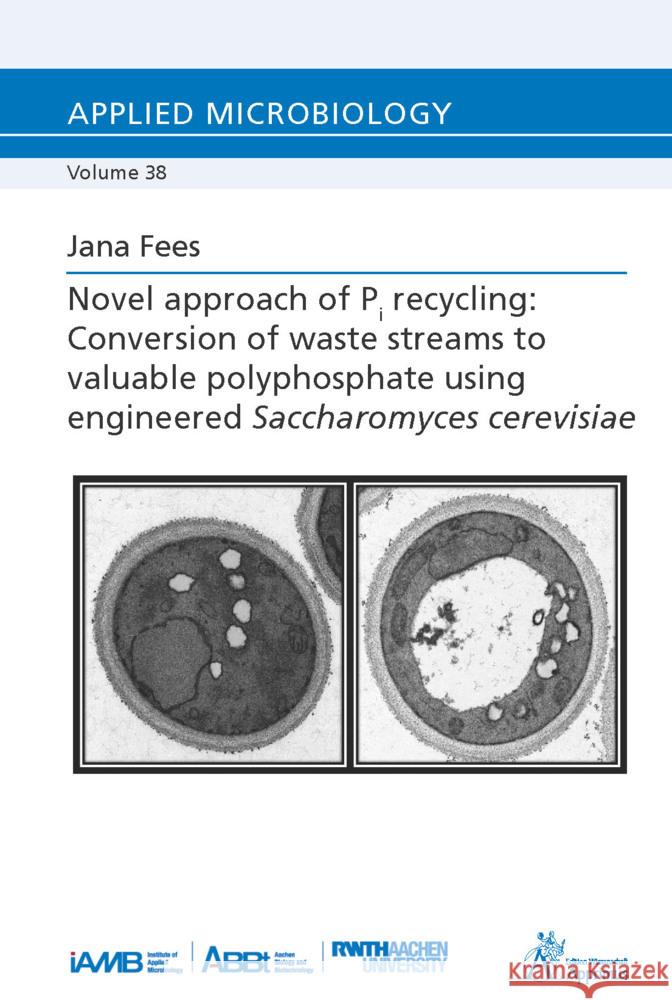
Novel approach of Pi recycling: Conversion of waste streams to valuable polyphosphate using Engineered Saccharomyces cerevisiae
ISBN-13: 9783985552504 / Angielski / Miękka / 166 str.
(netto: 229,50 VAT: 5%)
Najniższa cena z 30 dni: 241,54
ok. 10-14 dni roboczych
Dostawa w 2026 r.
Darmowa dostawa!
Phosphate (Pi) is an irreplaceable nutrient in all living organisms and is mined from Pi rock. Since the global Pi rock reserves will be depleted in a few hundred years, it is essential to develop new strategies for recycling Pi from unused Pi waste streams. One such Pi waste stream is plant biomass, a by-product of the deoiling of seeds and bran. In addition, unused Pi accumulates in various waste streams during the production of Pi rich molecules. In this thesis, Pi was recycled from these waste streams into polyphosphate (polyP). Therefore, Pi-starved Saccharomyces cerevisiae was subjected to the Pi-rich waste streams, causing an accumulation of Pi and an intracellular polymerization to form polyP. PolyP is the mainly linear polymer of Pi. Currently, it is only produced chemically and used as a food additive or flame retardant, for example. PolyP rich S. cerevisiae served as the substrate to produce polyP-rich yeast extract or pure biotechnologically synthesized (bio-) polyP. Additionally, the yeast was genetically optimized via metabolic engineering to increase the polyP content and chain length during production.The overall goal was to make the process of biotechnological polyP production economical. Therefore, this thesis analyzed the production of biotechnological polyP using Pi-rich plant extracts and industrial wash waters. Additionally, genes involved in polyP degradation were deleted in S. cerevisiae to increase the polyP content and the average chain length. In collaboration, Pi was recycled from canola, rice, and seven other deoiled plant-based seeds and bran and upcycled into pure bio-polyP. The produced polyP was demonstrated to be applicable as food additives in meat sausages. PolyP was also produced with industrial wash waters demonstrating the great flexibility of S. cerevisiae toward various Pi sources. By the genetic optimization of the yeast, it was possible to double the polyP content and triple the average chain length, representing a milestone toward economic efficiency. Nevertheless, the process presented here is not industrially efficient yet. It shares this problem with many other Pi recycling strategies. To change this, a paradigm shift in public opinion regarding waste streams as nutrient sources of high value is needed, and the legal classification of these recycling products must be clarified. By implementing such things, a significant contribution toward a circular Pi economy can be made.
Phosphate (Pi) is essential for all organisms and is typically minds from Pi-rock, which will be depleted in a few hundred years. In this thesis, Pi from plant biomass and industrial waste streams was upcycled into polyphosphate (polyP) using Saccharomyces cerevisiae. The yeast was genetically optimized to increase polyP production. Overall, the described process enables the sustainable production of polyP from renewable resources contributing to an envisaged circular Pi economy.




Czytaj nas na:
KrainaKsiazek.PL - Księgarnia Internetowa


