• Wyszukiwanie zaawansowane
  • Kategorie
  • Kategorie BISAC
  • Książki na zamówienie
  • Promocje
  • Granty
  • Książka na prezent
  • Opinie
  • Pomoc
  • Załóż konto
  • Zaloguj się

Noninvasive Mechanical Ventilation: Theory, Equipment, and Clinical Applications » książka


zaloguj się | załóż konto
Logo Krainaksiazek.pl

koszyk

konto

szukaj
topmenu
Księgarnia internetowa
Szukaj
Książki na zamówienie
Promocje
Granty
Książka na prezent
Moje konto
Pomoc
 
 
Wyszukiwanie zaawansowane
Pusty koszyk
Bezpłatna dostawa dla zamówień powyżej 20 złBezpłatna dostawa dla zamówień powyżej 20 zł

Kategorie główne

• Nauka
 [2949965]
• Literatura piękna
 [1857847]

  więcej...
• Turystyka
 [70818]
• Informatyka
 [151303]
• Komiksy
 [35733]
• Encyklopedie
 [23180]
• Dziecięca
 [617748]
• Hobby
 [139972]
• AudioBooki
 [1650]
• Literatura faktu
 [228361]
• Muzyka CD
 [398]
• Słowniki
 [2862]
• Inne
 [444732]
• Kalendarze
 [1620]
• Podręczniki
 [167233]
• Poradniki
 [482388]
• Religia
 [509867]
• Czasopisma
 [533]
• Sport
 [61361]
• Sztuka
 [243125]
• CD, DVD, Video
 [3451]
• Technologie
 [219309]
• Zdrowie
 [101347]
• Książkowe Klimaty
 [123]
• Zabawki
 [2362]
• Puzzle, gry
 [3791]
• Literatura w języku ukraińskim
 [253]
• Art. papiernicze i szkolne
 [7933]
Kategorie szczegółowe BISAC

Noninvasive Mechanical Ventilation: Theory, Equipment, and Clinical Applications

ISBN-13: 9783031289620 / Angielski
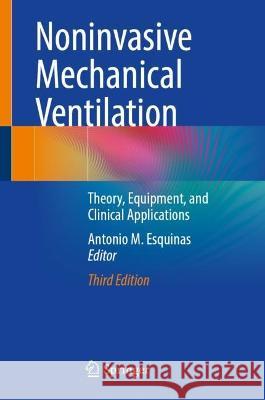
Antonio M. Esquinas
Noninvasive Mechanical Ventilation: Theory, Equipment, and Clinical Applications Antonio M. Esquinas 9783031289620 Springer - książkaWidoczna okładka, to zdjęcie poglądowe, a rzeczywista szata graficzna może różnić się od prezentowanej.

Noninvasive Mechanical Ventilation: Theory, Equipment, and Clinical Applications

ISBN-13: 9783031289620 / Angielski

Antonio M. Esquinas
cena 726,29 zł
(netto: 691,70 VAT:  5%)

Najniższa cena z 30 dni: 693,97 zł
Termin realizacji zamówienia:
ok. 22 dni roboczych
Bez gwarancji dostawy przed świętami

Darmowa dostawa!
inne wydania

The 3rdand updated edition of this book represents a new and unique scientific reference for the medical community on how to understand rationale and applications of noninvasive mechanical ventilation (NIMV). Its aim is to establish the indications of NIMV in critically ill patients in weaning from invasive MV. Nowadays, there is a growing evidence-based medicine that recommends use of NIMV in patients after extubation or in difficult weaning patients also affected by comorbidities. This book has been conceived with the vision or providing the best resources for everyone working in ICUs even if belonging to different specialties (intensive care, anesthesiology, pneumology, emergency medicine, etc.). Considering the enormous increase of literature on this topic, authors have selected major key topics related to NIMV, excluding those with low rate of interest, have updated previous topics and have introduced new items collecting them in a practical book analyzing major key topics for a correct practical applications.A new gaze has been devoted to emergency medicine and prehospital applications and technical developments (new ventilation modes: neurology adaptive modes, average support mode and to the development of synchronization and patient-ventilator interaction result).A section dedicated to sleep medicine - due tothe new interesting studies on NIV-CPAP adaptation studies, clinical impacts of CPAP devices and ventilatory modes representing an essentials development for a new adequate analysis - is now included. A part devoted to clinical indications based on the observation ofnew clinical indications in anesthesiology and pneumology in NIV as complementary technique for procedures like bronchoscopy, pre-oxygenation and difficult endotracheal intubations is also now foreseen.


The 3rd and updated edition of this book represents a new and unique scientific reference for the medical community on how to understand rationale and applications of noninvasive mechanical ventilation (NIMV). Its aim is to establish the indications of NIMV in critically ill patients in weaning from invasive MV. Nowadays, there is a growing evidence-based medicine that recommends use of NIMV in patients after extubation or in difficult weaning patients also affected by comorbidities. This book has been conceived with the vision or providing the best resources for everyone working in ICUs even if belonging to different specialties (intensive care, anesthesiology, pneumology, emergency medicine, etc.). Considering the enormous increase of literature on this topic, authors have selected major key topics related to NIMV, excluding those with low rate of interest, have updated previous topics and have introduced new items collecting them in a practical book analyzing major key topics for a correct practical applications.A new gaze has been devoted to emergency medicine and prehospital applications and technical developments (new ventilation modes: neurology adaptive modes, average support mode and to the development of synchronization and patient-ventilator interaction result). A section dedicated to sleep medicine - due to the new interesting studies on NIV-CPAP adaptation studies, clinical impacts of CPAP devices and ventilatory modes representing an essentials development for a new adequate analysis - is now included. A part devoted to clinical indications based on the observation of new clinical indications in anesthesiology and pneumology in NIV as complementary technique for procedures like bronchoscopy, pre-oxygenation and difficult endotracheal intubations is also now foreseen.

Kategorie:
Nauka, Medycyna
Kategorie BISAC:
Medical > Critical Care
Medical > Pulmonologia
Medical > Anesthesiology
Wydawca:
Springer
Język:
Angielski
ISBN-13:
9783031289620

Part I. Physiology

Chapter 1. Rationale of Noninvasive Ventilation.

Part II. Interface , Ventilatory Modes and Ventilators

Chapter 2. Interfaces for noninvasive mechanical ventilation. Nasal, full , Helmet and Mask Ventilation and alternatives.

Chapter 3. Ventilatory modes of Non Invasive mechanical ventilation: Technology and clinical implications

Chapter 4. NIV-Leaks compensations and clinical implications

Chapter 5. New ventilatory modes of noninvasive mechanical ventilation

Chapter 6. Ventilators for Noninvasive Mechanical Ventilation: Theory and Technology

Chapter 7. Continuous Positive Airway Pressure-high flow CPAP

Chapter 8. Negative noninvasive mechanical ventilation

Part III. Nasal high flow

Chapter 9.High-flow oxygen therapy.

Part IV. Complementary technologies in NIV

Chapter 10. Humidification and airway secretions management

Chapter 11. Aersol therapy

Part V. Methodology; Patient-Ventilator Interaction

Chapter 12. How to start the VNI, preparation of the patient, interface, primary ventilator setting

Chapter 13.Pressure/ airflow and volume waveforms

Chapter 14. Basic patient ventilator interaction. Pressure-volume-flow

Chapter 15. Asynchrony. Diagnosis and treatment

Chapter 16 –BIS. Role of awake and prone position and the roles of oxygen escalation in noninvasive ventilation-nasal high flow oxygen.

Chapter 17. Inspiratory Effort Assessments: and Noninvasive Ventilation Outcome in de novo Respiratory Failure.

Chapter 18. Carbon Dioxide Rebreathing and exhalation ports during noninvasive Mechanical Ventilation

Chapter 19. Hemodynamic interactions of noninvasive mechanical ventilation

Chapter 20. Patters of NIV response (success and failure) during noninvasive mechanical ventilation.

Chapter 21. Predictive factors of noninvasive mechanical ventilation

Chapter 22. NIV failure: how to foresee, prevent, diagnose it, and when to switch to invasive mechanical ventilation.

Chapter 23. Withdrawal of noninvasive Mechanical Ventilation

Chapter 24. Psychological factors during noninvasive mechanical ventilation

Part VI. Monitoring, complications and hospital transport

Chapter 25. Nocturnal Monitoring in the Evaluation of Continuous Nocturnal Monitoring in the Evaluation of Continuous

Chapter 26. Technology and advances of noninvasive mechanical ventilation monitoring

Chapter 27. Complications during noninvasive Pressure Support Ventilation

Chapter 28. Intra-hospital transport during noninvasive mechanical ventilation

Chapter 29. Use of new technology advance in NIV. Echography and other procedures

Chapter 30. TcCO2 , remote monitoring , breath by breath analysis

Part VII. Chronic Applications  Non invasive mechanical ventilation 

Chapter 31. Adherence and complications of CPAP in Obstructive Sleep Apnea

Chapter 32. New ventilatory modes in OSA. Key topics and clinical implications

Chapter 33. Devices for CPAP in OSA.

Chapter 34. Transnasal Insufflation — A New Approach in the Treatment of OSAS

Chapter 35. Noninvasive Ventilation in Patients with Obesity hypoventilation syndrome.

Chapter 36. Cardiopulmonary Interventions to Prolong Survival in Patients with Duchenne Muscular Dystrophy

Chapter 37. Noninvasive Ventilation Pressure Adjustments in Patients with Amyotrophic Lateral Sclerosis

Chapter 38. Noninvasive Mechanical Ventilation in Patients with Myasthenia Crisis

Chapter 39. Noninvasive Mechanical Ventilation in COPD exacerbations

Chapter 40. Noninvasive Mechanical Ventilation in Acute Exacerbations of Chronic Obstructive Pulmonary Disease: Key Determinants of Early and Late Failure.

Chapter 40. Noninvasive Ventilation in Patients with Acute Exacerbations of Asthma

Chapter 41. Noninvasive Mechanical Ventilation in Restrictive pulmonary disease

Chapter 42. Noninvasive Positive Pressure Ventilation for Acute Decompensated Heart Failure

Chapter 43. NIV and cardiac diseases with left ventricular mechanics

Chapter 44. Home Ventilation for Chronic Obstructive Pulmonary Disease

Chapter 45. Nocturnal noninvasive Mechanical Ventilation

Chapter 46. European Model Of Home Noninvasive Mechanical Ventilation. What have We Learned? Evidence and Key Determinants

Chapter 47. Tele-home noninvasive mechanical ventilation

Chapter 48. Noninvasive mechanical ventilation in rare diseases.

Chapter 49. Unusual and emergent new indications of noninvasive mechanical ventilation.

Chapter 50. Epidemic consequences of using NIV - the spread of infected aerosols

Part VIII. Critical Care Applications of NIMV and Related Issues

Chapter 51. Technology for Noninvasive Ventilation in the Pre-hospital Setting.

Chapter 52. Noninvasive mechanical ventilation in pre-hospital medicine. Clinical applications.

Chapter 53. Current Strategies and Equipment for noninvasive Ventilation in Emergency Medicine.

Chapter 54. Noninvasive Ventilation Outside of Intensive Care Units

Chapter 55. Noninvasive Positive Airway Pressure in Acute Cardiogenic Pulmonary

Chapter 56. Noninvasive mechanical ventilation in Severe Pneumonia

Chapter 57. Noninvasive Ventilation in Acute Lung Injury

Chapter 58. Acute Respiratory Distress Syndrome

Chapter 59. Hypoxemic Respiratory Failure and in Solid-Cancer Patients

Chapter 60. Hypoxemic Respiratory Failure and in Haematology critically Patients 

Chapter 61. Noninvasive mechanical ventilation in Polytrauma patients

Chapter  62. Noninvasive Positive Pressure Ventilation in Lung Transplant Recipients

Chapter 63. Noninvasive Ventilation as a Preoxygenation

Chapter 64. Noninvasive Ventilation during bronchoscopy

Chapter 65. Noninvasive mechanical ventilation in preoperative use

Chapter 66. Intraoperative Use of Noninvasive Ventilation

Chapter 67. Use of Noninvasive Ventilation in postoperative patients in cardiac surgery

Chapter 68. Use of Noninvasive Ventilation in postoperative patients in abdominal surgery.

Chapter 69. Use of Noninvasive Ventilation in postoperative spine-thoracic surgery

Chapter 70. Noninvasive Ventilation in solid organ Transplantation

Chapter 71. Noninvasive Positive Pressure Ventilation in Patients Undergoing Lung Resection Surgery

Chapter 72. Use of Noninvasive Mechanical Ventilation in Patient Management after Chronic Thromboembolic Pulmonary Hypertension (CTEPH) surgery.

Part IX. NIMV analgesia and sedation

Chapter 73. Sedation and analgesia during noninvasive Ventilation in Intensive Care

Part X. Weaning from Conventional MV and Post-extubation Failure

Chapter 74. Noninvasive Positive Pressure Ventilation in the Postextubation

Chapter 75. Extubation and Decannulation of Unweanable Patients with Neuromuscular Weakness.

Chapter 76.Chest physiotherapy/niv in postextubation respiratory failure/ prevention and indications?

Part XI. Rehabilitation applications

Chapter 77. Noninvasive mechanical ventilation in rehabilitation process

Chapter 78. Combination of noninvasive mechanical ventilation and complementary therapies for airway clear secretions.

Part XII. Training and education NIMV

Chapter 79. Skills and training in Noninvasive mechanical ventilation

Part XIII. NIV practice and trends. Epidemiology perspectives

Chapter 80. Trends of noninvasive mechanical ventilation. Epidemiology insights

Part XIV. NIMV do not endotracheal intubation order, palliative and Quality of Life influence

Chapter 81. Palliative use of no invasive ventilation

Chapter 82. Do not endotracheal intubation order use of no invasive ventilation

Chapter 83. Influence of noninvasive mechanical ventilation and implications of quality of life.  

Chapter 84. Use of noninvasive mechanical ventilation in older patients

Chapter 85. Predictors of Survival in chronic Hypercapnic Respiratory Failure Receiving noninvasive.

Part XV. NIMV in Neonates and Children

Chapter 86. Equipment and Technology for Continuous Positive Airway Pressure during Neonatal disorders

Chapter 87. Noninvasive ventilation in hypoxemic in Children

Chapter 88. Home Mechanical Ventilation in Children- with Chronic Respiratory Failure

Part XVI. NIMV and health care organizations models

Chapter 89. Organization of noninvasive mechanical ventilation in hospital

Chapter  90. New models of hospital organization of noninvasive mechanical ventilation. Step down unit, respiratory intensive care units

Antonio M. Esquinas is critical care specialist and staff physician in the Intensive Care Unit at the Hospital Morales Meseguer, Murcia. Spain. He is an International fellow of the American Association Respiratory Care (AARC), fellow of the American College Chest Physicians. (ACCP) European Respiratory Society, and Director of the International School of Non Invasive Ventilation, International noninvasive ventilation Fellowship program, president of the International Association of Non Invasive Ventilation and International College of Expert of noninvasive ventilation. 

His main educational and research activities are related to noninvasive mechanical ventilation in pulmonary, critical care and sleep medicine. Currently, he is very keen in difficult weaning, post-extubation, respiratory, humidification and airway clearance techniques in mechanically ventilated patients. He is author of more than 60 books and 560 indexed papers in noninvasive ventilation approaches.

The 3rd and updated edition of this book represents a new and unique scientific reference for the medical community on how to understand rationale and applications of noninvasive mechanical ventilation (NIMV). Its aim is to establish the indications of NIMV in critically ill patients in weaning from invasive MV. Nowadays, there is a growing evidence-based medicine that recommends use of NIMV in patients after extubation or in difficult weaning patients also affected by comorbidities. This book has been conceived with the vision or providing the best resources for everyone working in ICUs even if belonging to different specialties (intensive care, anesthesiology, pneumology, emergency medicine, etc.). Considering the enormous increase of literature on this topic, authors have selected major key topics related to NIMV, excluding those with low rate of interest, have updated previous topics and have introduced new items collecting them in a practical book analyzing major key topics for a correct practical applications.


A new gaze has been devoted to emergency medicine and prehospital applications and technical developments (new ventilation modes: neurology adaptive modes, average support mode and to the development of synchronization and patient-ventilator interaction result). A section dedicated to sleep medicine - due to the new interesting studies on NIV-CPAP adaptation studies, clinical impacts of CPAP devices and ventilatory modes representing an essentials development for a new adequate analysis - is now included. A part devoted to clinical indications based on the observation of new clinical indications in anesthesiology and pneumology in NIV as complementary technique for procedures like bronchoscopy, pre-oxygenation and difficult endotracheal intubations is also now foreseen.




Udostępnij

Facebook - konto krainaksiazek.pl


Opinie o Krainaksiazek.pl na Opineo.pl

Partner Mybenefit

Krainaksiazek.pl w programie rzetelna firma Krainaksiaze.pl - płatności przez paypal

Czytaj nas na:

Facebook - krainaksiazek.pl
  • książki na zamówienie
  • granty
  • książka na prezent
  • kontakt
  • pomoc
  • opinie
  • regulamin
  • polityka prywatności

Zobacz:

  • Księgarnia czeska

  • Wydawnictwo Książkowe Klimaty

1997-2025 DolnySlask.com Agencja Internetowa

© 1997-2022 krainaksiazek.pl
     
KONTAKT | REGULAMIN | POLITYKA PRYWATNOŚCI | USTAWIENIA PRYWATNOŚCI
Zobacz: Księgarnia Czeska | Wydawnictwo Książkowe Klimaty | Mapa strony | Lista autorów
KrainaKsiazek.PL - Księgarnia Internetowa

Polityka prywatnosci - link
Krainaksiazek.pl - płatnośc Przelewy24
Przechowalnia Przechowalnia



