• Wyszukiwanie zaawansowane
  • Kategorie
  • Kategorie BISAC
  • Książki na zamówienie
  • Promocje
  • Granty
  • Książka na prezent
  • Opinie
  • Pomoc
  • Załóż konto
  • Zaloguj się

Nonclassical Effects and Dynamics of Quantum Observables » książka


zaloguj się | załóż konto
Logo Krainaksiazek.pl

koszyk

konto

szukaj
topmenu
Księgarnia internetowa
Szukaj
Książki na zamówienie
Promocje
Granty
Książka na prezent
Moje konto
Pomoc
 
 
Wyszukiwanie zaawansowane
Pusty koszyk
Bezpłatna dostawa dla zamówień powyżej 20 złBezpłatna dostawa dla zamówień powyżej 20 zł

Kategorie główne

• Nauka
 [2952079]
• Literatura piękna
 [1850969]

  więcej...
• Turystyka
 [71058]
• Informatyka
 [151066]
• Komiksy
 [35579]
• Encyklopedie
 [23181]
• Dziecięca
 [620496]
• Hobby
 [139036]
• AudioBooki
 [1646]
• Literatura faktu
 [228729]
• Muzyka CD
 [379]
• Słowniki
 [2932]
• Inne
 [445708]
• Kalendarze
 [1409]
• Podręczniki
 [164793]
• Poradniki
 [480107]
• Religia
 [510956]
• Czasopisma
 [511]
• Sport
 [61267]
• Sztuka
 [243299]
• CD, DVD, Video
 [3411]
• Technologie
 [219640]
• Zdrowie
 [100984]
• Książkowe Klimaty
 [124]
• Zabawki
 [2281]
• Puzzle, gry
 [3363]
• Literatura w języku ukraińskim
 [258]
• Art. papiernicze i szkolne
 [8020]
Kategorie szczegółowe BISAC

Nonclassical Effects and Dynamics of Quantum Observables

ISBN-13: 9783031194139 / Angielski / Miękka / 2022 / 130 str.
S. Lakshmibala; V. Balakrishnan
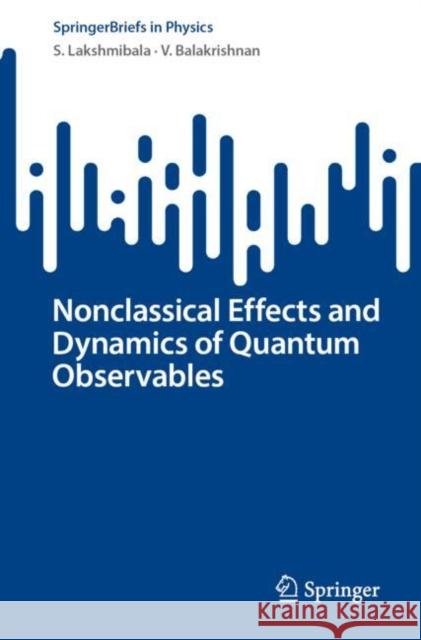
Nonclassical Effects and Dynamics of Quantum Observables S. Lakshmibala V. Balakrishnan 9783031194139 Springer - książkaWidoczna okładka, to zdjęcie poglądowe, a rzeczywista szata graficzna może różnić się od prezentowanej.

Nonclassical Effects and Dynamics of Quantum Observables

ISBN-13: 9783031194139 / Angielski / Miękka / 2022 / 130 str.

S. Lakshmibala; V. Balakrishnan
cena 201,24
(netto: 191,66 VAT:  5%)

Najniższa cena z 30 dni: 192,74
Termin realizacji zamówienia:
ok. 22 dni roboczych
Dostawa w 2026 r.

Darmowa dostawa!

This book explores interesting possibilities of extracting information about quantum states from data readily obtained from experiments, such as tomograms and expectation values of appropriate observables. The procedures suggested for identifying nonclassical effects such as wave packet revivals, squeezing and entanglement solely from tomograms circumvent detailed state reconstruction. Several bipartite entanglement indicators are defined based on tomograms, and their efficacy assessed in models of atom-field interactions and qubit systems. Tools of classical ergodic theory such as time series and network analysis are applied to quantum observables treated as dynamical variables. This brings out novel aspects involving different time scales. The book is aimed at researchers in the areas of quantum optics and quantum dynamics.


This book explores interesting possibilities of extracting information about quantum states from data readily obtained from experiments, such as tomograms and expectation values of appropriate observables. The procedures suggested for identifying nonclassical effects such as wave packet revivals, squeezing and entanglement solely from tomograms circumvent detailed state reconstruction. Several bipartite entanglement indicators are defined based on tomograms, and their efficacy assessed in models of atom-field interactions and qubit systems. Tools of classical ergodic theory such as time series and network analysis are applied to quantum observables treated as dynamical variables. This brings out novel aspects involving different time scales. The book is aimed at researchers in the areas of quantum optics and quantum dynamics.

Kategorie:
Nauka, Fizyka
Kategorie BISAC:
Science > Fizyka kwantowa
Mathematics > Mathematical Analysis
Technology & Engineering > Mechanical
Wydawca:
Springer
Seria wydawnicza:
Springerbriefs in Physics
Język:
Angielski
ISBN-13:
9783031194139
Rok wydania:
2022
Dostępne języki:
Numer serii:
000417619
Ilość stron:
130
Oprawa:
Miękka

Chap. 1. Introduction

1.1 Preamble

1.2 States of light

1.3 Tomograms and state reconstruction

Snapshot summary of Chap. 1: Introduction to nonclassical effects—wave packet revival phenomena, squeezing and entanglement. Ehrenfest relations for quantum observables with nonlinear Hamiltonians. Moment expansion and non-commutativity. Importance of quantum optics models in the study of nonclassical effects. Different states of radiation. Usefulness of tomograms. Optical tomograms and qubit tomograms.

Chap. 2. Revivals, Fractional Revivals and Tomograms

2.1 Introduction

2.2 Basic mechanism of wave packet revivals

2.3 An illustrative example

2.4 Manifestation of revivals in expectation values of observables

2.5 Effect of an imperfectly coherent initial state

2.6 Revivals in single-mode systems: A tomographic approach

2.7 Decoherence effects

2.8 Double-well BEC system: A tomographic approach

Snapshot summary of Chap. 2: Signatures of revivals and fractional revivals in appropriate tomograms corresponding to single-mode and bipartite systems are examined. It is also demonstrated how moments of observables reflect the revival phenomena at specific instants of time during the temporal evolution of a wave packet of radiation in a given initial quantum state, as it propagates in a nonlinear atomic medium.

Chap. 3. Tomographic Approach to Squeezing

3.1 Introduction

3.2 Quadrature squeezing from optical tomograms

3.3 Tomographic entropic squeezing

3.4 Spin squeezing from qubit tomograms

3.5 Higher-order squeezing in single-mode states of light

3.6 Two-mode squeezing

Snapshot summary of Chap. 3: Brief review of quadrature squeezing, spin squeezing and tomographic entropic squeezing. Extraction of squeezing properties from the relevant tomograms, illustrated for single-mode and two-mode systems.

Chap. 4. Entanglement at Avoided Level Crossings

4.1 Entanglement measures and tomographic entanglement indicators

4.2 Entanglement at avoided energy-level crossings

4.3 Tomographic assessment of entanglement in continuous-variable systems

4.4 Bipartite entanglement in multipartite hybrid quantum systems

Snapshot summary of Chap. 4: Review of tomographic entanglement indicators (EIs). Avoided energy-level crossings and chaos. Assessment of entanglement in models of bipartite continuous-variable (CV) systems: (i) a multilevel atom interacting with radiation, (ii) BEC in a double well. Bipartite entanglement in hybrid quantum (HQ) systems—the Tavis-Cummings model.

Remark applicable to both Chap. 4 and Chap. 5: There is, of course, an exhaustive literature on entanglement, but not on the detection and assessment of the extent of entanglement from tomograms. The relevant literature will be cited and discussed.

Chap. 5. Entanglement in time-evolving bipartite systems

5.1 Introduction

5.2 Comparison of EIs in continuous-variable systems

5.3 Comparison of EIs in hybrid quantum systems

5.4 IBM Quantum Platform: Computation of entanglement

5.5 Time series analysis for comparing EIs

Appendix: Brief review of time series analysis

Snapshot summary of Chap. 5: Time dependence of entanglement in CV systems. Examples: (i) a multilevel atom interacting with radiation, (ii) double-well BEC. Assessment of EIs using time series analysis.

Remark applicable to Chap. 5 and Chap. 6: There is exhaustive literature on time series analysis and network analysis, but not on applications of these to quantum observables. The relevant literature will be cited and discussed.

Chap. 6. Ergodic properties of expectation values

6.1 Introduction

6.2 Observables in bipartite systems: Time series analysis

6.3 A tripartite example

6.4 Dynamics of quantum observables: Network analysis

6.5 Inferences drawn

Appendix: Brief review of network analysis

Snapshot summary of Chap. 6: Non-quadratic Hamiltonians and time evolution of quantum expectation values. What can we expect from a time series analysis of observables? Time series analysis of observables for bipartite systems. Role of initial state, interaction strength and nonlinearity. Inferences from network analysis of a data set of observables.

Epilogue

Summary of the report. Tie-up of the different aspects discussed in the report. Open problems and prospects.

References

S. Lakshmibala earned her Ph. D. degree in theoretical high energy physics from the University of Madras in 1987 and joined the Department of Physics, IIT Madras, as a postdoctoral fellow. She became a faculty member in 1991 and is currently a professor there. Her research has ranged over particle physics, nonlinear dynamics, and the interface between quantum mechanics and quantum optics. For the past two decades, her research has focused on the general theme of the ergodic properties of the expectation values of observables in quantum mechanical systems, particularly in the context of paradigmatic atom-field interaction models in quantum optics. In addition to significant work in this area, she has also pioneered the application of time series and network analysis to quantum dynamics. She has taught a variety of courses at the undergraduate and graduate levels and has also given an NPTEL-sponsored video course on quantum mechanics (available on YouTube) that has been very well received. Among her current research interests is the tomographic approach to the exploration of entanglement in bipartite and multipartite systems. 

V. Balakrishnan earned his Ph. D. degree in theoretical high energy physics from Brandeis University in 1970. After a decade of research at TIFR (Mumbai) and IGCAR (Kalpakkam), he joined IIT Madras in 1980 as a professor, retired as professor emeritus in 2013, and is currently an adjunct professor there. His research interests have spanned many areas over the years, including particle physics, mechanical behavior of solids, condensed matter physics, random walks and stochastic processes, nonlinear dynamics and chaos, and quantum dynamics, in which he has published numerous research papers and articles. He has made significant contributions to the theory of an elasticity and viscoelasticity, anomalous diffusion and continuous time random walks, first-passage times for random walks on fractals, and extreme-value and recurrence-time distributions in chaotic dynamics. He is a co-author of Beyond the Crystalline State (Springer, 1989) and the author of Elements of Nonequilibrium Statistical Mechanics (Ane Books, 2008; Springer, 2021), Mathematical Physics (Ane Books, 2018; Springer, 2020) and A Miscellany of Mathematical Physics (Indian Academy of Sciences, 2018). Over four decades, he has taught a wide variety of extremely popular courses at the undergraduate and graduate levels. He has given seven NPTEL-sponsored video courses (available on YouTube). These have received very high acclaim, with a total of several million views worldwide. He has been a fellow of the Indian Academy of Sciences since 1985.


Udostępnij

Facebook - konto krainaksiazek.pl


Opinie o Krainaksiazek.pl na Opineo.pl

Partner Mybenefit

Krainaksiazek.pl w programie rzetelna firma Krainaksiaze.pl - płatności przez paypal

Czytaj nas na:

Facebook - krainaksiazek.pl
  • książki na zamówienie
  • granty
  • książka na prezent
  • kontakt
  • pomoc
  • opinie
  • regulamin
  • polityka prywatności

Zobacz:

  • Księgarnia czeska

  • Wydawnictwo Książkowe Klimaty

1997-2025 DolnySlask.com Agencja Internetowa

© 1997-2022 krainaksiazek.pl
     
KONTAKT | REGULAMIN | POLITYKA PRYWATNOŚCI | USTAWIENIA PRYWATNOŚCI
Zobacz: Księgarnia Czeska | Wydawnictwo Książkowe Klimaty | Mapa strony | Lista autorów
KrainaKsiazek.PL - Księgarnia Internetowa

Polityka prywatnosci - link
Krainaksiazek.pl - płatnośc Przelewy24
Przechowalnia Przechowalnia




