• Wyszukiwanie zaawansowane
  • Kategorie
  • Kategorie BISAC
  • Książki na zamówienie
  • Promocje
  • Granty
  • Książka na prezent
  • Opinie
  • Pomoc
  • Załóż konto
  • Zaloguj się

New Science of Learning: Cognition, Computers and Collaboration in Education » książka


zaloguj się | załóż konto
Logo Krainaksiazek.pl

koszyk

konto

szukaj
topmenu
Księgarnia internetowa
Szukaj
Książki na zamówienie
Promocje
Granty
Książka na prezent
Moje konto
Pomoc
 
 
Wyszukiwanie zaawansowane
Pusty koszyk
Bezpłatna dostawa dla zamówień powyżej 20 złBezpłatna dostawa dla zamówień powyżej 20 zł

Kategorie główne

• Nauka
 [2949965]
• Literatura piękna
 [1857847]

  więcej...
• Turystyka
 [70818]
• Informatyka
 [151303]
• Komiksy
 [35733]
• Encyklopedie
 [23180]
• Dziecięca
 [617748]
• Hobby
 [139972]
• AudioBooki
 [1650]
• Literatura faktu
 [228361]
• Muzyka CD
 [398]
• Słowniki
 [2862]
• Inne
 [444732]
• Kalendarze
 [1620]
• Podręczniki
 [167233]
• Poradniki
 [482388]
• Religia
 [509867]
• Czasopisma
 [533]
• Sport
 [61361]
• Sztuka
 [243125]
• CD, DVD, Video
 [3451]
• Technologie
 [219309]
• Zdrowie
 [101347]
• Książkowe Klimaty
 [123]
• Zabawki
 [2362]
• Puzzle, gry
 [3791]
• Literatura w języku ukraińskim
 [253]
• Art. papiernicze i szkolne
 [7933]
Kategorie szczegółowe BISAC

New Science of Learning: Cognition, Computers and Collaboration in Education

ISBN-13: 9781441957153 / Angielski / Twarda / 2010 / 607 str.
Myint Swe Khine; Issa M. Saleh
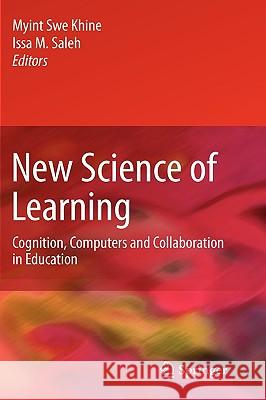
New Science of Learning: Cognition, Computers and Collaboration in Education Khine, Myint Swe 9781441957153 Springer - książkaWidoczna okładka, to zdjęcie poglądowe, a rzeczywista szata graficzna może różnić się od prezentowanej.

New Science of Learning: Cognition, Computers and Collaboration in Education

ISBN-13: 9781441957153 / Angielski / Twarda / 2010 / 607 str.

Myint Swe Khine; Issa M. Saleh
cena 605,23 zł
(netto: 576,41 VAT:  5%)

Najniższa cena z 30 dni: 578,30 zł
Termin realizacji zamówienia:
ok. 22 dni roboczych
Bez gwarancji dostawy przed świętami

Darmowa dostawa!
inne wydania

The earliest educational software simply transferred print material from the page to the monitor. Since then, the Internet and other digital media have brought students an ever-expanding, low-cost knowledge base and the opportunity to interact with minds around the globe--while running the risk of shortening their attention spans, isolating them from interpersonal contact, and subjecting them to information overload. The New Science of Learning: Cognition, Computers and Collaboration in Education deftly explores the multiple relationships found among these critical elements in students' increasingly complex and multi-paced educational experience. Starting with instructors' insights into the cognitive effects of digital media--a diverse range of viewpoints with little consensus--this cutting-edge resource acknowledges the double-edged potential inherent in computer-based education and its role in shaping students' thinking capabilities. Accordingly, the emphasis is on strategies that maximize the strengths and compensate for the negative aspects of digital learning, including:

  • Group cognition as a foundation for learning
  • Metacognitive control of learning and remembering
  • Higher education course development using open education resources
  • Designing a technology-oriented teacher professional development model
  • Supporting student collaboration with digital video tools
  • Teaching and learning through social annotation practices
The New Science of Learning: Cognition, Computers and Collaboration in Education brings emerging challenges and innovative ideas into sharp focus for researchers in educational psychology, instructional design, education technologies, and the learning sciences. Endorsements: "The book brings together leading researchers who study how technology can enhance student learning. They address questions of how technology can support collaborative learning, knowledge building, assessment, metacognition, and professional development. For example, a chapter by Howard Gardner and his colleagues describes how students are changing as they grow up with new technologies, and a chapter by Kurt W. Fischer and his colleagues describes redesigning testing with the use of latest in computer technology and learning science. Altogether it is a fine collection of chapters about the latest advances in educational technology."

Allan Collins, Northwestern University - Author, Rethinking Education in the Age of Technology
"Modern learning technologies have emerged in the 21st century as powerful tools to enhance learning and thinking, but much of their potential remains to be realized. Remarkably, as we explore how learners interact with diverse learning environments, including digital media, we are discovering that these tools also are revealing new insights into how our minds operate and how better to realize the promise that learning technologies offer. This book presents some of the latest discoveries and theoretical insights about how we think and learn, especially through explorations employing digital media. This is a first-class book containing chapters by some of the best researchers worldwide." O. R. Anderson, Columbia University, Teachers College - Chair, Mathematics, Science and Technology


Kategorie:
Podręczniki
Kategorie BISAC:
Education > Educational Psychology
Education > Computers & Technology
Education > Teaching - General
Wydawca:
Springer
Język:
Angielski
ISBN-13:
9781441957153
Rok wydania:
2010
Wydanie:
2010
Ilość stron:
607
Waga:
1.06 kg
Wymiary:
23.39 x 15.6 x 3.51
Oprawa:
Twarda
Wolumenów:
01
Dodatkowe informacje:
Bibliografia
Wydanie ilustrowane

Endorsements:

"The book brings together leading researchers who study how technology can enhance student learning. They address questions of how technology can support collaborative learning, knowledge building, assessment, metacognition, and professional development. For example, a chapter by Howard Gardner and his colleagues describes how students are changing as they grow up with new technologies, and a chapter by Kurt W. Fischer and his colleagues describes redesigning testing with the use of latest in computer technology and learning science. Altogether it is a fine collection of chapters about the latest advances in educational technology." (Allan Collins, Northwestern University - Author, Rethinking Education in the Age of Technology)

"Modern learning technologies have emerged in the 21st century as powerful tools to enhance learning and thinking, but much of their potential remains to be realized. Remarkably, as we explore how learners interact with diverse learning environments, including digital media, we are discovering that these tools also are revealing new insights into how our minds operate and how better to realize the promise that learning technologies offer. This book presents some of the latest discoveries and theoretical insights about how we think and learn, especially through explorations employing digital media. This is a first-class book containing chapters by some of the best researchers worldwide." (O. R. Anderson, Columbia University, Teachers College - Chair, Mathematics, Science and Technology)

Foreword Robert J. Sternberg About the Contributors PART I Cognition and New Science of Learning 1 New Digital Media and their Potential Cognitive Impact on Youth Learning Margaret Weigel, Celka Straughn, and Howard Gardner 2 Group Cognition as a Foundation for the New Science of Learning Gerry Stahl 3 An Embodied/Grounded Cognition Perspective on Educational Technology John B. Black 4 Features of Computerized Multimedia Environments that Support Vicarious Learning Processes Barry Gholson, Roby Coles, and Scotty D. Craig 5 Human Memory and the New Science of Learning Paul Eggen 6 Metacognitive Control of Learning and Remembering Jason R. Finley, Jonathan G. Tullis, and Aaron S. Benjamin 7 Ethnic Differences on Students’ Approaches to Learning: Self-regulatory Cognitive and Motivational Predictors of Academic Achievement for Latino/a and White College Students Robert Rueda, Hyo Jin Lim, Harold O’Neil, Noelle Griffin, Shel Bockman, & Barbara Sirotnik 8 Intuitions, Conceptions and Frameworks: Modelling Student Cognition in Science Learning Keith S. Taber 9 An Analysis of Design Strategies for Creating Educational Experiences in Virtual Environments Theresa Horstman and Stephen Kerr PART II Computers and New Science of Learning 10 Redesigning Testing: Operationalizing the New Science of Learning Zachary Stein, Theo Dawson, and Kurt W. Fischer 11 Self-Regulated Learning with MetaTutor: Advancing the Science of Learning with MetaCognitive Tools Roger Azevedo, Amy Witherspoon, Amber Chauncey, and Candice Burkett 12 New Learning -Old methods? How e-research might Change Technology-enhanced Learning Research Peter Reimann and Lina Markauskaite 13 Designing Higher Education Courses using Open Educational Resources Frank Rennie and Robin Mason 14 The Evolution of an Automated Reading Strategy Tutor: From the Classroom to a Game-Enhanced Automated System. G. Tanner Jackson, Kyle B. Dempsey, and Danielle S. McNamara 15 Experiences in the Field: The Evolution of a Technology-Oriented Teacher Professional Development Model M. Brooke Robertshaw, Andrew Walker, Mimi Recker, Heather Leary, and Linda Sellers 16 A Dialogic Approach to Technology-enhanced Education for the Global Knowledge Society Rupert Wegerif and Nasser Mansour 17 Conceptual Representation Embodied in Hypermedia: An Approach to Promoting Knowledge Co-construction Lei Liu and Cindy E. Hmelo-Silver 18 Virtual Worlds for Young People in a Program Context: Lessons from Four Case Studies Marina Umaschi Bers, Laura Beals, Clement Chau, Keiko Satoh, & Nauman Khan 19 New Technologies, Learning Systems and Communication: Reducing Complexity in the Educational System Helle Mathiasen and Lynne Schrum PART III Collaboration and New Science of Learning 20 Fostering Higher Levels of Learning Using Diverse Instructional Strategies with Internet Communication Tools Heather Kanuka 21 Windows into Teaching and Learning through Social Annotation Practices Hope J. Hartman 22 Orchestrating Learning in a one-to-one Technology Classroom Jitti Niramitranon, Mike Sharples, & Chris Greenhalgh 23 Designing Online Learning Environments for Professional Development Kedmon Hungwe

The earliest educational software simply transferred print material from the page to the monitor. Since then, the Internet and other digital media have brought students an ever-expanding, low-cost knowledge base and the opportunity to interact with minds around the globe—while running the risk of shortening their attention spans, isolating them from interpersonal contact, and subjecting them to information overload.

The New Science of Learning: Cognition, Computers and Collaboration in Education deftly explores the multiple relationships found among these critical elements in students’ increasingly complex and multi-paced educational experience. Starting with instructors’ insights into the cognitive effects of digital media—a diverse range of viewpoints with little consensus—this cutting-edge resource acknowledges the double-edged potential inherent in computer-based education and its role in shaping students’ thinking capabilities. Accordingly, the emphasis is on strategies that maximize the strengths and compensate for the negative aspects of digital learning, including:

  • Group cognition as a foundation for learning
  • Metacognitive control of learning and remembering
  • Higher education course development using open education resources
  • Designing a technology-oriented teacher professional development model
  • Supporting student collaboration with digital video tools
  • Teaching and learning through social annotation practices

The New Science of Learning: Cognition, Computers and Collaboration in Education brings emerging challenges and innovative ideas into sharp focus for researchers in educational psychology, instructional design, education technologies, and the learning sciences.


Endorsements:

"The book brings together leading researchers who study how technology can enhance student learning. They address questions of how technology can support collaborative learning, knowledge building, assessment, metacognition, and professional development. For example, a chapter by Howard Gardner and his colleagues describes how students are changing as they grow up with new technologies, and a chapter by Kurt W. Fischer and his colleagues describes redesigning testing with the use of latest in computer technology and learning science. Altogether it is a fine collection of chapters about the latest advances in educational technology."

Allan Collins, Northwestern University – Author, Rethinking Education in the Age of Technology


"Modern learning technologies have emerged in the 21st century as powerful tools to enhance learning and thinking, but much of their potential remains to be realized. Remarkably, as we explore how learners interact with diverse learning environments, including digital media, we are discovering that these tools also are revealing new insights into how our minds operate and how better to realize the promise that learning technologies offer. This book presents some of the latest discoveries and theoretical insights about how we think and learn, especially through explorations employing digital media. This is a first-class book containing chapters by some of the best researchers worldwide."

O. R. Anderson, Columbia University, Teachers College – Chair, Mathematics, Science and Technology



Udostępnij

Facebook - konto krainaksiazek.pl


Opinie o Krainaksiazek.pl na Opineo.pl

Partner Mybenefit

Krainaksiazek.pl w programie rzetelna firma Krainaksiaze.pl - płatności przez paypal

Czytaj nas na:

Facebook - krainaksiazek.pl
  • książki na zamówienie
  • granty
  • książka na prezent
  • kontakt
  • pomoc
  • opinie
  • regulamin
  • polityka prywatności

Zobacz:

  • Księgarnia czeska

  • Wydawnictwo Książkowe Klimaty

1997-2025 DolnySlask.com Agencja Internetowa

© 1997-2022 krainaksiazek.pl
     
KONTAKT | REGULAMIN | POLITYKA PRYWATNOŚCI | USTAWIENIA PRYWATNOŚCI
Zobacz: Księgarnia Czeska | Wydawnictwo Książkowe Klimaty | Mapa strony | Lista autorów
KrainaKsiazek.PL - Księgarnia Internetowa

Polityka prywatnosci - link
Krainaksiazek.pl - płatnośc Przelewy24
Przechowalnia Przechowalnia




