• Wyszukiwanie zaawansowane
  • Kategorie
  • Kategorie BISAC
  • Książki na zamówienie
  • Promocje
  • Granty
  • Książka na prezent
  • Opinie
  • Pomoc
  • Załóż konto
  • Zaloguj się

Neurodevelopmental Disorders: Employing Ipsc Technologies to Define and Treat Childhood Brain Diseases » książka


zaloguj się | załóż konto
Logo Krainaksiazek.pl

koszyk

konto

szukaj
topmenu
Księgarnia internetowa
Szukaj
Książki na zamówienie
Promocje
Granty
Książka na prezent
Moje konto
Pomoc
 
 
Wyszukiwanie zaawansowane
Pusty koszyk
Bezpłatna dostawa dla zamówień powyżej 20 złBezpłatna dostawa dla zamówień powyżej 20 zł

Kategorie główne

• Nauka
 [2946912]
• Literatura piękna
 [1852311]

  więcej...
• Turystyka
 [71421]
• Informatyka
 [150889]
• Komiksy
 [35717]
• Encyklopedie
 [23177]
• Dziecięca
 [617324]
• Hobby
 [138808]
• AudioBooki
 [1671]
• Literatura faktu
 [228371]
• Muzyka CD
 [400]
• Słowniki
 [2841]
• Inne
 [445428]
• Kalendarze
 [1545]
• Podręczniki
 [166819]
• Poradniki
 [480180]
• Religia
 [510412]
• Czasopisma
 [525]
• Sport
 [61271]
• Sztuka
 [242929]
• CD, DVD, Video
 [3371]
• Technologie
 [219258]
• Zdrowie
 [100961]
• Książkowe Klimaty
 [124]
• Zabawki
 [2341]
• Puzzle, gry
 [3766]
• Literatura w języku ukraińskim
 [255]
• Art. papiernicze i szkolne
 [7810]
Kategorie szczegółowe BISAC

Neurodevelopmental Disorders: Employing Ipsc Technologies to Define and Treat Childhood Brain Diseases

ISBN-13: 9783030454920 / Angielski / Twarda / 2020 / 305 str.
Emanuel Dicicco-Bloom; James Millonig
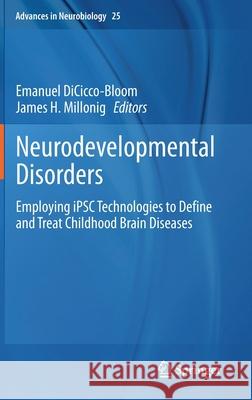
Neurodevelopmental Disorders: Employing Ipsc Technologies to Define and Treat Childhood Brain Diseases Dicicco-Bloom, Emanuel 9783030454920 Springer - książkaWidoczna okładka, to zdjęcie poglądowe, a rzeczywista szata graficzna może różnić się od prezentowanej.

Neurodevelopmental Disorders: Employing Ipsc Technologies to Define and Treat Childhood Brain Diseases

ISBN-13: 9783030454920 / Angielski / Twarda / 2020 / 305 str.

Emanuel Dicicco-Bloom; James Millonig
cena 602,40
(netto: 573,71 VAT:  5%)

Najniższa cena z 30 dni: 578,30
Termin realizacji zamówienia:
ok. 22 dni roboczych
Dostawa w 2026 r.

Darmowa dostawa!
inne wydania
Kategorie:
Nauka, Medycyna
Kategorie BISAC:
Medical > Neuroscience
Science > Life Sciences - Neuroscience
Wydawca:
Springer
Seria wydawnicza:
Advances in Neurobiology
Język:
Angielski
ISBN-13:
9783030454920
Rok wydania:
2020
Wydanie:
2020
Numer serii:
000408641
Ilość stron:
305
Waga:
0.61 kg
Wymiary:
23.39 x 15.6 x 1.91
Oprawa:
Twarda
Wolumenów:
01
Dodatkowe informacje:
Wydanie ilustrowane

1. Modeling neurodevelopmental deficits in Tuberous Sclerosis Complex with stem cell-derived neural precursors and neurons

2. Advances in human stem cells and genome editing to understand and develop treatment for Fragile X syndrome

3. IPSC MODELS OF CHROMOSOME 15Q IMPRINTING DISORDERS:  FROM DISEASE MODELING TO THERAPEUTIC STRATEGIES

4. Creating iPSC based models to understand the signaling and cellular phenotypes in idiopathic autism and 16p11.2 derived neurons

5. Dysregulation of Neurite Outgrowth and Cell Migration in Autism and other Neurodevelopmental Disorders

6. Investigation of Schizophrenia with Human Induced Pluripotent Stem Cells

7. Modeling Inflammation on Neurodevelopmental disorders using pluripotent stem cells

8. Astrocyte-derived exosomes in an iPSC model of bipolar disorder

9. Two- and there-dimensional stem cell models to define mechanisms underlying psychiatric disorders

10. Development of a 3-D organoid system using human induced pluripotent stem cells to model idiopathic autism

Emanuel DiCicco-Bloom, M.D. is Professor of Neuroscience and Cell Biology and Pediatrics (Child Neurology & Neurodevelopmental Disabilities) at Rutgers Robert Wood Johnson Medical School (RWJMS) in New Jersey and a member of graduate programs in Cell & Developmental Biology, Neuroscience, and Toxicology at Rutgers University. He graduated summa cum laude from Princeton University, received his M.D. from then Cornell University Medical College, and trained in Pediatrics and Neurology at New York Hospital-Cornell Medical Center, joining RWJMS in 1990.


Dr. DiCicco-Bloom has broad experience performing basic and translational research on neurodevelopmental disorders including animal models and human induced pluripotent stem cells (iPCSs). As an active child neurologist, his research focuses on defining molecular and cellular pathways that regulate production of neuronal cells (neurogenesis) during brain development, and how related abnormalities contribute to developmental disorders including autism. He investigates how growth signals, genetic factors, and environmental toxins impact cell proliferation, survival, and fate determination during brain development using rat and mouse neural stem cells in culture and in vivo, with a focus on the cerebral cortex, cerebellum, and hippocampus. To begin defining mechanisms that are more directly relevant to human disorders, recent collaborative studies with Co-Editor James H. Millonig, Ph.D. have focused on creating human induced neural stem cells (NPCs) from people with autism, to determine their neurobiological signatures. Significantly, by comparing NPCs from two forms of autism, including idiopathic and genetically defined (CNV 16p11.2 Deletion Syndrome), these studies reveal a common neurobiological phenotype consisting of reduced neural process outgrowth and cell migration in autism compared to control NPCs. Moreover dysregulation of the mTOR signaling pathway appears to be central to these phenotypes, as pathway manipulation both corrects autism deficits and recreates abnormalities in relevant controls. This new era of exploring neuropsychiatric conditions in human neurons may provide more relevant cellular and molecular pathways on which to target therapeutic interventions that may be “personalized” to the needs of the specific individual.

Dr. DiCicco-Bloom has long served the autism scientific and advocacy communities, providing scientific expertise to federal agencies including NIH, DOD, NSF, and IACC, and disease advocacy organizations including National Alliance for Autism Research, Autism Science Foundation, Autism Speaks, Autism Tissue Program, Brain Canada, Rett Syndrome Foundation, and Simons Foundation. He Chaired the Scientific Program Committee of the 2008 International Meeting for Autism Research (IMFAR) meeting (London) and Co-Chaired 2010 (Philadelphia), and has long served the IMFAR Program Committee. For the Society for Neuroscience, he has served on many committees (PECC, GPA, Audit, Rigor and Reproducibility Working Group) and as a Councilor. Currently, he is Chair of the NIH Developmental Brain Disorders Study Section, is a member of the DOD Autism Research Program and the American Brain Coalition (ABC) Board of Directors, and serves as Scientific Advisor to the Eagles Autism Foundation. He serves on the editorial boards of Autism Research, Molecular Autism, and other developmental neuroscience journals, and has authored numerous research articles and book chapters in neuroscience, child neurology, and psychiatry.


James H. Millonig Ph.D. is associate professor in the department of Neuroscience and Cell Biology and resident member in the Center for Advanced Biotechnology and Medicine at Robert Wood Johnson Medical School-Rutgers University. 

Dr. Millonig graduated from The University of Rochester magna cum laude with a B.S. in Biochemistry. After college he received a M.Sc. degree from Oxford University, University College studying B subtilis sporulation. Dr. Millonig matriculated in the Princeton University Molecular Biology PhD program and performed his thesis research in the lab of Shirley Tilghman Ph.D., President emerita of Princeton University. During his PhD, he was trained in genetics, mouse development, and molecular biology. Subsequent post-doctoral research, using mouse genetic approaches to study cerebellar development, was performed in Mary E. Hatten’s laboratory at The Rockefeller University. He joined the faculty at Rutgers in 1999.

Dr. Millonig has studied CNS development throughout his career applying molecular genetic approaches to understand basic mechanisms and disease. His work in collaboration with Emanuel DiCicco-Bloom M.D. and Linda Brzustowicz M.D. demonstrated genetic association of ENGRAILED2 (EN2) with autism spectrum disorder and defined autism-like behaviors in mouse models that could be reversed by pharmacological treatment. His lab also identified the orphan GPCR, Gpr161, as an unknown, important regulator of neural tube closure and lens development. Forward mouse genetic approaches demonstrated that Gpr161 functions through the retinoic acid (RA) pathway. His lab is currently studying rare human mutations in the RA metabolic pathway and Gpr161 and their impact on development. More recently, Dr. Millonig and Dr. DiCicco-Bloom have applied iPSC-based approaches to study idiopathic and 16p11.2 Deletion Syndrome. They have defined neurodevelopmental phenotypes in culture and are applying numerous omic strategies to define the downstream signaling and cell biological pathways affected in autism. He is the recipient of many research awards including Basil O’Connor Starter Research Award, NARSAD Young Investigator Award, and the Thomas A Edison Patent Award for medical diagnostics. He has over 100 abstracts, papers, and grants related to autism and neurodevelopmental disorders. He has been an active reviewer for many scientific journals including Molecular Psychiatry, Translational Psychiatry, and eLife. For the NIH, he has been an ad hoc member of Clinical Neuroplasticity and Neurotransmitters and Genetics of Health and Disease, was a standing member of the NIH Developmental Brain Disorders Study Section (2010-16) and has also contributed to NIH Loan Repayment Program, BRAIN, and NIH Director’s Early Independence Awards initiatives.

He is currently the Director of the Rutgers-RWJMS-Princeton University MD/PhD program and is senior associate dean in the Rutgers School of Graduate Studies. He was co-PI on an NIH Director’s Fund Broadening Experiences Scientific Training (BEST) training grant. In these roles, Dr. Millonig has developed numerous educational initiatives including the BEST program called iJOBS, which includes all Rutgers campuses across NJ that has reached 836 trainees or 16,258 person hours in 4 years.

This book contains a compendium of induced pluripotent stem cells (iPSCs) articles and reviews concerning state of the art technologies and how they are being applied to human neurodevelopmental disorders.  With the establishment of effective technologies to produce iPSCs and their derivatives, like neural precursors, neurons, and glia, researchers have new platforms to study neurodevelopmental disorders.  iPSC technology enables researchers to study how human neurons develop in individuals with neurodevelopmental disorders, providing an unparalleled opportunity to investigate their etiology.  In turn, researchers have now begun to understand the underlying molecular and cellular pathways that contribute to human diseases. iPSCs technologies also provide an emerging tool for future translational studies and disease classification.  The chapters will emphasize how among the diverse idiopathic and genetic disorders, there are common clinical as well as cellular and molecular phenotypes.




Udostępnij

Facebook - konto krainaksiazek.pl


Opinie o Krainaksiazek.pl na Opineo.pl

Partner Mybenefit

Krainaksiazek.pl w programie rzetelna firma Krainaksiaze.pl - płatności przez paypal

Czytaj nas na:

Facebook - krainaksiazek.pl
  • książki na zamówienie
  • granty
  • książka na prezent
  • kontakt
  • pomoc
  • opinie
  • regulamin
  • polityka prywatności

Zobacz:

  • Księgarnia czeska

  • Wydawnictwo Książkowe Klimaty

1997-2025 DolnySlask.com Agencja Internetowa

© 1997-2022 krainaksiazek.pl
     
KONTAKT | REGULAMIN | POLITYKA PRYWATNOŚCI | USTAWIENIA PRYWATNOŚCI
Zobacz: Księgarnia Czeska | Wydawnictwo Książkowe Klimaty | Mapa strony | Lista autorów
KrainaKsiazek.PL - Księgarnia Internetowa

Polityka prywatnosci - link
Krainaksiazek.pl - płatnośc Przelewy24
Przechowalnia Przechowalnia




