• Wyszukiwanie zaawansowane
  • Kategorie
  • Kategorie BISAC
  • Książki na zamówienie
  • Promocje
  • Granty
  • Książka na prezent
  • Opinie
  • Pomoc
  • Załóż konto
  • Zaloguj się

Neurochemical Aspects of Neurotraumatic and Neurodegenerative Diseases » książka


zaloguj się | załóż konto
Logo Krainaksiazek.pl

koszyk

konto

szukaj
topmenu
Księgarnia internetowa
Szukaj
Książki na zamówienie
Promocje
Granty
Książka na prezent
Moje konto
Pomoc
 
 
Wyszukiwanie zaawansowane
Pusty koszyk
Bezpłatna dostawa dla zamówień powyżej 20 złBezpłatna dostawa dla zamówień powyżej 20 zł

Kategorie główne

• Nauka
 [2946912]
• Literatura piękna
 [1852311]

  więcej...
• Turystyka
 [71421]
• Informatyka
 [150889]
• Komiksy
 [35717]
• Encyklopedie
 [23177]
• Dziecięca
 [617324]
• Hobby
 [138808]
• AudioBooki
 [1671]
• Literatura faktu
 [228371]
• Muzyka CD
 [400]
• Słowniki
 [2841]
• Inne
 [445428]
• Kalendarze
 [1545]
• Podręczniki
 [166819]
• Poradniki
 [480180]
• Religia
 [510412]
• Czasopisma
 [525]
• Sport
 [61271]
• Sztuka
 [242929]
• CD, DVD, Video
 [3371]
• Technologie
 [219258]
• Zdrowie
 [100961]
• Książkowe Klimaty
 [124]
• Zabawki
 [2341]
• Puzzle, gry
 [3766]
• Literatura w języku ukraińskim
 [255]
• Art. papiernicze i szkolne
 [7810]
Kategorie szczegółowe BISAC

Neurochemical Aspects of Neurotraumatic and Neurodegenerative Diseases

ISBN-13: 9781489982568 / Angielski / Miękka / 2014 / 401 str.
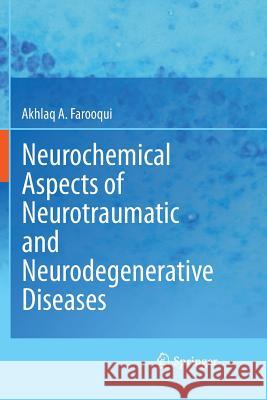
Akhlaq a Farooqui
Neurochemical Aspects of Neurotraumatic and Neurodegenerative Diseases Akhlaq a Farooqui   9781489982568 Springer - książkaWidoczna okładka, to zdjęcie poglądowe, a rzeczywista szata graficzna może różnić się od prezentowanej.

Neurochemical Aspects of Neurotraumatic and Neurodegenerative Diseases

ISBN-13: 9781489982568 / Angielski / Miękka / 2014 / 401 str.

Akhlaq a Farooqui
cena 805,10
(netto: 766,76 VAT:  5%)

Najniższa cena z 30 dni: 771,08
Termin realizacji zamówienia:
ok. 22 dni roboczych
Bez gwarancji dostawy przed świętami

Darmowa dostawa!
inne wydania

Neurodegeneration is defined as a process that results in death of neural cells (neurons, astrocytes, and oligodendrocytes) in acute neural trauma (stroke, spinal cord injury, and head injury) and neurodegenerative diseases. Neurodegenerative diseases are a complex heterogeneous group of diseases associated with site-specific premature and slow death of certain neuronal populations in brain and spinal cord tissues. For example, in Alzheimer disease (AD) neuronal degeneration occurs in the nucleus basalis, whereas in Parkinson disease (PD) neurons die in the substantia nigra. The most severely affected neurons in Huntington disease (HD) are striatal medium spiny neurons. Although in ischemic injury neurons die in several regions, the CA1 hippocampal region is relatively more susceptible to ischemic injury compared to other regions. The neuronal populations that are lost in ischemic injury and neurodegenerative diseases modulate functions, such as controlling movements, processing sensory information, memory, and making decisions. Collectively, neurodegenerative diseases are characterized by chronic and progressive loss of neurons in discrete areas of the brain, producing debilitating symptoms such as dementia, loss of memory, loss of sensory or motor capability, decreased overall quality of life eventually leading to premature death. Two types of cell death are known to occur during neurodegeneration: (a) apoptosis and (b) necrosis. The necrosis is characterized by the passive cell swelling, intense mitochondrial damage with rapid loss of ATP, alterations in neural membrane permeability, high calcium influx, and disruption of ion homeostasis. This type of cell death leads to membrane lysis and release of intracellular components that induce inflammatory reactions. Necrotic cell death normally occurs at the core of injury site. In contrast, apoptosis is an active process in which caspases (a group of endoproteases with specificity for aspartate residues in protein) are stimulated. Apoptotic cell death is accompanied by cell shrinkage, dynamic membrane blebbing, chromatin condensation, DNA laddering, loss of phospholipids asymmetry, low ATP levels, and mild calcium overload. This type of cell death normally occurs in penumbral region at the ischemic injury site and in different regions in various neurodegenerative diseases. Thus, apoptosis and necrosis are two extremes of a wide spectrum of cell death processes with different mechanistic and morphological features. However, they may share some common mediators and signal transduction processes that are often inseparable. Although the molecular mechanism of neurodegeneration remains unknown, it is becoming increasingly evident that excitotoxicity, inflammation, and oxidative stress may contribute to neural cell demise independently or synergistically. During aging an upregulation of interplay (cross talk) among exicitotoxicity, oxidative stress, and neuroinflammation occurs throughout the normal elderly brain, but in neurodegenerative diseases this interplay turns on specific genes that affect only a specific neuronal population in a particular region where neuronal degeneration occurs both by apoptotic and necrotic cell death.


Kategorie:
Nauka, Medycyna
Kategorie BISAC:
Medical > Neuroscience
Medical > Neurologia i neurofizjologia kliniczna
Science > Life Sciences - Neuroscience
Wydawca:
Springer
Język:
Angielski
ISBN-13:
9781489982568
Rok wydania:
2014
Wydanie:
2010
Ilość stron:
401
Waga:
0.65 kg
Wymiary:
23.5 x 15.5
Oprawa:
Miękka
Wolumenów:
01
Dodatkowe informacje:
Wydanie ilustrowane

From the reviews:

"Farooqui summarizes the current knowledge about neurochemical aspects of trauma such as stroke and head injury and disease such as Alzheimer's and prion disease. The book can serve as a reference for researchers and clinicians ... . chapter projects future directions and developments in the field." (SciTech Book News, December, 2010)

"Readers will find the book to be an excellent source of information about neurochemical changes that occur in many brain diseases. ... I can recommend this book to those who work in the field of neurotrauma or to those who are looking for a source of information about the many different neurochemical abnormalities that occur in neurotrauma or in neurodegenerative diseases. ... the book fills a major niche in this important area of research." (David H. Small, Journal of Alzheimer's Disease, Vol. 24, 2011)

Chapter 1. Neurodegeneration in Neurological Disorders.- Chapter 2. Neurochemical Aspects of ischemia.- Chapter 3. Potential neuroprotective strategies for ischemic injury.- Chapter 4. Neurochemical Aspects of Spinal cord injury.- Chapter 5. Potential Neuroprotective Strategies for Experimental Spinal Cord Injury.- Chapter 6. Neurochemical Aspects of head Injury.- Chapter 7. Potential neuroprotective strategies for head Injury.- Chapter 8. Neurochemical Aspects of Neurodegenerative Diseases.- Chapter 9. Conclusion.- Chapter 10. Perspective and Direction for Future Developments.

Dr. Akhlaq A. Farooqui is a leader in the field of brain phospholipases A2, bioactive ether lipid metabolism, polyunsaturated fatty acid metabolism, glycerophospholipid-, sphingolipid-, and cholesterol-derived lipid mediators, glutamate-induced neurotoxicity and neurological disorders. He has discovered the stimulation of plasmalogen-selective phospholipase A2 (PlsEtn-PLA2) in brains from patients with Alzheimer disease. Stimulation of PlsEtn-PLA2 produces plasmalogen deficiency and increases levels of eicosanoids that may be related to the loss of synapses, induction of neuroinflammation and oxidative stress in brains of patients with Alzheimer disease. Dr. Farooqui has published cutting edge research on the generation and identification of glycerophospholipid-, sphingolipid-, and cholesterol-derived lipid mediators in kainic acid neurotoxicity by lipidomics. He has previously authored five monographs: Glycerophospholipids in Brain: Phospholipase A2 in Neurological Disorders (2007); Neurochemical Aspects of Excitotoxicity (2008); Metabolism and Functions of Bioactive Ether Lipids in Brain (2008); Hot Topics in Neural Membrane Lipidology (2009), and Beneficial Effects of Fish Oil on Human Brain (2009). All monographs are published by Springer. Dr. Farooqui has also edited two books: “Biogenic Amines: Pharmacological, Neurochemical and Molecular Aspects in the CNS” Nova Science Publishers, Hauppauge, N.Y (2010) and Molecular Aspects of Neurodegeneration and Neuroprotection, Bentham Science Publishers Ltd (2010).

Neurotraumatic (stroke, spinal cord trauma, and traumatic head injury) and neurodegenerative diseases (Alzheimer disease, Parkinson disease, Amyotrophic Lateral Sclerosis, Huntington disease, and prion disease) are afflicting aging Americans with increasing frequency. These diseases result in acute, as well as gradual and progressive neurodegeneration, leading to brain dysfunction. Known risk factors for stroke and neurodegenerative diseases include increasing age, genetic polymorphisms, endocrine dysfunction, oxidative stress, neuroinflammation, excitotoxicity, infection, and exposure to neurotoxins. In contrast, spinal cord trauma and traumatic brain injury due to motorcycle and car accidents are major causes of death and disability among young people below the mid-thirties. Although molecular mechanisms involved in the pathogenesis of neurotraumatic and neurodegenerative diseases remain elusive, oxidative stress, excitotoxicity, inflammation, misfolding, aggregation, and accumulation of proteins, perturbed Ca2+ homeostasis, and apoptosis have been implicated as possible causes of neurodegeneration in the above neurological disorders. In 2005, the global prevalence of neurotraumatic and neurodegenerative diseases was estimated at 35 million, with more than seven million new cases occurring each year. It is calculated that the number of people affected with neurotraumatic and neurodegenerative diseases will double every 20 years, to 100 million by 2040, if a cure is not discovered. More than 60% of dementia cases are due to Alzheimer disease. Today, approximately six million individuals in the US suffer from Alzheimer disease alone, representing one in eight individuals over the age of 65-70.

Neurochemical Aspects of Neurotraumatic and Neurodegenerative Diseases presents readers with a cutting edge and comprehensive overview of neurochemical aspects of neurotraumatic and neurodegenerative diseases and their potential therapeutic strategies in a manner that is useful not only to graduate students and teachers, but also to research scientists and clinicians.

About the Author:
Dr. Akhlaq A. Farooqui is a leader in the field of brain phospholipases, lipid mediators, glutamate neurotoxicity and neurological disorders. Dr. Farooqui has authored five monographs: Glycerophospholipids in Brain: Phospholipase A2 in Neurological Disorders (2007); Neurochemical Aspects of Excitotoxicity (2008); Metabolism and Functions of Bioactive Ether Lipids in Brain (2008); Hot Topics in Neural Membrane Lipidology (2009), and Beneficial Effects of Fish Oil on Human Brain (2009). All monographs are published by Springer. Dr. Farooqui has also edited two books: Biogenic Amines: Pharmacological, Neurochemical and Molecular Aspects in the CNS Nova Science Publishers, Hauppauge, N.Y (2010) and Molecular Aspects of Neurodegeneration and Neuroprotection, Bentham Science Publishers Ltd (2010).


Udostępnij

Facebook - konto krainaksiazek.pl


Opinie o Krainaksiazek.pl na Opineo.pl

Partner Mybenefit

Krainaksiazek.pl w programie rzetelna firma Krainaksiaze.pl - płatności przez paypal

Czytaj nas na:

Facebook - krainaksiazek.pl
  • książki na zamówienie
  • granty
  • książka na prezent
  • kontakt
  • pomoc
  • opinie
  • regulamin
  • polityka prywatności

Zobacz:

  • Księgarnia czeska

  • Wydawnictwo Książkowe Klimaty

1997-2025 DolnySlask.com Agencja Internetowa

© 1997-2022 krainaksiazek.pl
     
KONTAKT | REGULAMIN | POLITYKA PRYWATNOŚCI | USTAWIENIA PRYWATNOŚCI
Zobacz: Księgarnia Czeska | Wydawnictwo Książkowe Klimaty | Mapa strony | Lista autorów
KrainaKsiazek.PL - Księgarnia Internetowa

Polityka prywatnosci - link
Krainaksiazek.pl - płatnośc Przelewy24
Przechowalnia Przechowalnia






