• Wyszukiwanie zaawansowane
  • Kategorie
  • Kategorie BISAC
  • Książki na zamówienie
  • Promocje
  • Granty
  • Książka na prezent
  • Opinie
  • Pomoc
  • Załóż konto
  • Zaloguj się

Neurobionics: The Biomedical Engineering of Neural Prostheses » książka


zaloguj się | załóż konto
Logo Krainaksiazek.pl

koszyk

konto

szukaj
topmenu
Księgarnia internetowa
Szukaj
Książki na zamówienie
Promocje
Granty
Książka na prezent
Moje konto
Pomoc
 
 
Wyszukiwanie zaawansowane
Pusty koszyk
Bezpłatna dostawa dla zamówień powyżej 20 złBezpłatna dostawa dla zamówień powyżej 20 zł

Kategorie główne

• Nauka
 [2949965]
• Literatura piękna
 [1857847]

  więcej...
• Turystyka
 [70818]
• Informatyka
 [151303]
• Komiksy
 [35733]
• Encyklopedie
 [23180]
• Dziecięca
 [617748]
• Hobby
 [139972]
• AudioBooki
 [1650]
• Literatura faktu
 [228361]
• Muzyka CD
 [398]
• Słowniki
 [2862]
• Inne
 [444732]
• Kalendarze
 [1620]
• Podręczniki
 [167233]
• Poradniki
 [482388]
• Religia
 [509867]
• Czasopisma
 [533]
• Sport
 [61361]
• Sztuka
 [243125]
• CD, DVD, Video
 [3451]
• Technologie
 [219309]
• Zdrowie
 [101347]
• Książkowe Klimaty
 [123]
• Zabawki
 [2362]
• Puzzle, gry
 [3791]
• Literatura w języku ukraińskim
 [253]
• Art. papiernicze i szkolne
 [7933]
Kategorie szczegółowe BISAC

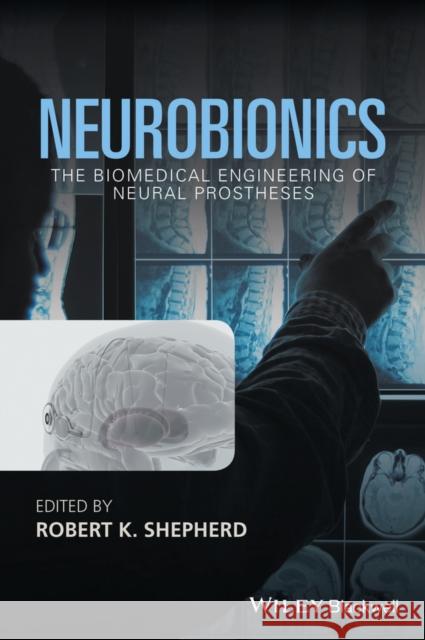
Neurobionics: The Biomedical Engineering of Neural Prostheses

ISBN-13: 9781118814871 / Angielski / Twarda / 2016 / 360 str.
Robert Shepherd
Neurobionics: The Biomedical Engineering of Neural Prostheses Shepherd, Robert K. 9781118814871 John Wiley & Sons - książkaWidoczna okładka, to zdjęcie poglądowe, a rzeczywista szata graficzna może różnić się od prezentowanej.

Neurobionics: The Biomedical Engineering of Neural Prostheses

ISBN-13: 9781118814871 / Angielski / Twarda / 2016 / 360 str.

Robert Shepherd
cena 641,56 zł
(netto: 611,01 VAT:  5%)

Najniższa cena z 30 dni: 635,00 zł
Termin realizacji zamówienia:
ok. 30 dni roboczych
Bez gwarancji dostawy przed świętami

Darmowa dostawa!

Technological advances have greatly increased the potential for, and practicability of, using medical neurotechnologies to revolutionize how a wide array of neurological and nervous system diseases and dysfunctions are treated. These technologies have the potential to help reduce the impact of symptoms in neurological disorders such as Parkinson's Disease and depression as well as help regain lost function caused by spinal cord damage or nerve damage. Medical Neurobionics is a concise overview of the biological underpinnings of neurotechnologies, the development process for these technologies, and the practical application of these advances in clinical settings. Medical Neurobionics is divided into three sections. The first section focuses specifically on providing a sound foundational understanding of the biological mechanisms that support the development of neurotechnologies. The second section looks at the efforts being carried out to develop new and exciting bioengineering advances. The book then closes with chapters that discuss practical clinical application and explore the ethical questions that surround neurobionics. A timely work that provides readers with a useful introduction to the field, Medical Neurobionics will be an essential book for neuroscientists, neuroengineers, biomedical researchers, and industry personnel.


Kategorie:
Nauka, Biologia i przyroda
Kategorie BISAC:
Science > Life Sciences - Neuroscience
Medical > Family & General Practice
Wydawca:
John Wiley & Sons
Język:
Angielski
ISBN-13:
9781118814871
Rok wydania:
2016
Ilość stron:
360
Waga:
0.73 kg
Wymiary:
23.5 x 16.1 x 2.1
Oprawa:
Twarda
Wolumenów:
01
Dodatkowe informacje:
Bibliografia

1. The Historical Foundation of Bionics
Nick Donaldson and Giles.S. Brindley

1.1 Bionics Past & Future

1.2 History in 1973

1.2.1 Biomaterials

1.2.2 Nerve Stimulation & Recording

1.2.3 Transistors

1.2.4 Conclusion

1.3 Anaesthesia

1.4 Aseptic Surgery

1.5 Clinical Observation & Experiments

1.6 Hermetic Packages

1.6.1 Vacuum Methods

1.6.2 Welding

1.6.3 Glass

1.6.4 Glass Ceramics & Solder Glasses

1.6.5 Ceramics

1.6.6 Microcircuit Technologies

1.6.7 Leak Testing

1.7 Encapsulation (Electrical Insulation)

1.7.1 Insulation

1.7.2 Under–water insulation

1.7.3 Silicones

1.7.4 Primers

1.8 Early Implanted Devices

1.9 Afterword

References

2. Development of Stable Long–Term Electrode Tissue Interfaces for Recording and Stimulation
Jens Schouenborg

2.1 Introduction

2.2 Tissue responses in the brain to an implanted foreign body

2.2.1 Acute tissue responses

2.2.2 Chronic tissue responses

2.2.3 On the importance of physiological conditions

2.3 Brain Computer Interfaces (BCI) – state of the art

2.4 Biocompatibility of BCI  on the importance of mechanical compliance

2.5 Novel electrode constructs and implantation procedures

2.5.1 Methods to implant ultraflexible electrodes

2.5.2 Surface configurations

2.5.3 Matrix embedded electrodes

2.5.4 Electrode arrays encorporating drugs

2.6 Concluding remarks

Acknowledgements

References

3. Electrochemical Principles of Safe Charge Injection
Stuart F. Cogan, David J. Garrett and Rylie A. Green

3.1 Introduction

3.2 Charge Injection Requirements

3.2.1 Stimulation Levels for Functional Responses

3.2.2 Tissue damage thresholds

3.2.3 Charge Injection Processes

3.2.4 Capacitive Charge Injection

3.2.5 Faradaic Charge Injection

3.2.6 Stimulation Waveforms

3.2.7 Voltage Transient Analysis

3.3 Electrode Materials

3.3.1 Non–noble Metal Electrodes

3.3.2 Noble metals

3.3.3 High Surface Area Capacitor Electrodes

3.3.4 Three–dimensional Noble Metal Oxide Films

3.4 Factors Influencing Electrode Reversibility

3.4.1 In vivo versus saline charge injection limits

3.4.2 Degradation Mechanisms and Irreversible Reactions

3.5 Emerging Electrode Materials

3.5.1 Intrinsically conductive polymers

3.5.2 Carbon Nanotubes and Conductive Diamond

3.6 Conclusion

References

4. Principles of Recording from an Electrical Stimulation of Neural Tissue
James B. Fallon and Paul M. Carter

4.1 Introduction

4.2 Anatomy and physiology of neural tissue

4.2.1 Active Neurons

4.3 Physiological principles of recording from neural tissue

4.3.1 Theory of recording

4.3.2 Recording electrodes

4.3.3 Amplification

4.3.4 Imaging

4.4 Principles of Stimulation of Neural Tissue

4.4.1 Introduction

4.4.2 Principles of Neural Stimulator Design

4.4.3 Modelling Nerve Stimulation

4.4.4 The Activating Function

4.4.5 Properties of Nerves Under Electrical Stimulation

4.5 Safety of Electrical Stimulation

4.5.1 Safe Stimulation Limits

4.5.2 Metabolic Stress

4.5.3 Electrochemical Stress

4.6 Conclusion

References

5. Wireless Neurotechnology for Neural Prostheses
Arto Nurmikko, David Borton and Ming Yin

5.1 Introduction

5.2 Rationale and overview of Technical Challenges Associated with Wireless Neuroelectronic Interfaces

5.3 Wireless Brain Interfaces Require Specialized Microelectronics

5.3.1 Lessons learned from Cabled Neural Interfaces

5.3.2 Special Demands for Compact Wireless Neural Interfaces

5.4 Illustrative Microsystems for High Data Rate Wireless Brain Interfaces in Primates

5.5 Power Supply and Management for Wireless Neural Interfaces

5.6 Packaging and Challenges in Hermetic Sealing

5.7 Deployment of High Data Rate Wireless Recording in Freely Moving Large Animals

5.8 Summary and Prospects for High Data Rate Brain Interfaces for Neural Prostheses

Acknowledgements

References

6. Preclinical Testing of Neural Prostheses
Douglas McCreery

6.1 Introduction

6.2 Biocompatibility testing of neural implants

6.3 Testing for mechanical and electrical integrity

6.4 In vitro accelerated testing and accelerated aging of neural implants  

6.5 In vivo testing of neural prostheses

6.6 Conclusion

References

7. Auditory and Visual Neural Prostheses
Robert K. Shepherd, Peter M. Seligman, Mohit N. Shivdasani

7.1 Introduction

7.2 Auditory prostheses

7.2.1 The Auditory system

7.2.2 Hearing loss

7.2.3 Cochlear implants

7.2.4 Central auditory prostheses

7.2.5 Combined electric and acoustic stimulation

7.2.6 Bilateral cochlear implants

7.2.7 Future directions

7.3 Visual prostheses

7.3.1 The Visual system

7.3.2 Vision loss

7.3.3 Retinal prostheses

7.3.4 Central visual prostheses

7.3.5 Perception through a vision prosthesis

7.3.6 Future directions

7.4 Sensory prostheses and brain plasticity

7.5 Conclusions

Acknowledgments

References

8. Neurobionics: Treatments for Disorders of the Central Nervous System
Hugh McDermott

8.1 Introduction

8.2 Psychiatric conditions

8.2.1 Obsessive–compulsive disorder

8.2.2 Major depression

8.3 Movement disorders

8.3.1 Essential Tremor

8.3.2 Parkinson s disease

8.3.3 Dystonia

8.3.4 Tourette syndrome

8.4 Epilepsy

8.5 Pain

8.6 Future directions

Acknowledgements

References

9. Brain Computer Interfaces
David M. Brandman and Leigh R. Hochberg

9.1 Introduction

9.2 Motor Physiology

9.2.1 Neurons are the fundamental unit of the Brain

9.2.2 Movement occurs through coordinated activity between multiple regions of the nervous system

9.2.3 Motor Cortex: a first source for iBCI signals

9.2.4 The Parietal Cortex is implicated in spatial coordination

9.2.5 The premotor and supplementary motor cortices are engaged in movement goals

9.2.6 Functional brain organization is constantly changing

9.2.7 Section Summary

9.3 The Clinical Population for Brain Machine Interfaces

9.3.1 Paralysis may result from damage to the motor system

9.3.2 Individuals with spinal cord injuries develop motor impairments that may impact hand function

9.3.3 Individuals with LIS develop motor impairment that impacts communication

9.4 BCI Modalities

9.4.1 BCI Modalities

9.4.2 Electrodes placed in the cortex record action potentials from neurons

9.4.3 Raw voltage signals are processed into spikes

9.5 BCI Decoding and applications

9.5.1 BCI decoders convert neural information into control of devices

9.5.2 BCI decoders allow for the control of prosthetic devices

9.6 Future directions

9.6.1 Scientific and engineering directions for developing BMI technology

9.6.2 Clinical directions for development of BCI technology

9.7 Conclusion

References

10. Taking a Device to Market: Regulatory and Commercial Issues
John L. Parker

10.1 Introduction

10.2 Basic Research

10.3 Preclinical Development

10.4 Clinical trials and approval to sell

10.5 Building a Business not a product

10.6 Conclusions

References

11. Ethical Considerations in the Development of Neural Prostheses
Frank J. Lane, Kristian P. Nitsch, and Marcia Scherer

11.1 Introduction

11.2 Individuals with Disabilities & Technology Development

11.3 Ethical Principles of Biomedical Research

11.4 Conclusions

References

Appendix: Companies Developing and/or Marketing Bionic Devices

Robert Shepherd is Professor of Medical Bionics and Director of the Bionics Institute in the Department of Otolaryngology at the University of Melbourne.

Shepherd, Robert Robert Shepherd is a radio and television producer... więcej >


Udostępnij

Facebook - konto krainaksiazek.pl


Opinie o Krainaksiazek.pl na Opineo.pl

Partner Mybenefit

Krainaksiazek.pl w programie rzetelna firma Krainaksiaze.pl - płatności przez paypal

Czytaj nas na:

Facebook - krainaksiazek.pl
  • książki na zamówienie
  • granty
  • książka na prezent
  • kontakt
  • pomoc
  • opinie
  • regulamin
  • polityka prywatności

Zobacz:

  • Księgarnia czeska

  • Wydawnictwo Książkowe Klimaty

1997-2025 DolnySlask.com Agencja Internetowa

© 1997-2022 krainaksiazek.pl
     
KONTAKT | REGULAMIN | POLITYKA PRYWATNOŚCI | USTAWIENIA PRYWATNOŚCI
Zobacz: Księgarnia Czeska | Wydawnictwo Książkowe Klimaty | Mapa strony | Lista autorów
KrainaKsiazek.PL - Księgarnia Internetowa

Polityka prywatnosci - link
Krainaksiazek.pl - płatnośc Przelewy24
Przechowalnia Przechowalnia





