Neighborhood Design and Travel » książka





Neighborhood Design and Travel
ISBN-13: 9783639254433 / Angielski / Miękka / 2010 / 264 str.
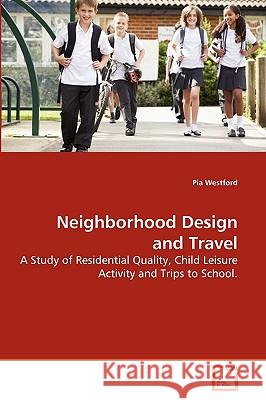
Sustainable urban mobility calls for well-informed design of neighborhoods. Although many studies have been conducted in the field, there is little evidence on the relationships between design elements, urban quality and behavior. Little is also known about residents valuation of design and urban quality in this context. This study uses a multidisciplinary approach in dealing with these issues. Logistic regression models are used to analyze relationships between neighborhood design, parents satisfaction with urban qualities and childrens behavior. The results support the hypothesis that environmental and social qualities and proximity to school can influence childrens trips to school, and the location and frequency of childrens leisure activities. Two suburban lifestyles are identified, relating also to parents preferences for and priorities of public versus private urban qualities. The results support and extend earlier research. The thesis includes a critical review of current urban design ideals, while these are viewed as part of a comprehensive urban and transportation policy. It should be useful to policy makers, urban designers and researchers.




Czytaj nas na:
KrainaKsiazek.PL - Księgarnia Internetowa


