• Wyszukiwanie zaawansowane
  • Kategorie
  • Kategorie BISAC
  • Książki na zamówienie
  • Promocje
  • Granty
  • Książka na prezent
  • Opinie
  • Pomoc
  • Załóż konto
  • Zaloguj się

Negotiating the End of the British Empire in Africa, 1959-1964: Conferences, Commissions and Decolonisation » książka


zaloguj się | załóż konto
Logo Krainaksiazek.pl

koszyk

konto

szukaj
topmenu
Księgarnia internetowa
Szukaj
Książki na zamówienie
Promocje
Granty
Książka na prezent
Moje konto
Pomoc
 
 
Wyszukiwanie zaawansowane
Pusty koszyk
Bezpłatna dostawa dla zamówień powyżej 20 złBezpłatna dostawa dla zamówień powyżej 20 zł

Kategorie główne

• Nauka
 [2952079]
• Literatura piękna
 [1850969]

  więcej...
• Turystyka
 [71058]
• Informatyka
 [151066]
• Komiksy
 [35579]
• Encyklopedie
 [23181]
• Dziecięca
 [620496]
• Hobby
 [139036]
• AudioBooki
 [1646]
• Literatura faktu
 [228729]
• Muzyka CD
 [379]
• Słowniki
 [2932]
• Inne
 [445708]
• Kalendarze
 [1409]
• Podręczniki
 [164793]
• Poradniki
 [480107]
• Religia
 [510956]
• Czasopisma
 [511]
• Sport
 [61267]
• Sztuka
 [243299]
• CD, DVD, Video
 [3411]
• Technologie
 [219640]
• Zdrowie
 [100984]
• Książkowe Klimaty
 [124]
• Zabawki
 [2281]
• Puzzle, gry
 [3363]
• Literatura w języku ukraińskim
 [258]
• Art. papiernicze i szkolne
 [8020]
Kategorie szczegółowe BISAC

Negotiating the End of the British Empire in Africa, 1959-1964: Conferences, Commissions and Decolonisation

ISBN-13: 9783030880934 / Angielski / Miękka / 2022 / 313 str.
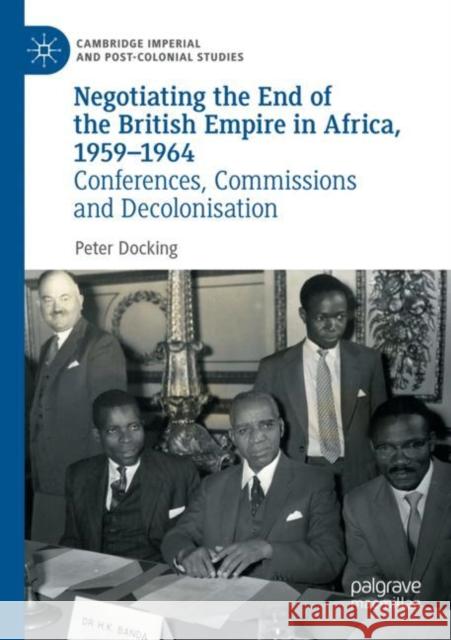
Peter Docking
Negotiating the End of the British Empire in Africa, 1959-1964: Conferences, Commissions and Decolonisation Peter Docking 9783030880934 Palgrave MacMillan - książkaWidoczna okładka, to zdjęcie poglądowe, a rzeczywista szata graficzna może różnić się od prezentowanej.

Negotiating the End of the British Empire in Africa, 1959-1964: Conferences, Commissions and Decolonisation

ISBN-13: 9783030880934 / Angielski / Miękka / 2022 / 313 str.

Peter Docking
cena 524,53
(netto: 499,55 VAT:  5%)

Najniższa cena z 30 dni: 501,19
Termin realizacji zamówienia:
ok. 22 dni roboczych.

Darmowa dostawa!
inne wydania

This book examines conferences and commissions held for British colonial territories in East and Central Africa in the early 1960s.Until 1960, the British and colonial governments regularly employed hard methods of colonial management in East and Central Africa, such as instituting states of emergency and imprisoning political leaders. A series of events at the end of the 1950s made hard measures no longer feasible, including criticism from the United Nations. As a result, softer measures became more prevalent, and the use of constitutional conferences and commissions became an increasingly important tool for the British government in seeking to manage colonial affairs.During the period 1960-64, a staggering sixteen conferences and ten constitutional commissions were held for British colonies in East and Central Africa. This book is the first of its kind to provide a detailed overview of how the British sought to make use of these events to control and manage the pace of change. The author also demonstrates how commissions and conferences helped shape politics and African popular opinion in the early 1960s. Whilst giving the British government temporary respite, conferences and commissions ultimately accelerated the decolonisation process by transferring more power to African political parties and engendering softer perceptions on both sides. Presenting both British and African perspectives, this book offers an innovative exploration into the way that these episodes played an important part in the decolonisation of Africa. It shows that far from being dry and technical events, conferences and commissions were occasions of drama that tell us much about how the British government and those in Africa engaged with the last days of empire.


This book examines conferences and commissions held for British colonial territories in East and Central Africa in the early 1960s. Until 1960, the British and colonial governments regularly employed hard methods of colonial management in East and Central Africa, such as instituting states of emergency and imprisoning political leaders. A series of events at the end of the 1950s made hard measures no longer feasible, including criticism from the United Nations. As a result, softer measures became more prevalent, and the use of constitutional conferences and commissions became an increasingly important tool for the British government in seeking to manage colonial affairs.During the period 1960-64, a staggering sixteen conferences and ten constitutional commissions were held for British colonies in East and Central Africa. This book is the first of its kind to provide a detailed overview of how the British sought to make use of these events to control and manage the pace of change. The author also demonstrates how commissions and conferences helped shape politics and African popular opinion in the early 1960s. Whilst giving the British government temporary respite, conferences and commissions ultimately accelerated the decolonisation process by transferring more power to African political parties and engendering softer perceptions on both sides. Presenting both British and African perspectives, this book offers an innovative exploration into the way that these episodes played an important part in the decolonisation of Africa. It shows that far from being dry and technical events, conferences and commissions were occasions of drama that tell us much about how the British government and those in Africa engaged with the last days of empire. 

Kategorie:
Nauka, Historia
Kategorie BISAC:
History > Africa - General
History > Europe - Great Britain - General
History > Modern - General
Wydawca:
Palgrave MacMillan
Seria wydawnicza:
Cambridge Imperial and Post-Colonial Studies
Język:
Angielski
ISBN-13:
9783030880934
Rok wydania:
2022
Dostępne języki:
Numer serii:
000304516
Ilość stron:
313
Waga:
0.39 kg
Wymiary:
21.01 x 14.81 x 1.75
Oprawa:
Miękka
Dodatkowe informacje:
Wydanie ilustrowane

Chapter 1. Introduction

Chapter 2. Breathing Spaces and Leverage: Reasons Behind the African Conferences and Commissions Chapter 3. Commissions and British Governmental Control
Chapter 4. Conferences and British Governmental Control
Chapter 5. Strengthening Voices: Constitutional Commissions and Popular Opinion and Politics in Africa
Chapter 6. Conferences and Popular Opinion and Politics in Africa in the Wind of Change Era
Chapter 7. Successes, Failures, and Consequences of the Commissions and Conferences
Chapter 8. Conclusion.

Peter Docking is a visitor in the history department at King’s College, London, where he gained his PhD. He is a former solicitor. Peter has research interests in decolonisation and the role of international conferences


“Peter Docking’s book successfully presents a crucial stage in the decolonisation of Africa by covering the vital conference and commission factor.  These are often mentioned, but seldom investigated in depth in the existing literature, despite their significance.  This invaluable book provides this missing analysis and much more.”

—H. Kumarasingham, University of Edinburgh, UK

This book examines conferences and commissions held for British colonial territories in east and central Africa in the early 1960s. 

Until 1960, the British and colonial governments regularly employed hard methods of colonial management in east and central Africa, such as instituting states of emergency and imprisoning political leaders. A series of events at the end of the 1950s made hard measures no longer feasible, including criticism from the United Nations. As a result, softer measures became more prevalent, and the use of constitutional conferences and commissions became an increasingly important tool for the British government in seeking to manage colonial affairs.

During the period 1960-64, a staggering 16 conferences and 10 constitutional commissions were held for British colonies in east and central Africa. This book is the first of its kind to provide a detailed overview of how the British sought to make use of these events to control and manage the pace of change.  The author also demonstrates how commissions and conferences helped shape politics and African popular opinion in the early 1960s. Whilst giving the British government temporary respite, conferences and commissions ultimately accelerated the decolonisation process by transferring more power to African political parties and engendering softer perceptions on both sides. Presenting both British and African perspectives, this book offers an innovative exploration into the way that these episodes played an important part in the decolonisation of Africa. It shows that far from being dry and technical events, conferences and commissions were occasions of drama that tell us much about how the British government and those in Africa engaged with the last days of empire. 

 

Peter Docking  is a visitor in the history department at King’s College, London, where he gained his PhD. He is a former solicitor. Peter has research interests in decolonisation and the role of international conferences. 


Udostępnij

Facebook - konto krainaksiazek.pl


Opinie o Krainaksiazek.pl na Opineo.pl

Partner Mybenefit

Krainaksiazek.pl w programie rzetelna firma Krainaksiaze.pl - płatności przez paypal

Czytaj nas na:

Facebook - krainaksiazek.pl
  • książki na zamówienie
  • granty
  • książka na prezent
  • kontakt
  • pomoc
  • opinie
  • regulamin
  • polityka prywatności

Zobacz:

  • Księgarnia czeska

  • Wydawnictwo Książkowe Klimaty

1997-2026 DolnySlask.com Agencja Internetowa

© 1997-2022 krainaksiazek.pl
     
KONTAKT | REGULAMIN | POLITYKA PRYWATNOŚCI | USTAWIENIA PRYWATNOŚCI
Zobacz: Księgarnia Czeska | Wydawnictwo Książkowe Klimaty | Mapa strony | Lista autorów
KrainaKsiazek.PL - Księgarnia Internetowa

Polityka prywatnosci - link
Krainaksiazek.pl - płatnośc Przelewy24
Przechowalnia Przechowalnia




