• Wyszukiwanie zaawansowane
  • Kategorie
  • Kategorie BISAC
  • Książki na zamówienie
  • Promocje
  • Granty
  • Książka na prezent
  • Opinie
  • Pomoc
  • Załóż konto
  • Zaloguj się

Nature in Silico » książka

zaloguj się | załóż konto
Logo Krainaksiazek.pl

koszyk

konto

szukaj
topmenu
Księgarnia internetowa
Szukaj
Książki na zamówienie
Promocje
Granty
Książka na prezent
Moje konto
Pomoc
 
 
Wyszukiwanie zaawansowane
Pusty koszyk
Bezpłatna dostawa dla zamówień powyżej 20 złBezpłatna dostawa dla zamówień powyżej 20 zł

Kategorie główne

• Nauka
 [2952079]
• Literatura piękna
 [1850969]

  więcej...
• Turystyka
 [71058]
• Informatyka
 [151066]
• Komiksy
 [35579]
• Encyklopedie
 [23181]
• Dziecięca
 [620496]
• Hobby
 [139036]
• AudioBooki
 [1646]
• Literatura faktu
 [228729]
• Muzyka CD
 [379]
• Słowniki
 [2932]
• Inne
 [445708]
• Kalendarze
 [1409]
• Podręczniki
 [164793]
• Poradniki
 [480107]
• Religia
 [510956]
• Czasopisma
 [511]
• Sport
 [61267]
• Sztuka
 [243299]
• CD, DVD, Video
 [3411]
• Technologie
 [219640]
• Zdrowie
 [100984]
• Książkowe Klimaty
 [124]
• Zabawki
 [2281]
• Puzzle, gry
 [3363]
• Literatura w języku ukraińskim
 [258]
• Art. papiernicze i szkolne
 [8020]
Kategorie szczegółowe BISAC

Nature in Silico

ISBN-13: 9783030973834 / Angielski / Miękka / 2023
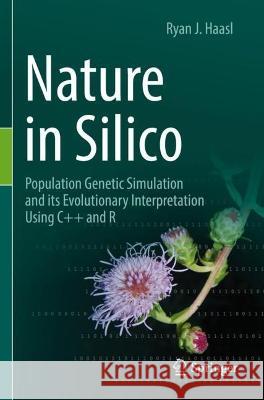
Ryan J. Haasl
Nature in Silico Ryan J. Haasl 9783030973834 Springer International Publishing - książkaWidoczna okładka, to zdjęcie poglądowe, a rzeczywista szata graficzna może różnić się od prezentowanej.

Nature in Silico

ISBN-13: 9783030973834 / Angielski / Miękka / 2023

Ryan J. Haasl
cena 322,77
(netto: 307,40 VAT:  5%)

Najniższa cena z 30 dni: 308,41
Termin realizacji zamówienia:
ok. 22 dni roboczych
Dostawa w 2026 r.

Darmowa dostawa!
inne wydania

Dramatic advances in computing power enable simulation of DNA sequences generated by complex microevolutionary scenarios that include mutation, population structure, natural selection, meiotic recombination, demographic change, and explicit spatial geographies. Although retrospective, coalescent simulation is computationally efficient—and covered here—the primary focus of this book is forward-in-time simulation, which frees us to simulate a wider variety of realistic microevolutionary models. The book walks the reader through the development of a forward-in-time evolutionary simulator dubbed FORward Time simUlatioN Application (FORTUNA). The capacity of FORTUNA grows with each chapter through the addition of a new evolutionary factor to its code. Each chapter also reviews the relevant theory and links simulation results to key evolutionary insights. The book addresses visualization of results through development of R code and reference to more than 100 figures. All code discussed in the book is freely available, which the reader may use directly or modify to better suit his or her own research needs. Advanced undergraduate students, graduate students, and professional researchers will all benefit from this introduction to the increasingly important skill of population genetic simulation. 

Kategorie:
Nauka, Biologia i przyroda
Kategorie BISAC:
Science > Life Sciences - Ecology
Science > Life Sciences - Evolution
Science > Research & Methodology
Wydawca:
Springer International Publishing
Język:
Angielski
ISBN-13:
9783030973834
Rok wydania:
2023
Waga:
0.51 kg
Wymiary:
23.5 x 15.5
Oprawa:
Miękka
Dodatkowe informacje:
Wydanie ilustrowane

Amended draft Table of Contents


1.       Introduction and relevance

a.       Who this book benefits

b.      Required background

c.       Review of population genetic/genomic simulation resources

d.      When to write your own simulations

2.       Retrospective and prospective simulation

a.       Retrospective, coalescent simulation

b.      Prospective simulation

c.       Individual-based models

3.       Data structures and computational efficiency

a.       Data structures

b.      Computer clusters

c.       Graphical processor units (GPU) programming


Part I. Simulating the five factors that affect population dynamics and genetic diversity

4.       Mutation

a.       Background and theory

b.      The bitset as a data structure for storing genetic sequence data

c.       Writing individual and population classes

d.      Common types of mutation

i.         Point mutations

ii. Indels

iii. Microsatellites

iv. AFLPs

e.      Haplotypes

5.       Population size and genetic drift

a.       Background and theory

b.      Fixation of alleles

c.       Demographic change: expansions and bottlenecks

6.       Migration and population structure

a.       Background and theory

b.      Panmixia

c.       Isolation by barrier

d.      Isolation by distance

e.      Admixture

f.        Metapopulations

7.       Meiotic recombination

a.       Background and theory

b.      Unlinked loci and independent assortment

c.       Linked loci and crossing-over

d.      Linked loci and gene conversion

8.       Natural selection

a.       Background and theory

b.      Fitness

c.       Viability and fecundity selection

d.      Positive natural selection

e.      Purifying natural selection and background selection

f.        Frequency-dependent selection

g.       Assortative mating

h.      Selection on a protein-coding gene


Part II. Adding biological and ecological realism


9.       Implementing all five factors simultaneously

a.       A generation function: the order of things

b.      Birth and death

c.       Overlapping vs. non-overlapping generations

d.      Using coalescent simulation to obtain random starting populations

10.   Modeling different life histories

a.       Ploidy

b.      Monoecious, dioecious, and hermaphroditic species

11.   Spatially-explicit simulation

a.       Neutral evolution

b.      The impact of landscape on dispersal

c.       The impact of environment on fitness


Part III. Statistical inference in population genetics


12.   Calculating summary statistics and visualization

a.       Sequence-based summary statistics

b.      Locus-specific summary statistics

c.       Null distributions

d.      Visualizing simulated and empirical data

13.   Approximate Bayesian computation: preliminaries

a.       Statistical and historical background

b.      Parameters

c.       Prior distributions

d.      Sufficient summary statistics

e.      Tolerance level

f.        The relevance of data type: SNPs, microsatellites, AFLPs

14.   Approximate Bayesian computation: implementation

a.       Rejection algorithms

b.      Regression-based algorithms

c.       Markov Chain Monte Carlo algorithms

d.      Sequential Monte Carlo algorithms

e.      Hierarchical models

f.        Model selection

g.       Parameter estimation

h.      Marginal, joint, and conditional distributions

i.         Posterior predictive distributions and model validation

j.        When simulation is costly: Approximate approximate Bayesian computation


Part IV. In-depth examples

15.   Comparing simulated genetic data to 1000 Genomes data

16.   The spread of the invasive species Japanese hops in the Upper Midwest, USA


Appendices

C++: Review and reference

R: Review and reference

Ryan J. Haasl is an Associate Professor of Biology at the University of Wisconsin-Platteville. He holds an M.A. in Entomology from the University of Kansas and a Ph.D. in Genetics from the University of Wisconsin-Madison. His research focuses on the use of simulation and statistical computing to explore favorite topics such as natural selection targeting microsatellites, phylogenomics, and the consolidation of microevolutionary dynamics and macroevolutionary pattern. He is passionate about teaching genetics and evolutionary biology to undergraduate students and fostering public literacy in the biological sciences through outreach.

Dramatic advances in computing power enable simulation of DNA sequences generated by complex microevolutionary scenarios that include mutation, population structure, natural selection, meiotic recombination, demographic change, and explicit spatial geographies. Although retrospective, coalescent simulation is computationally efficient—and covered here—the primary focus of this book is forward-in-time simulation, which frees us to simulate a wider variety of realistic microevolutionary models. The book walks the reader through the development of a forward-in-time evolutionary simulator dubbed FORward Time simUlatioN Application (FORTUNA). The capacity of FORTUNA grows with each chapter through the addition of a new evolutionary factor to its code. Each chapter also reviews the relevant theory and links simulation results to key evolutionary insights. The book addresses visualization of results through development of R code and reference to more than 100 figures. All code discussed in the book is freely available, which the reader may use directly or modify to better suit his or her own research needs. Advanced undergraduate students, graduate students, and professional researchers will all benefit from this introduction to the increasingly important skill of population genetic simulation. 



Udostępnij

Facebook - konto krainaksiazek.pl


Opinie o Krainaksiazek.pl na Opineo.pl

Partner Mybenefit

Krainaksiazek.pl w programie rzetelna firma Krainaksiaze.pl - płatności przez paypal

Czytaj nas na:

Facebook - krainaksiazek.pl
  • książki na zamówienie
  • granty
  • książka na prezent
  • kontakt
  • pomoc
  • opinie
  • regulamin
  • polityka prywatności

Zobacz:

  • Księgarnia czeska

  • Wydawnictwo Książkowe Klimaty

1997-2025 DolnySlask.com Agencja Internetowa

© 1997-2022 krainaksiazek.pl
     
KONTAKT | REGULAMIN | POLITYKA PRYWATNOŚCI | USTAWIENIA PRYWATNOŚCI
Zobacz: Księgarnia Czeska | Wydawnictwo Książkowe Klimaty | Mapa strony | Lista autorów
KrainaKsiazek.PL - Księgarnia Internetowa

Polityka prywatnosci - link
Krainaksiazek.pl - płatnośc Przelewy24
Przechowalnia Przechowalnia







