• Wyszukiwanie zaawansowane
  • Kategorie
  • Kategorie BISAC
  • Książki na zamówienie
  • Promocje
  • Granty
  • Książka na prezent
  • Opinie
  • Pomoc
  • Załóż konto
  • Zaloguj się

Nature, Economy and Society: Understanding the Linkages » książka


zaloguj się | załóż konto
Logo Krainaksiazek.pl

koszyk

konto

szukaj
topmenu
Księgarnia internetowa
Szukaj
Książki na zamówienie
Promocje
Granty
Książka na prezent
Moje konto
Pomoc
 
 
Wyszukiwanie zaawansowane
Pusty koszyk
Bezpłatna dostawa dla zamówień powyżej 20 złBezpłatna dostawa dla zamówień powyżej 20 zł

Kategorie główne

• Nauka
 [2946600]
• Literatura piękna
 [1856966]

  więcej...
• Turystyka
 [72221]
• Informatyka
 [151456]
• Komiksy
 [35826]
• Encyklopedie
 [23190]
• Dziecięca
 [619653]
• Hobby
 [140543]
• AudioBooki
 [1577]
• Literatura faktu
 [228355]
• Muzyka CD
 [410]
• Słowniki
 [2874]
• Inne
 [445822]
• Kalendarze
 [1744]
• Podręczniki
 [167141]
• Poradniki
 [482898]
• Religia
 [510455]
• Czasopisma
 [526]
• Sport
 [61590]
• Sztuka
 [243598]
• CD, DVD, Video
 [3423]
• Technologie
 [219201]
• Zdrowie
 [101638]
• Książkowe Klimaty
 [124]
• Zabawki
 [2473]
• Puzzle, gry
 [3898]
• Literatura w języku ukraińskim
 [254]
• Art. papiernicze i szkolne
 [8170]
Kategorie szczegółowe BISAC

Nature, Economy and Society: Understanding the Linkages

ISBN-13: 9788132224037 / Angielski / Twarda / 2015 / 357 str.
Nilanjan Ghosh; Pranab Mukhopadhyay; Amita Shah
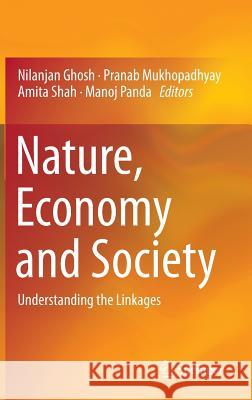
Nature, Economy and Society: Understanding the Linkages Ghosh, Nilanjan 9788132224037 Springer - książkaWidoczna okładka, to zdjęcie poglądowe, a rzeczywista szata graficzna może różnić się od prezentowanej.

Nature, Economy and Society: Understanding the Linkages

ISBN-13: 9788132224037 / Angielski / Twarda / 2015 / 357 str.

Nilanjan Ghosh; Pranab Mukhopadhyay; Amita Shah
cena 403,47 zł
(netto: 384,26 VAT:  5%)

Najniższa cena z 30 dni: 385,52 zł
Termin realizacji zamówienia:
ok. 22 dni roboczych
Bez gwarancji dostawy przed świętami

Darmowa dostawa!

This book presents an enquiry into the interface between nature, economy and society, which is still in its early stages, notwithstanding the commendable progress and advances made in the field of environmental and natural resource economics within the ever-expanding boundaries of economics as a discipline. It further delineates the evolution of an inter-disciplinary framework for analyzing the status, the future goals, mechanisms and policy instruments that can help move towards a more ecologically sustainable, economically beneficial and socially just future. A pre-requisite for preparing a comprehensive and coherent framework involves unfolding the multiple layers of interconnectedness between the three systems nature, economy and society, each of which has its own internal consistencies as well as externalities. Against this backdrop, the book presents scholarly contributions that focus on four broadly defined building blocks, namely: i) accounting for ecosystems services for life and human well-being; ii) impacts of economic growth on ecosystems; iii) social norms, equity, and governance; and iv) alternative approaches to green and socio-economic systems.The analyses, presented by some of the most eminent national and international scholars, address the major environmental challenges that nations around the world face today and consider which specific policy directions at the international and national level are needed. In particular, the choices India and South Asia now face, as development and environment both need to be addressed adequately, touch on many of these challenges.


Kategorie:
Nauka, Biologia i przyroda
Kategorie BISAC:
Business & Economics > Economics - General
Science > Life Sciences - Ecology
Business & Economics > Development - General
Wydawca:
Springer
Język:
Angielski
ISBN-13:
9788132224037
Rok wydania:
2015
Wydanie:
2016
Ilość stron:
357
Waga:
6.80 kg
Wymiary:
23.5 x 15.5
Oprawa:
Twarda
Wolumenów:
01
Dodatkowe informacje:
Wydanie ilustrowane

"This book attempts to showcase the real time application of ecological economics. ... a good effort in bringing out the relevant topics in ecological economics. The editors have managed to keep the curiosity of the reader awake until the last chapter of the book. ... a must asset for the university libraries." (S. Suresh Ramanan, Journal of Agricultural and Environmental Ethics, Vol. 31 (3), May, 2018)

Chapter 1. Ecological Economics: At the interface of nature, economy, and society.- Chapter 2. Nature, Economy and Society: Of values, valuation and policy-making in an unequal world.- Chapter 3. Social metabolism and environmental conflicts in India.- Chapter 4. Current status of environmental and economic accounting: Review of some countries experiences and way forward for India.- Chapter 5. Strengthening forest resource valuation and accounting system: a case of forest resources of Kerala, India.- Chapter 6. Urbanisation and water supply: an analysis of unreliable water supply in Bangalore city, India.- Chapter 7. Energetics of irrigation under surplus rainfall conditions.- Chapter 8. Governing firms’ corporate environmental response: success or failure? Evidence from a panel data based analysis on solid waste management in agri-food processing sector of Sri Lanka.- Chapter 9. ‘Livestock for Development’ in resource constrained environment: Would induction of external buffalo breeds help?.- Chapter 10. Soil fertility management in semi-arid regions: The socio-cultural, economic and livelihood dimensions of farmers’ practices- a case of Andhra Pradesh.- Chapter 11. Issues on forest governance in contemporary Odisha.- Chapter 12. Multifunctional benefits of community based mangrove restoration in Gujarat: An analysis.- Chapter 13. Linkages between environment and globalization: A case study of developing countries.- Chapter 14. Can the poor resist capital? Conflicts over 'accumulation by contamination' at the ship-breaking yard of Alang (India): How struggles for environmental justice contribute to the environmental sustainability of the economy.- Chapter 15. Environmental cost of shrimp farming in the coastal paddy lands of South India.- Chapter 16. Designing PAT as a climate policy in India: Issues learnt from EU-ETS.- Chapter 17. Persistence of Jhum cultivation: Social capital and labour market.- Chapter 18. Ecological and socio-economic impacts of Prosopis juliflora invasion into the semi-arid ecosystems in selected villages of Ramnad district in Tamilnadu.

Nilanjan Ghosh is a senior fellow (Professor), Observer Research Foundation, Kolkata Chapter. He is also a Senior Advisor - Environmental Economics, World Wide Fund (WWF) for Nature, New Delhi, India. Prior to joining ORF, he served as the Chief Economist at the Multi Commodity Exchange of India Limited and a senior research professional at The Energy and Resources Institute (TERI), New Delhi. He is also a visiting fellow at Department of Political Science, School of Social Sciences, Växjö University (now Linnaeus University), Växjö, Sweden. A natural resource economist and econometrician by training, he obtained his doctorate degree from the Indian Institute of Management, Calcutta. He has been working in the domains of ecological economics, water resources, and commodity derivative markets, conducting his research by combining frameworks of neoclassical economics and institutions. His publications include 6 books, 30-odd peer-reviewed research papers in top international journals (like Water Policy, Conservation and Society, Journal of Industrial Ecology, Journal of Index Investing, Economic & Political Weekly). Dr. Ghosh was also the Vice President of the Indian Society for Ecological Economics (INSEE) during 2012-14, and delivered the presidential address at the seventh INSEE biennial conference in 2013.

Pranab Mukhopadhyay is a professor and former head of the department of economics at the Goa University, India. He worked as an environmental economist with the South Asian Network for Development & Environmental Economics (SANDEE), based at the International Union for Conservation of Nature, (IUCN, Nepal), Kathmandu in 2006-2008. He is a SANDEE Fellow and continues to be actively involved with the Network’s activities. He has published books and also in national and international journals such as Ecology and Society, Economic & Political Weekly, Environment & Development Economics, and some edited volumes. His work in environmental economics focuses on common property resources and institutional economics. He was the Secretary of the Indian Society for Ecological Economics (INSEE) during 2012-14.

Amita Shah is a professor and the former Director at the Gujarat Institute of Development Research. Her major areas of research interest include natural resource development with special focus on dry-land agriculture and forestry, environmental impact assessment, gender and environment, the agriculture-industry interface, small scale and rural industries, diffusion of technologies, and employment-livelihood issues. More recently, she has been involved in a number of studies pertaining to participatory watershed development, protected area management, economic valuation of bio-diversity, and chronic poverty in remote rural areas, migration and status of women in agriculture. She has published nearly 100 research papers in professional journals and books and participated in a number of academic seminars. She has co-authored a book and jointly edited three books pertaining to agriculture, sustainable development and gender. She has been invited as a visiting fellow/scholar to academic institutions in the United Kingdom, China, France, the Netherlands and Canada. She was the President of the Indian Society for Ecological Economics in 2012-14.

Manoj Panda holds a PhD in economics from the Indian Statistical Institute. He is currently Director of the Institute of Economic Growth, Delhi. He has served as the Director of the Centre for Economic and Social Studies (CESS), Hyderabad (2008-2012), as a Professor and an Associate Professor at the Indira Gandhi Institute of Development Research (IGIDR), Mumbai (1992-2012) and as a senior economist at the National Council of Applied Economic Research, New Delhi (1982-92). He spent a year at Yale University, USA on a post-doctoral fellowship (1996-97). His research areas span monitoring and analysis of macroeconomic trends and prospects, evaluation of alternative trade and fiscal policy options from the point of view of growth and distribution, development and application of computable general equilibrium (CGE) models, construction of Social Accounting Matrices (SAM), measurement and policy issues in poverty and human development and interaction of carbon emission with economic growth and its pattern. He has undertaken short-term assignments for several international organizations including the World Bank, ADB, UNDP, FAO, UN-ESCAP, IFPRI, MacArthur Foundation and Carnegie Endowment. He has published extensively in journals and edited books.

This book presents an enquiry into the interface between nature, economy and society, which is still in its early stages, notwithstanding the commendable progress and advances made in the field of environmental and natural resource economics within the ever-expanding boundaries of economics as a discipline. It further delineates the evolution of an inter-disciplinary framework for analyzing the status, the future goals, mechanisms and policy instruments that can help move towards a more ecologically sustainable, economically beneficial and socially just future.

A pre-requisite for preparing a comprehensive and coherent framework involves unfolding the multiple layers of interconnectedness between the three systems nature, economy and society, each of which has its own internal consistencies as well as externalities. Against this backdrop, the book presents scholarly contributions that focus on four broadly defined building blocks, namely: i) accounting for ecosystems services for life and human well-being; ii) impacts of economic growth on ecosystems; iii) social norms, equity, and governance; and iv) alternative approaches to green and socio-economic systems.

The analyses, presented by some of the most eminent national and international scholars, address the major environmental challenges that nations around the world face today and consider which specific policy directions at the international and national level are needed. In particular, the choices India and South Asia now face, as development and environment both need to be addressed adequately, touch on many of these challenges.




Udostępnij

Facebook - konto krainaksiazek.pl


Opinie o Krainaksiazek.pl na Opineo.pl

Partner Mybenefit

Krainaksiazek.pl w programie rzetelna firma Krainaksiaze.pl - płatności przez paypal

Czytaj nas na:

Facebook - krainaksiazek.pl
  • książki na zamówienie
  • granty
  • książka na prezent
  • kontakt
  • pomoc
  • opinie
  • regulamin
  • polityka prywatności

Zobacz:

  • Księgarnia czeska

  • Wydawnictwo Książkowe Klimaty

1997-2025 DolnySlask.com Agencja Internetowa

© 1997-2022 krainaksiazek.pl
     
KONTAKT | REGULAMIN | POLITYKA PRYWATNOŚCI | USTAWIENIA PRYWATNOŚCI
Zobacz: Księgarnia Czeska | Wydawnictwo Książkowe Klimaty | Mapa strony | Lista autorów
KrainaKsiazek.PL - Księgarnia Internetowa

Polityka prywatnosci - link
Krainaksiazek.pl - płatnośc Przelewy24
Przechowalnia Przechowalnia




