• Wyszukiwanie zaawansowane
  • Kategorie
  • Kategorie BISAC
  • Książki na zamówienie
  • Promocje
  • Granty
  • Książka na prezent
  • Opinie
  • Pomoc
  • Załóż konto
  • Zaloguj się

Nature Conservation: A Critical Introduction » książka


zaloguj się | załóż konto
Logo Krainaksiazek.pl

koszyk

konto

szukaj
topmenu
Księgarnia internetowa
Szukaj
Książki na zamówienie
Promocje
Granty
Książka na prezent
Moje konto
Pomoc
 
 
Wyszukiwanie zaawansowane
Pusty koszyk
Bezpłatna dostawa dla zamówień powyżej 20 złBezpłatna dostawa dla zamówień powyżej 20 zł

Kategorie główne

• Nauka
 [2949965]
• Literatura piękna
 [1857847]

  więcej...
• Turystyka
 [70818]
• Informatyka
 [151303]
• Komiksy
 [35733]
• Encyklopedie
 [23180]
• Dziecięca
 [617748]
• Hobby
 [139972]
• AudioBooki
 [1650]
• Literatura faktu
 [228361]
• Muzyka CD
 [398]
• Słowniki
 [2862]
• Inne
 [444732]
• Kalendarze
 [1620]
• Podręczniki
 [167233]
• Poradniki
 [482388]
• Religia
 [509867]
• Czasopisma
 [533]
• Sport
 [61361]
• Sztuka
 [243125]
• CD, DVD, Video
 [3451]
• Technologie
 [219309]
• Zdrowie
 [101347]
• Książkowe Klimaty
 [123]
• Zabawki
 [2362]
• Puzzle, gry
 [3791]
• Literatura w języku ukraińskim
 [253]
• Art. papiernicze i szkolne
 [7933]
Kategorie szczegółowe BISAC

Nature Conservation: A Critical Introduction

ISBN-13: 9783662661581 / Angielski / Miękka / 2023 / 404 str.
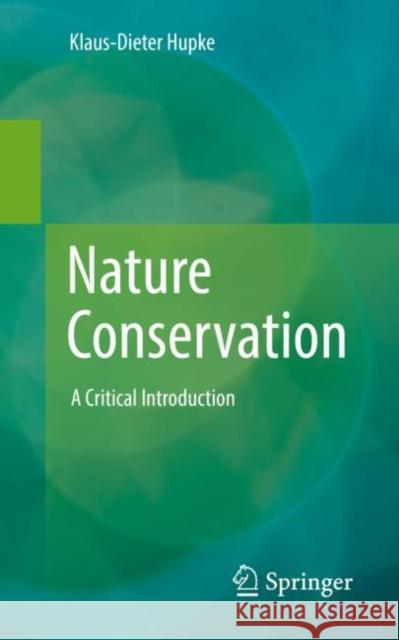
Klaus-Dieter Hupke
Nature Conservation: A Critical Introduction Klaus-Dieter Hupke 9783662661581 Springer Spektrum - książkaWidoczna okładka, to zdjęcie poglądowe, a rzeczywista szata graficzna może różnić się od prezentowanej.

Nature Conservation: A Critical Introduction

ISBN-13: 9783662661581 / Angielski / Miękka / 2023 / 404 str.

Klaus-Dieter Hupke
cena 302,60
(netto: 288,19 VAT:  5%)

Najniższa cena z 30 dni: 289,13
Termin realizacji zamówienia:
ok. 22 dni roboczych
Bez gwarancji dostawy przed świętami

Darmowa dostawa!

Many things happen in nature reserves that are contradictory at first glance. For example, flower meadows are mown down during maintenance work, even though all the plants growing there are protected. Elsewhere, protected reed beds are burnt down in a fen or the top layer of soil is removed with bulldozers in a dune conservation area. Still other areas are to remain completely untouched by human intervention. The author Klaus-Dieter Hupke shows the different strategies of nature conservation. He also shows that nature conservation is mostly not exactly what the term says in essence: "protection of nature". On the contrary, in Central Europe nature conservation areas are predominantly the relics of old agricultural and thus cultural landscapes. Often, aesthetic aspects of a landscape section are also in the foreground when designating it as a natural monument or nature reserve. Moreover, nature conservation runs the risk of becoming a substitute action and an alibi for a still growing destruction of traditional and near-natural landscape systems in Central Europe as well as globally.The updated second edition now explicitly includes the consequences of climate change for nature conservation and has also incorporated a stronger reference to Austria as well as to the central Alpine region in some places for the relevant readers.


Many things happen in nature reserves that are contradictory at first glance. For example, flower meadows are mown down during maintenance work, even though all the plants growing there are protected. Elsewhere, protected reed beds are burnt down in a fen or the top layer of soil is removed with bulldozers in a dune conservation area. Still other areas are to remain completely untouched by human intervention. The author Klaus-Dieter Hupke shows the different strategies of nature conservation. He also shows that nature conservation is mostly not exactly what the term says in essence: "protection of nature". On the contrary, in Central Europe nature conservation areas are predominantly the relics of old agricultural and thus cultural landscapes. Often, aesthetic aspects of a landscape section are also in the foreground when designating it as a natural monument or nature reserve. Moreover, nature conservation runs the risk of becoming a substitute action and an alibi for a still growing destruction of traditional and near-natural landscape systems in Central Europe as well as globally.

The updated second edition now explicitly includes the consequences of climate change for nature conservation and has also incorporated a stronger reference to Austria as well as to the central Alpine region in some places for the relevant readers.

Kategorie:
Nauka, Biologia i przyroda
Kategorie BISAC:
Nature > Environmental Conservation & Protection - General
Science > Life Sciences - Ecology
Science > Environmental Science (see also Chemistry - Environmental)
Wydawca:
Springer Spektrum
Język:
Angielski
ISBN-13:
9783662661581
Rok wydania:
2023
Dostępne języki:
Ilość stron:
404
Oprawa:
Miękka

1 What is "nature" for us?.- 2 Why "nature conservation"?.- 3 Why "nature conservation" has the worse cards compared to "environmental protection" and "animal protection".- 4 Nature conservation - on which areas?.- 5 "Extreme locations" - avoided by the economy, preferred by nature conservation?.- 6 Confusing diversity - area categories of nature and landscape conservation: Nature reserves, national parks, natural monuments, landscape conservation areas, nature parks.-7 Which nature do we want to protect and how?.- 8 The construction of natural balances - Ideal starting point of the demand for nature conservation.- 9 Help for endangered species? Red lists and endangerment categories.- 10 Of birds and butterflies: How nature conservation distributes its sympathies.- 11 What endangers nature?.- 12 "Outlaws" and "helpers": the actors in nature conservation.- 13 Nature that does not deserve protection: spontaneous vegetation, ruderal communities, neophytes and neozoa.- 14 "Process conservation" as an alternative and a silver bullet?.- 15 Nature where no one expects it: in the city.- 16 Land used for military purposes - a nature idyll?.- 17 Second-hand nature: renaturation of quarries and open-cast mines.- 18 Is nature only intact if all species increase equally?.- 19 Nature conservation is successful: the example of large animal species.- 20 Habitats for land conservation in Central Europe.- 21 Small biotopes: their importance for biodiversity and nature conservation.- 22 Geological landscape objects in nature conservation.- 23 River straightening vs. river renaturation.- 24 Nature conservation in the forest: natural forest - permanent forest - clear-cutting?.- 25 Agricultural accompanying programs of nature conservation in Germany.- 26 Europe also gets involved: Federal Nature Conservation Act, FFH and Natura 2000.- 27 On the role of non-governmental organizations (NGOs) in nature conservation.- 28 The silverware of the GDR? Nature conservation in the eastern German states.- 29 The world's oceans and Antarctica: international, therefore unprotected?.- 30 Nature conservation outside Europe.- 31 Nature conservation in the "Third World - a pillar of "neo-colonialism"?.- 32 Nature disappears, nature conservation arrives? - On the token function of nature conservation and nature-protected areas.- 33 Lines of conflict between nature conservation and environmental protection.- 34 Hikers, cyclists, motorists: How leisure modalities shape our view of nature.- 35 Man and nature - a constructed opposition?.- 36) Search for ideas: How can "nature conservation" be socially justified and anchored?.- 37 Nature conservation versus zeitgeist?.- 38 The benefits of diversity: reality, poetry or esotericism?.- 39 On the future of nature conservation.- 40 Are there alternative models for thinking about nature conservation?.- 41 Epilogue: Nature conservation expertise concerns everyone!


Prof. Dr Klaus-Dieter Hupke is a lecturer in geography at Heidelberg University of Education.

Many things happen in nature reserves that seem contradictory at first glance. For example, flower meadows are mown down during maintenance work, even though all the plants growing there are protected. In a fen, protected reed beds are burnt down and in a dune conservation area the top layer of soil is removed with bulldozers. Other areas, on the other hand, are to remain completely untouched by human intervention.

Klaus-Dieter Hupke shows the different strategies of nature conservation. He also shows that nature conservation is mostly not exactly what the term says in essence: "protection of nature". On the contrary, in Central Europe nature conservation areas are predominantly the relics of old agricultural and thus cultural landscapes. Often, aesthetic aspects of a landscape section are also in the foreground when designating it as a natural monument or nature reserve. Moreover, nature conservation runs the risk of becoming a substitute action and an alibi for a still growing destruction of traditional and near-natural landscape systems in Central Europe as well as globally.

The updated second edition now explicitly includes the consequences of climate change for nature conservation and has also incorporated a stronger reference to Austria as well as to the central alpine region in some places for the relevant readers.

The author

Prof. Dr. habil. Klaus-Dieter Hupke has a seat in Geography at the Heidelberg University of Education.


This book is a translation of an original German edition. The translation was done with the help of artificial intelligence (machine translation by the service DeepL.com). A subsequent human revision was done primarily in terms of content, so that the book will be read stylistically differently from a conventional translation.


Udostępnij

Facebook - konto krainaksiazek.pl


Opinie o Krainaksiazek.pl na Opineo.pl

Partner Mybenefit

Krainaksiazek.pl w programie rzetelna firma Krainaksiaze.pl - płatności przez paypal

Czytaj nas na:

Facebook - krainaksiazek.pl
  • książki na zamówienie
  • granty
  • książka na prezent
  • kontakt
  • pomoc
  • opinie
  • regulamin
  • polityka prywatności

Zobacz:

  • Księgarnia czeska

  • Wydawnictwo Książkowe Klimaty

1997-2025 DolnySlask.com Agencja Internetowa

© 1997-2022 krainaksiazek.pl
     
KONTAKT | REGULAMIN | POLITYKA PRYWATNOŚCI | USTAWIENIA PRYWATNOŚCI
Zobacz: Księgarnia Czeska | Wydawnictwo Książkowe Klimaty | Mapa strony | Lista autorów
KrainaKsiazek.PL - Księgarnia Internetowa

Polityka prywatnosci - link
Krainaksiazek.pl - płatnośc Przelewy24
Przechowalnia Przechowalnia




