• Wyszukiwanie zaawansowane
  • Kategorie
  • Kategorie BISAC
  • Książki na zamówienie
  • Promocje
  • Granty
  • Książka na prezent
  • Opinie
  • Pomoc
  • Załóż konto
  • Zaloguj się

Natural Fibers to Composites: Process, Properties, Structures » książka


zaloguj się | załóż konto
Logo Krainaksiazek.pl

koszyk

konto

szukaj
topmenu
Księgarnia internetowa
Szukaj
Książki na zamówienie
Promocje
Granty
Książka na prezent
Moje konto
Pomoc
 
 
Wyszukiwanie zaawansowane
Pusty koszyk
Bezpłatna dostawa dla zamówień powyżej 20 złBezpłatna dostawa dla zamówień powyżej 20 zł

Kategorie główne

• Nauka
 [2950560]
• Literatura piękna
 [1849509]

  więcej...
• Turystyka
 [71097]
• Informatyka
 [151150]
• Komiksy
 [35848]
• Encyklopedie
 [23178]
• Dziecięca
 [617388]
• Hobby
 [139064]
• AudioBooki
 [1657]
• Literatura faktu
 [228597]
• Muzyka CD
 [383]
• Słowniki
 [2855]
• Inne
 [445295]
• Kalendarze
 [1464]
• Podręczniki
 [167547]
• Poradniki
 [480102]
• Religia
 [510749]
• Czasopisma
 [516]
• Sport
 [61293]
• Sztuka
 [243352]
• CD, DVD, Video
 [3414]
• Technologie
 [219456]
• Zdrowie
 [101002]
• Książkowe Klimaty
 [124]
• Zabawki
 [2311]
• Puzzle, gry
 [3459]
• Literatura w języku ukraińskim
 [254]
• Art. papiernicze i szkolne
 [8079]
Kategorie szczegółowe BISAC

Natural Fibers to Composites: Process, Properties, Structures

ISBN-13: 9783031205965 / Angielski / Twarda / 2022 / 172 str.
Yasir Nawab; Abdelghani Saouab; Abdellatif Imad
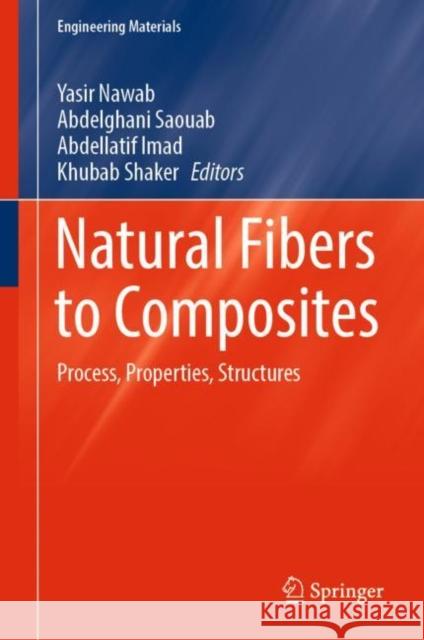
Natural Fibers to Composites: Process, Properties, Structures Yasir Nawab Abdelghani Saouab Abdellatif Imad 9783031205965 Springer - książkaWidoczna okładka, to zdjęcie poglądowe, a rzeczywista szata graficzna może różnić się od prezentowanej.

Natural Fibers to Composites: Process, Properties, Structures

ISBN-13: 9783031205965 / Angielski / Twarda / 2022 / 172 str.

Yasir Nawab; Abdelghani Saouab; Abdellatif Imad
cena 644,07
(netto: 613,40 VAT:  5%)

Najniższa cena z 30 dni: 616,85
Termin realizacji zamówienia:
ok. 22 dni roboczych
Dostawa w 2026 r.

Darmowa dostawa!
inne wydania

Natural fiber composites are a preferred alternative to conventional composites due to their environment-friendly nature. However, their market share is limited due to: a) limited number and quantities of natural fibers available for composites, b) diversity in fibers structure, c) poor mechanical properties of fibers as well as composites, d) susceptibility to microbial attacks, and e) cellulose degradation temperature around 200 deg C, which hinders the development of natural fiber reinforced thermoplastic composites using thermoforming at high temperatures. A number of researchers have contributed to the solution of the problem of poor mechanical properties and issues related to fabrication during the last decade. This book covers these different solutions. The book is divided into two principal themes: a) structure–property relationship: fibers to composites—it includes the discussion on fibers, their surface modifications, variation in the structure of reinforcement, and approaches for the enhancement of properties. b) Fabrication process of composites—it includes the novel approaches used for the development of natural fiber composites using the commingling technique for thermoplastic composites.


Natural fiber composites are a preferred alternative to conventional composites due to their environment-friendly nature. However, their market share is limited due to: a) limited number and quantities of natural fibers available for composites, b) diversity in fibers structure, c) poor mechanical properties of fibers as well as composites, d) susceptibility to microbial attacks, and e) cellulose degradation temperature around 200 deg C, which hinders the development of natural fiber reinforced thermoplastic composites using thermoforming at high temperatures. A number of researchers have contributed to the solution of the problem of poor mechanical properties and issues related to fabrication during the last decade. This book covers these different solutions. The book is divided into two principal themes: a) structure–property relationship: fibers to composites—it includes the discussion on fibers, their surface modifications, variation in the structure of reinforcement, and approaches for the enhancement of properties. b) Fabrication process of composites—it includes the novel approaches used for the development of natural fiber composites using the commingling technique for thermoplastic composites.

Kategorie:
Technologie
Kategorie BISAC:
Technology & Engineering > Materials Science - General
Wydawca:
Springer
Seria wydawnicza:
Engineering Materials
Język:
Angielski
ISBN-13:
9783031205965
Rok wydania:
2022
Dostępne języki:
Numer serii:
000089500
Ilość stron:
172
Oprawa:
Twarda

Natural Fibers to Composites - Process, Properties, Structure


Chapter 1. Alternative natural fibers for biocomposites

1.1.      Introduction

1.2.      Seed based fibers

1.2.1     Cotton (Gossipium genus) Fiber

1.2.2     Coir (Cocos nucifera) Fiber

1.2.3     Kapok (Ceiba pentandra) Fiber

1.2.4     Oil Palm (Elaeis guineensis) fiber

1.2.5     Rice husk Fiber

1.3.      Bast Based fibers

1.3.1 Jute (Corchorus capsularis) Fiber

1.3.2 Flax (Linum Usitatissimum) Fiber

1.3.3 Ramie (Boehmeria nivea) Fiber

1.3.4 Kenaf (Hibiscus cannabinus) Fiber

1.3.5 Sugarcane Bagasse Fiber

1.3.6 Corn husk Fiber

1.3.7 Hemp (Cannabis sativa) Fiber

1.3.8 Banana (Musa acuminate) Fiber

1.4.      Leaf Based fibers

1.4.1     Sisal (Agave sisalana) Fiber

1.4.2     Pineapple (Ananas bracteatus) Fiber

1.4.3     Abaca (Musa textilis Nee) Fiber

1.5.      Grass-based fibers

1.5.1 Bamboo Fibers

1.6.      Conclusion

1.7.      References        12


2          Treatment of natural fibers

2.1       Introduction

2.2       Natural fibers

2.2.1     Cotton

2.2.2     Coir

2.2.3     Jute

2.2.4     Bamboo

2.2.5     Hemp

2.2.6     Banana

2.3       Different treatments for natural fibers

2.3.1     Physical Treatments

2.3.2     Chemical Treatment

2.4       Treatments to impart electrical conductivity

2.4.1     Conductive polymers

2.5       Treatments for antipathogen composites

2.6       Treatments for flame retardant composites

2.6.1     Properties of FR in fabricated composites

2.7       Treatments to impart hydrophobicity

2.7.1     Methacrylate treatment

2.7.2     Silane treatment

2.7.3     Acetylation

2.7.4     Etherification

2.7.5     Enzymatic treatment

2.7.6     Peroxide treatments

2.7.7     Dicumyl peroxide treatment

2.8       Physical treatment

2.8.1     Plasma treatment

2.8.2     Corona treatment

2.9       Applications of Natural fiber composites

2.10      Future Trends


3          Introduction

3.1       Reinforcement

3.1.1     Two dimensional (2D) woven structures

3.1.2     Three dimensional (3D) woven structures

3.2       Composite fabrication techniques

3.2.1     Hand layup

3.2.2     Compression molding

3.2.3     Commingling

3.3       Literature survey of 3D woven natural fiber reinforced composite

3.3.1     Effect of Z yarn stitching density on 3D woven composites

3.3.2     Effect of binder and stuffer yarns on 3D woven composites

3.3.3     Effect of weaving patterns on damage resistance of 3D woven T and H shaped reinforcements

3.3.4     3D woven-shaped preforms and their associated composites

3.4       Challenges

3.5       References


4          Commingling Technique for Thermoplastic Composites

4.1       Introduction

4.2       Techniques of Commingling

4.2.1     Fiber Level Commingling

4.2.2     Yarn Level Commingling

4.2.3     Woven & Knitted Commingled Composites

4.3       Fabrication of Commingled Composites

4.3.1     Thermoforming

4.3.2     Pultrusion

4.3.3     Effect of different factors

4.4       Effect on Physical properties

4.5       Mechanical Properties of Commingled Composites

4.5.1     Tensile Properties

4.5.2     Flexural & Impact Behaviors

4.6       Conclusion


5          Process Induced Residual Stresses

5.1       Introduction

5.2       Mechanical levels of residual stress

5.2.1     Micromechanical level

5.2.2     Macro-mechanical residual stress.

5.2.3     Global residual stress

5.3       Parameters which contribute to residual stress formation

5.3.1     Coefficient for thermal expansion

5.3.2     Cure shrinkage

5.3.3     Moisture Absorption

5.3.4     Tool/part interaction

5.3.5     Other mechanisms

5.4       Problems generated by residual stress

5.5       Strategies to reduce residual stresses

5.5.1     Countering the effect of chemical shrinkage

5.5.2     Stress relaxation

5.5.3     Modification of product

5.6       Brief literature on reduction in Process induced residual stress

5.7       Conclusion


6          Performance of Filler Reinforced Composites

6.1       Introduction

6.2       Natural fillers

6.2.1     Microcrystalline Cellulose Filler

6.2.2     Rice Husk

6.2.3     Wood Saw Dust Fillers

6.2.4     Coconut Shell Fillers

6.2.5     Peanut Shell Fillers

6.2.6     Egg Shell Fillers

6.2.7     Wheat Straw Filler

6.2.8     Fish Bone/Fish Scale Fillers

6.2.9     Clay Filler

6.2.10   Fly ash Filler

6.3       Synthetic Fillers

6.3.1     Graphite Filler

6.3.2     Zinc Oxide Filler

6.3.3     Calcium Carbonate Filler

6.3.4     Boron Carbide

6.3.5     Aluminum Oxide Filler

6.3.6     Carbon Nano reinforcements

6.4       Manufacturing Techniques: Filler Loaded Composites

6.4.1     Vacuum Infusion

6.4.2     Hand Layup Technique

6.4.3     Thermoforming

6.5       Effect of Fillers on Performance

6.5.1     Tensile Characteristics

6.5.2     Flexural Characteristics

6.5.3     Impact Strength

6.6       Application Areas


7          Testing of Natural Fiber Composites

7.1       Introduction

7.2       Natural Fiber as Biodegradable Materials

7.3       Natural fibers properties

7.4       Applications of NFRC

7.5       Physical Testing

7.5.1     Surface Morphology

7.5.2     Analytical Testing

7.5.3     Thermal Properties

7.5.4     Moisture Absorption

7.6       7.6 Mechanical Characterization

7.6.1     Tensile Testing

7.6.2     Compression Testing

7.6.3     Flexural Testing

7.6.4     Impact Testing

7.6.5     Shear Testing

7.7       Conclusions


8. Natural Fiber Metal Laminate and its joining

8.1 Introduction

8.2 Fabrication of Fiber Metal Laminates

8.2.1 Preparation of metal surface

8.3 Reinforcements used for NFMLs

8.4 Matrices used for NFMLS

8.5 Fabrication Process of FMLs

8.5.1 Autoclave process

8.5.2 Vacuum Infusion Process for FMLs Fabrication

8.5.3 Compression Hot Press Molding

8.6 Mechanical Properties

8.6.1 Characterization of Metal-Composite Bond

8.6.2 Monotonic Properties of FMLs

8.6.3 Monotonic Properties of NFMLs

8.6.4 Impact properties of FML

8.6.5 Impact Performance of NFMLs

8.7 Conclusions

Yasir Nawab

Yasir Nawab is affiliated with the National Textile University, Faisalabad, Pakistan, as Associate Professor, and leading the Textile Composite Materials Research Group. His research areas are composite materials, 2D & 3D woven fabrics, and finite element analysis. He is the author of over 120 peer-reviewed journal articles, 5 books/book chapters, and over 50 conference communications. He is the founding Director of the National Center for Composite Materials. He received his Ph.D. from the University of Nantes, France, in the domain of composite materials in 2012, which was declared as Remarkable Ph.D. in science and Technology in that year. In 2013, he did his postdoc at the ONERA (The French Aerospace lab) and the University of Le Havre, France.


Abdelghani Saouab

Prof. Abdelghani Saouab has been working on the manufacturing of composite materials since 1991. He has developed nationally and internationally recognized expertise in the simulation of LCM (Liquid Composites Molding) processes and has conducted numerous collaborations with academic and industrial partners at the national and international levels.  He has been working at the University of Le Havre Normandy since 1991. He is the author of more than 70 peer-reviewed journal articles, 2 books, 7 chapters in edited books, and 132 conference communications. 12 Post-Doc, 22 Ph.D. students, and 29 Master’s students in engineering have completed their degrees under his supervision, while the theses of 5 Ph.D. students are in progress.


Abdellatif Imad

Abdellatif IMAD is Professor in the Department of Mechanical Engineering, University of Lille, France. He holds a Ph.D. in Mechanics of Materials. His fields of research interests include mechanical of heterogeneous materials and biocomposites materials. He has thirty-two years of teaching and research experience.  He has published around one hundred papers in international and national journals.


Khubab Shaker

Khubab Shaker is Assistant Professor at National Textile University, Faisalabad-Pakistan. His areas of interest include fiber reinforced polymer composites, particle-loaded composites, natural fiber composites, and circular economy/sustainability. He has taught composite materials, design, and analysis to students are different levels. He is one of the most productive researchers in the composite materials domain at National Textile University Pakistan, with 65 impact factor publications, 3 edited books, 11 book chapters, and more than 25 conference papers and keynote talks. 


Natural fiber composites are a preferred alternative to conventional composites due to their environment-friendly nature. However, their market share is limited due to: a) limited number and quantities of natural fibers available for composites, b) diversity in fibers structure, c) poor mechanical properties of fibers as well as composites, d) susceptibility to microbial attacks, and e) cellulose degradation temperature around 200 deg C, which hinders the development of natural fiber reinforced thermoplastic composites using thermoforming at high temperatures. A number of researchers have contributed to the solution of the problem of poor mechanical properties and issues related to fabrication during the last decade. This book covers these different solutions. The book is divided into two principal themes: a) structure–property relationship: fibers to composites—it includes the discussion on fibers, their surface modifications, variation in the structure of reinforcement, and approaches for the enhancement of properties. b) Fabrication process of composites—it includes the novel approaches used for the development of natural fiber composites using the commingling technique for thermoplastic composites.




Udostępnij

Facebook - konto krainaksiazek.pl


Opinie o Krainaksiazek.pl na Opineo.pl

Partner Mybenefit

Krainaksiazek.pl w programie rzetelna firma Krainaksiaze.pl - płatności przez paypal

Czytaj nas na:

Facebook - krainaksiazek.pl
  • książki na zamówienie
  • granty
  • książka na prezent
  • kontakt
  • pomoc
  • opinie
  • regulamin
  • polityka prywatności

Zobacz:

  • Księgarnia czeska

  • Wydawnictwo Książkowe Klimaty

1997-2025 DolnySlask.com Agencja Internetowa

© 1997-2022 krainaksiazek.pl
     
KONTAKT | REGULAMIN | POLITYKA PRYWATNOŚCI | USTAWIENIA PRYWATNOŚCI
Zobacz: Księgarnia Czeska | Wydawnictwo Książkowe Klimaty | Mapa strony | Lista autorów
KrainaKsiazek.PL - Księgarnia Internetowa

Polityka prywatnosci - link
Krainaksiazek.pl - płatnośc Przelewy24
Przechowalnia Przechowalnia



