• Wyszukiwanie zaawansowane
  • Kategorie
  • Kategorie BISAC
  • Książki na zamówienie
  • Promocje
  • Granty
  • Książka na prezent
  • Opinie
  • Pomoc
  • Załóż konto
  • Zaloguj się

National-Socialist Archaeology in Europe and its Legacies » książka


zaloguj się | załóż konto
Logo Krainaksiazek.pl

koszyk

konto

szukaj
topmenu
Księgarnia internetowa
Szukaj
Książki na zamówienie
Promocje
Granty
Książka na prezent
Moje konto
Pomoc
 
 
Wyszukiwanie zaawansowane
Pusty koszyk
Bezpłatna dostawa dla zamówień powyżej 20 złBezpłatna dostawa dla zamówień powyżej 20 zł

Kategorie główne

• Nauka
 [2946912]
• Literatura piękna
 [1852311]

  więcej...
• Turystyka
 [71421]
• Informatyka
 [150889]
• Komiksy
 [35717]
• Encyklopedie
 [23177]
• Dziecięca
 [617324]
• Hobby
 [138808]
• AudioBooki
 [1671]
• Literatura faktu
 [228371]
• Muzyka CD
 [400]
• Słowniki
 [2841]
• Inne
 [445428]
• Kalendarze
 [1545]
• Podręczniki
 [166819]
• Poradniki
 [480180]
• Religia
 [510412]
• Czasopisma
 [525]
• Sport
 [61271]
• Sztuka
 [242929]
• CD, DVD, Video
 [3371]
• Technologie
 [219258]
• Zdrowie
 [100961]
• Książkowe Klimaty
 [124]
• Zabawki
 [2341]
• Puzzle, gry
 [3766]
• Literatura w języku ukraińskim
 [255]
• Art. papiernicze i szkolne
 [7810]
Kategorie szczegółowe BISAC

National-Socialist Archaeology in Europe and its Legacies

ISBN-13: 9783031280238 / Angielski
Martijn Eickhoff; Daniel Modl; Katie Meheux
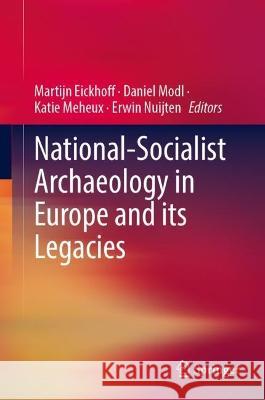
National-Socialist Archaeology in Europe and its Legacies Martijn Eickhoff Daniel Modl Katie Meheux 9783031280238 Springer - książkaWidoczna okładka, to zdjęcie poglądowe, a rzeczywista szata graficzna może różnić się od prezentowanej.

National-Socialist Archaeology in Europe and its Legacies

ISBN-13: 9783031280238 / Angielski

Martijn Eickhoff; Daniel Modl; Katie Meheux
cena 605,23
(netto: 576,41 VAT:  5%)

Najniższa cena z 30 dni: 578,30
Termin realizacji zamówienia:
ok. 22 dni roboczych
Bez gwarancji dostawy przed świętami

Darmowa dostawa!

This edited volume is dedicated to national-socialist archaeology as a Europe-wide phenomenon. It analyses national-socialist attempts to denationalize the archaeologies of European nations by creating a new unifying European archaeology on a racial basis.From the beginning of the nineteenth century, archaeology began to develop into an important force behind processes of nation building. At the same time, structures of transnational academic collaboration contributed strongly to the internal dynamics of the research field, which was primarily organized on a national basis.In those European countries that were confronted with national-socialist occupation and repression between 1939 and 1945, these transnational archaeological networks were to prove crucial for the development of national-socialist archaeological policies.This volume will reveal how national-socialist archaeology was to an extent valued positively in its time as highly innovative, even influencing the archaeology of non-occupied countries. Although in the final instance, it generally failed to displace the national archaeologies in Europe, the volume also analyses the long-term impact of national-socialist rule on the development of European archaeology. How did the attempts to create a unified European archaeology after 1945 continue to influence networks, methods and terminologies, institutional structures, or popular representations of the early past?

This edited volume is dedicated to national-socialist archaeology as a Europe-wide phenomenon. It analyses national-socialist attempts to denationalize the archaeologies of European nations by creating a new unifying European archaeology on a racial basis.

From the beginning of the nineteenth century, archaeology began to develop into an important force behind processes of nation building. At the same time, structures of transnational academic collaboration contributed strongly to the internal dynamics of the research field, which was primarily organized on a national basis.

In those European countries that were confronted with national-socialist occupation and repression between 1939 and 1945, these transnational archaeological networks were to prove crucial for the development of national-socialist archaeological policies.

This volume will reveal how national-socialist archaeology was to an extent valued positively in its time as highly innovative, even influencing the archaeology of non-occupied countries. Although in the final instance, it generally failed to displace the national archaeologies in Europe, the volume also analyses the long-term impact of national-socialist rule on the development of European archaeology. How did the attempts to create a unified European archaeology after 1945 continue to influence networks, methods and terminologies, institutional structures, or popular representations of the early past?

Kategorie:
Nauka, Historia
Kategorie BISAC:
Social Science > Archaeology
History > Wars & Conflicts - World War II - General
Wydawca:
Springer
Język:
Angielski
ISBN-13:
9783031280238

Chapter 1. Introduction: National Socialist Archaeology in Europe and its Legacies.- Chapter 2. Prehistoric Archaeology in Germany and National Socialism.- Chapter 3. Archaeology in Austria during the Nazi Era.- Chapter 4. National Socialist Archaeology in Bohemia, Moravia, and Slovakia.- Chapter 5. Poland reborn: the Ethnic Origin of Past Societies and Contemporary Land Affiliation. Polish and German Prehistorians during the Twentieth Century.- Chapter 6. Dreams of Germanic unity: the desire for Scandinavia and the use of archaeology.- Chapter 7. Dangerous Liaisons of a Nazi sort: a failed Icelandic expedition and the legacy of Bruno Schweizer.- Chapter 8. National Socialist Archaeology in the Low Countries.- Chapter 9. National Socialist Archaeology and France.- Chapter 10. National Socialist Archaeology in Serbia: Power and Ideology at the “Völkerstrasse”.- Chapter 11. "Unrestricted research opportunities” with “unpleasant surprises” – German archaeologists in Greece during the National Socialist era".- Chapter 12. The Kunstschutz in World War II occupied Crete.- Chapter 13. Lithuanian Archaeology during the National Socialist Occupation.- Chapter 14. The Struggle to Survive and Work: Archaeology in Latvia during the German Occupation (1941-1945).- Chapter 15. Between the rock and a hard place: Estonian archaeology at the times of national, socialist, and national socialist ideologies.- Chapter 16. Archaeology in Ukraine during World War II.- Chapter 17. Interactions between British Archaeologists and National Socialism: Pragmatism, Neutrality, Opposition and Compromise.- Chapter 18. Adolf Mahr: What was his impact and what is his legacy for contemporary prehistoric research in Ireland?.- Chapter 19. Walking on egg shells? Archaeology in Switzerland torn between submission and resistance from 1933 to 1945.- Chapter 20. Visigothic Archaeology. An example of the influence of National Socialism in Spain?.- Chapter 21. Redistributions of the National Socialist archaeological research program within the study of prehistory in Portugal during Estado Novo.- Chapter 22. "Was Italian archaeology influenced by National Socialism? A provisional assessment".- Chapter 23. Albania and the Period of Fascist Archaeology.- Chapter 24. Hungarian Archaeology in the Shadow of National Socialism (1920–1945).- Chapter 25. Nationalism and National Socialism in Romanian archaeology in the interwar period and World War II (1918-1945).- Chapter 26. Bulgarian-German relations in archaeology before and during the time of National Socialism.- Chapter 27. Archaeology and National Socialism in the Independent State of Croatia (1941-1945).- Chapter 28. Epilogue: Legacies and continuities, and what to do about them.

Martijn Eickhoff is director of NIOD Institute for War, Holocaust and Genocide Studies and professor by special appointment of Archaeology and Heritage of War and Mass Violence at the University of Groningen. He researches the history, cultural dimensions, and after-effects of large-scale violence and regime change in Europe and Asia in the nineteenth and twentieth centuries.

Daniel Modl is curator and research assistant at the Department of Archaeology & Coin Cabinet at the Universalmuseum Joanneum in Graz. His primary areas of expertise lie in history of archaeology, archaeometallurgy, mining archaeology, speleology, and experimental archaeology. He recently published the edited volume 'Archäologie in Österreich 1938-1945' (2020), which contains over 30 contributions by international authors on archaeological research in Austria during the Nazi era.

Katie Meheux works for the University College London department of Libraries, Culture, Collections and Open Science (LCCOS) as the librarian of the Institute of Archaeology Library. An archaeologist by training, her research focuses on the history and historiography of archaeology, with a particular interest in the twentieth-century development of the profession within contemporary political contexts. Katie is a Fellow of the Society of Antiquaries and a member of HARN (Histories of Archaeology Research Network).


Erwin Nuijten is a project assistant at NIOD Institute for War, Holocaust and Genocide Studies. After his studies in anthropology, he followed the Masters programme Holocaust and Genocide Studies and completed his second Masters degree in 2015. In 2016 he became the project assistant and managing editor for this edited volume.

This edited volume is dedicated to national-socialist archaeology as a Europe-wide phenomenon. It analyses national-socialist attempts to denationalize the archaeologies of European nations by creating a new unifying European archaeology on a racial basis.

From the beginning of the nineteenth century, archaeology began to develop into an important force behind processes of nation building. At the same time, structures of transnational academic collaboration contributed strongly to the internal dynamics of the research field, which was primarily organized on a national basis.

In those European countries that were confronted with national-socialist occupation and repression between 1939 and 1945, these transnational archaeological networks were to prove crucial for the development of national-socialist archaeological policies.

This volume will reveal how national-socialist archaeology was to an extent valued positively in its time as highly innovative, even influencing the archaeology of non-occupied countries. Although in the final instance, it generally failed to displace the national archaeologies in Europe, the volume also analyses the long-term impact of national-socialist rule on the development of European archaeology. How did the attempts to create a unified European archaeology after 1945 continue to influence networks, methods and terminologies, institutional structures, or popular representations of the early past?



Udostępnij

Facebook - konto krainaksiazek.pl


Opinie o Krainaksiazek.pl na Opineo.pl

Partner Mybenefit

Krainaksiazek.pl w programie rzetelna firma Krainaksiaze.pl - płatności przez paypal

Czytaj nas na:

Facebook - krainaksiazek.pl
  • książki na zamówienie
  • granty
  • książka na prezent
  • kontakt
  • pomoc
  • opinie
  • regulamin
  • polityka prywatności

Zobacz:

  • Księgarnia czeska

  • Wydawnictwo Książkowe Klimaty

1997-2025 DolnySlask.com Agencja Internetowa

© 1997-2022 krainaksiazek.pl
     
KONTAKT | REGULAMIN | POLITYKA PRYWATNOŚCI | USTAWIENIA PRYWATNOŚCI
Zobacz: Księgarnia Czeska | Wydawnictwo Książkowe Klimaty | Mapa strony | Lista autorów
KrainaKsiazek.PL - Księgarnia Internetowa

Polityka prywatnosci - link
Krainaksiazek.pl - płatnośc Przelewy24
Przechowalnia Przechowalnia





