• Wyszukiwanie zaawansowane
  • Kategorie
  • Kategorie BISAC
  • Książki na zamówienie
  • Promocje
  • Granty
  • Książka na prezent
  • Opinie
  • Pomoc
  • Załóż konto
  • Zaloguj się

National Finance: A Chinese Perspective » książka


zaloguj się | załóż konto
Logo Krainaksiazek.pl

koszyk

konto

szukaj
topmenu
Księgarnia internetowa
Szukaj
Książki na zamówienie
Promocje
Granty
Książka na prezent
Moje konto
Pomoc
 
 
Wyszukiwanie zaawansowane
Pusty koszyk
Bezpłatna dostawa dla zamówień powyżej 20 złBezpłatna dostawa dla zamówień powyżej 20 zł

Kategorie główne

• Nauka
 [2949965]
• Literatura piękna
 [1857847]

  więcej...
• Turystyka
 [70818]
• Informatyka
 [151303]
• Komiksy
 [35733]
• Encyklopedie
 [23180]
• Dziecięca
 [617748]
• Hobby
 [139972]
• AudioBooki
 [1650]
• Literatura faktu
 [228361]
• Muzyka CD
 [398]
• Słowniki
 [2862]
• Inne
 [444732]
• Kalendarze
 [1620]
• Podręczniki
 [167233]
• Poradniki
 [482388]
• Religia
 [509867]
• Czasopisma
 [533]
• Sport
 [61361]
• Sztuka
 [243125]
• CD, DVD, Video
 [3451]
• Technologie
 [219309]
• Zdrowie
 [101347]
• Książkowe Klimaty
 [123]
• Zabawki
 [2362]
• Puzzle, gry
 [3791]
• Literatura w języku ukraińskim
 [253]
• Art. papiernicze i szkolne
 [7933]
Kategorie szczegółowe BISAC

National Finance: A Chinese Perspective

ISBN-13: 9789813360914 / Angielski / Twarda / 2021 / 321 str.
Yunxian Chen; Heming Yong
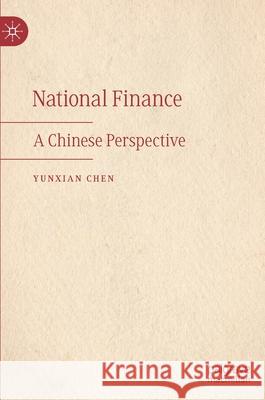
National Finance: A Chinese Perspective Yunxian Chen Heming Yong 9789813360914 Palgrave MacMillan - książkaWidoczna okładka, to zdjęcie poglądowe, a rzeczywista szata graficzna może różnić się od prezentowanej.

National Finance: A Chinese Perspective

ISBN-13: 9789813360914 / Angielski / Twarda / 2021 / 321 str.

Yunxian Chen; Heming Yong
cena 484,18 zł
(netto: 461,12 VAT:  5%)

Najniższa cena z 30 dni: 462,63 zł
Termin realizacji zamówienia:
ok. 22 dni roboczych
Bez gwarancji dostawy przed świętami

Darmowa dostawa!
inne wydania
Kategorie:
Nauka, Ekonomia i biznes
Kategorie BISAC:
Business & Economics > Finanse publiczne
Business & Economics > Economics - General
Political Science > World - Asian
Wydawca:
Palgrave MacMillan
Język:
Angielski
ISBN-13:
9789813360914
Rok wydania:
2021
Wydanie:
2021
Ilość stron:
321
Waga:
0.55 kg
Wymiary:
21.01 x 14.81 x 2.06
Oprawa:
Twarda
Wolumenów:
01
Dodatkowe informacje:
Wydanie ilustrowane

Foreword  

Chapter One The concept of “big finance” and the national policy of 
a strong RMB — A policy study of the top-level design and layout of 
Chinese finance 
1.1 The positioning of the modern financial system  
1.1.1 An overview of the modern financial system  
1.1.2 The two types of world financial systems  
1.2 The structure of the modern financial system  
1.2.1 The financial market system  
1.2.2 The financial organization system  
1.2.3 The financial legal system  
1.2.4 The financial regulation system  
1.2.5 The financial environment system  
1.2.6 The financial infrastructure  
1.3 Policies for the modern financial system  
1.3.1 Financial policies  
1.3.2 The monetary policy  
1.3.3 The exchange rate policy  
1.3.4 The regulatory policy 
1.4 The development of a modern financial system  
1.4.1 The currency area  
1.4.2 The “national policy” of a strong U.S. dollar  
1.4.3 The national policy of a strong RMB  
1.5 The establishment of an organization for the top-level layout of 
China's finance  
Chapter Two The “twin-peak” model for financial regulation — A 
review of financial regulatory and coordinating measures in China 
2.1 The financial regulation system in America 
2.2 The U.K. financial regulation system  
2.3 The financial regulation system in the EU 
2.4 Differences and similarities in financial regulation schemes 
2.5 Selection of modes of financial regulation in China  
2.5.1 The “twin-peak” mode of financial regulation  
2.5.2 Top-level decision-making body  
2.5.3 Interaction of financial regulation policies  
2.5.4 Regulation of systematically important financial institutions 
2.5.5 International cooperation in financial regulation 
Chapter Three Local economic development and financial support — 
A study of Chinese financial hierarchy  
3.1 Financial liberalization and national instability  
3.2 Financial repression and regional lack of vitality  
3.2.1 Financial development — a choice for regional economic transition 
3.2.2 Eight types of competition in local economy  
3.2.3 Local economic development requires financial underpinning 
3.2.4 Stronger measures are needed to release financial repression 
3.3 Definition of central and local responsibilities and authorities  
3.3.1 Overall thinking and basic principles  
3.3.2 Definition of authorities and responsibilities of central and local 
governments for financial regulation 
3.3.3 Central and local financial regulatory structure  
3.4 Measures for effectively promoting local financial development 
Chapter Four The establishment of an onshore transaction clearing 
center for RMB offshore business — Explorations in the interactive 
model for internal and external finance 
4.1 Integration and internationalization  
4.1.1 Globalized integration of real economy  
4.1.2 Internationalization of financial markets  
4.2 Offshore and onshore markets  
4.2.1 Production and capital internalization facilitate the offshore 
financial market formation and development  
4.2.2 The orderly connection between offshore and onshore markets  
4.3 The design of offshore-onshore connections in China  
4.3.1 Rationale  
4.3.2 Mode selection 
4.3.3 Basic framework and system 
4.3.4 General principles  
4.3.5 Effective measures  
4.4 Chinese rules for offshore-onshore connections  
4.4.1 The separation of CIBF’s from domestic onshore RMB account to 
ensure orderly flow and equal rights 
4.4.2 The need to accelerate the amelioration of the offshore financial 
legal system. 
4.4.3 Strengthen risk control  
4.4.4 Strengthen the appeal of offshore RMB and enhance onshore 
settlement business volume 
4.4.5 Other suggestions  
Chapter Five The settlement of “carbon emissions trading” in RMB 
─ Explorations in China's pathway of “overtaking on the curve” in 
finance 
5.1 The Kyoto Protocol 
5.2 Carbon, carbon emissions rights and carbon emissions trading  
5.2.1 Carbon  
5.2.2. Carbon emissions rights  
5.2.3. Carbon emissions trading  
5.2.4. Formation of carbon commodities 
5.2.5. Carbon forwards  
5.2.6. Carbon futures  
5.2.7. Carbon options 
5.2.8. Carbon Funds  
5.2.9. Carbon markets  
5.3 The status quo of world carbon market development  
5.3.1 European Union  
5.3.2 The United States  
5.3.3 Asia  
5.3.4 China  
5.4 The settlement of “carbon emissions trading” in RMB 
5.4.1 Carbon emissions trading as an institutional arrangement for 
optimizing regional distribution of industries in China 
5.4.2 The development of a standardized carbon market as a financial 
launch pad for China’s 21st Century Maritime Silk Road initiative  
5.4.3 “RMB settlement” for “carbon emissions trading” – a new pathway 
towards “overtaking on the curve” for RMB internationalization  
5.5. Accelerating the Development of China’s Carbon Market  
5.5.1 Establishing and perfecting China’s carbon market system  
5.5.2 Creating a unified national carbon futures exchange  
5.5.3 Striving for a decisive say in Asia’s carbon futures market with 
standardization development as a point of departure 
5.5.4 Strengthening legal frameworks and binding carbon futures trading 
with RMB international settlement to boost RMB’s international standing  
5.5.4.1 Devising full-fledged laws to protect carbon property rights  
5.5.4.2 Incorporating Asia-Pacific countries and regions into China’s 
carbon futures market and prompting the RMB to become a major 
denomination currency for the settlement of carbon futures contracts 
5.5.4.3 Formulating national (international) regulatory norms on carbon 
futures markets 
Chapter Six The present and future of China’s internet finance ─ 
The trend of FinTech innovation in China 
6.1 An overview of the development of online banking  
6.1.1 Definition of online banking 
6.1.2 Types of online banks  
6.1.3 An overview of online banking abroad  
6.1.4 An overview of online banking in China  
6.1.4.1 Services of online branches of commercial banks in China 
6.1.4.2 The development stage of online banking in China 
6.2 An overview of electronic currency  
6.2.1 The concept of electronic currency  
6.2.2 Types of electronic currencies  
6.2.3 Electronic currency and virtual currency  
6.3 The development trends of internet finance  
6.3.1 The trend of business integration in Internet finance  
6.3.2 The trend of financialization of online platforms  
6.3.3 Challenges facing Internet financial regulation  
6.3.3.1 Impacts of Internet financial products on financial regulation.  
6.3.3.2 Impacts of blockchain on financial regulation  
6.3.3.3 Impacts of monetary policy and monetary regulation  
6.4 The unique risks of Internet finance  
6.4.1 System operating risks 
6.4.1.1 Security risks  
6.4.1.2 Management risks  
6.4.1.3 Authentication risks  
6.4.1.4 Outsourcing risks  
6.4.2 Business risks  
6.4.2.1 Strategic risks  
6.4.2.2 Reputation risks  
6.4.2.3 Legal and regulatory risks  
6.4.2.4 Monetary policy risks  
6.5 The necessity of China's promoting steady development of Internet 
finance  
6.5.1 Establishing an effective payment and clearing system for Internet 
finance  
6.5.2 Establishing a multi-layered legal regulatory system for Internet 
finance  
6.5.3 Building a three-level Internet financial risk control system  
6.5.3.1 Risk prevention and control at the national and macro level  
6.5.3.2 Risk prevention and control at the industrial and mezzo level  
6.5.3.3 Risk prevention and control at the corporate and micro level  
6.5.4 Promoting intellectual property protection and standardization in 
Internet finance  
6.5.5 Strengthening international cooperation for the steady development 
of Internet finance  
Chapter Seven The prevention and diffusion of systematic or regional 
financial risks ─ The methodology for China to resolve financial 
crises 
7.1 Meaning and types of financial crises  
7.1.1 Meaning of financial crises  
7.1.2 Systematic risk  
7.1.3 Conventional types of financial crises  
7.1.4 New characteristics of financial crises at the present stage  
7.2 A review of major financial crises in the world history  
7.2.1 The Great Depression from 1929 to 1933  
7.2.2 The eruption of the 1997 Asian Financial Crisis   
7.2.3 The international financial crisis of 2007-2008  
7.3 The U.S. response to the 2008 international financial crisis  
7.3.1 An overview of the US response to the 2008 financial crisis   
7.3.2 The U.S. tactics and measures for the 2008 international financial 
crisis  
7.3.2.1 Three monetary policies by the Federal Reserve 7.3.2.2 Five fiscal 
policies by the U.S. Government  
7.3.2.2 Six measures for strengthening regulation  
7.3.2.3 Six measures for strengthening regulation  
7.3.2.4 Legislative guarantee  
7.3.3 Post-crisis response in the United States  
7.3.3.1 The U.S. loan-based consumption pattern remains unchanged  
7.3.3.2 Government takes over banks, securities agencies and insurance 
companies, yet with the intention of putting them back to private 
management wherever and whenever appropriate  
7.3.3.3 Evolution of financial regulatory legislation and market 
developments in the United States  
7.4 China must anchor financial development in financial stability  
Chapter Eight Innovation and improvement of the international 
financial architecture ── China’s plan for engagement in 
international finance 
8.1 The structure of international financial institutions  
8.2 International financial infrastructure  
8.2.1 Payment and clearing systems (on-exchange trading)  
8.2.2 Central counterparty clearing and transaction register (OTC 
transactions)  
8.2.3 Credit rating and financial standards  
8.2.3.1 The world’s Big Three credit rating agencies  
8.2.3.2 The international Big Four accounting firms  
8.2.3.3 Financial standards  
8.3 Coordination of international financial regulation  
8.3.1 International organizations for financial regulatory coordination  
8.3.2 Forms of international financial regulatory coordination  
8.3.3 Specifics of international financial regulatory coordination  
8.3.4 The outlook for international financial regulatory coordination  
8.4 China should proactively participate in the building of international 
financial architecture  
8.4.1 Building new engines of global economic development  
8.4.2 Promoting innovation as a new engine of global growth  
8.4.3 Promoting global rules as a new engine of growth  
8.4.4 Promoting the international financial architecture (order) as a new 
engine of growth  
Major References 

Yunxian Chen is a well-known economist and financial expert in China. He was awarded a doctoral degree in economics by Peking University. He founded GF Securities and later worked in various administrative posts, as Executive Deputy Mayor and Mayor of Foshan Municipality Government in Guangdong Province, Secretary of the Communist Party Committee of Foshan City and Chairman of the Municipal People's Congress of Foshan, and Deputy Governor of Guangdong Provincial Government. He is now guest professor and doctoral supervisor at Peking University and Sun Yat-sen University, China.


“National finance” is a new concept launched by the author in his book National Finance ─ A Chinese Perspective, a unique monograph that differs from other financial publications dealing with general topics in public finance. The monograph intends to provide a full, well-developed and macro-level exposition of all major aspects of finance from the perspective of the central government, with focus laid on the most essential, immediate and intricate issues in national financial development, which are the "hard nuts" that have to be cracked on both central and regional levels and on the fronts of both offshore and onshore finance. It attempts to cope with a series of formidable challenges that a country, particularly its top government officials, must take in developing finance: how national finance should develop and overtake in the face of rising financial industries, how it should respond to the influx of AI+blockchain technologies, how a country guards against and copes with systematic or regional financial risks with security, fluidity and profitability serving as its cornerstones, how it can build up and promote the new international financial system and governance amid international financial powers around the world, and so on. 


Yunxian Chen is a well-known economist and financial expert in China. He was awarded a doctoral degree in economics by Peking University. He founded GF Securities and later worked in various administrative posts, as Executive Deputy Mayor and Mayor of Foshan Municipality Government in Guangdong Province, Secretary of the Communist Party Committee of Foshan City and Chairman of the Municipal People's Congress of Foshan, and Deputy Governor of Guangdong Provincial Government. He is now guest professor and doctoral supervisor at Peking University and Sun Yat-sen University, China.


Udostępnij

Facebook - konto krainaksiazek.pl


Opinie o Krainaksiazek.pl na Opineo.pl

Partner Mybenefit

Krainaksiazek.pl w programie rzetelna firma Krainaksiaze.pl - płatności przez paypal

Czytaj nas na:

Facebook - krainaksiazek.pl
  • książki na zamówienie
  • granty
  • książka na prezent
  • kontakt
  • pomoc
  • opinie
  • regulamin
  • polityka prywatności

Zobacz:

  • Księgarnia czeska

  • Wydawnictwo Książkowe Klimaty

1997-2025 DolnySlask.com Agencja Internetowa

© 1997-2022 krainaksiazek.pl
     
KONTAKT | REGULAMIN | POLITYKA PRYWATNOŚCI | USTAWIENIA PRYWATNOŚCI
Zobacz: Księgarnia Czeska | Wydawnictwo Książkowe Klimaty | Mapa strony | Lista autorów
KrainaKsiazek.PL - Księgarnia Internetowa

Polityka prywatnosci - link
Krainaksiazek.pl - płatnośc Przelewy24
Przechowalnia Przechowalnia






