• Wyszukiwanie zaawansowane
  • Kategorie
  • Kategorie BISAC
  • Książki na zamówienie
  • Promocje
  • Granty
  • Książka na prezent
  • Opinie
  • Pomoc
  • Załóż konto
  • Zaloguj się

Nanoparticle-Mediated Immunotherapy » książka


zaloguj się | załóż konto
Logo Krainaksiazek.pl

koszyk

konto

szukaj
topmenu
Księgarnia internetowa
Szukaj
Książki na zamówienie
Promocje
Granty
Książka na prezent
Moje konto
Pomoc
 
 
Wyszukiwanie zaawansowane
Pusty koszyk
Bezpłatna dostawa dla zamówień powyżej 20 złBezpłatna dostawa dla zamówień powyżej 20 zł

Kategorie główne

• Nauka
 [2952079]
• Literatura piękna
 [1850969]

  więcej...
• Turystyka
 [71058]
• Informatyka
 [151066]
• Komiksy
 [35579]
• Encyklopedie
 [23181]
• Dziecięca
 [620496]
• Hobby
 [139036]
• AudioBooki
 [1646]
• Literatura faktu
 [228729]
• Muzyka CD
 [379]
• Słowniki
 [2932]
• Inne
 [445708]
• Kalendarze
 [1409]
• Podręczniki
 [164793]
• Poradniki
 [480107]
• Religia
 [510956]
• Czasopisma
 [511]
• Sport
 [61267]
• Sztuka
 [243299]
• CD, DVD, Video
 [3411]
• Technologie
 [219640]
• Zdrowie
 [100984]
• Książkowe Klimaty
 [124]
• Zabawki
 [2281]
• Puzzle, gry
 [3363]
• Literatura w języku ukraińskim
 [258]
• Art. papiernicze i szkolne
 [8020]
Kategorie szczegółowe BISAC

Nanoparticle-Mediated Immunotherapy

ISBN-13: 9783030783402 / Angielski / Miękka / 2022
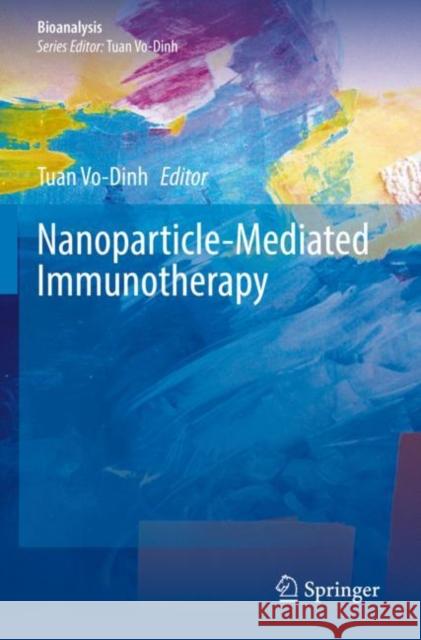
Nanoparticle-Mediated Immunotherapy  9783030783402 Springer International Publishing - książkaWidoczna okładka, to zdjęcie poglądowe, a rzeczywista szata graficzna może różnić się od prezentowanej.

Nanoparticle-Mediated Immunotherapy

ISBN-13: 9783030783402 / Angielski / Miękka / 2022

cena 605,23
(netto: 576,41 VAT:  5%)

Najniższa cena z 30 dni: 578,30
Termin realizacji zamówienia:
ok. 22 dni roboczych
Dostawa w 2026 r.

Darmowa dostawa!
inne wydania

This book is intended to serve as an authoritative reference source for a broad audience involved in the research, teaching, learning, and practice of nanotechnology in immunotherapy. The combination of nanotechnology and immunotherapy is recognized as a promising treatment modality. In particular, the use of nanoparticles in immunotherapy has attracted increased attention for their unique efficacy and specificity in cancer treatment. A wide variety of nanoparticles, such as polymeric and liposomal nanosystems, carbon nanotubes, and gold nanoparticles have provided important nanoplatforms for immunotherapeutic approaches. They have been shown to improve delivery and efficacy of immunotherapeutic agents such as vaccines or adjuvants.Nanoparticle-mediated thermal therapy has demonstrated the effectiveness for precise tumor cell ablation, radio-sensitization of hypoxic regions, enhancement of drug delivery, activation of thermosensitive agents, and enhancement of the immune system. Plasmonic nanoparticles are a special type of metallic nanoparticles that has received great interest due to their enhanced optical and electromagnetic properties and their superior capacity to convert photon energy into heat for selective photothermal therapy at the nanoscale level. Nanoparticle sizes can also be controlled such that they accumulate preferentially in tumors due to the enhanced permeability and retention effect of tumor vasculature. Various nanosystems such as gold nanoparticles have also been shown to stimulate the immune system.Immunotherapies could thus synergistically benefit from the combination with targeted nanoparticle-mediated photothermal therapies, especially when hyperthermia around immune-checkpoint inhibitors in the tumor bed is combined with precise thermal ablation of cancer cells. Of great importance is the possibility that such an approach can induce long-term immunological memory that can provide protection against tumor recurrence long after treatment of the initial tumors, like an ‘anticancer vaccine’. Nanoparticle-mediated immunotherapy could lead to an entirely new treatment paradigm that challenges traditional surgical resection approaches for many cancers and metastases.


Kategorie:
Nauka, Biologia i przyroda
Kategorie BISAC:
Science > Biofizyka
Science > Biologia molekularna
Science > Nanoscience
Wydawca:
Springer International Publishing
Seria wydawnicza:
Bioanalysis
Język:
Angielski
ISBN-13:
9783030783402
Rok wydania:
2022
Waga:
0.43 kg
Wymiary:
23.5 x 15.5
Oprawa:
Miękka
Dodatkowe informacje:
Wydanie ilustrowane

Chapter 1. The New Frontier of Medicine at the Convergence of Nanotechnology and Immunotherapy.- Chapter 2. Strategies for Immunotherapy: Basic Principles.- Chapter 3. Immunotherapy: From Discovery to Bedside.- Chapter 4. Intravital Optical Imaging to Monitor Anti-Tumor Immunological Response in Preclinical Models.- Chapter 5. Nanoparticle-Mediated Heating: A Theoretical Study for Photothermal Treatment and Photo Immunotherapy.- Chapter 6. Nanoparticle Systems Applied for Immunotherapy in Various Treatment Modalities.- Chapter 7. Design of Nanostructure Materials to Modulate Immunosuppressive Tumour Microenvironments and Enhance Cancer Immunotherapy.- Chapter 8. Plasmonic Gold Nanostars for Immuno Photothermal Nanotherapy to Treat Cancers and Induce Long-Term Immunity.- Chapter 9. Nanotechnologies for Photothermal and Immuno Cancer Therapy: Advanced Strategies Using Copper Sulfide Nanoparticles and Bacterium-mimicking Liposomes for Enhanced Efficacy.- Chapter 10. Nanoparticle-Based Phototherapy in Combination With Checkpoint Blockade for Cancer Immunotherapy.- Chapter 11. Development of Nanoparticles as a Vaccine Platform.- Chapter 12. Multifunctional Gold Nanostars for Sensitive Detection, Photothermal Treatment and Immunotherapy of Brain Tumor

Tuan Vo-Dinh is R. Eugene and Susie E. Goodson Distinguished Professor of Biomedical Engineering, Professor of Chemistry, and Director of the Fitzpatrick Institute for Photonics at Duke University. Dr. Vo-Dinh completed high school education in Saigon (now Ho Chi Minh City) and pursued  studies in Europe where he received a B.S. in physics in 1970 from EPFL (Ecole Polytechnique Federal de Lausanne), Lausanne and a Ph.D. in physical chemistry in 1975 from ETH (Swiss Federal Institute of Technology), Zurich, Switzerland. Before joining Duke University in 2006, Dr. Vo-Dinh was Director of the Center for Advanced Biomedical Photonics, Group Leader of Advanced Biomedical Science and Technology Group, and a Corporate Fellow, one of the highest honors for distinguished scientists at Oak Ridge National Laboratory (ORNL). His research has focused on the development of advanced technologies for the protection of the environment and the improvement of human health. His research activities involve nano-biophotonics, nanosensors, laser spectroscopy, molecular imaging, medical theranostics and photoimmunotherapy.

Dr. Vo-Dinh has authored over 500 publications in peer-reviewed scientific journals.  He is the author of a textbook on spectroscopy and editor of 8 books.  Elected Fellow of the National Academy of Inventors (NAI), he holds over 58 U.S. and international patents. Dr. Vo-Dinh has received seven R&D 100 Awards for Most Technologically Significant Advance in Research and Development for his pioneering research and inventions of innovative technologies.  He has received the Gold Medal Award, Society for Applied Spectroscopy (1988); the Languedoc-Roussillon Award (France) (1989); the Scientist of the Year Award, ORNL (1992); the Thomas Jefferson Award, Martin Marietta Corporation (1992); two Awards for Excellence in Technology Transfer, Federal Laboratory Consortium (1995, 1986); the Inventor of the Year Award, Tennessee Inventors Association (1996); and the Lockheed Martin Technology Commercialization Award (1998), The Distinguished Inventors Award, UT-Battelle (2003), and the Distinguished Scientist of the Year Award, ORNL (2003). In 1997, Dr. Vo-Dinh was presented the Exceptional Services Award for distinguished contribution to a Healthy Citizenry from the U.S. Department of Energy. Dr. Vo-Dinh received the 2017 Award for Spectrochemical Analysis from the American Chemical Society (ACS), and the 2019 Sir George Stokes Award from the Royal Society of Chemistry (United Kingdom).

This book is intended to serve as an authoritative reference source for a broad audience involved in the research, teaching, learning, and practice of nanotechnology in immunotherapy. The combination of nanotechnology and immunotherapy is recognized as a promising treatment modality. In particular, the use of nanoparticles in immunotherapy has attracted increased attention for their unique efficacy and specificity in cancer treatment. A wide variety of nanoparticles, such as polymeric and liposomal nanosystems, carbon nanotubes, and gold nanoparticles have provided important nanoplatforms for immunotherapeutic approaches. They have been shown to improve delivery and efficacy of immunotherapeutic agents such as vaccines or adjuvants.

Nanoparticle-mediated thermal therapy has demonstrated the effectiveness for precise tumor cell ablation, radio-sensitization of hypoxic regions, enhancement of drug delivery, activation of thermosensitive agents, and enhancement of the immune system. Plasmonic nanoparticles are a special type of metallic nanoparticles that has received great interest due to their enhanced optical and electromagnetic properties and their superior capacity to convert photon energy into heat for selective photothermal therapy at the nanoscale level. Nanoparticle sizes can also be controlled such that they accumulate preferentially in tumors due to the enhanced permeability and retention effect of tumor vasculature. Various nanosystems such as gold nanoparticles have also been shown to stimulate the immune system.

Immunotherapies could thus synergistically benefit from the combination with targeted nanoparticle-mediated photothermal therapies, especially when hyperthermia around immune-checkpoint inhibitors in the tumor bed is combined with precise thermal ablation of cancer cells. Of great importance is the possibility that such an approach can induce long-term immunological memory that can provide protection against tumor recurrence long after treatment of the initial tumors, like an ‘anticancer vaccine’. Nanoparticle-mediated immunotherapy could lead to an entirely new treatment paradigm that challenges traditional surgical resection approaches for many cancers and metastases.




Udostępnij

Facebook - konto krainaksiazek.pl


Opinie o Krainaksiazek.pl na Opineo.pl

Partner Mybenefit

Krainaksiazek.pl w programie rzetelna firma Krainaksiaze.pl - płatności przez paypal

Czytaj nas na:

Facebook - krainaksiazek.pl
  • książki na zamówienie
  • granty
  • książka na prezent
  • kontakt
  • pomoc
  • opinie
  • regulamin
  • polityka prywatności

Zobacz:

  • Księgarnia czeska

  • Wydawnictwo Książkowe Klimaty

1997-2025 DolnySlask.com Agencja Internetowa

© 1997-2022 krainaksiazek.pl
     
KONTAKT | REGULAMIN | POLITYKA PRYWATNOŚCI | USTAWIENIA PRYWATNOŚCI
Zobacz: Księgarnia Czeska | Wydawnictwo Książkowe Klimaty | Mapa strony | Lista autorów
KrainaKsiazek.PL - Księgarnia Internetowa

Polityka prywatnosci - link
Krainaksiazek.pl - płatnośc Przelewy24
Przechowalnia Przechowalnia




