• Wyszukiwanie zaawansowane
  • Kategorie
  • Kategorie BISAC
  • Książki na zamówienie
  • Promocje
  • Granty
  • Książka na prezent
  • Opinie
  • Pomoc
  • Załóż konto
  • Zaloguj się

Nanocomputers and swarm intell » książka


zaloguj się | załóż konto
Logo Krainaksiazek.pl

koszyk

konto

szukaj
topmenu
Księgarnia internetowa
Szukaj
Książki na zamówienie
Promocje
Granty
Książka na prezent
Moje konto
Pomoc
 
 
Wyszukiwanie zaawansowane
Pusty koszyk
Bezpłatna dostawa dla zamówień powyżej 20 złBezpłatna dostawa dla zamówień powyżej 20 zł

Kategorie główne

• Nauka
 [2946912]
• Literatura piękna
 [1852311]

  więcej...
• Turystyka
 [71421]
• Informatyka
 [150889]
• Komiksy
 [35717]
• Encyklopedie
 [23177]
• Dziecięca
 [617324]
• Hobby
 [138808]
• AudioBooki
 [1671]
• Literatura faktu
 [228371]
• Muzyka CD
 [400]
• Słowniki
 [2841]
• Inne
 [445428]
• Kalendarze
 [1545]
• Podręczniki
 [166819]
• Poradniki
 [480180]
• Religia
 [510412]
• Czasopisma
 [525]
• Sport
 [61271]
• Sztuka
 [242929]
• CD, DVD, Video
 [3371]
• Technologie
 [219258]
• Zdrowie
 [100961]
• Książkowe Klimaty
 [124]
• Zabawki
 [2341]
• Puzzle, gry
 [3766]
• Literatura w języku ukraińskim
 [255]
• Art. papiernicze i szkolne
 [7810]
Kategorie szczegółowe BISAC

Nanocomputers and swarm intell

ISBN-13: 9781848210097 / Angielski / Twarda / 2008 / 294 str.
Jean-Baptiste Waldner
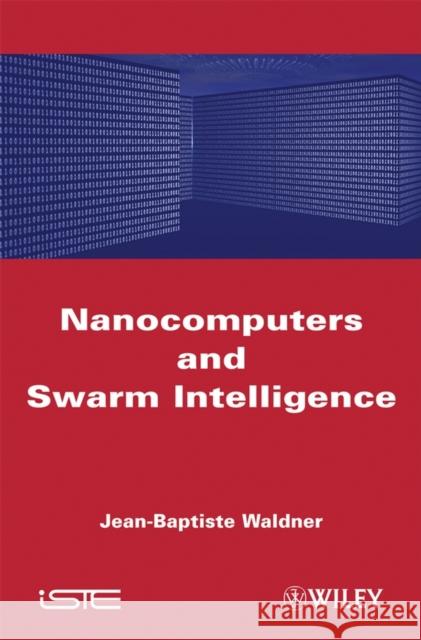
Nanocomputers and swarm intell Waldner, Jean-Baptiste 9781848210097 ISTE LTD AND JOHN WILEY & SONS INC - książkaWidoczna okładka, to zdjęcie poglądowe, a rzeczywista szata graficzna może różnić się od prezentowanej.

Nanocomputers and swarm intell

ISBN-13: 9781848210097 / Angielski / Twarda / 2008 / 294 str.

Jean-Baptiste Waldner
cena 780,51
(netto: 743,34 VAT:  5%)

Najniższa cena z 30 dni: 777,29
Termin realizacji zamówienia:
ok. 30 dni roboczych
Dostawa w 2026 r.

Darmowa dostawa!

For the last 50 years, the power of integrated circuits has continued to grow. However, this performance will end up reaching its physical limit. What new ways will then be available to develop even more powerful and up-to-date systems? This book introduces the principles of quantic computing, the use of nano-tubes in molecular transistors and DNA computing. It suggests new fabrication methods for the 21st century and introduces new architecture models, ranging from the most conventional to the most radical. Using a chronological theme, it explains our unavoidable entry in the nano-device world: from the 1948 transistor to the microchip. It concludes by anticipating the changes in daily living: investments, impact on coding activities, nanocomputing systems implementation and IT job mutation.


Kategorie:
Technologie
Kategorie BISAC:
Computers > Artificial Intelligence - General
Technology & Engineering > Nanotechnology & MEMS
Technology & Engineering > Electronics - Microelectronics
Wydawca:
ISTE LTD AND JOHN WILEY & SONS INC
Język:
Angielski
ISBN-13:
9781848210097
Rok wydania:
2008
Ilość stron:
294
Waga:
0.59 kg
Wymiary:
23.37 x 15.49 x 2.29
Oprawa:
Twarda
Wolumenów:
01
Dodatkowe informacje:
Bibliografia
Wydanie ilustrowane

Foreword ix
Didier TRUTT

Preface xiii

Acknowledgements xix

Introduction xxi

Chapter 1. Revolution or Continuity? 1

1.1. Ubiquity and pervasion 1

1.2. From the art of building small – perspectives of nanoproduction 4

Chapter 2. The Rise and Anticipated Decline of the Silicon Economy 7

2.1. 40 years of global growth 7

2.2. From sand to the chip, the epic of semi–conductors 9

2.2.1. Semi–conductors – some solid–state physics 10

2.2.2. CMOS technology and high–density integrated circuits 14

2.2.3. Half a century of industrial methods and processes 16

2.3. The fatality of Moore’s Law: “the wall” 22

2.3.1. The disaggregation of the microelectronics industry value chain 26

2.3.2. The ITRS (International Roadmap for Semi–conductors) – a race to controlled miniaturization 29

2.3.3. Will a slowdown in the economy overturn established models? 33

2.4. Beyond silicon – from microelectronics to nanotechnologies 36

Chapter 3. Rebuilding the World Atom by Atom 41

3.1. Manipulation on an atomic scale – the scanning tunneling microscope 41

3.2. From the manipulation of atoms to nanomachines – the concept of self–assembly 45

3.3. From the feasibility of molecular assemblers to the creation of self–replicating entities 49

3.4. Imitating nature – molecular biology and genetic engineering 55

3.4.1. When nature builds its own nanomachines 56

3.4.2. Genetic engineering – the nanotechnology approach by life sciences 60

3.5. From coal to nanotubes – the nanomaterials of the Diamond Age 62

3.6. Molecular electronics and nanoelectronics – first components and first applications 70

3.6.1. Carbon Nanotube Field Effect Transistors (CNFET) 71

3.6.2. Hybrid mono–molecular electronic circuits73

3.6.3. Organic molecular electronics 75

3.6.4. Spin valves and spintronic semi–conductor components 82

3.6.5. Quantum dots and the phenomenon of quantum confinement 85

Chapter 4. The Computers of Tomorrow 89

4.1. From evolution to revolution 89

4.2. Silicon processors – the adventure continues 93

4.2.1. Progress in photolithography and new materials 95

4.2.2. The structure of microprocessors 101

4.2.3. Digital signal processing and DSP processors 107

4.3. Conventional generation platforms 109

4.3.1. Traditional platforms 110

4.3.2. Emerging platforms 113

4.3.3. Distributed computing, an alternative to supercomputers 115

4.4. Advanced platforms – the exploration of new industries 119

4.4.1. Quantum information systems 121

4.4.2. DNA computing 130

Chapter 5. Elements of Technology for Information Systems of the New Century 135

5.1. Beyond processors 135

5.2. Memories and information storage systems 138

5.2.1. Memories consisting of semi–conductors – perspectives 140

5.2.2. Limits of magnetic data storage 146

5.2.3. Holographic memory 150

5.2.4. The technology of AFM memories 154

5.2.5. Molecular memory 156

5.3. Batteries and other forms of power supply 157

5.3.1. Lithium–ion and lithium–polymer batteries 159

5.3.2. Zinc–air batteries 160

5.3.3. Micro–batteries 161

5.3.4. Micro–batteries using nuclear energy 162

5.3.5. Recharging batteries with the help of kinetic energy 163

5.4. New peripheral devices and interfaces between humans and machines 163

5.4.1. Automatic speech recognition 165

5.4.2. Gesture recognition 170

5.4.3. Processing and recognizing writing 171

5.4.4. Eye tracking 172

5.4.5. Brain machine interface 173

5.4.6. Electronic paper 177

5.4.7. New visualization systems 181

5.5. Telecommunications – a different kind of revolution 184

5.6. The triumph of microsystems 187

5.7. Is this the end of the silicon era? 190

Chapter 6. Business Mutation and Digital Opportunities in the 21st Century 197

6.1. Towards a new concept of information technology 197

6.2. Ubiquitous information technology and the concept of “diluted” information systems 199

6.3. Highly diffused information systems – RFID 204

6.3.1. The “Internet of things” and the supply chain of the future – Auto–ID 209

6.3.2. Economic opportunities vs. privacy protection 214

6.4. New challenges for web applications in a global network of objects 218

6.4.1. Complexity and efficiency of very large infrastructures 219

6.4.2. From centralized intelligence to swarm intelligence – reinventing the programming code 224

6.5. The IT jobs mutation 231

6.5.1. New concepts in agile software development 235

6.5.2. Ambient intelligence and the delocalization of jobs in the IT sector 241

6.5.3. New opportunities for the profession 245

Conclusion 253

Bibliography 259

Index 263

Jean–Baptiste Waldner is a technology–managing consultant for various companies. He has also worked as head of operations for Carrefour and PPR, where he instigated worldwide transformations based on the intensive use of IT, telecommunications and digital technologies.

For the last 50 years, the power of integrated circuits has continued to grow. However, this performance will end up reaching its physical limit. What new ways will then be available to develop even more powerful and up–to–date systems? This book introduces the principles of quantic computing, the use of nano–tubes in molecular transistors and ADN computing. It suggests new fabrication methods for the 21st century and introduces new architecture models, ranging from the most conventional to the most radical. Using a chronological theme, it explains our unavoidable entry in the nano–device world: from the 1948 transistor to the microchip. It concludes by anticipating the changes in daily living: investments, impact on coding activities, nanocomputing systems implementation and IT job mutation.

Waldner, Jean-Baptiste Jean-Baptiste Waldner is a technology-managing con... więcej >


Udostępnij

Facebook - konto krainaksiazek.pl


Opinie o Krainaksiazek.pl na Opineo.pl

Partner Mybenefit

Krainaksiazek.pl w programie rzetelna firma Krainaksiaze.pl - płatności przez paypal

Czytaj nas na:

Facebook - krainaksiazek.pl
  • książki na zamówienie
  • granty
  • książka na prezent
  • kontakt
  • pomoc
  • opinie
  • regulamin
  • polityka prywatności

Zobacz:

  • Księgarnia czeska

  • Wydawnictwo Książkowe Klimaty

1997-2025 DolnySlask.com Agencja Internetowa

© 1997-2022 krainaksiazek.pl
     
KONTAKT | REGULAMIN | POLITYKA PRYWATNOŚCI | USTAWIENIA PRYWATNOŚCI
Zobacz: Księgarnia Czeska | Wydawnictwo Książkowe Klimaty | Mapa strony | Lista autorów
KrainaKsiazek.PL - Księgarnia Internetowa

Polityka prywatnosci - link
Krainaksiazek.pl - płatnośc Przelewy24
Przechowalnia Przechowalnia





