• Wyszukiwanie zaawansowane
  • Kategorie
  • Kategorie BISAC
  • Książki na zamówienie
  • Promocje
  • Granty
  • Książka na prezent
  • Opinie
  • Pomoc
  • Załóż konto
  • Zaloguj się

Nanobiotechnology in Agriculture: An Approach Towards Sustainability » książka

zaloguj się | załóż konto
Logo Krainaksiazek.pl

koszyk

konto

szukaj
topmenu
Księgarnia internetowa
Szukaj
Książki na zamówienie
Promocje
Granty
Książka na prezent
Moje konto
Pomoc
 
 
Wyszukiwanie zaawansowane
Pusty koszyk
Bezpłatna dostawa dla zamówień powyżej 20 złBezpłatna dostawa dla zamówień powyżej 20 zł

Kategorie główne

• Nauka
 [2949965]
• Literatura piękna
 [1857847]

  więcej...
• Turystyka
 [70818]
• Informatyka
 [151303]
• Komiksy
 [35733]
• Encyklopedie
 [23180]
• Dziecięca
 [617748]
• Hobby
 [139972]
• AudioBooki
 [1650]
• Literatura faktu
 [228361]
• Muzyka CD
 [398]
• Słowniki
 [2862]
• Inne
 [444732]
• Kalendarze
 [1620]
• Podręczniki
 [167233]
• Poradniki
 [482388]
• Religia
 [509867]
• Czasopisma
 [533]
• Sport
 [61361]
• Sztuka
 [243125]
• CD, DVD, Video
 [3451]
• Technologie
 [219309]
• Zdrowie
 [101347]
• Książkowe Klimaty
 [123]
• Zabawki
 [2362]
• Puzzle, gry
 [3791]
• Literatura w języku ukraińskim
 [253]
• Art. papiernicze i szkolne
 [7933]
Kategorie szczegółowe BISAC

Nanobiotechnology in Agriculture: An Approach Towards Sustainability

ISBN-13: 9783030399771 / Angielski / Twarda / 2020 / 229 str.
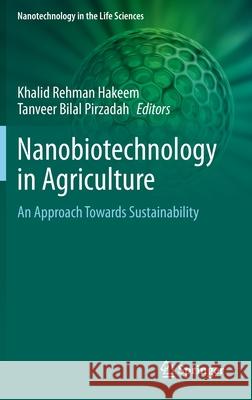
Khalid Rehman Hakeem; Tanveer Bilal Pirzadah
Nanobiotechnology in Agriculture: An Approach Towards Sustainability Hakeem, Khalid Rehman 9783030399771 Springer - książkaWidoczna okładka, to zdjęcie poglądowe, a rzeczywista szata graficzna może różnić się od prezentowanej.

Nanobiotechnology in Agriculture: An Approach Towards Sustainability

ISBN-13: 9783030399771 / Angielski / Twarda / 2020 / 229 str.

Khalid Rehman Hakeem; Tanveer Bilal Pirzadah
cena 726,29 zł
(netto: 691,70 VAT:  5%)

Najniższa cena z 30 dni: 693,97 zł
Termin realizacji zamówienia:
ok. 22 dni roboczych
Bez gwarancji dostawy przed świętami

Darmowa dostawa!
inne wydania
Kategorie:
Nauka, Biologia i przyroda
Kategorie BISAC:
Technology & Engineering > Agriculture - General
Science > Botanika
Technology & Engineering > Nanotechnology & MEMS
Wydawca:
Springer
Seria wydawnicza:
Nanotechnology in the Life Sciences
Język:
Angielski
ISBN-13:
9783030399771
Rok wydania:
2020
Wydanie:
2020
Numer serii:
000835759
Ilość stron:
229
Waga:
0.51 kg
Wymiary:
23.39 x 15.6 x 1.42
Oprawa:
Twarda
Wolumenów:
01
Dodatkowe informacje:
Wydanie ilustrowane


1. Nanotechnology-An Overview

2. Nanotechnology: A boost for the urgently needed second green revolution in Indian Agriculture
3. Nano-Enabled Agriculture can Sustain “Farm to Forkˮ Chain
4. Role of Nanotechnology in Crop Improvement
5. Nano-Fertilizers: A Way Forward for Green Economy
6. Embodiment of Nano-biotechnology in agriculture-An overview
7. Nano-Biosensors: NextGen Diagnostic Tools in Agriculture
8. Nanoparticles: The Magic Bullets in Mitigating Drought Stress in Plants
9. Nanotechnology: An innovative tool to enhance Crop Production
10. Development of Nano-formulations via Green Synthesis Approach
11. Nano-Agrochemicals: Economic Potential and Future Trends
12. CRISPR/Cas9: A New Revolutionary Science in Agricultural and Horticulture
13. Pros and Cons of Nanotechnology

Khalid Rehman Hakeem, PhD is Professor at King Abdulaziz University, Jeddah, Saudi Arabia. After completing his doctorate (Botany; specialization in Plant Eco-physiology and Molecular Biology) from Jamia Hamdard, New Delhi, India, in 2011, he worked as a lecturer at the University of Kashmir, Srinagar, for a short period. Later, he joined Universiti Putra Malaysia, Selangor, Malaysia, and worked there as Post Doctorate Fellow in 2012 and Fellow Researcher (Associate Prof.) from 2013 to 2016. Dr. Hakeem has more than 10 years of teaching About the Editors and research experience in plant eco-physiology, biotechnology and molecular biology, medicinal plant research, plant-microbe-soil interactions as well as in environmental studies. He is the recipient of several fellowships at both national and international levels; also, he has served as the visiting scientist at Jinan University, Guangzhou, China. Currently, he is involved with a number of international research projects with different government organizations.


So far, Dr. Hakeem has authored and edited more than 36 books with international publishers, including Springer Nature, Academic Press (Elsevier), and CRC Press. He also has to his credit more than 90 research publications in peer-reviewed international journals and 55 book chapters in edited volumes with international publishers. At present, Dr. Hakeem serves as an editorial board member and reviewer of several high-impact international scientific journals from Elsevier, Springer Nature, Taylor and Francis, Cambridge, and John Wiley Publishers. He is included in the advisory board of Cambridge Scholars Publishing, UK. He is also a fellow of Plantae group of the American Society of Plant Biologists, member of the World Academy of Sciences, member of the International Society for Development and Sustainability, Japan, and member of Asian Federation of Biotechnology, Korea. Dr. Hakeem has been listed in Marquis Who’s Who in the World, since 2014–2019. Currently, Dr. Hakeem is engaged in studying the plant processes at eco-physiological as well as molecular levels.


Tanveer Bilal Pirzadah, PhD is Assistant Professor at University Centre for Research and Development, Chandigarh University, India. After completing his doctorate (Bioresources; specialization in Plant Stress Physiology and Biofuels) from University of Kashmir, Srinagar, India, in 2017, he worked as a lecturer at the Cluster University Srinagar. Dr. Tanveer has about 8 years of research and teaching experience in bioresources management, biofuels, plant stress physiology, biotechnology and molecular biology, medicinal plant research, plant-metal interactions as well as in environmental studies. He also has to his credit 20 research publications in peer-reviewed international journals and 22 book chapters in edited volumes with international publishers. At present, Dr. Tanveer serves as an editorial board member and reviewer of several international scientific journals. He is also member of the World Academy of Sciences and Plantae group of the American Society of Plant Biologists. Currently, Dr. Tanveer is engaged in studying the plant processes at proteomic, metabolomic and molecular level to better understand the dynamic plant-metal interactions.

Dr. Tanveer Bilal Pirzadah

Assistant Professor

University Centre for Research and Development (UCRD)

Chandigarh University, Mohali, Punjab, India


Agriculture is considered as a backbone of developing nations as it caters the needs of the people, directly or indirectly. The global agriculture currently faces enormous challenges like land degradation and reduced soil fertility, shrinking of land, low production yield, water accessibility and a dearth of labor due to evacuation of individuals from farming. Besides, the global population increases at an exponential rate and it is predicted that the global population will be 9 billion by 2050 that in turn leads to food crisis in near future. Although, green revolution revolutionizes the agriculture sector by enhancing the yield but it was not considered as a sustainable approach. Exorbitant use of chemical fertilizers and pesticides to boost the crop yield is definitely not a convenient approach for agriculture sustainability in the light of the fact that these chemical fertilizers are considered as double-edged sword, which on one hand enhance the crop yield but at the same time possess deleterious effect on the soil microflora and thus declines its fertility. Besides, it cause irreversible damage to the soil texture and disrupts the equilibrium in the food chain across ecosystem, which might in turn lead to genetic mutations in future generations of consumers. Thus, the increased dependence on fabricated agricultural additives during and post green revolution has generated serious issues pertaining to sustainability, environmental impact and health hazards. Therefore, nano-biotechnology has emerged as a promising tool to tackle the above problems especially in the agriculture sector. Nano-agribusiness is an emerged field to enhance crop yield, rejuvenate soil health, provide precision farming and stimulate plant growth. Nano-biotechnology is an essential tool in modern agriculture and is considered as a primary economic driver in near future. It is evaluated that joining of cutting edge nanotechnology in agribusiness would push the worldwide monetary development to approximately US$ 3.4 trillion by 2020 which clearly indicates that how agri-nanobiotechnology plays a pivotal role in the agricultural sector, without any negative impact on the environment and other regulatory issues of biosafety. Agri-nanobiotechnology is an innovative green technology, which provides the solution to global food security, sustainability and climate change. The current book is presenting the role of nano-biotechnology in modern agriculture and how it plays a pivotal role to boost the agri-business.


Udostępnij

Facebook - konto krainaksiazek.pl


Opinie o Krainaksiazek.pl na Opineo.pl

Partner Mybenefit

Krainaksiazek.pl w programie rzetelna firma Krainaksiaze.pl - płatności przez paypal

Czytaj nas na:

Facebook - krainaksiazek.pl
  • książki na zamówienie
  • granty
  • książka na prezent
  • kontakt
  • pomoc
  • opinie
  • regulamin
  • polityka prywatności

Zobacz:

  • Księgarnia czeska

  • Wydawnictwo Książkowe Klimaty

1997-2025 DolnySlask.com Agencja Internetowa

© 1997-2022 krainaksiazek.pl
     
KONTAKT | REGULAMIN | POLITYKA PRYWATNOŚCI | USTAWIENIA PRYWATNOŚCI
Zobacz: Księgarnia Czeska | Wydawnictwo Książkowe Klimaty | Mapa strony | Lista autorów
KrainaKsiazek.PL - Księgarnia Internetowa

Polityka prywatnosci - link
Krainaksiazek.pl - płatnośc Przelewy24
Przechowalnia Przechowalnia






