• Wyszukiwanie zaawansowane
  • Kategorie
  • Kategorie BISAC
  • Książki na zamówienie
  • Promocje
  • Granty
  • Książka na prezent
  • Opinie
  • Pomoc
  • Załóż konto
  • Zaloguj się

Mycorrhizal Fungi in South America » książka

zaloguj się | załóż konto
Logo Krainaksiazek.pl

koszyk

konto

szukaj
topmenu
Księgarnia internetowa
Szukaj
Książki na zamówienie
Promocje
Granty
Książka na prezent
Moje konto
Pomoc
 
 
Wyszukiwanie zaawansowane
Pusty koszyk
Bezpłatna dostawa dla zamówień powyżej 20 złBezpłatna dostawa dla zamówień powyżej 20 zł

Kategorie główne

• Nauka
 [2949965]
• Literatura piękna
 [1857847]

  więcej...
• Turystyka
 [70818]
• Informatyka
 [151303]
• Komiksy
 [35733]
• Encyklopedie
 [23180]
• Dziecięca
 [617748]
• Hobby
 [139972]
• AudioBooki
 [1650]
• Literatura faktu
 [228361]
• Muzyka CD
 [398]
• Słowniki
 [2862]
• Inne
 [444732]
• Kalendarze
 [1620]
• Podręczniki
 [167233]
• Poradniki
 [482388]
• Religia
 [509867]
• Czasopisma
 [533]
• Sport
 [61361]
• Sztuka
 [243125]
• CD, DVD, Video
 [3451]
• Technologie
 [219309]
• Zdrowie
 [101347]
• Książkowe Klimaty
 [123]
• Zabawki
 [2362]
• Puzzle, gry
 [3791]
• Literatura w języku ukraińskim
 [253]
• Art. papiernicze i szkolne
 [7933]
Kategorie szczegółowe BISAC

Mycorrhizal Fungi in South America

ISBN-13: 9783031129964 / Angielski / Miękka / 2023
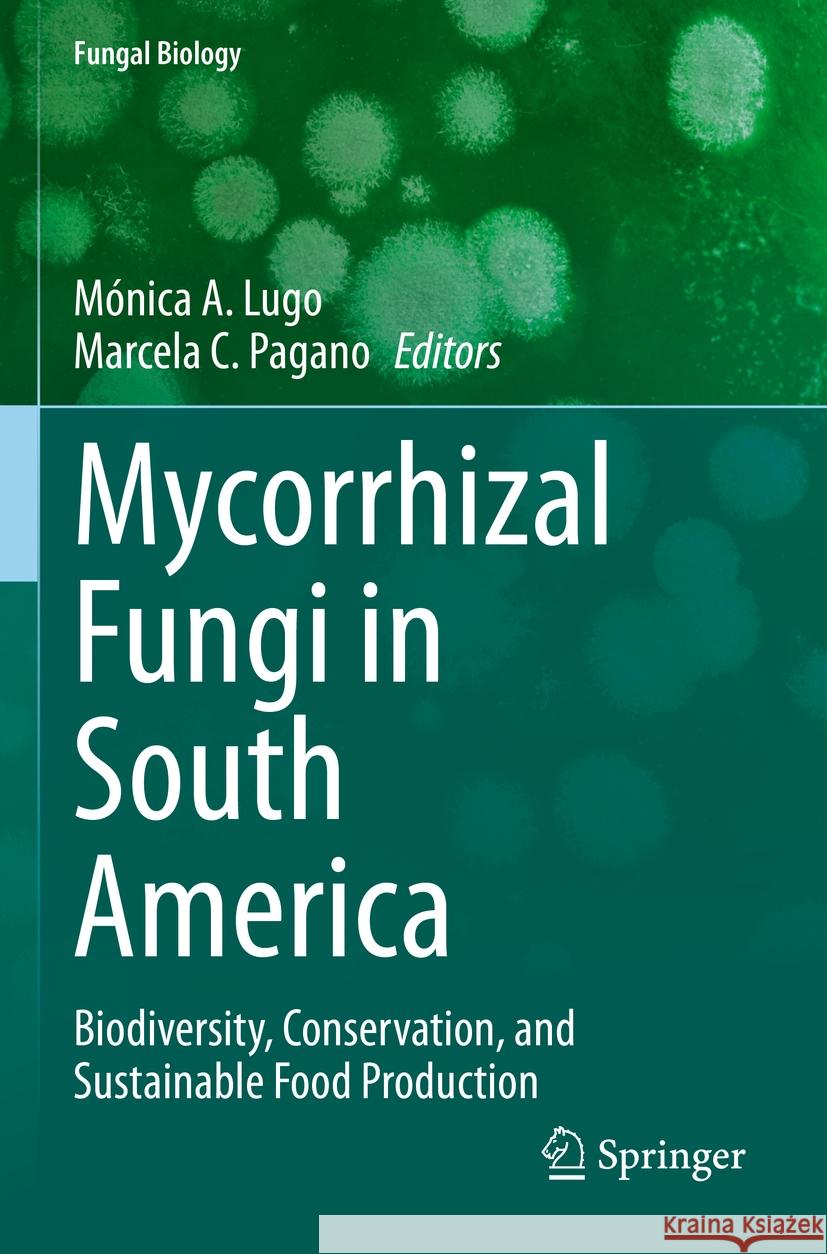
Mycorrhizal Fungi in South America  9783031129964 Springer International Publishing - książkaWidoczna okładka, to zdjęcie poglądowe, a rzeczywista szata graficzna może różnić się od prezentowanej.

Mycorrhizal Fungi in South America

ISBN-13: 9783031129964 / Angielski / Miękka / 2023

cena 484,18 zł
(netto: 461,12 VAT:  5%)

Najniższa cena z 30 dni: 462,63 zł
Termin realizacji zamówienia:
ok. 22 dni roboczych
Bez gwarancji dostawy przed świętami

Darmowa dostawa!
inne wydania

In order to feed the world, global agriculture will have to double food production by 2050. As a result, the use of soils with fertilizers and pesticides in agronomic ecosystems will increase, taking into account the sustainability of these systems and also the provision of food security. Thus, soil ecosystems, their health, and their quality are directly involved in sustainable agronomical practices, and it is important to recognize the important role of soil microbial communities such as mycorrhizal fungi, their biodiversity, interactions, and functioning. Soil ecosystems are under the threat of biodiversity loss due to an increase of cultivated areas and agronomic exploitation intensity. Also, changes in land use alter the structure and function of ecosystems where biodiversity is vital in the ecosystem.

Soils are a major aid in food production in all terrestrial ecosystems; however, this means they are also involved in gas emission and global warming. Thus, in agronomic ecosystems, several mitigation practices have been proposed to promote the increase of carbon soil stock, and the reduction of warming gas emission from soils. In South America, most of the rural population depends economically on agriculture and usually works in family units. New, organic, safe, and sustainable agro-forestry practices must be applied to support local communities and countries to achieve hunger eradication, rural poverty reduction, and sustainable development.

This book compiles new information for mycorrhizal occurrence in natural and anthropic environments in South America. It includes new reports of mycorrhizal fungi diversity along different mycorrhizal types and their effect on plant communities, plant invasions, the use of mycorrhizal fungi for ecological and sustainable studies, management programs of natural and agroecosystems, and forestry and food-secure production. This book fills the gaps in biodiversity knowledge, management and safe food production of mycorrhizas. It should be a valuable help to researchers, professors and students, to aid in use of mycorrhizal fungi while also focusing on their biodiversity, sustainable safe food production, and conservation perspectives.


Kategorie:
Nauka, Biologia i przyroda
Kategorie BISAC:
Science > Botanika
Science > Biotechnology
Science > Life Sciences - Mycology
Wydawca:
Springer International Publishing
Seria wydawnicza:
Fungal Biology
Język:
Angielski
ISBN-13:
9783031129964
Rok wydania:
2023
Waga:
0.72 kg
Wymiary:
23.5 x 15.5
Oprawa:
Miękka
Dodatkowe informacje:
Wydanie ilustrowane

1. Overview 
2. Ectomycorrhizal fungi invasions in Southern South America 
3. Pseudomonotes tropenbosii, an endemic Dipterocarp tree from a Neotropical terra firme forest in Colombian Amazonia that hosts ectomycorrhizal fungi
4. Arbuscular Mycorrhizal Fungi in the Colombian Amazon: A Historical Review
5. AMF diversity in coffee and cacao agroforestry systems: importance for crop productivity and forest conservation
6. Potential of arbuscular mycorrhizas for the remediation of soils impacted with pollutants
7. Diversity of Arbuscular Mycorrhizal Fungi in the Ecuadorian Amazon region.
8. Orchid Mycorrhizas in South America: Tropical and Subtropical Ecosystems
9. Symbiotic propagation of South American orchids
10. Arbuscular mycorrhizal fungi in agroecosystems of East-Central Argentina: two agricultural practices effects on taxonomic groups 
11. Metal soil contamination, metallophytes and arbuscular mycorrhizal fungi from South America
12. Native and exotic woodland from Patagonian Andes: Anthropic impacts and Mycorrhizas
13. Current Knowledge on Mycorrhizal Symbiosis and Endophytes in northwest Patagonia, Argentina
14. Mycorrhizas in Nothofagus from South America: what do we know from nursery and field experiences?
15. Arbuscular mycorrhizal fungi in the Espinal Ecoregion, gaps and opportunities
16. Edible ectomycorrhizal mushrooms in South America
17. Arbuscular mycorrhizal symbiosis in temperate grassland forage species of Argentina
18. Current trends and challenges in viticulture using arbuscular mycorrhizal fungi
19. Communities of Glomeromycota in the Argentine Arid Diagonal: an approach from their ecological role in grassland management and use
20. The current scenario of the distribution, functionality and ecosystemic role of the arbuscular mycorrhizal symbiosis in Chile
21. Mycorrhizas and Restoration in South America
22. Gaps in South American mycorrhizal biodiversity and ecosystem function research

Prof. Dr. Mónica Alejandra Lugo 
MICODIF- IMIBIO-CONICET-UNSL- Facultad de Química, Bioquímica y Farmacia, 5700, San Luis, Argentina.  e-mail lugo@unsl.edu.ar/monicalugo63@gmail.com
ML was born in Tigre, Argentina. She taught for 28 years at high school and Universities such as National University of Buenos Aires, National University of Córdoba and National University of San Luis; and her current positions are Adjunct professor (Biology Department, FQByF, National University of San Luis) to Bachelor of Biological Sciences and to Professor in Biological Sciences, becoming Professor of Vegetal Diversity I, Plant-Fungi interactions: Mycophyllas and Mycorrhizas, Biology of Protist and Fungi and Fungi and Vegetal Systematic. She won three Doctoral Scholarships (1994-1999) and a Postdoc Fellowship (1999-2001). Further, she is the Director of the Mycology, Diversity and Fungal Interaction Herbarium (MICODIF) of the National University of San Luis-SNDB (National System of Biological Data-Argentina).
Education: Dr. Lugo completed her D.Sc. (Biological Sciences) from National University of Córdoba, Argentina.
Experience: She has worked in diverse research topics such as: Plan-Fungi associations (stem fungal endophytes/mycophyllas, arbuscular mycorrhizas and dark septate endophytes, ectomycorrhizas ecology), Environmental Microbiology (plants and soil microorganism interactions in highlands, stressed, arid and semi-arid native and agronomic ecosystems, secondary communities), Mycology, fungal diversity, etc.
Publication: Since 1995, 30 papers published in national and international peer reviewed journals like Microbial Ecology, Mycologia, Symbiosis, Mycorrhiza, Pedobiologia, Journal of Arid Environments, Plant and Soil, etc., published also 6 Book Chapters, 1 Book of Research Methodologies, 3 Didactic and Research Books from different editorial such as NOVA Science Publishers, and Springer
International collaboration: Dr. Lugo also collaborate in research projects in Argentina, Colombia, Italy and with other research groups.
Editorial Experience: She has reviewed research works as expert reviewer of International Journals (Applied Soil Ecology, Fungal Ecology, Microbial Ecology, Mycorrhiza, Symbiosis, etc.) and National Journals.
Specialization Keywords: Plant-soil interactions /soil ecology, mycorrhizic fungi, plant symbiosis/arid, semiarid, highlands, stressed environments

Dr. Marcela Claudia Pagano
Marcela Pagano was born in La Plata, Argentina. She taught for some years at high school and Universities. In 2018 she was appointed as Technical analyst in Health Promotion and Management at Sanitary Surveillance Board, Santa Catarina, Brazil. Prior to that, she spent over 10 years in mycorrhizal research, completing her PhD at the Federal University of Minas Gerais, Brazil and four postdoctoral fellowships.
Education: Dr. Pagano completed her D.Sc. (Sciences - Applied Botany) and her MSc in Ecology, Conservation and Wild Life Management from Federal University of Minas Gerais, Brazil.
Experience: She has vast experience in different areas of plant-soil-fungal biology, to name a few: Rhizobial and mycorrhizal symbiosis, Nanomaterials focusing on anthropogenic soils and biochar, terrestrial ecology, etc.
Publication: Since 1998, 28 papers published in national and international peer reviewed journals like Ecological Indicators, Applied Soil Ecology, Symbiosis, Soil & Tillage Research, etc. and from different journals of Elsevier, Springer, etc.
International collaboration: Dr. Pagano also collaborate in research projects in Brazil and with other research groups, which has resulted in 27 book chapters and 2 edited books.
Editorial Experience: She is editorial board member of three International Journals (European Journal of Soil Biology, Frontiers in Microbiology).
Specialization Keywords: Plant-soil interactions /soil ecology, mycorrhizal fungi, plant symbiosis, Nanomaterials

In order to feed the world, global agriculture will have to double food production by 2050. As a result, the use of soils with fertilizers and pesticides in agronomic ecosystems will increase, taking into account the sustainability of these systems and also the provision of food security. Thus, soil ecosystems, their health, and their quality are directly involved in sustainable agronomical practices, and it is important to recognize the important role of soil microbial communities such as mycorrhizal fungi, their biodiversity, interactions, and functioning. Soil ecosystems are under the threat of biodiversity loss due to an increase of cultivated areas and agronomic exploitation intensity. Also, changes in land use alter the structure and function of ecosystems where biodiversity is vital in the ecosystem.

Soils are a major aid in food production in all terrestrial ecosystems; however, this means they are also involved in gas emission and global warming. Thus, in agronomic ecosystems, several mitigation practices have been proposed to promote the increase of carbon soil stock, and the reduction of warming gas emission from soils. In South America, most of the rural population depends economically on agriculture and usually works in family units. New, organic, safe, and sustainable agro-forestry practices must be applied to support local communities and countries to achieve hunger eradication, rural poverty reduction, and sustainable development.

This book compiles new information for mycorrhizal occurrence in natural and anthropic environments in South America. It includes new reports of mycorrhizal fungi diversity along different mycorrhizal types and their effect on plant communities, plant invasions, the use of mycorrhizal fungi for ecological and sustainable studies, management programs of natural and agroecosystems, and forestry and food-secure production. This book fills the gaps in biodiversity knowledge, management and safe food production of mycorrhizas. It should be a valuable help to researchers, professors and students, to aid in use of mycorrhizal fungi while also focusing on their biodiversity, sustainable safe food production, and conservation perspectives.




Udostępnij

Facebook - konto krainaksiazek.pl


Opinie o Krainaksiazek.pl na Opineo.pl

Partner Mybenefit

Krainaksiazek.pl w programie rzetelna firma Krainaksiaze.pl - płatności przez paypal

Czytaj nas na:

Facebook - krainaksiazek.pl
  • książki na zamówienie
  • granty
  • książka na prezent
  • kontakt
  • pomoc
  • opinie
  • regulamin
  • polityka prywatności

Zobacz:

  • Księgarnia czeska

  • Wydawnictwo Książkowe Klimaty

1997-2025 DolnySlask.com Agencja Internetowa

© 1997-2022 krainaksiazek.pl
     
KONTAKT | REGULAMIN | POLITYKA PRYWATNOŚCI | USTAWIENIA PRYWATNOŚCI
Zobacz: Księgarnia Czeska | Wydawnictwo Książkowe Klimaty | Mapa strony | Lista autorów
KrainaKsiazek.PL - Księgarnia Internetowa

Polityka prywatnosci - link
Krainaksiazek.pl - płatnośc Przelewy24
Przechowalnia Przechowalnia





