• Wyszukiwanie zaawansowane
  • Kategorie
  • Kategorie BISAC
  • Książki na zamówienie
  • Promocje
  • Granty
  • Książka na prezent
  • Opinie
  • Pomoc
  • Załóż konto
  • Zaloguj się

Municipal Solid Waste Landfill Technology in Japan » książka


zaloguj się | załóż konto
Logo Krainaksiazek.pl

koszyk

konto

szukaj
topmenu
Księgarnia internetowa
Szukaj
Książki na zamówienie
Promocje
Granty
Książka na prezent
Moje konto
Pomoc
 
 
Wyszukiwanie zaawansowane
Pusty koszyk
Bezpłatna dostawa dla zamówień powyżej 20 złBezpłatna dostawa dla zamówień powyżej 20 zł

Kategorie główne

• Nauka
 [2949965]
• Literatura piękna
 [1857847]

  więcej...
• Turystyka
 [70818]
• Informatyka
 [151303]
• Komiksy
 [35733]
• Encyklopedie
 [23180]
• Dziecięca
 [617748]
• Hobby
 [139972]
• AudioBooki
 [1650]
• Literatura faktu
 [228361]
• Muzyka CD
 [398]
• Słowniki
 [2862]
• Inne
 [444732]
• Kalendarze
 [1620]
• Podręczniki
 [167233]
• Poradniki
 [482388]
• Religia
 [509867]
• Czasopisma
 [533]
• Sport
 [61361]
• Sztuka
 [243125]
• CD, DVD, Video
 [3451]
• Technologie
 [219309]
• Zdrowie
 [101347]
• Książkowe Klimaty
 [123]
• Zabawki
 [2362]
• Puzzle, gry
 [3791]
• Literatura w języku ukraińskim
 [253]
• Art. papiernicze i szkolne
 [7933]
Kategorie szczegółowe BISAC

Municipal Solid Waste Landfill Technology in Japan

ISBN-13: 9789811627361 / Angielski / Miękka / 2022
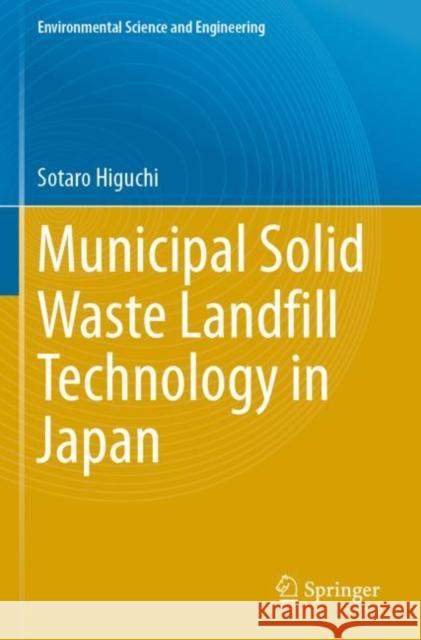
Sotaro Higuchi
Municipal Solid Waste Landfill Technology in Japan Sotaro Higuchi 9789811627361 Springer Nature Singapore - książkaWidoczna okładka, to zdjęcie poglądowe, a rzeczywista szata graficzna może różnić się od prezentowanej.

Municipal Solid Waste Landfill Technology in Japan

ISBN-13: 9789811627361 / Angielski / Miękka / 2022

Sotaro Higuchi
cena 564,88 zł
(netto: 537,98 VAT:  5%)

Najniższa cena z 30 dni: 539,74 zł
Termin realizacji zamówienia:
ok. 22 dni roboczych
Bez gwarancji dostawy przed świętami

Darmowa dostawa!

Japan was ahead of the rest of the world when it introduced intermediate processing of municipal waste by such means as incineration in the 1960s. Owing to the small land area of the country and the difficulty in securing landfill sites, the incineration ratio of municipal combustible waste had reached 100% by the 1990s. Along with the landfill of incineration residues, proprietary technologies such as high salt leachate treatment, desalination treatment, by-product recycling, a focus on the resource of incineration residues, sea surface landfill sites, and covered type landfill sites have spread and developed since then. This book describes the introduction of incineration facilities starting in the 1960s, landfill technology, and issues arising after 1990 following the introduction of the facilities. The necessity of a total system from incineration to landfill is explained as well. The volume is a valuable resource for countries that plan to introduce intermediate processing such as incineration and for countries that are developing a waste management policy.


Kategorie:
Technologie
Kategorie BISAC:
Science > Environmental Science (see also Chemistry - Environmental)
Political Science > Public Policy - Environmental Policy
Technology & Engineering > Environmental - Waste Management
Wydawca:
Springer Nature Singapore
Seria wydawnicza:
Environmental Science and Engineering
Język:
Angielski
ISBN-13:
9789811627361
Rok wydania:
2022
Waga:
0.52 kg
Wymiary:
23.5 x 15.5
Oprawa:
Miękka
Dodatkowe informacje:
Wydanie ilustrowane

Preface

Chapter 1 The Transition of Landfill Technologies   
1.1 Social situation and landfill disposal volume over landfill   
1.2 The transition of landfill waste   
1.3 The transition of researches in the field of landfill   
1.4 The transition of technologies by the year   
1.4.1 The 1960s   
1.4.2 The 1970s   
1.4.3 The 1980s   
1.4.4 The 1990s   
1.4.5 The 2000s~ Present   

Chapter 2 Issues and Measures for Landfill Technologies  
2.1 Changes in landfill waste quality  
2.1.1 Quality of waste carried into landfill sites  
2.1.2 The necessity of grasping landfill waste quality  
2.2 Issue of high concentration inorganic salt  
2.2.1 Issue of calcium scale  
2.2.2 Issue of chloride  
2.2.3 Generation of by-product salt  
2.2.4 Composition of by-product salt  
2.2.5 Disposal and recycling of by-product salt  
2.3 The problem of remaining chelate  
2.3.1 Survey on the actual situation  
2.3.2 Composition of the chelating agent  
2.3.3 Effect of chelate treatment  
2.3.4 Chelate countermeasure  
2.3.5 Analysis of residual chelate  
2.4Covered type landfill site  
2.4.1 Definition of the covered type landfill site  
2.4.2 Advantages of the covered type landfill site  
2.4.3 Issues and countermeasures for the covered type landfill site  
2.5 Sea surface landfill site  
2.5.1 General structure of sea surface landfill site  
2.5.2 Water balance of sea surface landfill site  
2.5.3 Issues of sea surface landfill site  
2.5.4 Countermeasures  
2.5.5 Advanced use of ultimate land  
2.6 Semi-aerobic landfill structure  
2.6.1 Concept  
2.6.2 Function check method of semi-aerobic landfill structure  
2.6.3 Inhibitors of semi-aerobic landfill structure  
2.6.4 Intermediate processing residue landfill and semi-aerobic landfill  
2.6.5 Semi-aerobic landfill at a covered type landfill site  
2.6.6 Semi-aerobic landfill at the full landfill site  
2.7 Abolition of the landfill site  
2.7.1 Closure and abolition of the landfill site  
2.7.2 Issues of abolition  
2.7.3 Abolition and stabilization  
2.7.4 Abolition promotion technologies  

Chapter 3 A Relationship between Landfill Materials and Landfill  
3.1 Leachate management in the introduction process of intermediate processing 
3.1.1 Guidelines of MSW Landfill Sites (1978)  
3.1.2 Explanation of the Guidelines on MSW Landfill Sites (1989)  
3.2 Landfill technology for intermediate processing residue  
3.2.1 Leachate collection/drainage facility  
3.2.2 Landfill gas treatment facility  
3.2.3 Leachate treatment facility  
3.2.4 Landfill methods  
3.2.5 Leachate management  
3.2.6 Others  

Chapter 4 The Role and the Technology for the Future Landfill site
4.1 Requirements for the future landfill site  
4.1.1 Location issues
4.1.2 Regeneration of existing landfill site and its early stabilization
4.1.3A newly established landfill site
4.1.4 Concept of the future landfill site
4.2 Location selection of landfill site
4.2.1 Residents' consciousness of the location of the troublesome facility
4.2.2 Site selection method
4.3 Regeneration of landfill site
4.3.1 Survey and procedures for regeneration
4.3.2 Sorting technology
4.3.3 Heat treatment
4.3.4 Life-prolonging by consolidation method
4.4 Technology for early stabilization
4.4.1 Pre-treatment of the landfill
4.4.2 Post-treatment of the landfill
4.5 Technology for future landfill
4.5.1 Concept of the leachate treatment system
4.5.2 Leachate collection/drainage facility
4.5.3 Landfill gas removal facility
4.5.4The capacity decision of the facility according to the leachate management 
4.5.5 Quality prediction on leachate
4.5.6 Seepage control system
4.5.7 Multi-barrier concept
4.6 Landfill according to the waste management system
4.6.1 Issues of the current waste management system
4.6.2 The waste management system and MSW landfill in the future

Chapter 5 Conclusion

Following his graduation from the Faculty of Engineering at Fukuoka University in 1972, Sotaro Higuchi worked as a construction consultant planning and designing a MSW landfill. After obtaining a doctoral degree in engineering at Kyushu University, since 2001 he has been a professor in the Graduate School of Engineering, Fukuoka University, and is the director of Institute for resource recycling and environmental Controll system, Fukuoka University. The focus of his study is waste management, and his main research areas are landfills of incineration residue, desalination treatment of leachate, regeneration of landfill sites, recycling of by-product salts, and related topics. Dr. Higuchi is the chief director of the Environment Technology Network and a member of the Japan Society of Material Cycles and Waste Management. He received the Minister of the Environment Award for contributions in research and development of waste and wastewater treatment facilities in 2014.


Japan was ahead of the rest of the world when it introduced intermediate processing of municipal waste by such means as incineration in the 1960s. Owing to the small land area of the country and the difficulty in securing landfill sites, the incineration ratio of municipal combustible waste had reached 100% by the 1990s. Along with the landfill of incineration residues, proprietary technologies such as high salt leachate treatment, desalination treatment, by-product recycling, a focus on the resource of incineration residues, sea surface landfill sites, and covered type landfill sites have spread and developed since then. 

This book describes the introduction of incineration facilities starting in the 1960s, landfill technology, and issues arising after 1990 following the introduction of the facilities. The necessity of a total system from incineration to landfill is explained as well. The volume is a valuable resource for countries that plan to introduce intermediate processing such as incineration and for countries that are developing a waste management policy.




Udostępnij

Facebook - konto krainaksiazek.pl


Opinie o Krainaksiazek.pl na Opineo.pl

Partner Mybenefit

Krainaksiazek.pl w programie rzetelna firma Krainaksiaze.pl - płatności przez paypal

Czytaj nas na:

Facebook - krainaksiazek.pl
  • książki na zamówienie
  • granty
  • książka na prezent
  • kontakt
  • pomoc
  • opinie
  • regulamin
  • polityka prywatności

Zobacz:

  • Księgarnia czeska

  • Wydawnictwo Książkowe Klimaty

1997-2025 DolnySlask.com Agencja Internetowa

© 1997-2022 krainaksiazek.pl
     
KONTAKT | REGULAMIN | POLITYKA PRYWATNOŚCI | USTAWIENIA PRYWATNOŚCI
Zobacz: Księgarnia Czeska | Wydawnictwo Książkowe Klimaty | Mapa strony | Lista autorów
KrainaKsiazek.PL - Księgarnia Internetowa

Polityka prywatnosci - link
Krainaksiazek.pl - płatnośc Przelewy24
Przechowalnia Przechowalnia




