• Wyszukiwanie zaawansowane
  • Kategorie
  • Kategorie BISAC
  • Książki na zamówienie
  • Promocje
  • Granty
  • Książka na prezent
  • Opinie
  • Pomoc
  • Załóż konto
  • Zaloguj się

Multimodal Usability » książka


zaloguj się | załóż konto
Logo Krainaksiazek.pl

koszyk

konto

szukaj
topmenu
Księgarnia internetowa
Szukaj
Książki na zamówienie
Promocje
Granty
Książka na prezent
Moje konto
Pomoc
 
 
Wyszukiwanie zaawansowane
Pusty koszyk
Bezpłatna dostawa dla zamówień powyżej 20 złBezpłatna dostawa dla zamówień powyżej 20 zł

Kategorie główne

• Nauka
 [2946600]
• Literatura piękna
 [1856966]

  więcej...
• Turystyka
 [72221]
• Informatyka
 [151456]
• Komiksy
 [35826]
• Encyklopedie
 [23190]
• Dziecięca
 [619653]
• Hobby
 [140543]
• AudioBooki
 [1577]
• Literatura faktu
 [228355]
• Muzyka CD
 [410]
• Słowniki
 [2874]
• Inne
 [445822]
• Kalendarze
 [1744]
• Podręczniki
 [167141]
• Poradniki
 [482898]
• Religia
 [510455]
• Czasopisma
 [526]
• Sport
 [61590]
• Sztuka
 [243598]
• CD, DVD, Video
 [3423]
• Technologie
 [219201]
• Zdrowie
 [101638]
• Książkowe Klimaty
 [124]
• Zabawki
 [2473]
• Puzzle, gry
 [3898]
• Literatura w języku ukraińskim
 [254]
• Art. papiernicze i szkolne
 [8170]
Kategorie szczegółowe BISAC

Multimodal Usability

ISBN-13: 9781848825529 / Angielski / Twarda / 2009 / 431 str.
Niels Ole Bernsen;Laila Dybkjær
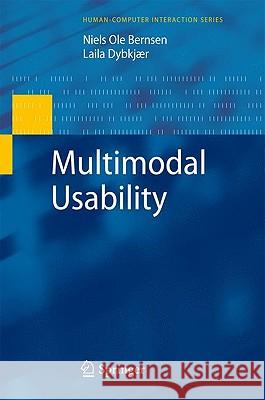
Multimodal Usability Niels Ole Bernsen, Laila Dybkjær 9781848825529 Springer London Ltd - książkaWidoczna okładka, to zdjęcie poglądowe, a rzeczywista szata graficzna może różnić się od prezentowanej.

Multimodal Usability

ISBN-13: 9781848825529 / Angielski / Twarda / 2009 / 431 str.

Niels Ole Bernsen;Laila Dybkjær
cena 605,23 zł
(netto: 576,41 VAT:  5%)

Najniższa cena z 30 dni: 578,30 zł
Termin realizacji zamówienia:
ok. 22 dni roboczych
Bez gwarancji dostawy przed świętami

Darmowa dostawa!
inne wydania

This preface tells the story of how Multimodal Usability responds to a special challenge. Chapter 1 describes the goals and structure of this book. The idea of describing how to make multimodal computer systems usable arose in the European Network of Excellence SIMILAR - "Taskforce for cre- ing human-machine interfaces SIMILAR to human-human communication," 2003- 2007, www. similar. cc. SIMILAR brought together people from multimodal signal processing and usability with the aim of creating enabling technologies for new kinds of multimodal systems and demonstrating results in research prototypes. Most of our colleagues in the network were, in fact, busy extracting features and guring out how to demonstrate progress in working interactive systems, while claiming not to have too much of a notion of usability in system development and evaluation. It was proposed that the authors support the usability of the many multimodal pro- types underway by researching and presenting a methodology for building usable multimodal systems. We accepted the challenge, rst and foremost, no doubt, because the formidable team spirit in SIMILAR could make people accept outrageous things. Second, h- ing worked for nearly two decades on making multimodal systems usable, we were curious - curious at the opportunity to try to understand what happens to traditional usability work, that is, work in human-computer interaction centred around tra- tional graphical user interfaces (GUIs), when systems become as multimodal and as advanced in other ways as those we build in research today.


Kategorie:
Informatyka
Kategorie BISAC:
Computers > User Interfaces
Computers > Hardware - Cell Phones & Devices
Computers > Interactive & Multimedia
Wydawca:
Springer London Ltd
Seria wydawnicza:
Human–Computer Interaction Series
Język:
Angielski
ISBN-13:
9781848825529
Rok wydania:
2009
Dostępne języki:
Angielski
Wydanie:
2010
Numer serii:
000303886
Ilość stron:
431
Waga:
1.77 kg
Wymiary:
23.523.5 x 15.5
Oprawa:
Twarda
Wolumenów:
01
Dodatkowe informacje:
Bibliografia
Wydanie ilustrowane

1. Structure, Usability, Readership 1.1 Goals 1.2 How to work on Usability 1.3 Structure and Scope of this book 1.4 What is Usability 1.5 Usability Matters - But how much? 1.6 Reader's Guide 1.7 Key points 2. Intermezzo 1 Three Multimodal Cases 2.1 Contents and Origins 2.2 What's Next? 3. Creating a Model of Use 3.1 AMITUDE - A model of system use 3.2 Application Type 3.3 Users and people 3.4 Tasks and other activities, Domain 3.5 Use Environment 3.6 Interaction 3.7 Key points 4. Modalities and Devices 4.1 What is a Multimodal system? 4.2 Which modalities exist? 4.3 Practical use of modalities 4.4 Multimodal representation 4.5 Input/Output devices 5. Intermezzo 2 Status on Cases and Next Steps 5.1 Case AMITUDE Models of Use 5.2 Case Usability Goals, Requirements and Evaluation Criteria 5.3 Towards a Broader Perspective on Usability Work 6. Common Approaches, Methods, Planning 6.1 Common Usability Approaches 6.2 Methods for Usability 6.3 Writing a usability workplan 6.4 Writinga usability method plan 6.5 Key points 7. Intermezzo 3 Case Usability Workplan, Design 7.1 Case Usability Workplans 7.2 Case Design 8. Question-Answering 8.1 About Interviews 8.2 About questionnaires 8.3 User Survey 8.4 Customer Interviews and Questionnaires 8.5 Expert interviews and questionnaires 8.6 Screening interviews and questionnaires 8.7 Pre-test interviews and questionnaires 8.8 Post-test interviews and questionnaires 9. Meetings with Discussion 9.1 Focus group meetings 9.2 Stakeholder meetings 9.3 Workshops and other meetings with user representatives 10. Observation of Users 10.1 Macro-Behavioural field methods 10.2 Micro-Behavioural field observation 10.3 Category sorting 10.4 Observation of users in real time 10.5 Human data collection in the lab 11. Imagination 11.1 Use cases and scenarios 11.2 Personas 11.3 Cognitive walkthrough 11.4 Guideline-based usability development and evaluation 11.5 Usability standards 12. Interaction with the System 12.1 Mock-up 12.2 Wizard of Oz  

Multimodal Usability demonstrates several major generalisations of human-computer interaction and extends the traditional focus on graphical user interfaces to all input/output modalities accessible to vision, hearing, and touch.

Multimodal Usability can help make a multimodal interactive system usable no matter if you are building a work tool or a game, and whether your system models aspects of people, like a virtual (or robot) companion or friend, or not.

Successful implementation can be achieved using the following usability development steps:

(1) Augment system model specification with an AMITUDE model of use specified in terms of Application type, Modalities, Interaction type, Task, User, Device and Environment of use.

(2) Apply usability methods to collect the usability data needed at any time. A toolbox of 24 key methods are presented in a common format. Methods are of five kinds: question-answering, meetings with discussion, observation, imagination, and interaction with the system.

(3) For each method application, post-process, annotate, analyse, report, and act on the data to improve system model usability.

Three multimodal system Cases are included to illustrate usability development from idea to user test of the implemented prototype.

Multimodal Usability assumes no prior knowledge about usability and human-computer interaction.


Udostępnij

Facebook - konto krainaksiazek.pl


Opinie o Krainaksiazek.pl na Opineo.pl

Partner Mybenefit

Krainaksiazek.pl w programie rzetelna firma Krainaksiaze.pl - płatności przez paypal

Czytaj nas na:

Facebook - krainaksiazek.pl
  • książki na zamówienie
  • granty
  • książka na prezent
  • kontakt
  • pomoc
  • opinie
  • regulamin
  • polityka prywatności

Zobacz:

  • Księgarnia czeska

  • Wydawnictwo Książkowe Klimaty

1997-2025 DolnySlask.com Agencja Internetowa

© 1997-2022 krainaksiazek.pl
     
KONTAKT | REGULAMIN | POLITYKA PRYWATNOŚCI | USTAWIENIA PRYWATNOŚCI
Zobacz: Księgarnia Czeska | Wydawnictwo Książkowe Klimaty | Mapa strony | Lista autorów
KrainaKsiazek.PL - Księgarnia Internetowa

Polityka prywatnosci - link
Krainaksiazek.pl - płatnośc Przelewy24
Przechowalnia Przechowalnia





