• Wyszukiwanie zaawansowane
  • Kategorie
  • Kategorie BISAC
  • Książki na zamówienie
  • Promocje
  • Granty
  • Książka na prezent
  • Opinie
  • Pomoc
  • Załóż konto
  • Zaloguj się

Moving Beyond Compromise: Why Stop There? » książka


zaloguj się | załóż konto
Logo Krainaksiazek.pl

koszyk

konto

szukaj
topmenu
Księgarnia internetowa
Szukaj
Książki na zamówienie
Promocje
Granty
Książka na prezent
Moje konto
Pomoc
 
 
Wyszukiwanie zaawansowane
Pusty koszyk
Bezpłatna dostawa dla zamówień powyżej 20 złBezpłatna dostawa dla zamówień powyżej 20 zł

Kategorie główne

• Nauka
 [2946912]
• Literatura piękna
 [1852311]

  więcej...
• Turystyka
 [71421]
• Informatyka
 [150889]
• Komiksy
 [35717]
• Encyklopedie
 [23177]
• Dziecięca
 [617324]
• Hobby
 [138808]
• AudioBooki
 [1671]
• Literatura faktu
 [228371]
• Muzyka CD
 [400]
• Słowniki
 [2841]
• Inne
 [445428]
• Kalendarze
 [1545]
• Podręczniki
 [166819]
• Poradniki
 [480180]
• Religia
 [510412]
• Czasopisma
 [525]
• Sport
 [61271]
• Sztuka
 [242929]
• CD, DVD, Video
 [3371]
• Technologie
 [219258]
• Zdrowie
 [100961]
• Książkowe Klimaty
 [124]
• Zabawki
 [2341]
• Puzzle, gry
 [3766]
• Literatura w języku ukraińskim
 [255]
• Art. papiernicze i szkolne
 [7810]
Kategorie szczegółowe BISAC

Moving Beyond Compromise: Why Stop There?

ISBN-13: 9780996469906 / Angielski / Miękka / 2016 / 142 str.
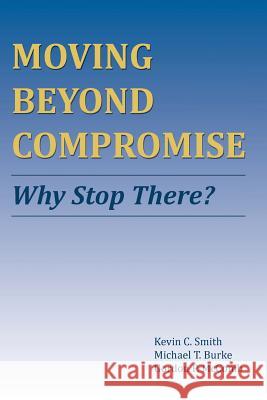
Kevin C. Smith; Michael T. Burke; Gordon P. McComb
Moving Beyond Compromise: Why Stop There? Kevin C. Smith Michael T. Burke Gordon P. McComb 9780996469906 Counsel Publishing, LLC - książkaWidoczna okładka, to zdjęcie poglądowe, a rzeczywista szata graficzna może różnić się od prezentowanej.

Moving Beyond Compromise: Why Stop There?

ISBN-13: 9780996469906 / Angielski / Miękka / 2016 / 142 str.

Kevin C. Smith; Michael T. Burke; Gordon P. McComb
cena 37,93
(netto: 36,12 VAT:  5%)

Najniższa cena z 30 dni: 37,93
Termin realizacji zamówienia:
ok. 16-18 dni roboczych
Bez gwarancji dostawy przed świętami

Darmowa dostawa!

The process of making decisions is integral to life. We make decisions every day, from what to have for breakfast to critical issues of life and business. When two or more people are involved in making those decisions, the process often involves "compromise" and can be complicated by the basic give-and-take and trade-offs that are associated with this approach. Webster's New Twentieth Century Dictionary of the English Language defines compromise in this way:

  • A settlement in which each side gives up some demands or makes concessions
  • An adjustment of opposing principles, systems, etc., in which part of each is given up
  • The result of such an adjustment or settlement
  • Something midway between different things
  • A laying open to danger, suspicion, or disrepute, as a compromise of one's good name, or; to surrender or give up (one's interest, principles, etc.)
Compromise necessarily, then, leads to a result that has the great risk of being suboptimal because the concessions made can easily preclude consideration of alternatives and important viewpoints. One of the factors that those who promote compromise as a means of making decisions use as justification is that each side gives up something they want, and thus each side can "live with" the result. In reality, neither side will give up something critically important to them while expecting the other to do just that. The end result is often that either no decision or agreement can be reached or one or both of the parties is unhappy with the result. Too frequently, the ultimate result is failure because one or both parties do not fully support the agreement, which becomes more likely if one party feels it gave more than the other or had to give up something related to its principles or best interest. In an increasingly complex world, compromise is not the best way to reach decisions. An approach that fully and objectively examines all points of view and ideas is needed to arrive at workable solutions to problems and issues as diverse as those we see in the world today. Anyone who has worked inside any company, large or small, knows that it is often very challenging to make decisions. Different personalities, diverse interactions, company politics, and even social, political, and economic philosophies present barriers to agreement. Add to that the basic competitive nature of human beings and the result can be a bubbling stewpot of rancor, foxhole-digging, foot-dragging, backbiting, criticism, individual conflict, and an attitude of an "I win, you lose" zero-sum game that leads to, at best, nonoptimal decisions and at worst, paralysis and no decisions at all. This description applies to virtually any type of organization, not just the corporate setting. It can be seen in organizations, nonprofits, politics, families, churches, schools, and any other setting in which a group of people, whether it be two or many, must meet and make decisions on any topic. All of us have seen the results of committee deliberations aimed at making decisions in a number of these seemingly different settings. Quite often, when we watch the process, we understand the saying that "A committee is a cul-de-sac down which ideas are lured and then quietly strangled." The three authors have worked in a variety of different companies and noncorporate settings, including small local companies (fewer than 10 employees) to very large multinational corporations; they have been a part of boards of directors and trustees of nonprofits, school and church groups, neighborhood organizations, and others. They have all had the (mis)fortune of serving on committees charged with making decisions ranging from purchasing equipment to basic corporate strategy for international product development.

The process of making decisions is integral to life. We make decisions every day, from what to have for breakfast to critical issues of life and business. When two or more people are involved in making those decisions, the process often involves "compromise" and can be complicated by the basic give-and-take and trade-offs that are associated with this approach.Webster's New Twentieth Century Dictionary of the English Language defines compromise in this way:

  • A settlement in which each side gives up some demands or makes concessions
  • An adjustment of opposing principles, systems, etc., in which part of each is given up
  • The result of such an adjustment or settlement
  • Something midway between different things
  • A laying open to danger, suspicion, or disrepute, as a compromise of one's good name, or; to surrender or give up (one's interest, principles, etc.)

Compromise necessarily, then, leads to a result that has the great risk of being suboptimal because the concessions made can easily preclude consideration of alternatives and important viewpoints. One of the factors that those who promote compromise as a means of making decisions use as justification is that each side gives up something they want, and thus each side can “live with” the result. In reality, neither side will give up something critically important to them while expecting the other to do just that. The end result is often that either no decision or agreement can be reached or one or both of the parties is unhappy with the result. Too frequently, the ultimate result is failure because one or both parties do not fully support the agreement, which becomes more likely if one party feels it gave more than the other or had to give up something related to its principles or best interest.In an increasingly complex world, compromise is not the best way to reach decisions. An approach that fully and objectively examines all points of view and ideas is needed to arrive at workable solutions to problems and issues as diverse as those we see in the world today.Anyone who has worked inside any company, large or small, knows that it is often very challenging to make decisions. Different personalities, diverse interactions, company politics, and even social, political, and economic philosophies present barriers to agreement. Add to that the basic competitive nature of human beings and the result can be a bubbling stewpot of rancor, foxhole-digging, foot-dragging, backbiting, criticism, individual conflict, and an attitude of an “I win, you lose” zero-sum game that leads to, at best, nonoptimal decisions and at worst, paralysis and no decisions at all.This description applies to virtually any type of organization, not just the corporate setting. It can be seen in organizations, nonprofits, politics, families, churches, schools, and any other setting in which a group of people, whether it be two or many, must meet and make decisions on any topic. All of us have seen the results of committee deliberations aimed at making decisions in a number of these seemingly different settings. Quite often, when we watch the process, we understand the saying that “A committee is a cul-de-sac down which ideas are lured and then quietly strangled." The three authors have worked in a variety of different companies and noncorporate settings, including small local companies (fewer than 10 employees) to very large multinational corporations; they have been a part of boards of directors and trustees of nonprofits, school and church groups, neighborhood organizations, and others. They have all had the (mis)fortune of serving on committees charged with making decisions ranging from purchasing equipment to basic corporate strategy for international product development.

Kategorie:
Nauka, Ekonomia i biznes
Kategorie BISAC:
Business & Economics > Decision Making & Problem Solving
Business & Economics > Zarządzenie zasobami ludzkimi
Business & Economics > Zarządzenie i techniki zarządzania
Wydawca:
Counsel Publishing, LLC
Język:
Angielski
ISBN-13:
9780996469906
Rok wydania:
2016
Ilość stron:
142
Waga:
0.20 kg
Wymiary:
22.86 x 15.24 x 0.76
Oprawa:
Miękka
Wolumenów:
01


Udostępnij

Facebook - konto krainaksiazek.pl


Opinie o Krainaksiazek.pl na Opineo.pl

Partner Mybenefit

Krainaksiazek.pl w programie rzetelna firma Krainaksiaze.pl - płatności przez paypal

Czytaj nas na:

Facebook - krainaksiazek.pl
  • książki na zamówienie
  • granty
  • książka na prezent
  • kontakt
  • pomoc
  • opinie
  • regulamin
  • polityka prywatności

Zobacz:

  • Księgarnia czeska

  • Wydawnictwo Książkowe Klimaty

1997-2025 DolnySlask.com Agencja Internetowa

© 1997-2022 krainaksiazek.pl
     
KONTAKT | REGULAMIN | POLITYKA PRYWATNOŚCI | USTAWIENIA PRYWATNOŚCI
Zobacz: Księgarnia Czeska | Wydawnictwo Książkowe Klimaty | Mapa strony | Lista autorów
KrainaKsiazek.PL - Księgarnia Internetowa

Polityka prywatnosci - link
Krainaksiazek.pl - płatnośc Przelewy24
Przechowalnia Przechowalnia





